
Amazon FBA wasn’t even on Travis Marziani‘s radar when he quit his corporate job thirteen years ago with no savings, no backup plan, and no clear idea of what came next. Today, he has generated over $12.3 million in sales. He has also sold two businesses for close to $1 million each and helped more than 4,000 people build their own online businesses.
However, his path was anything but a straight line. There was no secret strategy and no overnight win. Instead, Travis struggled, stumbled, and learned many of his most valuable lessons the hard way.
That’s exactly why his story matters. If you’re stuck in a job you dislike and dreaming of building something online, each of his mistakes points you toward a faster route. In fact, everything he learned eventually became the Passion Product Formula, the framework he now uses to help others launch profitable Amazon FBA brands.
Below, you’ll find the full journey, from his first corporate job to the shift that helped him earn $1 million in profit in a single year.
- Why a "Safe" Job Can Quietly Cost You Your Freedom
- The Book That Sparked a Leap of Faith
- Chasing Freedom Across South America
- Growing Revenue but Not Profit
- The 3 Mistakes That Keep New Entrepreneurs Stuck
- Discovering Amazon FBA: A Smarter System
- Performance Nut Butter: Proof That One Product Is Enough
- From One Success to Thousands of Students
- Losing Everything Overnight and Bouncing Back
- The 7-Day Challenge: Does the Framework Still Work?
- Working Less and Living More
- Your Turn: Skip the Four-Year Detour
- Frequently Asked Questions
Why a “Safe” Job Can Quietly Cost You Your Freedom

Growing up, Travis felt sure he would make it. After all, he followed every rule. He earned good grades, played football, and got into a good college. Then, in 2011, he landed what looked like a dream role as a consultant at Capgemini.
His parents felt proud, and his friends felt excited for him. Better yet, he earned $80,000 a year straight out of school, which was a strong salary at the time. Soon, though, a nagging feeling crept in. He worked 60-hour weeks doing the same tasks every single day.
The Simple Math That Changed Everything
One afternoon, Travis sat down and ran the numbers. After taxes, rent, and other costs, he took home about $40,000. Even if he saved a strict $10,000 a year, he would need roughly 100 years to become a millionaire. Small raises of 3% to 5% wouldn’t change that picture much.
Here’s a quick exercise worth trying. Take your own take-home pay and subtract your rent and living costs. Then divide $1 million by what’s left. The result shows how many years it would take you to reach seven figures, and that’s before counting inflation.
As a result of that math, Travis started looking for another way forward. He simply didn’t want to trade the best years of his life for tiny annual raises.
The Book That Sparked a Leap of Faith
By his second year at Capgemini, Travis felt worse with every passing day. He now believes that when you’re on the wrong path, life nudges you first and then pushes harder. For him, that push came as depression. Still, it took a full year before he found the courage to act.
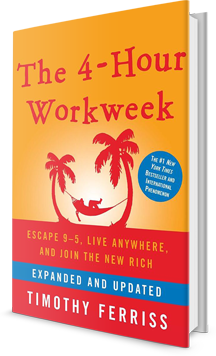
The spark came from Tim Ferriss’s book The 4-Hour Workweek. Travis read it under his desk while his boss wasn’t looking. The book wasn’t really about money. Instead, it focused on getting your life back through time freedom, location freedom, and more days spent with people you care about.
Inspired, Travis quit cold turkey, with no side hustle and no plan. Just two days later, a panic attack sent him to the emergency room while he frantically tried to start a business. His whole life had followed a clear system, and suddenly he had no next step and nobody to ask. Looking back, that moment showed him how much new entrepreneurs need structure and guidance, which is exactly what his Accelerator provides today.
The takeaway is simple. If you feel stuck in a 9-to-5 you dislike, waiting rarely makes the leap easier. Acting sooner, with a clear plan and the right support, gives you a far better start.
Chasing Freedom Across South America

Hoping to reset, Travis left a freezing Chicago winter for Miami. He grew up in LA and figured sunshine would lift his mood. However, he soon learned that sunshine alone can’t replace community, friends, or a steady income. Watching his savings shrink each month still felt scary.
Next, he followed another idea from The 4-Hour Workweek and moved to South America. He lived in Peru, then Colombia, then Rio, and then Buenos Aires. Along the way, he tested many ways to make money online. Above all, he finally started living the location freedom he had once read about under his desk.
Building B Dancewear With His Mom
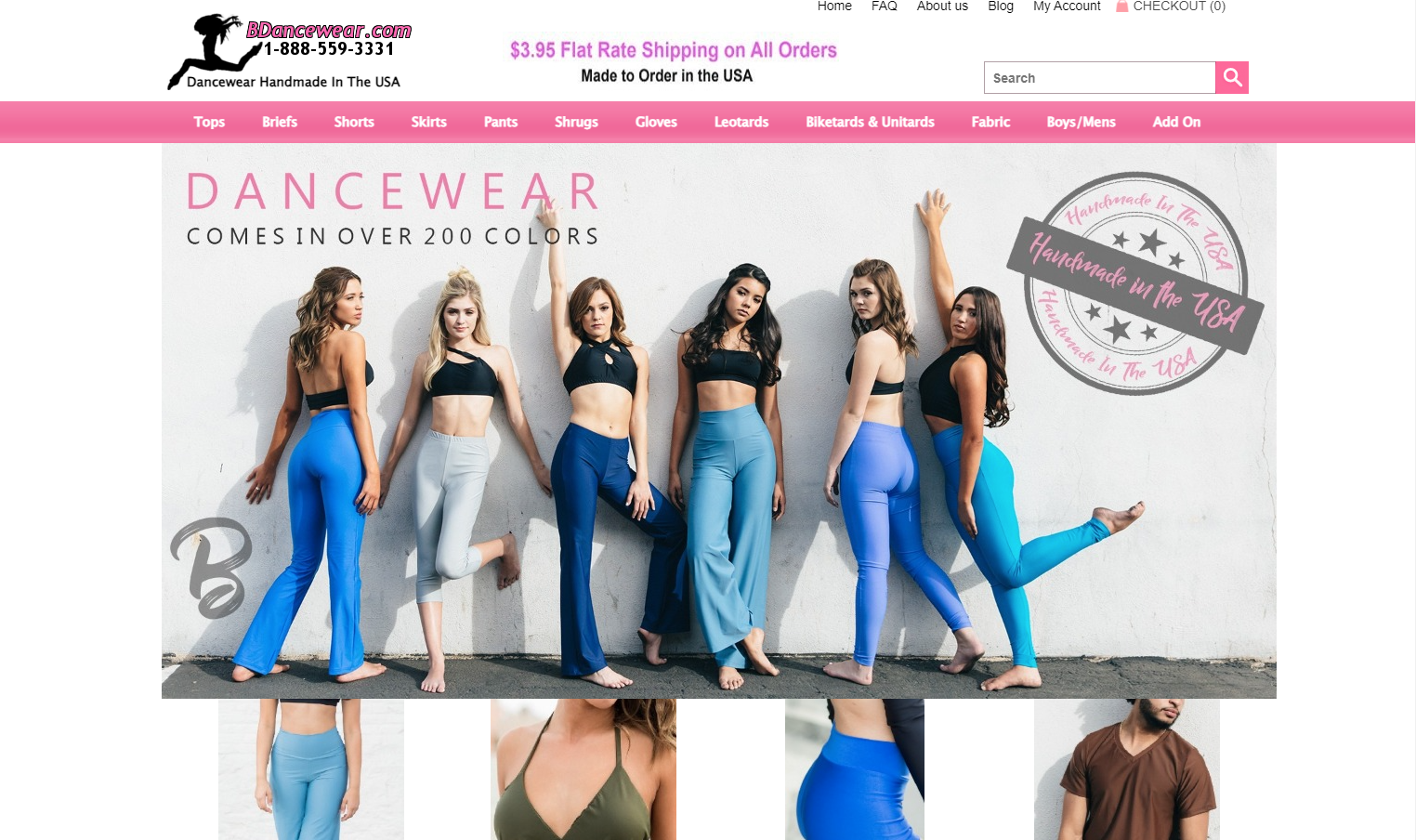
Meanwhile, Travis focused most of his energy on an online dance clothing brand called B Dancewear, which he started with his mom. He built the website and ran the marketing from wherever he was. Back home, his mom cut the fabric and sewed each order by hand, so every piece was premium and made in the United States.
In the first year, the business earned about $40,000 in revenue. After costs, Travis kept roughly $6,000 in profit, compared with $80,000 at his old job. His dad asked whether he was ready to admit that quitting had been a mistake. Undeterred, Travis said no. It was only year one, and he believed in himself.
Growing Revenue but Not Profit

So Travis doubled down. The team hired employees and kept adding colors, sizes, and styles. By year two, sales reached around $200,000. Even so, his personal profit came to only about $15,000, which wasn’t enough to cover his bills.
Over time, the options multiplied into roughly 100,000 different SKUs. At that point, Travis was really running two businesses: the online store and a factory. Every broken sewing machine, sick employee, or wrong-size order landed on his plate. Once again, he worked 60-hour weeks, just like at his corporate job.
By year three, his take-home rose to about $37,000. In year four, the brand hit half a million dollars in sales, yet he kept only about $60,000. Eventually, he moved back in with his parents and paid his dad rent for his childhood bedroom. When his dad asked the same question again, Travis needed a moment to think.
Ultimately, this low point became his turning point. Travis realized he wasn’t broken. Rather, the system he used to make money was broken. Running a factory and an online store at the same time simply didn’t make sense, so he set out to build something better.
The 3 Mistakes That Keep New Entrepreneurs Stuck

Interestingly, the three mistakes Travis made with B Dancewear are the same ones he now sees people make every week in his coaching program. Fortunately, each one has a clear fix.
Mistake 1: Believing More Options Means More Customers
At first, Travis assumed more choices would attract more buyers. In reality, each new option simply created another way to lose money. More SKUs meant more inventory, more complexity, and more headaches. By contrast, a focused lineup lets you put every dollar and hour behind what actually sells.
Mistake 2: Doing Every Step Yourself
Travis also owned every step of the process, from manufacturing and fulfillment to customer service and returns. He felt proud of that and believed it made the brand better. In truth, it was the exact reason the business couldn’t grow.
Here’s a practical fix. First, figure out what an hour of your time is worth and write that number down. Then review everything you did last week. Finally, delegate any task you could pay an employee or virtual assistant less than your hourly rate to handle.
Mistake 3: Building a Job Instead of a Business
Above all, Travis had built a business that couldn’t run without him. In his own words, he didn’t own a business at all; he owned a job and had simply hired himself into it.
This lesson sits at the core of the Passion Product Formula. From day one, the framework helps students build a brand designed to run without their constant involvement. Fortunately for Travis, the solution arrived through an unexpected conversation.
Discovering Amazon FBA: A Smarter System

In 2016, Travis started going out of his way to meet people who were already making money. One of them, a seller he met in LA, became one of his first mentors. This man earned hundreds of thousands, if not millions, of dollars a year selling on Amazon. Meanwhile, Travis worked 60 hours a week for about $60,000.
Importantly, the mentor wasn’t smarter or harder working. Instead, he followed a better system called Amazon FBA. He found one high-quality product, bought it in bulk, and sent the inventory to Amazon’s warehouse. From there, Amazon handled storage, packing, shipping, customer service, returns, and even helped bring in customers.
Suddenly, everything clicked. Travis didn’t need thousands of variations or 15 employees. He needed one high-demand, high-margin product he genuinely cared about, paired with the massive opportunity of Amazon FBA. That idea became the heart of the Passion Product Formula.
Performance Nut Butter: Proof That One Product Is Enough
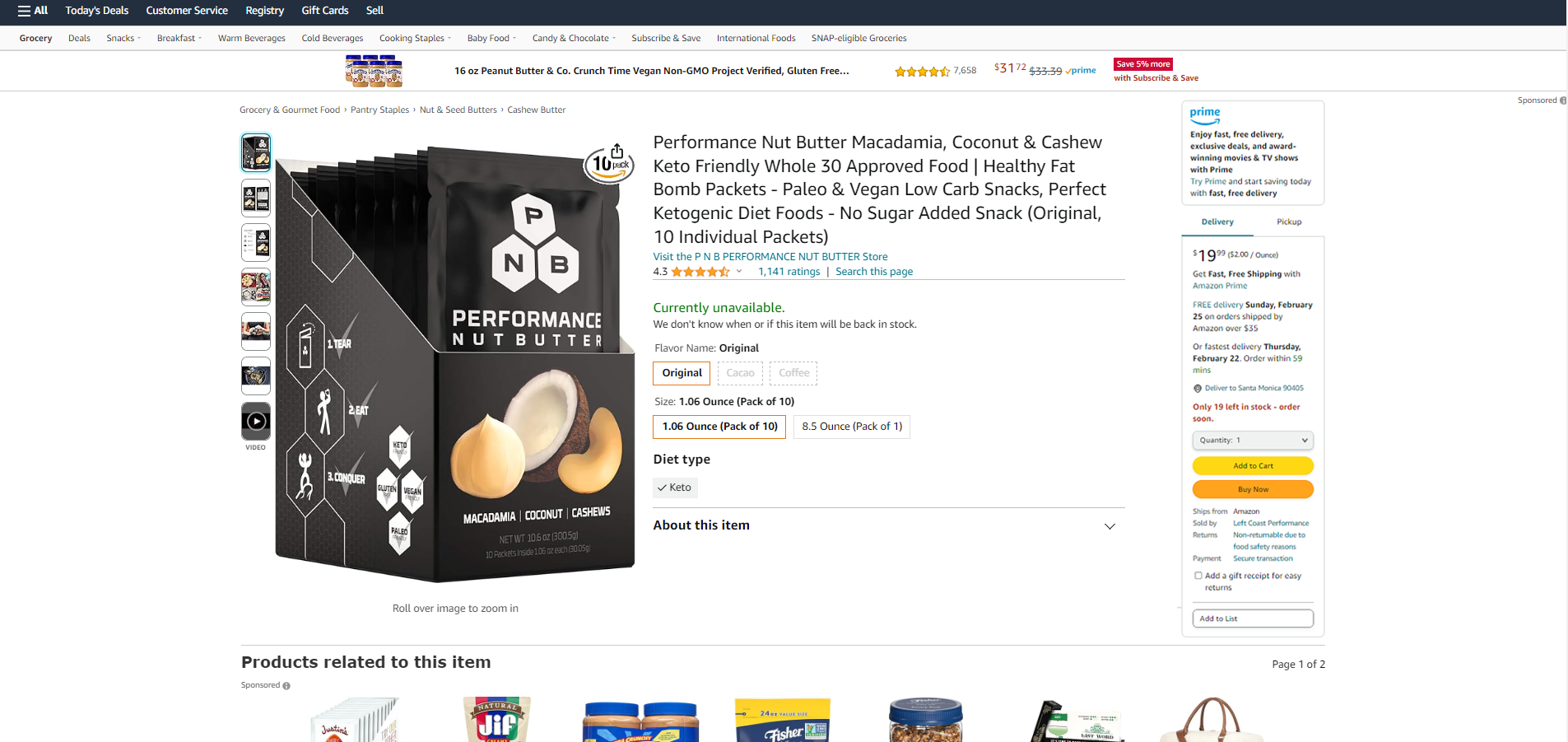
At the time, Travis was deeply into fitness and healthy eating, and he ate plenty of nut butter for the healthy fats. He noticed that most nut butters on Amazon used cheap palm oil or added sugar. Meanwhile, the premium options usually came in jars, which made eating on the go difficult.
So he spotted a gap and acted on it. He created Performance Nut Butter, a blend of macadamia, cashews, and coconut built for athletes and busy professionals. It became the first premium nut butter of its kind on Amazon FBA.
Competing on Quality, Not Price
Next, Travis made a key pricing decision. Rather than racing to the bottom, he positioned the product as the best option available. He priced it at $27.99 for a 10 oz box. As he puts it, someone will always accept a smaller profit than you, so compete on being the best instead.
Validating Before Manufacturing
Travis still had no money, so he validated the idea before committing to a big production run. He launched a Kickstarter campaign and raised over $15,000 in pre-sales before the product even existed. His rule is simple: sell it first, then make it. When people pay before a product exists, you have real proof of demand.
To cover the rest of production, he cashed out his 401(k) and pulled together every remaining dollar. In total, he invested $25,000 into the launch. It was a bold move, and it paid off.
The Results
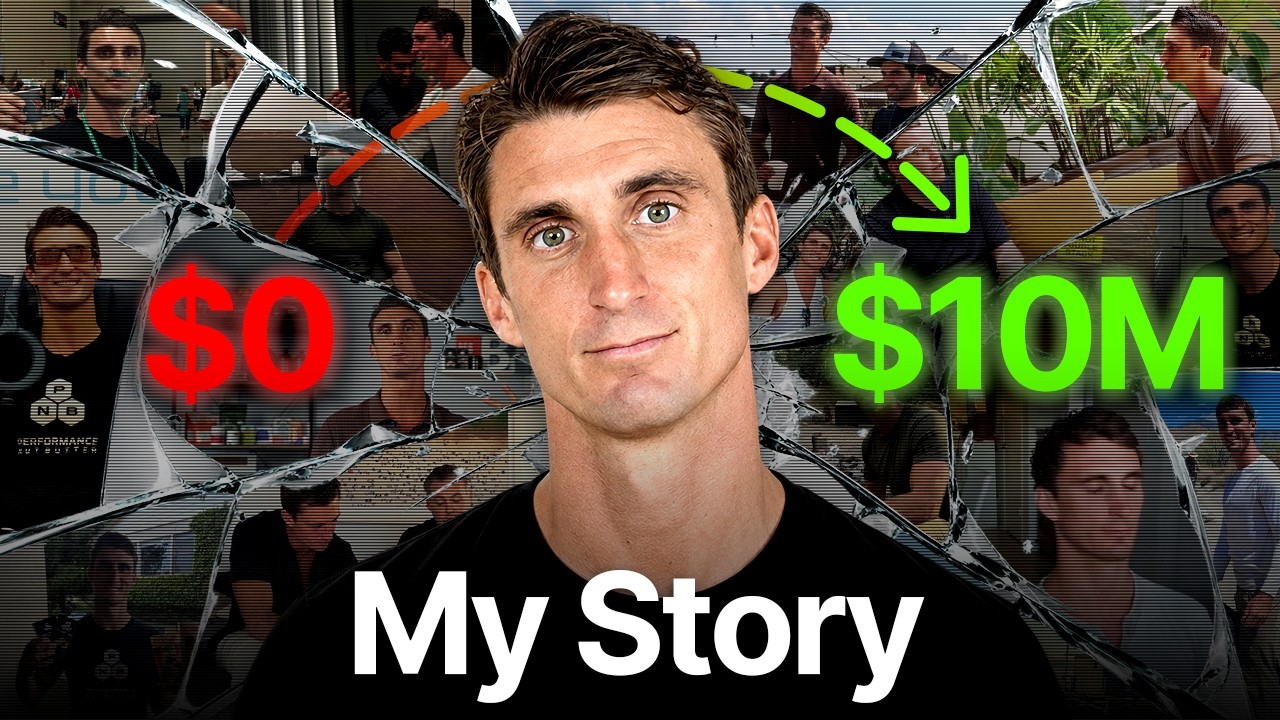
Toward the end of 2017, the first shipment reached Amazon’s warehouse. In its first year, the business generated $360,000 in sales and $120,000 in profit. That was more than he ever earned at Capgemini and more than he made in four years with B Dancewear.
Even better, Travis never touched the product. He had zero employees instead of 15 and one product instead of 100,000 SKUs. His main job was making sure he didn’t run out of stock every couple of months. As a result, he worked about 4 hours a week while traveling the world and enjoying his life.
From One Success to Thousands of Students
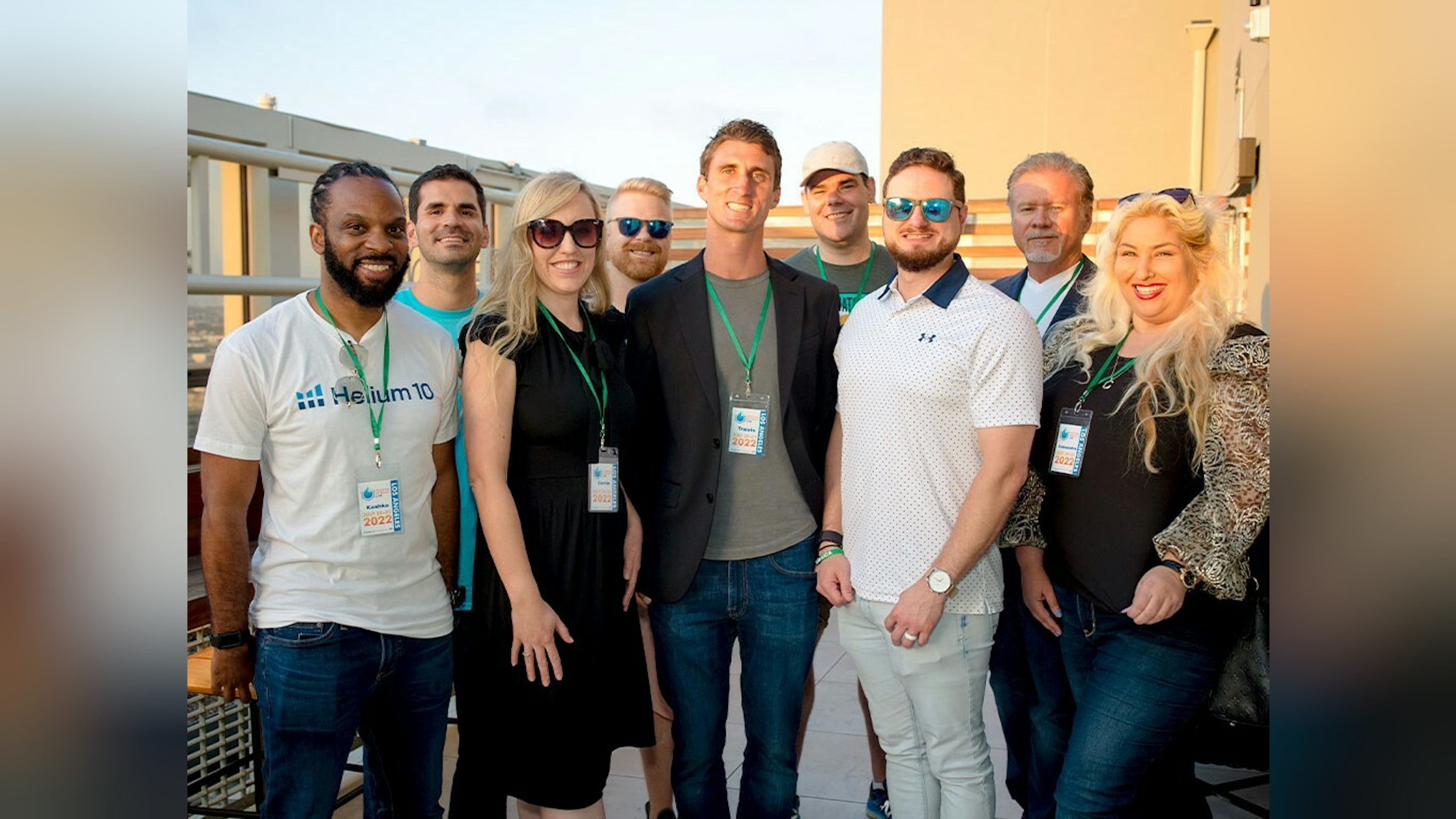
Soon after, Travis made a YouTube video telling the story of his nut butter brand. It blew up, and nearly every comment asked the same thing: how do I do this? So he began making free videos to answer that question. Eventually, he launched the Passion Product Accelerator to personally help people do the same thing.
Meanwhile, his own businesses kept growing. He made over $250,000 in profit in 2019 and over $600,000 in 2020. That same year, pandemic-related manufacturing problems led him to sell the nut butter brand. He then helped his girlfriend at the time launch Vino Cards, a flashcard deck that teaches wine tasting, which allowed her to quit her job and travel with him.
Profit kept climbing too. In 2021, he earned over $700,000 in profit even though revenue dipped, because he put his energy into what worked and dropped what didn’t. By the following year, he crossed $1 million.
Student Success Stories
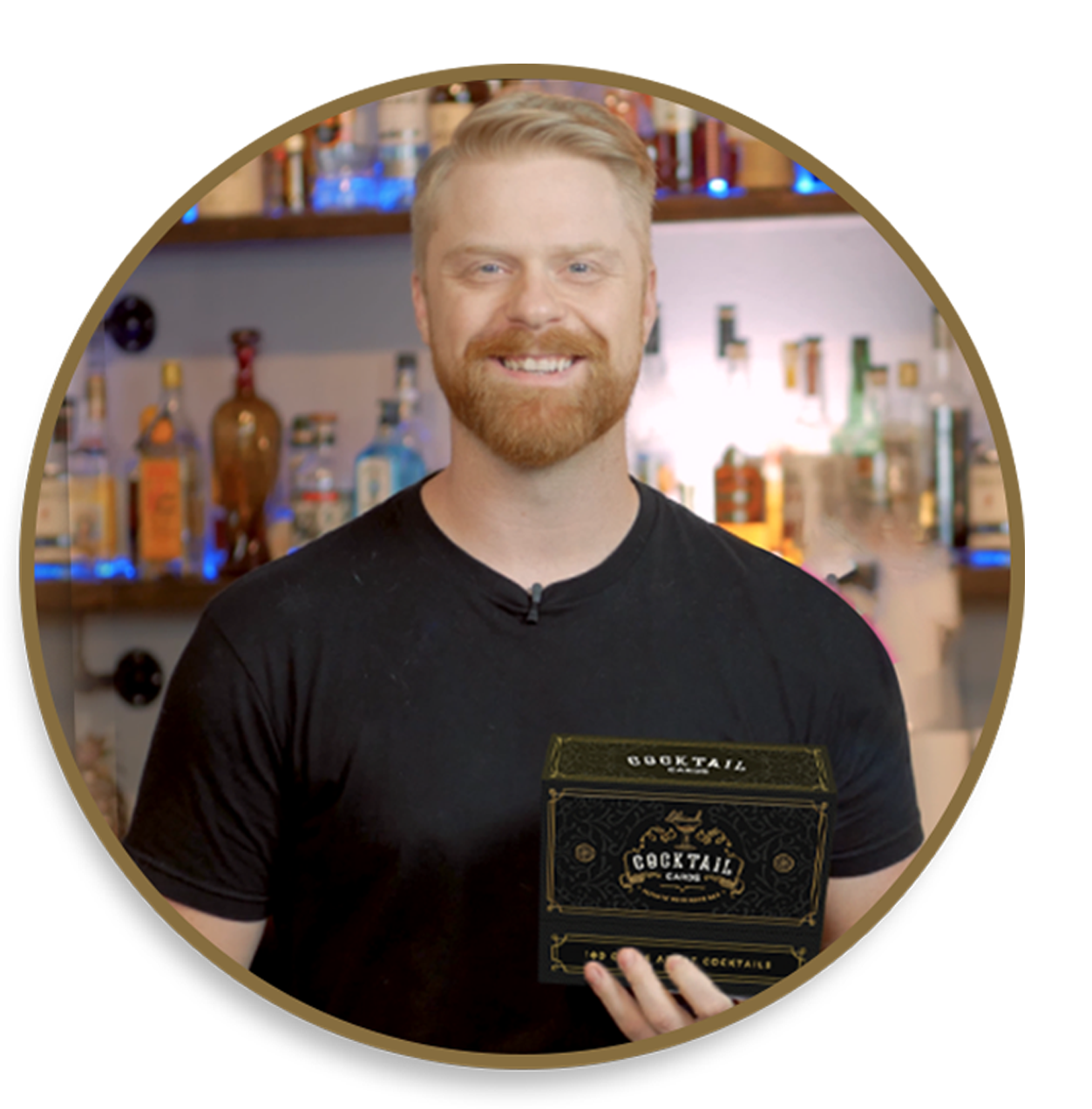
At the same time, his first students started seeing results. AJ, a bartender who lost his job during the pandemic, partnered with Travis to create cocktail recipe cards. On launch day, he sold out in just 2 hours. In his first year, he did over $600,000 in sales and roughly $250,000 in profit.
Similarly, Brent, a first responder helicopter pilot with two kids, came to Travis with limited time and a strong idea. With Travis’s help, he launched his product, which now does over $1 million a year. Consequently, Travis realized his results weren’t luck. With over 4,000 students and many success stories, he had a framework that works.
Losing Everything Overnight and Bouncing Back

Life was going smoothly until November 19th. That Sunday afternoon, Travis was at the beach when Connor, his right-hand man, called. Connor asked whether Travis was changing all the company passwords. He wasn’t, so he sprinted home and found himself locked out of everything. Worse, his YouTube videos were disappearing one by one in real time.
At first, Travis felt crushed and even considered walking away from the internet for good. Instead, his team filed an FBI cyber crime report, hired specialized attorneys, and spent a month fighting their way up through Google and YouTube. Finally, an email arrived confirming that his account and videos had been restored.
Although he still lost a lot, that month taught him a powerful lesson. Someone could take his channel or his business, but nobody could take what he knew how to do. And he was about to prove it.
The 7-Day Challenge: Does the Framework Still Work?

Once the adrenaline wore off, a question started bothering Travis. He was teaching thousands of people to launch Amazon FBA products, yet he hadn’t launched one completely on his own since 2017. Did the framework still work, or had he simply gotten lucky?
So in 2024, he ran a bold experiment. He would launch a brand-new product in a niche he’d never touched, using just 7 days of work and the same steps he teaches. He also made himself a promise: if it failed, he would shut the program down. To raise the stakes even further, he livestreamed every step on YouTube.
Finding the Gap With Helium 10
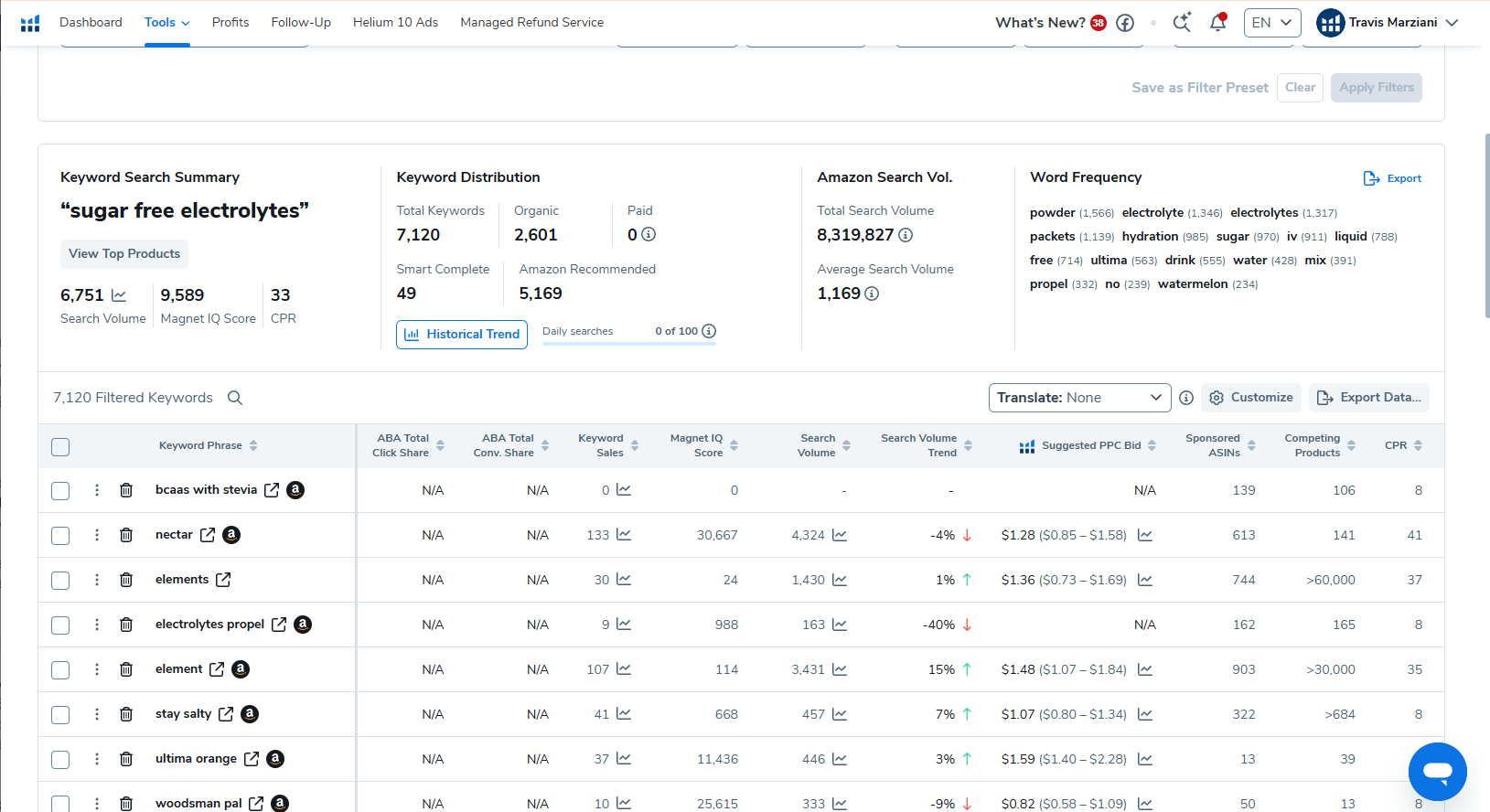
First, Travis went looking for a gap, just as he had with nut butter. Using Helium 10, he found over 600 monthly Amazon searches for carnivore electrolytes. However, almost every electrolyte product contained artificial sweeteners and other ingredients that people on a carnivore diet avoid.
So he launched Carnivore Electrolytes. Importantly, he didn’t build it for everyone who wants electrolytes. He built it for one person: someone on a carnivore diet who reads labels. As Travis teaches, you should always be able to describe your customer in a single sentence.
The Results Surpassed Expectations
Honestly, Travis expected modest results, maybe 3 to 5 sales a day. Instead, the brand made $6,000 in its first month and kept climbing. In January alone, it did over $100,000 in sales, and by the end of the year it had crossed $1 million. Along the way, his team also discovered a TikTok Shop strategy that multiplied sales even further.
Later, when the carnivore trend began to cool, Travis listed the business for sale and received an offer of $840,000. In total, a brand he built in 7 days of work produced over $1.3 million in profit. Above all, it proved that the Passion Product Formula still works, even in a brand-new niche started from scratch.
Working Less and Living More

Today, Travis has made over $1 million a year for the last few years while working only 5 to 10 hours a week. He’s also launching more products and documenting the process on his channel. Best of all, he genuinely loves his life.
Because his own brands cover his bills, he doesn’t run the Passion Product Accelerator to make ends meet. As a result, he can speak honestly with students about what it actually takes.
If he had to sum up 13 years in one piece of advice, it would be this: stop thinking in terms of money. The real goal is building something that runs without you. It took him four to five years to learn that, largely because he didn’t have a mentor until year five.
Your Turn: Skip the Four-Year Detour
Today, Travis’s dad no longer asks whether quitting was a mistake. In fact, he now says it was probably the best decision Travis ever made, and he’s proud that Travis didn’t listen to the doubters. Looking back, Travis would give his younger self one piece of advice: find someone who has already done it. Figuring everything out alone costs more than hiring the most expensive mentor in the world.
That belief is exactly why he built the Passion Product Accelerator and the Passion Product Formula behind it. With the right guidance from the start, he believes he would have avoided the ER visit and four years spent building the wrong thing. Now, his goal is to make the program so valuable that it becomes almost impossible to follow the steps and not succeed.
Inside the program, Travis and his team work with you for six months to pick a product, source it, build your listing, and launch it on Amazon FBA. You don’t need prior experience selling online. However, this isn’t a get-rich-quick scheme, and it isn’t the right fit if you only have $500 to your name. Instead, it’s built for people who want to do this the right way from the beginning.
If that sounds like you, book a free strategy call, and a coach will walk you through how the Passion Product Formula can work for you. Travis once doubted any of this was possible while reading under his desk. Now, he’s living proof that it is.
Frequently Asked Questions
What is the Passion Product Formula?
The Passion Product Formula is the framework Travis Marziani uses to help people launch Amazon FBA brands. It centers on finding one high-demand, high-margin product you genuinely care about, validating demand early, and building a business that runs without you.
How long did it take Travis to succeed with Amazon FBA?
Travis spent about four years on his dancewear brand before discovering Amazon FBA. Once he switched models, his first FBA product earned $120,000 in profit in its first year.
Do I need experience to start selling on Amazon?
No. The Passion Product Accelerator works with people who have never sold on Amazon before. Travis and his team guide you through picking a product, sourcing it, building your listing, and launching it.
How do you validate a product before manufacturing it?
Travis recommends selling before you make. For example, he raised over $15,000 in Kickstarter pre-sales for Performance Nut Butter. He also uses tools like Helium 10 to confirm real search demand.
Can one product really build a seven-figure business?
Yes. Carnivore Electrolytes, a single product launched in 7 days of work, crossed $1 million in sales and generated over $1.3 million in profit. Students like Brent have also built single-product brands that earn over $1 million a year.