

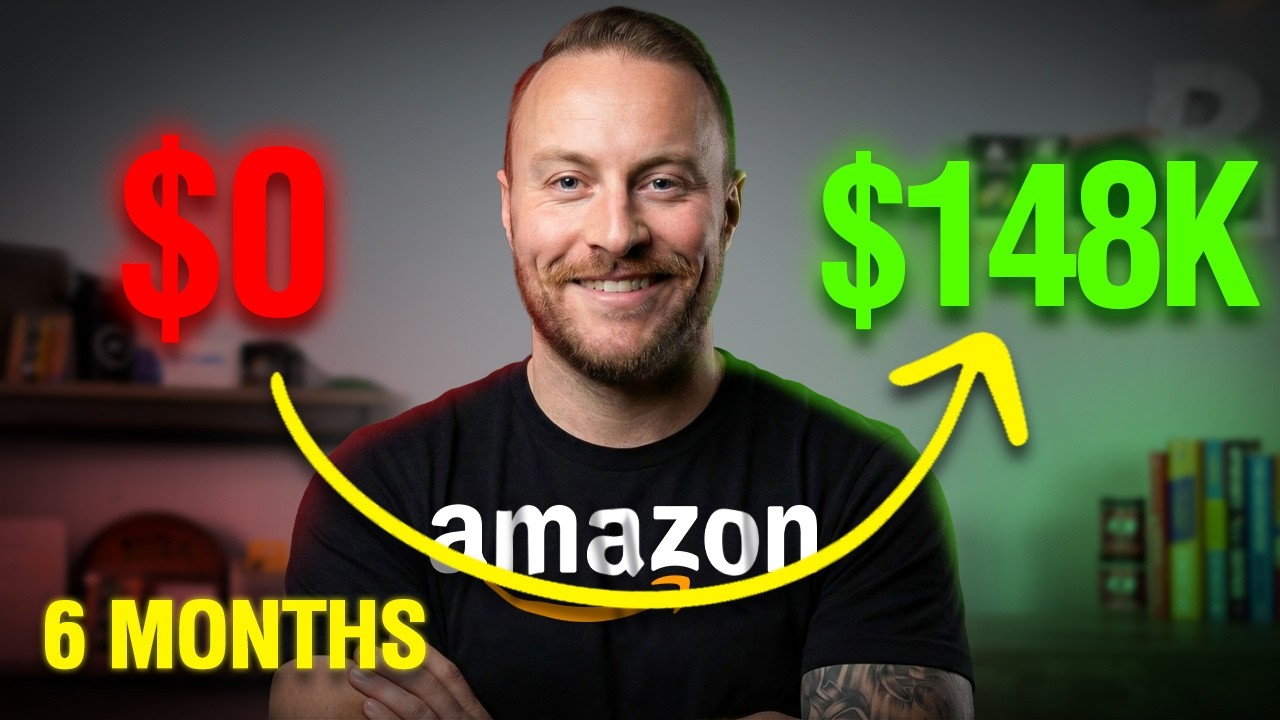
Amazon FBA results can vary dramatically from seller to seller, but Jules’ story reveals the raw truth about starting an Amazon business. He generated $140,000 in revenue selling cat beds, yet a critical inventory mistake cost him $150,000 in lost sales. Despite this setback, he still walked away with $60,000 in profit during his first six months. His journey from overworked real estate professional to successful Amazon seller demonstrates both the incredible opportunity and the costly pitfalls that await new entrepreneurs.
Jules wasn’t looking to become an Amazon mogul. He simply wanted more time with his family. While working long hours in real estate, he stumbled upon YouTube videos of young entrepreneurs building million-dollar businesses through Amazon FBA. One video by Travis Marziani caught his attention and changed everything. Jules decided to join the Passion Product Formula program, never imagining that his annoying cat would soon inspire a six-figure business idea.
This comprehensive breakdown covers Jules’ complete investment, month-by-month sales figures, and the three devastating mistakes that nearly derailed his success. More importantly, it reveals exactly what new Amazon sellers need to know before investing their first dollar. Whether you’re considering Amazon FBA or already selling, Jules’ transparent results provide invaluable insights into building a profitable online business.
- The Origin Story: How an Annoying Cat Became a Business
- Complete Cost Breakdown: The $76,000 Investment
- Month-by-Month Sales and Profit Analysis
- The $150,000 Mistake: Inventory Management
- Key Lessons and Mistakes to Avoid
- The Recovery and Future Growth
- Why Passion Product Formula Made the Difference
- Taking Action on Your Amazon FBA Journey
- Frequently Asked Questions
The Origin Story: How an Annoying Cat Became a Business

Jules faced a persistent problem while working from his home office. His cat constantly jumped onto his desk, demanding attention and disrupting his workflow. Instead of getting frustrated, he searched Amazon for a solution. Specifically, a bed that could attach to his desk so his cat could stay nearby without interfering with his work.
The search results shocked him. This product simply didn’t exist on Amazon’s marketplace. Furthermore, Jules knew that pet owners consistently spend significant money on their animals. He recognized an enormous opportunity to be the first seller offering this innovative cat desk bed. The potential for first-mover advantage was too compelling to ignore.
Consequently, Jules committed to bringing this product to market under the brand name Kobui. He joined Travis Marziani’s Passion Product Formula program to learn the proper methodology. Rather than wasting time and money through trial and error, Jules invested in mentorship upfront. His philosophy was simple: learn from experts who’ve already made the mistakes, then execute efficiently. This decision would prove crucial in navigating the complexities ahead.
Complete Cost Breakdown: The $76,000 Investment

Research Phase ($0)
Jules spent absolutely nothing on his initial research phase. He simply Googled his product idea and confirmed that no competitor offered it on Amazon. Additionally, he validated that pet owners represent a lucrative market willing to spend premium prices. This basic research revealed his winning opportunity without requiring expensive tools or consultants.
However, Jules mentions Helium 10 as a valuable resource for sellers who need help finding profitable product ideas. This tool unlocks powerful features for product research and market analysis. While not necessary for Jules’ obvious opportunity, Helium 10 can significantly accelerate the product discovery process for most entrepreneurs. The investment in research tools often pays for itself by preventing costly product failures.
Branding and Design ($20,000+)
Jules initially created his own brand name and hired someone on Fiverr to design a basic logo for around $50-100. His mentor Travis immediately provided critical feedback: the name wasn’t memorable enough. This early course correction saved Jules from investing further into a weak brand identity. Mentorship proved its value before he even finalized his product concept.
Subsequently, Jules made a significant decision. He hired a full-service marketing company for $20,000 to handle everything: logo design, product photography, packaging design, boxes, thank you cards, and complete brand development. They presented finished concepts while Jules simply reviewed and approved. This substantial investment reflected his time constraints and determination to launch quickly as the first seller in this category.
Most sellers can achieve excellent results more affordably, however. Fiverr offers logo design services, while Upwork provides access to skilled designers. 99Designs specializes in branding packages, and product photographers typically charge just a few hundred dollars. Jules also recommends FBA Creative, a company offering bundled services including product images, branding, packaging, and complete listing optimization at much more reasonable rates than he paid.
Legal Protection ($7,300)
Jules invested $1,500 hiring a Canadian lawyer to establish his business incorporation properly. Legal structure matters significantly when building a legitimate brand. Nevertheless, US-based sellers have more affordable options available. You can register an LLC through WY Registered Agent for approximately $200, providing solid legal protection against potential lawsuits.
Alternatively, entrepreneurs can file a DBA (Doing Business As) through Legal Zoom for just $99. This option works well for marketing purposes but offers no legal protection if someone sues your business. Jules also spent $800 trademarking his brand name to establish himself as the category authority. Protecting intellectual property becomes essential when launching innovative products that competitors will inevitably copy.
Finally, Jules invested $5,000 through Fiverr to patent his product design. This expense seemed justified given the uniqueness of his concept. However, he warns that obtaining a patent doesn’t automatically protect you, enforcement requires hiring lawyers and spending additional money if copycats emerge. Patents provide legal rights but defending those rights costs considerably more than filing the initial paperwork.
Product Development ($28,640)
Jules spent $5,500 working closely with manufacturers to ensure Kobui would be a premium product. Quality mattered enormously for his brand positioning strategy. He then invested $22,540 for his first production run of 3,000 units. This substantial order reflected his confidence in the product’s potential and his desire to avoid stock-outs during the critical launch phase.
Before committing to full production, Jules wisely ordered three different samples at $600 total. Each sample required adjustments and refinements to meet his standards. This iterative process ensured the final product matched his vision perfectly. Testing samples prevents costly mistakes when you’re manufacturing thousands of units overseas.
Jules found his manufacturer through Alibaba.com, where thousands of overseas manufacturers compete for business. He specifically targeted companies already producing pet products, then pitched his concept while requiring non-disclosure agreements. Alternatively, sellers can use Thomasnet.com for US-based manufacturers or simply search Google for potential partners. Building strong manufacturer relationships becomes foundational for long-term Amazon success.
Marketing Attempts ($1,000)
Jules invested nearly $1,000 collaborating with approximately 15 social media influencers. He sent product samples expecting their cat-loving audiences would drive immediate sales. The strategy seemed logical: influencers create content, followers see the innovative product, purchases flow into Amazon. Unfortunately, reality disappointed significantly.
The entire process consumed excessive time with minimal returns. Jules spent hours communicating back and forth with influencers, shipping products, coordinating content creation, and reviewing deliverables. Perhaps 5,000 people saw the videos across all influencers combined. Converting those views into trackable Amazon sales proved impossible, and engagement remained disappointingly low.
This expensive lesson taught Jules that influencer marketing requires careful planning and realistic expectations. The time investment alone made this strategy inefficient for product launches. Moreover, tracking ROI became nearly impossible without sophisticated attribution tools. Learning happens through experimentation, but some lessons cost more than others.
Shipping and Logistics ($12,000)

Jules needed to ship his Kobui inventory from China to two different countries: the United States and Canada. For the US shipment, he used Amazon Global Logistics (AGL), a service Amazon offers that manages the entire shipping process. AGL handled everything seamlessly with minimal communication required. Jules simply answered occasional email questions while Amazon managed customs, freight forwarding, and warehouse delivery.
Conversely, shipping to Canada proved significantly more complicated. Jules hired a freight forwarder independently, which required substantially more coordination and problem-solving. The Canadian shipment took nearly a month longer to reach Amazon’s fulfillment centers compared to the AGL shipment. This experience taught him valuable lessons about international logistics and the advantages of using Amazon’s integrated services.
The total shipping investment of $12,000 covered all freight costs, customs duties, and delivery to Amazon FBA warehouses. While substantial, these logistics costs are unavoidable when importing products from overseas manufacturers. Understanding shipping timelines becomes critical for inventory planning, a lesson Jules would learn painfully in the months ahead.
Website Development ($8,000)
Jules invested $8,000 building a professional website for Kobui. He wanted customers who Googled the product to discover a legitimate business, not some cheap dropshipping operation. Establishing brand credibility beyond Amazon’s marketplace mattered for premium positioning. The website communicated professionalism and permanence to potential customers researching before purchasing.
Strategically, Jules redirected all website traffic directly to his Amazon listing. While the website didn’t generate massive traffic initially, it served an important validation function. Customers trust brands with professional web presence more than marketplace-only sellers. This investment supported his premium pricing strategy and differentiation from inevitable competitors.
Final Setup Costs
Jules purchased a bundle of UPC codes for $100, though individual sellers only need one code available through GS1.org for $30. Universal Product Codes provide the barcodes that appear on all retail products. Every item sold on Amazon requires a unique UPC for identification and inventory tracking purposes.
Finally, Jules paid $39.99 to establish his Amazon seller account. This mandatory fee grants access to sell on Amazon’s platform. With this final expense, Jules had invested exactly $76,000 preparing to launch Kobui. The substantial investment reflected his commitment to quality, speed to market, and competitive positioning as the category creator.
Month-by-Month Sales and Profit Analysis

Month 1: The Launch ($5,000 revenue)
Jules generated over $5,000 in his very first month selling on Amazon. He sold 77 units of Kobui, with each unit costing approximately $900 to manufacture. However, revenue doesn’t equal profit, a critical distinction many new sellers overlook. Amazon charges substantial fees that dramatically reduce your take-home earnings.
The Amazon referral fee alone cost Jules over $800. This represents a mandatory 15% commission on every sale for the privilege of accessing Amazon’s marketplace. Additionally, the FBA pick and pack fee exceeded $600. Since Jules used Fulfillment by Amazon, the company warehouses his inventory, picks each order, packs it professionally, and ships it to customers. These services provide enormous value but significantly impact profit margins.
After deducting all manufacturing costs and Amazon fees, Jules earned over $3,000 in profit his first month. This result exceeded his initial expectations dramatically. He had calculated selling just a few Kobui beds daily, yet demand immediately surpassed projections. Following the Passion Product Formula methodology gave him confidence, but these results validated his product concept beyond doubt. His Amazon FBA results in month one proved the business model worked.
Month 2: Explosive Growth ($24,000 revenue)
September brought explosive growth that shocked even Jules. Sales skyrocketed from $6,000 to over $24,000 in a single month. Manufacturing costs reached approximately $4,000 for the units sold during this period. Amazon’s referral fee climbed to $3,500+, while FBA fees hit $2,800. Despite these increased expenses, Jules’ second month profit reached nearly $14,000.
These incredible results prompted Jules to invest aggressively in PPC campaigns. Over the following six months, he would spend $22,000 on pay-per-click advertising. PPC allows sellers to bid for top placement in Amazon search results, paying a small fee each time someone clicks their listing. Travis Marziani, who generated over $7 million in Amazon sales, teaches PPC mastery inside the Passion Product Formula program.
Jules recognized that capitalizing on early momentum required sustained marketing investment. PPC campaigns would drive traffic, generate reviews, and establish Kobui’s dominance in search rankings. This strategic decision would prove crucial for maintaining growth, though it also increased his financial risk. Nevertheless, the explosive second month gave him confidence to scale aggressively.
Months 3-4: Sustained Momentum ($65,000 combined revenue)
The momentum continued building throughout months three and four. October sales reached $30,000, followed by November’s $35,000 in revenue. After accounting for all expenses during these two months, Jules generated over $37,000 in combined profit. His PPC campaigns were delivering consistent results, driving traffic and conversions daily. The business was scaling exactly as planned.
During this period, Jules noticed patterns emerging in customer reviews. Several customers mentioned the same issue repeatedly, providing valuable product improvement insights. He immediately began working on Kobui Version 2.0 to address these concerns. Listening to customer feedback and iterating quickly separates successful brands from one-hit wonders. Jules understood that product excellence required continuous refinement based on real-world usage.
However, Jules also discovered a costly inventory mistake during these months. He sold approximately 12 units daily, but sales in the United States outpaced Canada by 10 times. Unfortunately, he had shipped nearly equal inventory to both countries. Thousands of dollars sat tied up in slow-moving Canadian inventory while US demand exceeded supply. This miscalculation taught him to test the US market first, then send much smaller sample quantities to Canada.
Month 5: Holiday Season Peak ($45,600 revenue)
December became Jules’ biggest sales month by far. Revenue exceeded $45,600 as holiday shopping drove unprecedented demand. After deducting all expenses, he generated over $26,000 in profit during this single month. The results felt incredible, Jules had successfully created a legitimate second income stream for his family. His vision of financial freedom and flexibility was materializing before his eyes.
The PPC campaigns delivered exceptional results during the holiday season. Kobui appeared prominently in search results for relevant keywords, capturing shoppers actively looking for cat products. Travis’ teachings about PPC optimization were paying massive dividends. Jules felt confident scaling even further as the new year approached. Everything seemed perfectly positioned for continued growth.
Nevertheless, warning signs were emerging that Jules failed to recognize. His inventory levels were dropping rapidly while new stock remained weeks away. He hadn’t adequately planned for the explosive December sales, nor had he anticipated how quickly his 3,000-unit initial order would deplete. This oversight would soon become his most expensive lesson in running an Amazon business.
The Disaster: Running Out of Stock

By the end of December, disaster struck. Jules ran completely out of stock in the United States, his primary market. The consequences extended far beyond simply missing sales for a few weeks. When you go out of stock on Amazon, your search ranking plummets dramatically. All the momentum, reviews, and algorithmic trust you’ve built evaporates. Starting over requires rebuilding everything from scratch.
Jules remained out of stock through January, February, and didn’t receive new inventory until mid-March. During December alone, he generated $45,000 in sales. Conservatively, he should have maintained similar performance for two additional months, representing $90,000 in lost revenue. Add another $20,000 for partial March sales, and Jules estimates losing at least $110,000 in direct revenue. However, the actual cost exceeded this figure substantially.
The missing sales meant fewer customer reviews accumulating on his listing. Reviews drive conversions and search visibility, creating a compounding effect over time. Additionally, his plummeting rank allowed copycat competitors to surge ahead with cheap knockoff versions. These competitors gained momentum while Jules sat helplessly watching. He attempted damage control by stopping PPC campaigns and raising prices to slow remaining sales, but the damage was done.
This catastrophic mistake costs most new Amazon sellers dearly. Production and shipping timelines stretch much longer than beginners anticipate. Jules needed two full months to manufacture new inventory and ship it to Amazon’s warehouses. During this period, his business essentially didn’t exist while competitors seized market share. Understanding lead times and maintaining buffer inventory prevents this nightmare scenario. Jules’ Amazon FBA results would have been exponentially better with proper inventory planning.
Six Month Totals:
Jules generated over $148,000 in total revenue across his first six months. However, revenue means nothing without examining profit margins. After deducting all manufacturing costs, Amazon fees, PPC advertising, and other expenses, Jules earned $61,000 in net profit. These results prove Amazon FBA’s potential while highlighting the importance of avoiding critical mistakes.
The $150,000 Mistake: Inventory Management

Jules estimates his inventory mistake cost at least $150,000 in lost opportunity. The direct sales loss of $110,000+ represents just the beginning. Amazon’s algorithm punishes stock-outs severely, pushing listings deep into search results where customers never find them. Rebuilding ranking requires weeks or months of aggressive PPC spending, essentially starting the business over. Competitors who maintained inventory captured Jules’ former customers permanently.
Moreover, Jules lost critical review velocity during his stock-out period. Reviews accumulate over time, providing social proof that drives conversions. Three months without sales meant three months without new reviews. His competitors gained reviews while Jules’ listing stagnated, widening the trust gap. Additionally, shoppers who couldn’t buy Kobui during the stock-out likely purchased competing products and never returned.
Amazon’s algorithm favors consistent inventory availability and sales velocity. Stock-outs signal unreliability to the platform, reducing future visibility even after inventory returns. Jules spent months rebuilding the momentum he’d established in his first six months. This mistake taught him brutal lessons about forecasting demand, understanding lead times, and maintaining safety stock. Preventing stock-outs requires daily inventory monitoring, conservative sales projections, and reorder triggers activated well before running out.
Key Lessons and Mistakes to Avoid

Mistake #1: Influencer Marketing Waste
The $1,000 investment in influencer collaborations delivered essentially zero measurable returns. Jules expected influencers with cat-loving audiences to drive immediate sales, but reality disappointed dramatically. The process consumed excessive time coordinating with 15 different influencers, shipping products, reviewing content, and waiting for videos to publish. Perhaps 5,000 total viewers saw the content across all collaborations combined.
Tracking conversions from influencer content to Amazon purchases proved virtually impossible without sophisticated attribution tools. Jules couldn’t determine whether any sales resulted from these videos at all. The engagement remained disappointingly low, suggesting the audiences weren’t as targeted as anticipated. Influencer marketing can work effectively, but it requires careful partner selection, clear performance expectations, and trackable links.
Jules recommends focusing on Amazon’s internal marketing tools instead. PPC campaigns provide clear attribution, precise targeting, and immediate results. Every dollar spent shows measurable returns through Amazon’s advertising dashboard. For product launches, investing in PPC delivers far superior results compared to external influencer collaborations, especially for sellers without marketing expertise.
Mistake #2: Canada Inventory Miscalculation
Jules overestimated Canadian market demand significantly. He shipped nearly equal inventory quantities to Canada and the United States, despite Canada’s much smaller population. Subsequently, he discovered US sales outpaced Canada by 10 times, approximately 12 units daily in America versus minimal Canadian sales. Thousands of dollars sat trapped in slow-moving Canadian inventory while US stock depleted rapidly.
This miscalculation tied up capital that could have prevented his catastrophic US stock-out. Jules should have tested the US market first with larger inventory, then sent small sample quantities to Canada. Market testing prevents expensive assumptions about demand across different regions. Even sharing a common language and culture, Canada and the US represent distinct markets with different purchasing behaviors.
Moving forward, Jules recommends aggressive US testing before expanding internationally. Validate demand in America first, then cautiously explore secondary markets with minimal inventory risk. This conservative approach prevents capital from becoming trapped in slow-moving stock while your primary market runs out. Learning this lesson cost Jules dearly, but future sellers can avoid repeating his mistake.
Mistake #3: Inadequate Inventory Planning
The stock-out represents Jules’ most devastating error by far. After investing $76,000 launching Kobui and building tremendous momentum, he lost everything by failing to order inventory soon enough. Understanding production timelines, shipping durations, and safety stock requirements separates successful Amazon sellers from failures. Jules learned this lesson through painful experience.
Manufacturing in China requires weeks or months depending on product complexity. Shipping adds additional weeks, and Amazon’s receiving process takes more time. Total lead time from placing orders to inventory being available for sale often exceeds 90 days. Meanwhile, sales continue daily, depleting your stock. Running inventory calculations weekly prevents surprises, while reorder triggers should activate when 60-90 days of stock remains.
Jules recommends maintaining buffer inventory beyond your calculated needs. Unexpected sales spikes, manufacturing delays, shipping problems, and customs issues all create risk. Conservative planning costs slightly more in holding fees but prevents catastrophic stock-outs. This mistake cost Jules $150,000, money that would have easily covered extra inventory. Proper planning transforms Amazon FBA results from mediocre to exceptional.
The Recovery and Future Growth

Jules finally received his Kobui Version 2.0 inventory in mid-March, ending his devastating stock-out period. The improved product addressed customer feedback from his initial reviews, demonstrating his commitment to continuous improvement. However, rebuilding his search rankings required aggressive PPC spending and strategic pricing. The recovery process took additional months beyond simply restocking inventory.
Gradually, Kobui reclaimed its prominent search positions as sales velocity increased and new reviews accumulated. Jules’ brand recognition helped attract customers who remembered the product from earlier. His patent and trademark protection also deterred some potential copycats, though competitors had already established themselves during his absence. Nevertheless, the business resumed growing as Jules applied his expensive lessons.
Currently, Jules is expanding the Kobui product line strategically. He’s developing multiple fabric colors to appeal to different customer preferences and interior design styles. Additionally, he’s designing removable slip covers that allow customers to change their Kobui’s appearance easily. These product extensions leverage his existing brand equity while capturing additional market segments. Customer feedback drives his innovation strategy, ensuring new products solve real problems rather than theoretical needs.
Why Passion Product Formula Made the Difference

Travis Marziani’s Passion Product Formula program provided Jules with the proven methodology that transformed his idea into a profitable business. Travis generated over $7 million in Amazon sales, developing systems and strategies through years of trial and error. Rather than learning through costly mistakes, Jules invested in mentorship upfront. This decision saved him from numerous additional errors beyond the ones he made.
The program includes over 100 step-by-step tutorial videos covering every aspect of Amazon FBA. Jules received one-on-one coaching to address his specific challenges and questions. Exclusive Q&A sessions provided access to Travis’ expertise whenever Jules faced decisions. The PPC mastery training proved particularly valuable, teaching Jules how to profitably scale his advertising spend. Without this guidance, he estimates his Amazon FBA results would have been dramatically worse.
Jules emphasizes that the program changed his life fundamentally. His $76,000 investment generated $61,000 profit in just six months despite major mistakes. With proper inventory planning, his profits would have exceeded $150,000 easily. The program teaches product research, brand development, launch strategies, PPC optimization, scaling tactics, and inventory management. Amazon’s 230 million US customers represent an enormous opportunity, 56% start their product searches on Amazon. Passion Product Formula provides the roadmap for capturing your share of this massive market.
Taking Action on Your Amazon FBA Journey

Jules’ journey from overworked real estate agent to successful Amazon seller demonstrates both the opportunity and challenges of building an online business. His first six months generated $148,000 in revenue and $61,000 in profit despite costly mistakes. Imagine the results with proper inventory planning, his profits would have potentially tripled. These realistic numbers prove Amazon FBA works when executed correctly with proper guidance.
Three critical lessons emerge from Jules’ experience. First, influencer marketing wastes money for product launches compared to Amazon PPC. Second, test your primary market aggressively before expanding to secondary regions. Third, inventory management makes or breaks your Amazon business, stock-outs destroy everything you’ve built. Learning from Jules’ $150,000 mistake costs you nothing, yet provides invaluable wisdom.
One cat and one mentor changed Jules’ life forever. Kobui now generates consistent income while giving him the family time he craved. The Passion Product Formula program provided the education, systems, and support that transformed his idea into reality. Success becomes achievable when you learn from experts who’ve already navigated the obstacles. Your Amazon FBA results depend entirely on applying proven strategies while avoiding common pitfalls. Take action today, your success story could be next.
Frequently Asked Questions
How much money do you really need to start selling on Amazon FBA?
Jules invested $76,000 total, but this figure included premium services and first-mover advantages. Most sellers can start with $5,000-$10,000 by using budget alternatives. Fiverr replaces expensive marketing agencies, smaller initial orders reduce inventory costs, and focusing solely on the US market eliminates international shipping expenses. The minimum realistic investment is approximately $3,000-$5,000 for product development, small inventory orders, and basic branding.
What are the ongoing fees for selling on Amazon?
Amazon charges a 15% referral fee on every sale as commission for accessing their marketplace. FBA fees vary by product size and weight, typically ranging from $3-$8 per unit for small items. Additionally, you’ll pay monthly storage fees for inventory in Amazon’s warehouses, approximately $0.75 per cubic foot. PPC advertising costs whatever you choose to invest, though successful sellers typically spend 10-20% of revenue on advertising. Budget for 30-35% of revenue going toward Amazon fees and advertising combined.
How long does it take to see profits on Amazon FBA?
Jules generated $3,000 profit in his first month, but this represents exceptional results. Most sellers should expect 3-6 months before seeing meaningful profits. Your first months involve building reviews, optimizing PPC campaigns, and refining your product based on feedback. Additionally, your initial investment in inventory, branding, and setup creates upfront costs that take time to recover. Plan for 6-12 months before your Amazon business becomes consistently profitable.
What happens if you run out of stock on Amazon?
Running out of stock devastates your business by destroying your search rankings. Amazon’s algorithm prioritizes listings with consistent inventory availability and sales velocity. When you stock out, your ranking plummets, making your product virtually invisible to shoppers. Rebuilding rankings requires months of aggressive PPC spending and typically costs more than maintaining proper inventory. Jules estimates his stock-out cost $150,000 in lost sales and opportunity. Never let this happen, monitor inventory daily and reorder well before running out.
Is the Passion Product Formula worth the investment?
Jules credits the program with changing his life and preventing numerous additional mistakes. The program includes 100+ tutorial videos, one-on-one coaching, and exclusive Q&A access with Travis Marziani. Travis generated over $7 million in Amazon sales, providing proven strategies rather than theoretical advice. Jules invested $76,000 launching his product but generated $61,000 profit in six months despite major mistakes. The program’s teachings would have prevented his $150,000 stock-out mistake, delivering exponentially greater returns. For serious entrepreneurs committed to Amazon FBA success, the investment pays for itself quickly.
How do you find profitable products to sell on Amazon?
Jules found his winning product by identifying a gap in Amazon’s marketplace, cat desk beds didn’t exist. Start by examining your own life for problems needing solutions, then search Amazon to verify demand. Tools like Helium 10 accelerate product research by analyzing search volume, competition, and profitability. Look for products with strong demand but limited competition, avoid highly seasonal items, and ensure sufficient profit margins after Amazon’s fees. The Passion Product Formula teaches systematic product research methodology that identifies winners consistently.
Should you get a patent for your Amazon product?
Jules spent $5,000 patenting his innovative cat desk bed design, believing the idea was too valuable to leave unprotected. However, patents only provide legal rights, enforcement requires hiring lawyers and spending significantly more money. Additionally, competitors often find ways to modify designs slightly, avoiding patent infringement. For truly unique innovations, patents offer some protection. For most products, trademarks and building strong brands provide better return on investment. Focus resources on marketing and inventory rather than expensive legal protection unless your product is genuinely revolutionary.
What’s the biggest mistake new Amazon sellers make?
Poor inventory management destroys more Amazon businesses than any other mistake. New sellers underestimate lead times for manufacturing and shipping, then run out of stock during growth phases. Stock-outs obliterate your search rankings, hand customers to competitors, and require months rebuilding momentum. Jules’ $150,000 mistake cost more than his entire initial investment. Calculate lead times conservatively, maintain buffer inventory, monitor stock levels daily, and reorder when 60-90 days of inventory remains. Preventing stock-outs matters more than nearly any other business decision.