
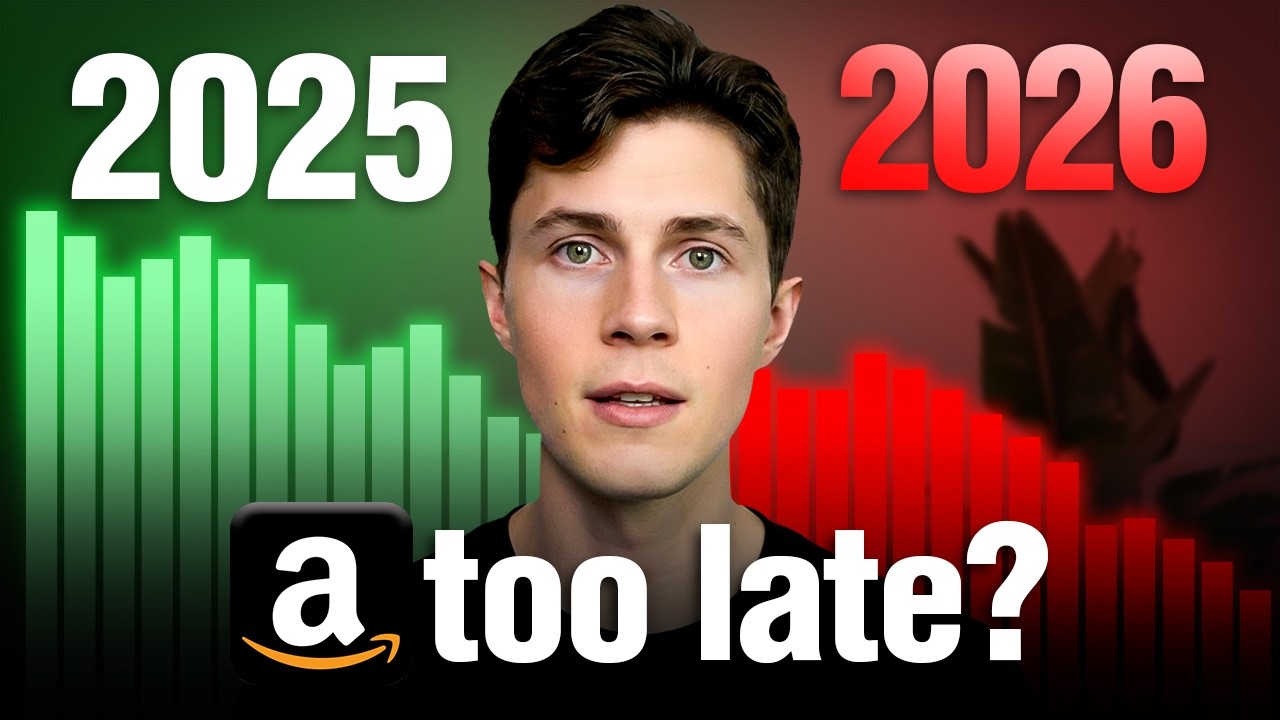
Amazon FBA blueprint strategies are evolving, and what worked yesterday won’t cut it tomorrow. If you’ve been wondering whether it’s too late to start your own Amazon business or if past failures mean you can never succeed, you’re about to discover why it’s never too late to leap into entrepreneurship. Drew’s journey from a $10,000 failure to building a thriving Amazon business proves that learning from setbacks and pivoting strategically can reveal your true calling. Furthermore, his shift to something practically free to produce Amazon KDP publishing, this demonstrates how passion and specificity trump generic products every single time.
Entrepreneurship isn’t a linear path, and Drew learned this the hard way. He started by following standard methods, lost significant time and money, yet found guidance from a mentor who redirected his approach. Once he shifted his strategy, everything transformed. This article shares his insights so you can unlock your unique skills and passion to build something beautiful without repeating his costly mistakes.
- The Five Concerns Holding You Back
- The $10,000 Sleep Mask Failure: What Went Wrong
- The Turning Point: Finding the Real Lesson
- The Pivot: Discovering Amazon KDP Success
- The Core Strategy: Niche Branding & Passion Products
- Breaking Down the Real Costs
- Overcoming the Fee Structure Fear
- Addressing the Recession Fear
- The KDP Advantage: Zero Risk Opportunity
- The Real Pathway to Winning in 2025-2026
- Your Blueprint for Success Starts Now
- Take the Next Step with Passion Product Formula
- Frequently Asked Questions
The Five Concerns Holding You Back

Fear of failure paralyzes most aspiring Amazon sellers before they even start. We worry our products will flop, leaving us with garages full of unsold inventory and bank accounts drained dry. Drew experienced this firsthand when he invested over $10,000 in a sleep mask product that barely sold, ultimately earning just $52 in five months.
However, modern psychology reveals that fear is simply a survival instinct, your brain protecting you from the unknown. It emerges because you haven’t yet proven to yourself that success is possible. The only way to change this internal narrative is through action, not avoidance.
Interestingly, Drew’s so-called failure became his stepping stone to everything he’s accomplishing now. It led him to discover products he genuinely enjoys selling, ones that align with his true purpose and actually generate income. This transformation only happened because he stuck with it and followed a proven strategy the second time around, specifically the methods taught in the Passion Product Formula program.
Market Oversaturation
Beyond the fear of failure, market oversaturation ranks as the second major concern stopping new sellers. You browse Amazon’s endless listings and wonder how you could possibly stand out in such a crowded marketplace. Consequently, many entrepreneurs convince themselves it’s simply too late to join the game.
This concern carries validity, especially for those selling generic products through traditional methods. When Drew launched his sleep mask business, he competed against hundreds of identical products where the only differentiation was price or maybe a pretty logo. Anyone could order the same products from Alibaba for pennies per unit, creating a brutal race to the bottom.
Nevertheless, standing out becomes entirely possible when you shift your approach from commodity selling to niche branding. Instead of competing on price with generic items, you create something specific for a specific audience. Travis proved this by launching carnivore-friendly electrolyte powder that generated over $100,000 in just six months, not because it was revolutionary, but because it spoke directly to an underserved niche.
Startup Costs
The third concern that holds entrepreneurs back is the belief that launching an Amazon business requires tens of thousands of dollars. Drew initially convinced himself he’d need $50,000 or more just to get a product off the ground. After diving in, he realized that number couldn’t have been further from reality.
Sure, retail arbitrage and wholesale offer cheap entry points, but that’s precisely why everyone pursues them. The competition becomes brutal, margins shrink to nothing, and you’re essentially fighting over scraps with countless other sellers. Conversely, building a niche brand or launching a passion product tells a completely different story.
Drew launched his first KDP product for just $300, covering everything from graphic design to ISBNs and AI tools for writing and formatting. The remarkable part? It started generating passive income almost immediately. AJ launched cocktail cards with literally $0 out of pocket by using crowdfunding to raise over $100,000 before ordering inventory, while Kam launched Clove Water for just over $2,000 and started selling organically from day one.
Amazon’s Fees

Amazon’s fee structure represents another barrier that discourages potential sellers from starting their businesses. Yes, Amazon takes their cut, a 15% referral fee plus FBA packing, shipping, and storage charges depending on how you manage inventory. For sellers pushing generic products, these fees hit exceptionally hard.
When you’re already trapped in a price war with 50 other sellers offering identical products, you’re forced to drop prices just to stay competitive. After subtracting Amazon’s fees from your already-slim margins, almost nothing remains as profit. This vicious cycle explains why Travis and his team adamantly recommend focusing on niche or passion products instead of commodities.
Creating something unique that solves a specific problem for a specific group of people completely changes the game. You’re no longer competing on price but on value and specificity. Kam’s Clove Water sells for $19, Travis’s Carnivore Electrolytes sell for $38, and people happily pay these premium prices because nothing else like them exists in the marketplace.
Fear of Recession
Finally, recession fears prevent many aspiring entrepreneurs from launching their Amazon businesses. Those alarming headlines appear almost weekly, warning of economic collapse and financial doom. Nobody wants to get stuck with boxes of unsold inventory when the economy supposedly falls off a cliff.
Surprisingly, online shopping has never stopped growing despite these recurring doomsday predictions. It didn’t even slow down during the 2020 lockdowns when people lost jobs left and right. Actually, e-commerce exploded during that period, growing by over 43% and crossing $240 billion in sales.
The key isn’t predicting the economy but choosing recession-resistant product categories. Pet supplies, baby items, and groceries perform well even during tough times because people prioritize what matters to them. Building a niche brand or passion product creates emotional connections that transcend price sensitivity, making your business more resilient regardless of economic conditions.
The $10,000 Sleep Mask Failure: What Went Wrong
The Private Label Trap
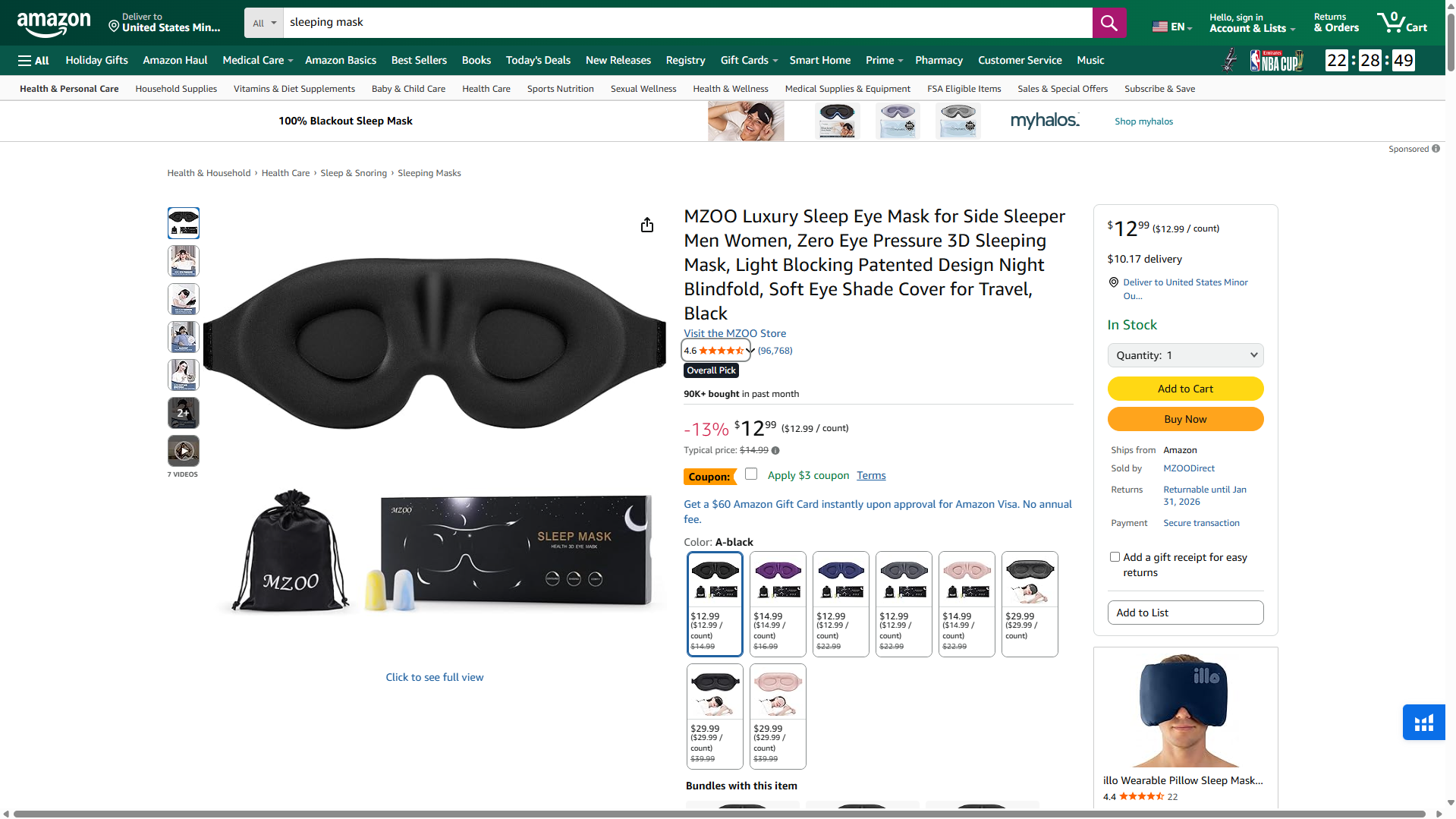
Like many new Amazon sellers, Drew initially tried the private label route when launching his sleep mask business. This approach seemed straightforward, find a product on Alibaba, slap your logo on it, and start selling. Unfortunately, this “proven method” led him straight into a trap that cost him thousands of dollars and months of wasted effort.
The fundamental problem with private label sleep masks was that literally anyone could source identical products. If you visit Alibaba right now, you’ll see sleep masks sold for pennies per unit with no meaningful differentiation. Drew ordered a thousand units, invested in professional logos and packaging, secured a trademark, and even set up a dedicated website, bringing his total investment to over $10,000.
Critical Mistakes Made
Drew’s biggest mistake was skipping the validation process that experienced sellers emphasize. He didn’t conduct proper market research to determine whether demand existed for yet another sleep mask. Instead, he jumped straight into production, assuming his product would naturally find its audience simply because it existed.
Additionally, he tried to compete in a market already flooded with hundreds of identical products. The only differences between competing listings were price points and maybe some superficial branding elements. Without a unique value proposition, Drew’s product simply got buried beneath the weight of established competitors with thousands of reviews and lower prices.
Most critically, he ignored his mentor’s advice about market saturation and niche selection. Looking back, Drew wishes he had listened because that guidance could have saved him from this costly mistake. However, this failure ultimately taught him lessons far more valuable than the money he lost.
The Brutal Reality Check
After five months of effort, aggressive marketing attempts, and constant price adjustments, Drew had made a whopping $52 in total sales. His garage overflowed with unsold inventory that served as a daily reminder of what happens when you follow the herd instead of carving your own path. The harsh reality hit hard, buyers consistently chose the cheapest options with the most reviews.
Nevertheless, this experience revealed something crucial about the Amazon marketplace. The issue wasn’t that Amazon FBA doesn’t work or that e-commerce is dead. Rather, most people approach it the exact same way, creating a crowded commodity market where only price matters and nobody wins except Amazon and the customers.
This realization became the catalyst for everything that followed. Drew understood that if he couldn’t compete on price and expect to build a sustainable business, he needed to completely rethink his approach. The real question became: How could he create something unique that people actually wanted rather than just another generic product fighting for attention?
The Turning Point: Finding the Real Lesson

After his sleep mask failure, Drew could have quit entirely and returned to traditional employment. Instead, he chose to extract valuable lessons from the experience. The most important insight? If you’re selling what everyone else is selling, you simply cannot compete on price and build a sustainable business simultaneously.
The real breakthrough came when Drew recognized that the problem wasn’t with Amazon FBA itself but with how most people execute the strategy. They copy what’s already saturated, hoping their slightly better logo or marginally lower price will somehow win the day. This approach guarantees failure in today’s competitive marketplace.
Consequently, Drew began researching alternative approaches that emphasized differentiation over commoditization. He discovered that customizing your offer to a specific audience creates opportunities that generic products can never capture. This principle became the foundation of his eventual success and guides his strategy to this day.
The Self-Reflection Moment
During this period of introspection, Drew asked himself a profound question: “What am I really passionate about?” This wasn’t just business strategizing, it connected deeply to his personal journey. After surviving a devastating car accident that left him in a coma for two weeks, Drew knew he had a purpose to fulfill.
His faith and personal experience naturally led him toward creating content for children. Specifically, he envisioned biblically-based coloring books and activity books that would serve his community while aligning with his values. This wasn’t just another product idea, it represented a genuine expression of who he was and what mattered to him.
This shift from “what can I sell?” to “what am I passionate about?” completely transformed Drew’s approach to business. Instead of chasing trends or copying competitors, he focused on creating something meaningful. This authenticity would soon prove to be his greatest competitive advantage.
The Pivot: Discovering Amazon KDP Success

Drew discovered Amazon’s Kindle Direct Publishing (KDP) platform, which offered a completely different approach to selling on Amazon. Unlike traditional FBA products requiring upfront inventory investment, KDP operates on a print-on-demand model where Amazon handles everything. This discovery opened doors Drew didn’t even know existed.
He began creating biblically-based coloring and activity books specifically for children, combining his creative skills with his faith-driven purpose. The beauty of KDP was its simplicity, he could design books using affordable software, upload them to Amazon, and let the platform handle printing, storage, and shipping automatically.
Furthermore, this approach eliminated virtually all the risks that had plagued his sleep mask venture. No more ordering thousands of units and praying they sell. No more storage fees eating into profits. Instead, each book sold on demand, meaning Drew only earned revenue when customers actually purchased his products.
Why KDP Changed Everything
KDP fundamentally transformed Drew’s business model by eliminating upfront inventory costs entirely. Unlike his $10,000 sleep mask investment that resulted in garage-filling inventory, KDP required zero physical inventory. Amazon’s sophisticated print-on-demand system produces each book only after a customer orders it, shipping it directly to them.
This model shift also removed the financial pressure that typically crushes new entrepreneurs. Drew didn’t need to calculate break-even points based on inventory depreciation or worry about storage fees accumulating monthly. The risk profile dropped dramatically compared to traditional FBA selling.
Additionally, KDP aligned perfectly with Drew’s creative strengths and personal values. He wasn’t just selling products anymore, he was creating meaningful content that served his community while building a sustainable business. This combination of purpose and profit created a fulfilling entrepreneurial journey rather than just another money-making scheme.
The Results
Within just a few months, Drew’s KDP business became profitable with minimal costs involved. His entire investment consisted primarily of design software subscriptions and his own creativity, no inventory, no storage, no shipping logistics. The contrast to his sleep mask failure couldn’t have been more stark.
More importantly, Drew was building something that truly mattered to him personally. Each book sale represented not just revenue but also impact, children engaging with content that reflected his values and community. This emotional connection made the work enjoyable rather than feeling like a grind.
The passive income component proved particularly rewarding. Once a book went live on Amazon, it continued selling in the background without requiring constant attention. Drew could create new books while previous ones generated ongoing revenue, creating a compounding effect that traditional product selling rarely achieves.
The Core Strategy: Niche Branding & Passion Products
The Amazon FBA blueprint that actually works in 2026 centers on one crucial principle: stop selling what everyone else is selling. When you compete solely on price with commodity products, you’re essentially racing to the bottom where nobody wins except the absolute cheapest seller. This unsustainable strategy destroys businesses daily.
Instead, successful sellers customize their offers to specific audiences with specific needs. They identify gaps in the marketplace where demand exists but quality solutions don’t. This approach transforms you from just another seller into a problem-solver who provides genuine value.
Travis demonstrated this perfectly when he created carnivore-friendly electrolyte powder. He didn’t invent electrolytes or revolutionize the supplement industry. Rather, he recognized a specific audience (carnivore dieters) who couldn’t find a product meeting their strict requirements, no sugar, no additives, no fluff and he filled that gap brilliantly.
Success Stories from Passion Product Formula
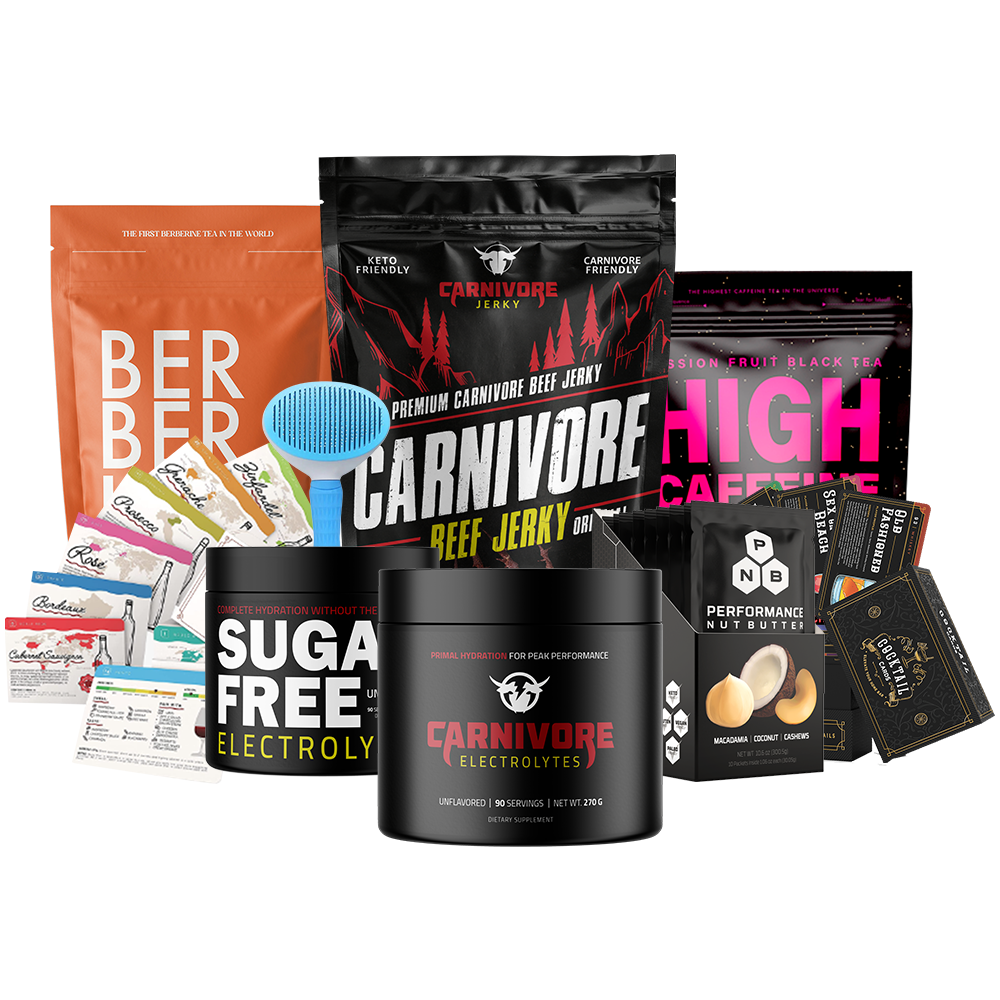
Travis’s Carnivore Electrolytes generated over $100,000 in just six months, not through massive advertising budgets or price wars, but through laser-focused niche targeting. The product sold for $38, a premium price point that’s impossible with generic products, because nothing else served this specific audience effectively. People happily paid more for something designed specifically for them.
Similarly, Kam launched Clove Water for just over $2,000, covering inventory, packaging, design, and shipping. The product started selling organically from day one because he followed the exact strategy taught in the Passion Product Formula. At $19 per unit, Kam wasn’t competing on price but on specificity and quality.
AJ’s story might be even more impressive, he launched cocktail cards with literally $0 out of pocket. Using crowdfunding strategies, he raised over $100,000 before ever ordering inventory, proving that creative approaches can completely eliminate financial barriers to entry. These success stories share one common thread: they all identified underserved niches and created solutions specifically for them.
The Winning Formula for 2025-2026
The winning Amazon FBA blueprint for 2026 involves selling something people are actively searching for but can’t easily find. This means launching real products that fill genuine gaps in the market rather than adding to the noise in oversaturated categories. Tools like Helium 10 make identifying these opportunities straightforward.
Specifically, you’re looking for categories where search demand exists but the available options are either low-quality, overpriced, or simply don’t meet specific audience needs. These golden gaps represent your biggest opportunities because you’re not fighting established competitors, you’re creating a new space entirely.
Additionally, the Passion Product Formula program walks you through every step from finding your niche to launching successfully. With over 100 tutorials, weekly Q&As, and two live coaching sessions monthly, you’re never left guessing about your next move. This structured approach prevents the costly mistakes Drew made with his sleep mask venture and accelerates your path to profitability.
Breaking Down the Real Costs

The Myth vs. Reality
One of the biggest myths preventing people from starting their Amazon businesses is the belief that you need $50,000 or more just to get off the ground. This misconception keeps countless potential entrepreneurs stuck in analysis paralysis, never taking that crucial first step. Drew himself believed this myth until he actually dove into the numbers.
The reality proves far more accessible than most people realize. While traditional retail arbitrage and wholesale models are cheap to start, they’re also why everyone pursues them, creating brutal competition and slim margins. You’re basically fighting over scraps in a crowded marketplace where success depends more on volume and speed than strategy.
Conversely, building a niche brand or launching a passion product requires surprisingly modest investment when done correctly. The key isn’t how much capital you have but how strategically you deploy it. Smart entrepreneurs leverage their resources efficiently rather than throwing money at problems hoping something sticks.
Real Investment Examples
Drew’s KDP launch cost just $300 total, covering graphic design, ISBNs, and AI tools for writing and formatting his books. This minimal investment started generating passive income almost immediately, proving that you don’t need deep pockets to build a profitable Amazon business. The return on investment was exponentially better than his $10,000 sleep mask failure.
Kam’s Clove Water launch required just over $2,000 for everything, inventory, packaging, design, and shipping. More importantly, the product started selling organically from day one because it filled a genuine market gap. This investment represented calculated risk rather than blind speculation.
Perhaps most remarkably, AJ launched his cocktail cards with $0 out of pocket by using crowdfunding strategies. He raised over $100,000 before ordering any inventory, completely eliminating personal financial risk while validating market demand simultaneously. These examples demonstrate that creative thinking often matters more than available capital.
Comparison to Traditional Methods
Traditional methods like retail arbitrage might seem attractive because startup costs are minimal. However, you’re immediately trapped in a price-driven commodity market where margins evaporate quickly. You’re constantly hunting for deals, managing logistics, and competing against thousands of other sellers pursuing identical strategies.
Wholesale follows a similar pattern, cheap to start but brutal to sustain. You’re selling products anyone else can sell, meaning your only competitive advantage is price. This race to the bottom destroys businesses faster than almost any other approach.
Niche branding and passion products flip this equation entirely. Yes, the upfront investment might be slightly higher, but you’re building a sustainable business with defendable margins and loyal customers. You’re creating something unique rather than reselling commodities, which makes all the difference in long-term profitability and business satisfaction.
Overcoming the Fee Structure Fear
Understanding Amazon’s Cuts
Amazon’s fee structure intimidates many new sellers who calculate that margins might be too thin to justify the effort. The 15% referral fee, FBA packing and shipping charges, and various storage fees can indeed eat significantly into profits. However, these fees affect different business models very differently.
For generic products caught in price wars, Amazon’s fees absolutely devastate profitability. When you’re already competing on price with 50 other sellers offering identical products, you’re forced to continually drop prices to maintain visibility. After subtracting Amazon’s fees from your razor-thin margins, you’re often left with pennies per unit or even losses.
Nevertheless, these same fees become manageable, even negligible when you’re selling unique products at premium price points. The percentage stays the same, but the dollar amounts work in your favor when you’re selling $38 electrolytes instead of $8 generic supplements. This fundamental shift in approach transforms Amazon’s fees from dealbreakers into acceptable costs of doing business.
How Niche Products Change the Game
Niche products completely transform the fee equation because you’re no longer competing on price. Travis’s Carnivore Electrolytes sell for $38, and people gladly pay that premium because nothing else meets their specific needs. Kam’s Clove Water sells for $19, which seems expensive for flavored water until you understand it serves a specific health-conscious audience.
These premium price points work because the products look premium, feel premium, and deliver premium value to their target audiences. They’re not fighting for attention in a sea of identical lookalikes where only the cheapest survive. Instead, they occupy unique positions where customers choose them based on fit rather than price.
Furthermore, when you create something that speaks directly to a specific group’s needs, those customers become loyal advocates. They’re not constantly comparison shopping because they’ve found exactly what they need. This loyalty creates sustainable business models rather than the constant customer churn that plagues commodity sellers.
The Organic Ranking Strategy
Most new sellers assume they’ll need massive advertising budgets to compete on Amazon. They envision burning through thousands of dollars on PPC (pay-per-click) campaigns just to get their products seen. However, Travis and his team spent literally $0 on ads when launching their products, focusing instead on organic ranking strategies.
This approach prioritizes finding the right keywords and optimizing listings to rank naturally in Amazon’s search results. By identifying underserved search terms where demand exists but competition is low, you can generate sales without paying for clicks. The Passion Product Formula program specifically teaches these organic ranking techniques.
PPC definitely has its place and can accelerate growth once your product is already selling. Nevertheless, it should serve as a bonus rather than your foundation. When you build your business relying entirely on paid advertising, you’re essentially renting customers rather than building sustainable organic traffic that compounds over time.
Addressing the Recession Fear

The Reality of Economic Headlines
Recession headlines appear so frequently that they’ve become background noise for most people. Almost every week, some economist or media outlet warns about impending economic collapse. These predictions create genuine fear among aspiring entrepreneurs who worry about launching businesses during uncertain times.
Nobody wants to invest money into inventory only to watch the economy crash and leave them holding worthless stock. This fear feels particularly acute when you’ve heard horror stories of entrepreneurs losing everything during downturns. Consequently, many people choose to wait for “the right time” that never actually arrives.
Interestingly, these doom-and-gloom headlines have persisted for years, actually decades regardless of actual economic conditions. Every single year, someone predicts we’re “about to fall off a cliff.” Meanwhile, online shopping has grown consistently, proving that consumer behavior doesn’t align with fearful headlines.
E-Commerce Growth During Uncertainty
Online shopping never stopped growing, even during the most challenging economic periods in recent memory. The 2020 lockdowns should have devastated e-commerce if recession fears were justified, millions lost their jobs, businesses closed, and uncertainty reigned. Instead, e-commerce absolutely exploded.
During that period, online sales grew by over 43%, crossing $240 billion while traditional retail suffered tremendously. People shifted their buying habits permanently toward online shopping, accelerating a trend that was already underway. This pattern demonstrates that economic uncertainty often drives people toward online platforms rather than away from them.
Additionally, people continue purchasing items that matter to them regardless of economic conditions. They might cut discretionary spending, but they don’t stop buying essentials or products that solve real problems for them. This reality creates opportunities for smart entrepreneurs who position their products correctly.
Recession-Resistant Product Categories
Certain product categories consistently perform well even during economic downturns. Pet supplies, baby items, and groceries represent categories where people maintain spending because these needs don’t disappear when times get tough. Parents don’t stop buying diapers because the economy struggles, and pet owners don’t abandon their animals.
This principle extends beyond traditional necessity items to niche products that solve specific problems. When you create something that genuinely improves someone’s life or addresses a passionate interest, they’ll continue purchasing it even when cutting other expenses. The emotional connection matters more than the price tag.
Building a niche brand or passion product creates exactly this type of resilient business. You’re not selling disposable commodities that people can easily skip, you’re providing solutions that your specific audience genuinely values. This positions your business to weather economic storms that destroy commodity sellers competing solely on price.
The KDP Advantage: Zero Risk Opportunity

Amazon KDP operates in a completely different league from traditional FBA selling, primarily because it eliminates virtually all financial risk. There’s zero inventory to purchase upfront, zero shipping to manage, and basically zero risk of getting stuck with unsold products. Everything operates digitally until a customer actually places an order.
This fundamental difference changes the entire entrepreneurial equation. Instead of calculating how many units you need to sell to break even on a $10,000 inventory investment, you simply create content and let Amazon handle everything else. Each sale generates profit without requiring you to maintain inventory or manage logistics.
Furthermore, KDP allows you to test ideas rapidly without financial consequences. If a book doesn’t sell well, you haven’t lost money, you’ve simply gathered data about what doesn’t work. This low-risk experimentation enables faster learning and iteration compared to traditional product selling where mistakes cost thousands of dollars.
What You Can Launch
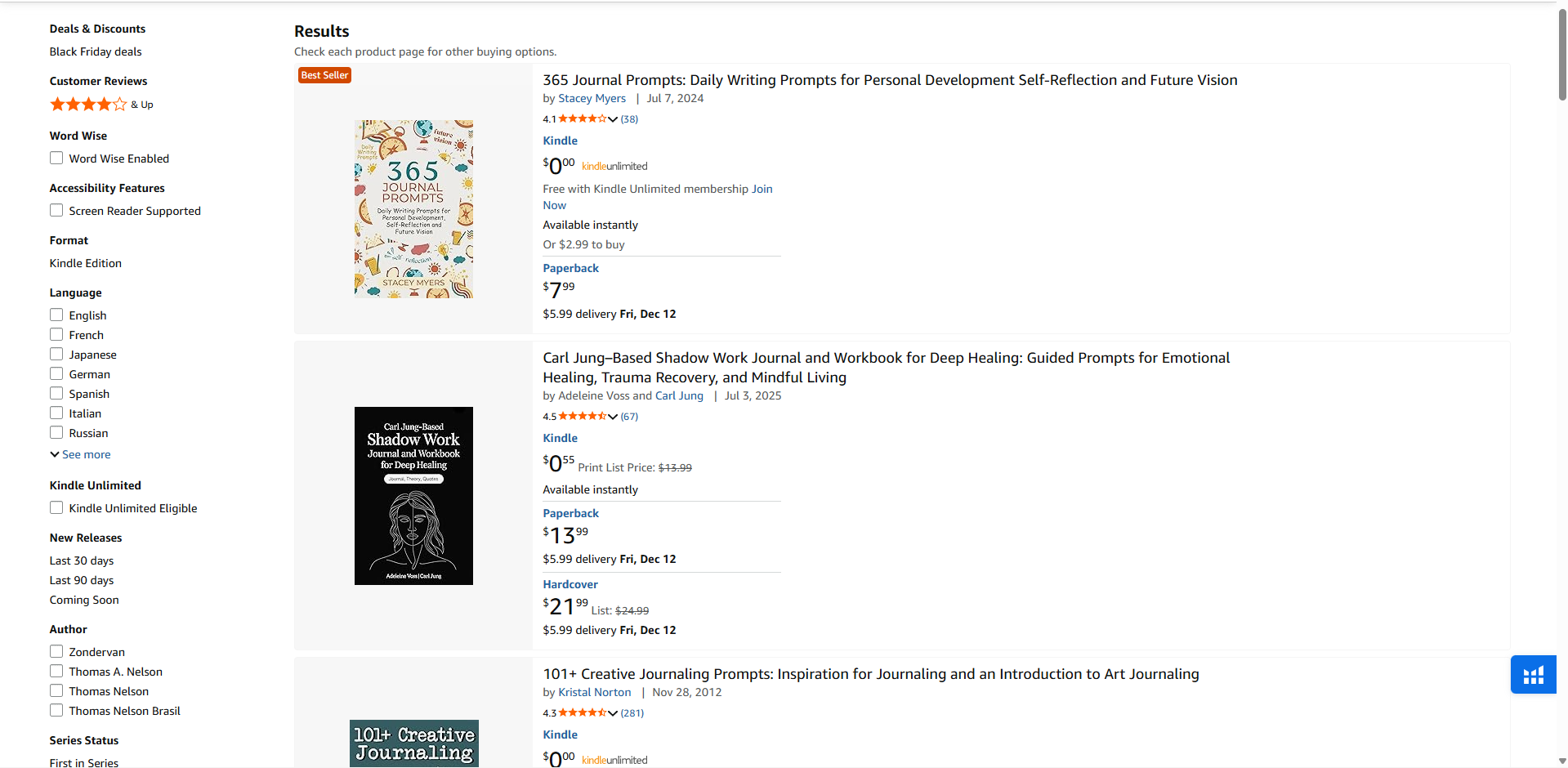
The versatility of KDP extends far beyond traditional books. You can create and sell journals, planners, coloring books, activity books, notebooks, and virtually any print product you can imagine. Low-content books like gratitude journals or habit trackers require minimal creation effort yet generate consistent passive income.
Drew focused on biblically-based coloring and activity books for children, combining his creative skills with his faith-driven purpose. This niche might seem narrow, but that specificity became his competitive advantage. Parents seeking faith-based content for their children found his books uniquely suited to their needs.
Additionally, you can scale horizontally by creating multiple products targeting the same audience or vertically by serving different niches entirely. Each new product adds to your passive income streams without requiring you to manage additional inventory or logistics. The business model scales beautifully as you grow.
The Scalability Factor
Once you launch a KDP product, it keeps selling in the background without requiring constant attention. You’re not managing inventory levels, processing shipments, or dealing with customer service issues related to fulfillment. Amazon handles everything while you focus on creating more content or growing your business.
This infinite scalability represents KDP’s biggest advantage over traditional product selling. You can have 10 products or 100 products, and the only difference is your earning potential, not your operational burden. Each additional product compounds your passive income without proportionally increasing your workload.
Moreover, successful KDP publishers create systems for content creation, allowing them to produce books efficiently and consistently. Some use freelancers for design work, others leverage AI tools for formatting, and many combine multiple strategies to maximize output while maintaining quality. This systematic approach turns KDP into a true passive income machine.
The Real Pathway to Winning in 2025-2026

The biggest mistake aspiring Amazon sellers make is copying what worked five years ago without questioning whether those strategies still apply today. The marketplace evolves constantly, and tactics that generated fortunes in 2018 often lead to losses in 2026. Following the herd guarantees you’ll arrive at an already-crowded destination.
Instead of blindly copying “proven methods” from outdated courses or YouTube videos, you need to understand the underlying principles that create success. Market conditions change, competition intensifies, and what worked yesterday might fail tomorrow. Adaptability matters more than rigid adherence to specific tactics.
Consequently, successful sellers focus on timeless strategies, finding underserved niches, creating genuine value, and building sustainable businesses, rather than chasing temporary loopholes or arbitrage opportunities. This mindset shift separates entrepreneurs who build lasting businesses from those who chase quick wins that evaporate.
Validate with Real Data
Validation represents the critical step Drew skipped with his sleep mask venture, and it cost him dearly. Before investing significant money or time, you must validate that actual demand exists for your product. Tools like Helium 10 allow you to research search volumes, competition levels, and market gaps with precision.
Look for keywords where people are actively searching but quality options are limited or nonexistent. These golden gaps represent your best opportunities because you’re not fighting established competitors, you’re creating solutions where none currently exist. The data removes guesswork and replaces it with informed decision-making.
Additionally, validation extends beyond just search volumes to understanding your target audience deeply. Who are they? What problems do they face? Why aren’t current solutions satisfying them? Answering these questions before creating products ensures you’re building something people actually want rather than hoping your product finds its audience.
Start Lean
Starting lean doesn’t mean starting cheap, it means starting smart with minimal risk. KDP and print-on-demand models represent perfect examples of lean startup methodology applied to e-commerce. You can test ideas, gather feedback, and iterate without betting your financial future on unproven concepts.
This approach allows you to fail fast and cheap rather than failing slow and expensive like Drew did with his sleep mask business. Each test costs minimal money but provides valuable data about what works and what doesn’t. You learn through action rather than analysis paralysis.
Furthermore, starting lean doesn’t limit your growth potential, it simply reduces your downside risk. Once you validate a winning product, you can scale aggressively with confidence. Many successful Amazon sellers started with modest investments, proved their concepts, then scaled to six or seven figures annually.
Don’t Be Afraid to Pivot
Drew’s story illustrates the power of pivoting when something isn’t working. His sleep mask failure could have ended his entrepreneurial journey entirely. Instead, he extracted lessons from the experience, asked himself what he was truly passionate about, and pivoted toward KDP publishing.
This willingness to pivot separates successful entrepreneurs from those who stubbornly cling to failing strategies. The core principle, you win or you learn, means failure only exists when you quit altogether. Every setback provides data and experience that improves your next attempt.
Sometimes your first product idea won’t work, and that’s completely normal. Sometimes you’ll need to try three or five different approaches before finding your winning formula. The entrepreneurs who succeed are simply those who persist through the learning process while adapting their strategies based on feedback and results.
Your Blueprint for Success Starts Now

The Amazon FBA blueprint for 2026 looks nothing like traditional private label strategies that dominated previous years. Success now requires niche branding, genuine value creation, and strategic market positioning rather than simply copying what competitors sell. Drew’s journey from $10,000 failure to profitable KDP business proves these principles work.
Whether you’re launching a traditional FBA product or starting with KDP, the fundamental message remains the same: it’s not too late. Actually, with the right strategy, lower costs than ever before, and endless underserved niches waiting to be discovered, there’s never been a better time to start your Amazon business.
The only guarantee in entrepreneurship is that doing nothing guarantees nothing changes. You can spend another year researching, planning, and preparing, or you can take action today using proven strategies that eliminate guesswork and accelerate your path to profitability. The choice is entirely yours.
Take the Next Step with Passion Product Formula
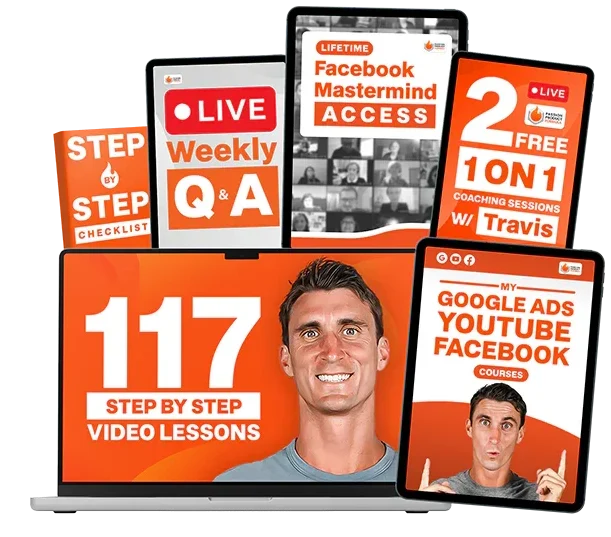
If you want expert guidance implementing this Amazon FBA blueprint, the Passion Product Formula program offers exactly what you need. With over 100 detailed tutorials covering every aspect of finding, launching, and scaling niche products, you’re never left wondering what to do next. Weekly Q&A sessions and two live coaching calls monthly provide personalized support as you build your business.
Travis and his team teach the exact strategies they use to generate six-figure revenues with products like Carnivore Electrolytes. You’ll learn how to find golden gaps in the marketplace, validate product ideas with data, and launch successfully without massive advertising budgets. Most importantly, you’ll avoid costly mistakes like Drew’s sleep mask failure.
The waitlist is open now for the next cohort. Additionally, if you’re not ready to commit to the full program yet, Travis has created a completely free 12-hour Amazon FBA course that covers foundational strategies. This free resource alone provides more value than most paid courses, giving you a solid introduction to what’s possible when you approach Amazon selling strategically rather than randomly.
Frequently Asked Questions
Is it really too late to start selling on Amazon in 2026?
Absolutely not. While traditional private label strategies have become oversaturated, niche branding and passion products create endless opportunities. The key is selling something specific to a specific audience rather than competing with generic products. Drew started his KDP business recently and became profitable within months, proving timing matters less than strategy.
How much money do I actually need to start an Amazon FBA business?
Far less than most people think. Drew launched his KDP business for just $300, while Kam launched Clove Water for just over $2,000. AJ even launched cocktail cards with $0 using crowdfunding. The startup cost depends on your chosen model, but strategic planning matters more than available capital.
What’s the difference between KDP and traditional Amazon FBA?
KDP (Kindle Direct Publishing) operates on print-on-demand, meaning Amazon prints and ships books only after customers order them. This eliminates inventory costs and storage fees entirely. Traditional FBA requires purchasing inventory upfront, storing it in Amazon’s warehouses, and hoping it sells before fees eat your profits.
How do I find profitable niches that aren’t oversaturated?
Use tools like Helium 10 to research search volumes and competition levels. Look for keywords where demand exists but quality options are limited. The Passion Product Formula program teaches specific strategies for identifying these golden gaps systematically rather than guessing.
Do I need to spend a lot on Amazon PPC advertising?
No. Travis and his team spent $0 on ads when launching their products, focusing instead on organic ranking through keyword optimization and listing quality. PPC can accelerate growth once your product is selling, but it should be a bonus rather than your foundation.
What if my first product fails like Drew’s sleep mask?
Failure only exists if you quit entirely. Drew’s $10,000 loss taught him invaluable lessons that led to his successful KDP business. The principle is “you win or you learn”, each attempt provides data that improves your next one. Starting lean with models like KDP minimizes financial risk while you learn.
Can I really make money during a recession?
Yes. E-commerce grew 43% during the 2020 economic crisis, crossing $240 billion in sales. People still purchase items that matter to them, especially in categories like pet supplies, baby items, and groceries. Niche products that solve specific problems remain recession-resistant because they create emotional value beyond price.
What makes passion products different from generic products?
Passion products serve specific audiences with specific needs, allowing premium pricing without competing on cost. Travis’s Carnivore Electrolytes sell for $38 because nothing else serves that niche properly. Generic products force you into price wars where everyone loses except the absolute cheapest seller.
How long does it take to see results with Amazon selling?
Results vary by model and execution. Drew’s KDP products started generating income within months. Kam’s Clove Water sold organically from day one. Following proven strategies dramatically accelerates results compared to trial-and-error approaches. The Passion Product Formula program specifically helps students reach profitability faster.
Is the Passion Product Formula program worth the investment?
If you’re serious about building a sustainable Amazon business, yes. The program includes over 100 tutorials, weekly Q&As, and live coaching sessions that prevent costly mistakes like Drew’s $10,000 sleep mask failure. Students like Travis, Kam, and AJ have generated six-figure revenues using these exact strategies. The free 12-hour course lets you sample the teaching style before committing.