
Have you ever scrolled through TikTok or YouTube and encountered those flashy Amazon FBA coaches? They promise to reveal all the secrets. Then they hook you with big promises and immediately hit you with an email capture form. Next comes a complicated sales funnel, and eventually a $5,000 course. It’s frustrating. It makes new sellers feel like the game is rigged before they even start.
Today, you’re getting something different. This is a complete, step-by-step Amazon FBA tutorial with no paywall. No email gate. No tricks. Just real, actionable value from someone who’s actually built a million-dollar Amazon business from scratch. Mindy Bai is a single mom. She turned a simple idea during her daughter’s potty training struggles into a product that generated over $2.5 million in sales within just two years.
Why is she sharing all this for free? Because she knows what it’s like to start with nothing. She built her business during nap times and late nights, juggling motherhood and entrepreneurship. She wants to pay it forward by giving you the real roadmap she wishes she had when she started. Furthermore, she’s partnered with Travis Marziani, founder of the Passion Product Formula. He has helped thousands of sellers build successful Amazon businesses using these exact methods.
If you follow the steps in this guide, you’ll learn how to find a unique product that people actively search for. You’ll validate that it will sell without expensive advertising. You’ll get it manufactured affordably and launch it properly on Amazon. Moreover, you’ll discover the costly mistakes most beginners make and how to avoid them entirely. Thousands of third-party sellers now make over six figures annually on Amazon. That kind of money can
- Why Amazon FBA Still Works in 2026
- Finding Your Winning Product Idea
- Setting Up Your Amazon Seller Account
- Finding the Perfect Manufacturer
- Creating Your Optimized Amazon Listing
- Pricing Strategy
- Shipping to Amazon FBA Warehouse
- Top Three Mistakes to Avoid
- Your Amazon FBA Journey Starts Now
- Frequently Asked Questions
Why Amazon FBA Still Works in 2026

Amazon FBA remains one of the best opportunities for building passive income, even as we move through 2026. Yes, competition exists. Over 3,000 new sellers join the platform every day. However, consumer demand continues growing at an even faster rate. This creates countless opportunities for sellers who approach the business strategically.
Consider this powerful statistic: over 50% of customers now start their product searches on Amazon. Not Google. Not social media. This means your products appear exactly where buying decisions happen. Additionally, when you use Fulfillment by Amazon (FBA), Amazon FBA handles all the challenging logistics. You don’t pack orders, don’t ship products and don’t deal with customer service headaches. Amazon FBA manages everything while you earn that coveted Prime badge that most customers specifically look for.
The strategies that worked five years ago no longer deliver results. But the methods you’re about to learn absolutely do. Therefore, if you’re ready to build something real, you’re entering at precisely the right time with the right information. The key difference between struggling sellers and successful ones isn’t luck. It’s following a proven system and learning from experienced mentors like Travis Marziani, who teach the Passion Product Formula approach.
Finding Your Winning Product Idea

You can discover your winning Amazon FBA product through two distinct approaches. Both work exceptionally well. First, you can create a passion product. This means something personally meaningful that solves a real problem you’ve experienced. This is exactly how Mindy built her multi-million dollar business. She struggled with potty training her daughter Ruby. She couldn’t find anything effective on the market. So she invented Potty Time Adventures. Her personal frustration became her biggest asset.
Alternatively, you can use data-driven discovery tools like Helium 10. This works even if you don’t have a specific product idea yet. This powerful software reveals exactly what people search for on Amazon but can’t find. It shows you opportunities where demand exists without competition. Travis Marziani teaches both approaches comprehensively in the Passion Product Formula. He helps students identify which path works best for their situation and guides them through the entire validation process.
The beauty of passion products lies in their uniqueness. You genuinely understand the customer because you’ve lived the problem. When you’ve experienced the frustration firsthand, you naturally create better solutions. On the other hand, data-driven discovery lets you find profitable opportunities quickly. You don’t need personal experience in that niche. Consequently, you can succeed with either method as long as you commit to thorough research and validation.
Using Amazon’s Best Sellers List
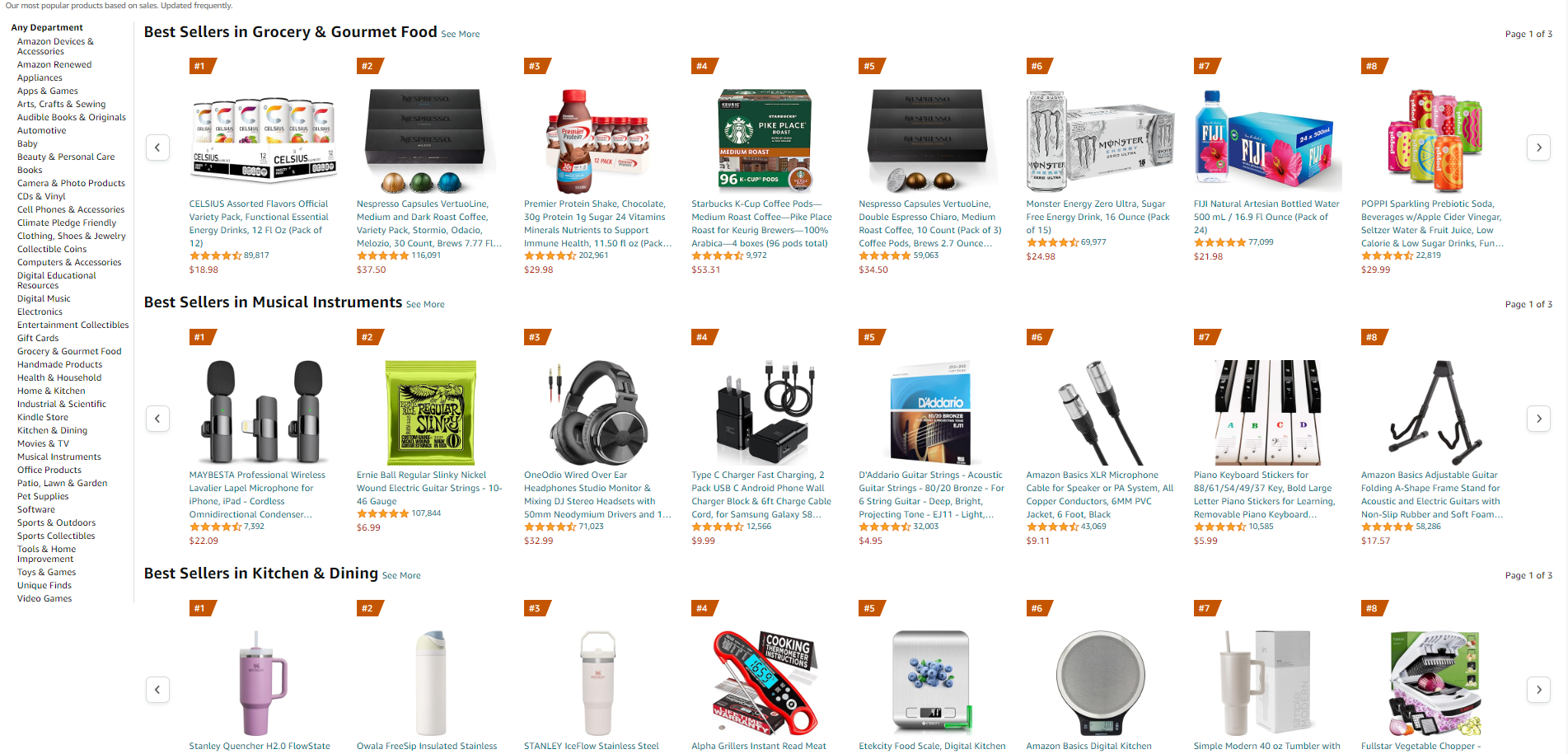
Amazon FBA essentially hands you a roadmap to profitable products through their Best Sellers list. Simply navigate to the Best Sellers section and browse through results across different categories. Click on any product that interests you. Then use Helium 10‘s X-ray tool to see exactly how much revenue that product generates monthly.
For example, some products in the beauty and personal care category generate over $1 million per month. This free tool reveals critical data that would otherwise require guesswork. However, you don’t want to sell the exact same products you find. That’s where most beginners make their first mistake. Instead, you’re gathering inspiration and learning what categories perform well.
The goal involves finding your own unique angle within profitable categories. Therefore, use this research to understand what customers buy. Learn what price points work. Identify which niches show strong demand. This information becomes invaluable when you start developing your own product concept. It’s especially powerful when combined with the additional research tools we’ll explore next.
The Search Bar Hack
Amazon’s search bar contains a hidden goldmine of product ideas. Most sellers completely overlook this feature. The platform’s autofill feature reveals the most popular searches letter by letter. It gives you direct insight into customer demand. This simple trick takes just minutes but reveals endless opportunities.
Try typing the letter “A” into Amazon’s search bar. You’ll immediately see that “AirPods” ranks as the most popular search starting with that letter. Type “B” and “Bluetooth speaker” appears. Continue with “baby wipes,” “bathing suits for women,” and countless other high-volume searches. Furthermore, you can dig even deeper by typing two-letter combinations. Try “BA,” “BB,” or “BC” to uncover more specific product ideas like “beach bag,” “beach towel,” and “beauty blender.”
When Mindy developed Little Advents, she wasn’t just a desperate mom. She was a smart entrepreneur who validated her idea using these exact techniques. The search bar showed her that thousands of parents searched for potty training solutions every month. Consequently, she knew demand existed before investing a single dollar in inventory.
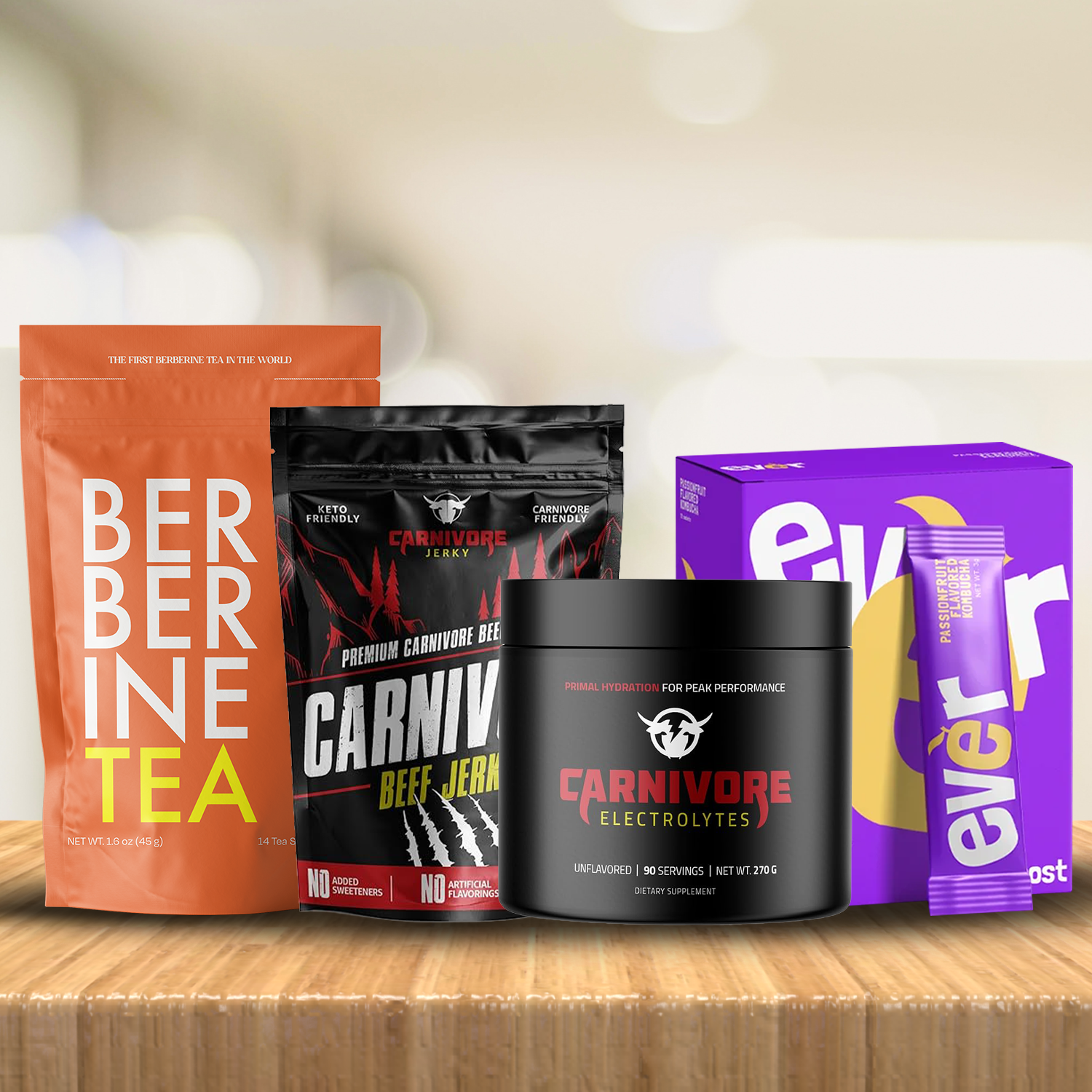
Travis uses this same method to discover winning products for his students. His carnivore electrolytes product emerged from noticing search patterns around specific dietary trends. Within six months, that single product generated over $100,000 in revenue. The search bar hack works because it reveals what real customers actively want right now. Not what you think they might want.
Helium 10’s Magnet Tool Deep Dive
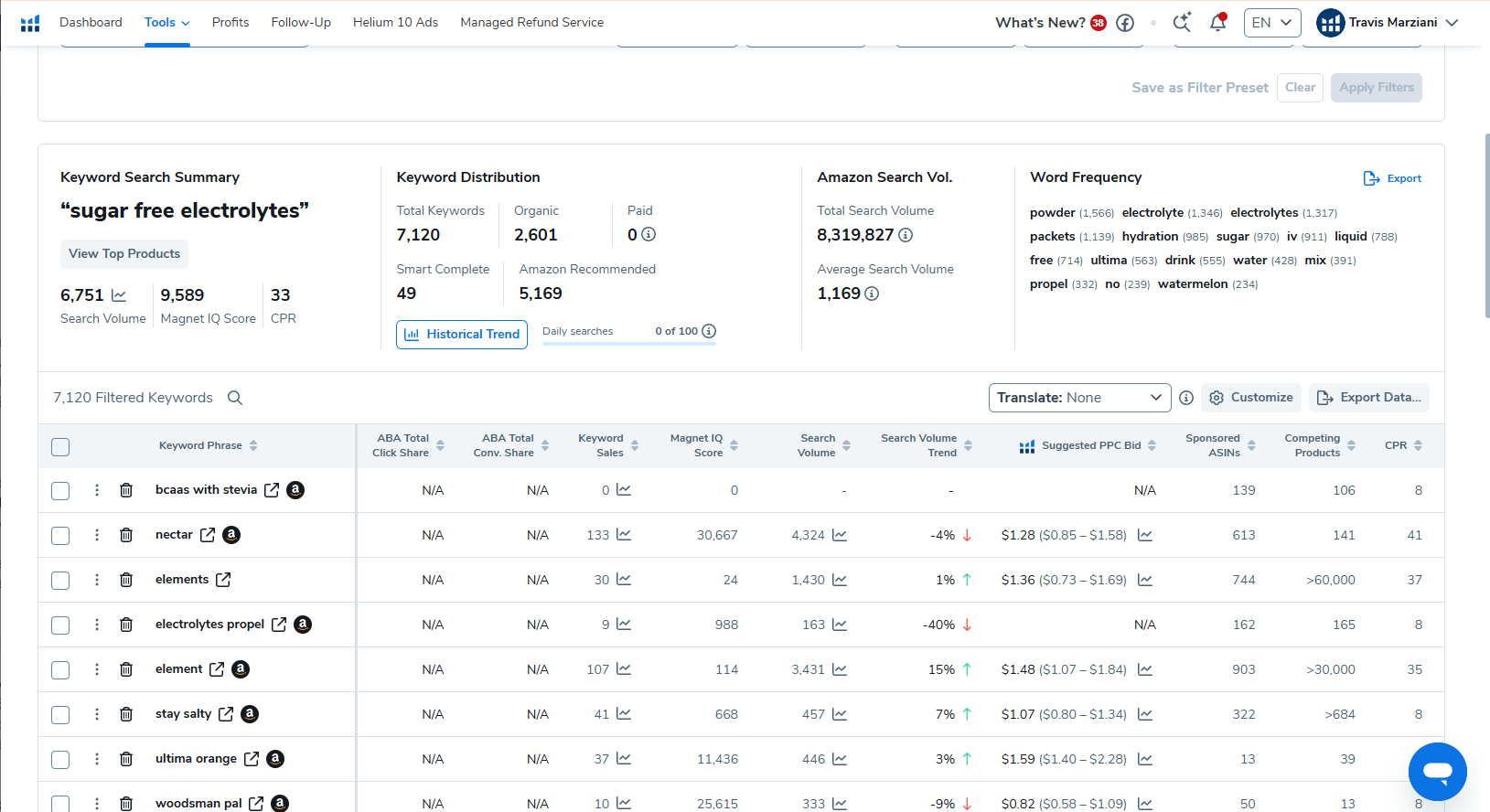
Once you’ve identified potential product ideas through Amazon’s search bar, you need to validate them with hard data. Helium 10‘s Magnet tool accomplishes exactly this. It shows you precise search volumes for any keyword. Simply enter your keyword. The tool reveals how many people search for that term each month along with related keywords you might have missed.
For example, when you type “CA” into Amazon’s search bar, you see “camping essentials” as a popular search. Enter “camping essentials” into the Magnet tool. You’ll discover that over half a million people search for this every month. When that many people actively look for something, opportunities always exist. Emerging trends wait for someone to capitalize on them.
Travis discovered people searching for electrolytes. But more specifically, they searched for “carnivore electrolytes.” However, Amazon had zero products specifically targeting that niche at the time. He simply created what people already wanted. The product succeeded immediately. Similarly, Mindy validated her potty training product by searching “potty training.” She found nearly 40,000 monthly searches. This provided proof that parents desperately needed solutions.
The secret to making money on Amazon FBA involves finding high search volume keywords with relatively low competition. Browse through several pages of Magnet results to find specific niches you can target. For instance, if 100,000 people searching for camping essentials also search for “pepper spray,” you could create a product specifically for them. Maybe a pepper spray designed for outdoor enthusiasts. Or one that’s safe for sensitive skin. The search volume indicates opportunity. Specificity reduces competition. Therefore, spend serious time with this tool. It’s arguably the most important step in your product research process.
Using Helium 10’s Blackbox Tool
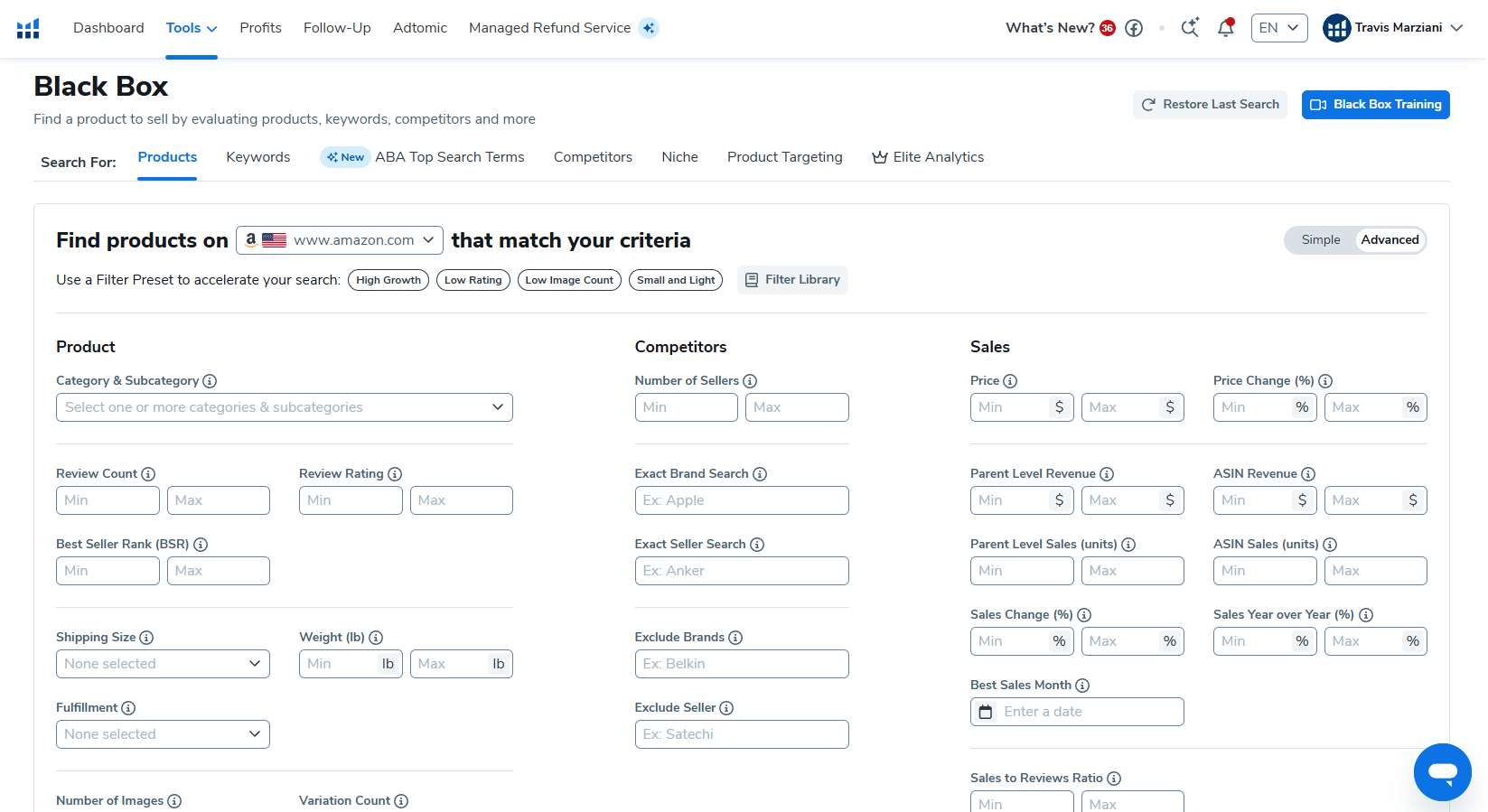
After you understand what people search for, Helium 10‘s Blackbox tool helps you narrow down the perfect product. You set specific criteria and the tool filters products based on parameters you choose. This ensures you only see opportunities that match your goals. Based on extensive experience helping thousands of sellers, certain metrics consistently predict success.
First, focus on products priced between $15 and $85. Products under $15 rarely generate profit after accounting for Amazon’s fees. The 15% referral fee, FBA pick and pack fees, manufacturing costs, and shipping expenses quickly eat away margins. Conversely, products over $85 stop being impulse purchases. Customers research extensively and think carefully before spending that much money. This means slower sales velocity and more competition from established brands. Mindy’s Potty Time Adventures sells for $25. This lands perfectly in the sweet spot where customers buy readily while sellers maintain healthy margins.
Second, target products weighing less than one pound whenever possible. Amazon’s FBA fees increase significantly for heavier items. This cuts directly into your profits. Additionally, lighter products cost less to ship from your manufacturer to Amazon’s warehouses. While Potty Time Adventures weighs 1.8 pounds (slightly over the ideal threshold), the product’s price point and customer value still allow for strong profitability.
Third, focus on specific categories where people consistently spend money. Pet supplies, baby products, health and household items, and groceries work best. People never stop buying for their pets and babies. This makes these categories particularly stable. When you search Blackbox with these parameters, you’ll find matching products already selling on Amazon FBA. Don’t copy them. Use them as inspiration. Read negative reviews to discover what customers dislike, then create something better. For example, one student found earplugs making $90,000 annually with weak branding and negative reviews. They created a superior version targeting musicians specifically. They validated it with the Magnet tool and built a strong brand around it. This systematic approach transforms random ideas into validated business opportunities. Travis teaches this comprehensively in the Passion Product Formula.
Setting Up Your Amazon Seller Account
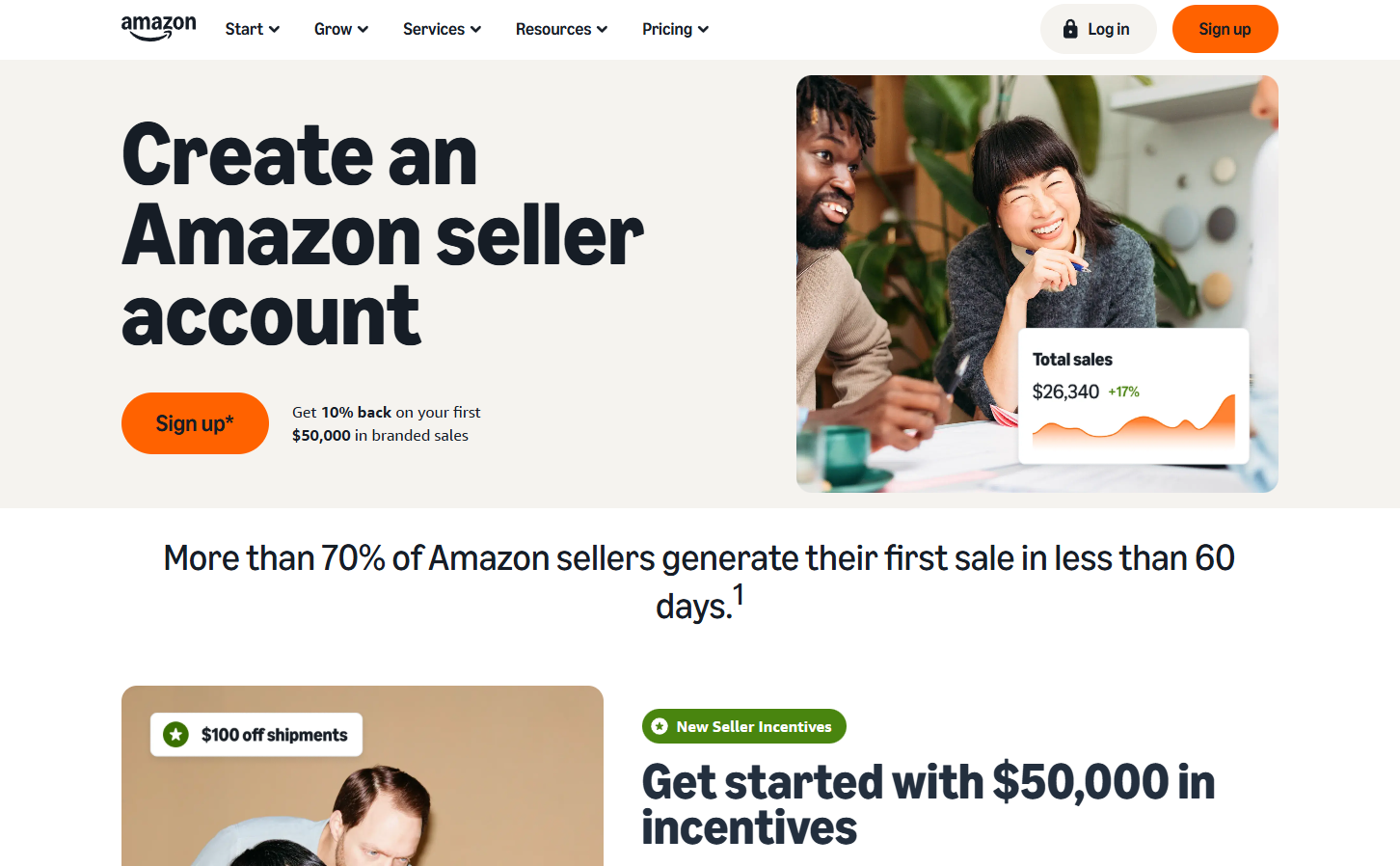
Your Amazon Seller account serves as your gateway to Seller Central. It provides access to over 300 million customers worldwide. This crucial step takes only a few minutes. However, one wrong move can result in Amazon flagging or even banning your account before you make a single sale. Therefore, follow each step carefully and enter all information accurately.
Navigate to sell.amazon.com to begin the process. Amazon offers two account types. The Professional selling plan costs $39.99 monthly. The Individual plan remains free but charges $0.99 for every item you sell. Most serious sellers choose the Professional plan because the math works in your favor once you sell more than 40 units monthly. Additionally, Professional accounts unlock advanced features like advertising, detailed analytics, and bulk listing capabilities that Individual accounts lack.
The setup process requires your ID information, passport details, business information, and location. If you don’t have a formal business yet, select “individual seller” and enter your social security number. However, different business structures offer various benefits and protections. Consider consulting an accountant before making this decision. Some sellers operate as sole proprietors initially. Others establish LLCs for liability protection and tax advantages.
Once you submit your application, Amazon reviews your account. If you followed everything step by step and provided accurate information, you should receive approval without issues. This typically takes 24 to 48 hours. Meanwhile, you can start preparing for the next critical phase: finding the perfect manufacturer for your product.
Finding the Perfect Manufacturer
Method One: Alibaba
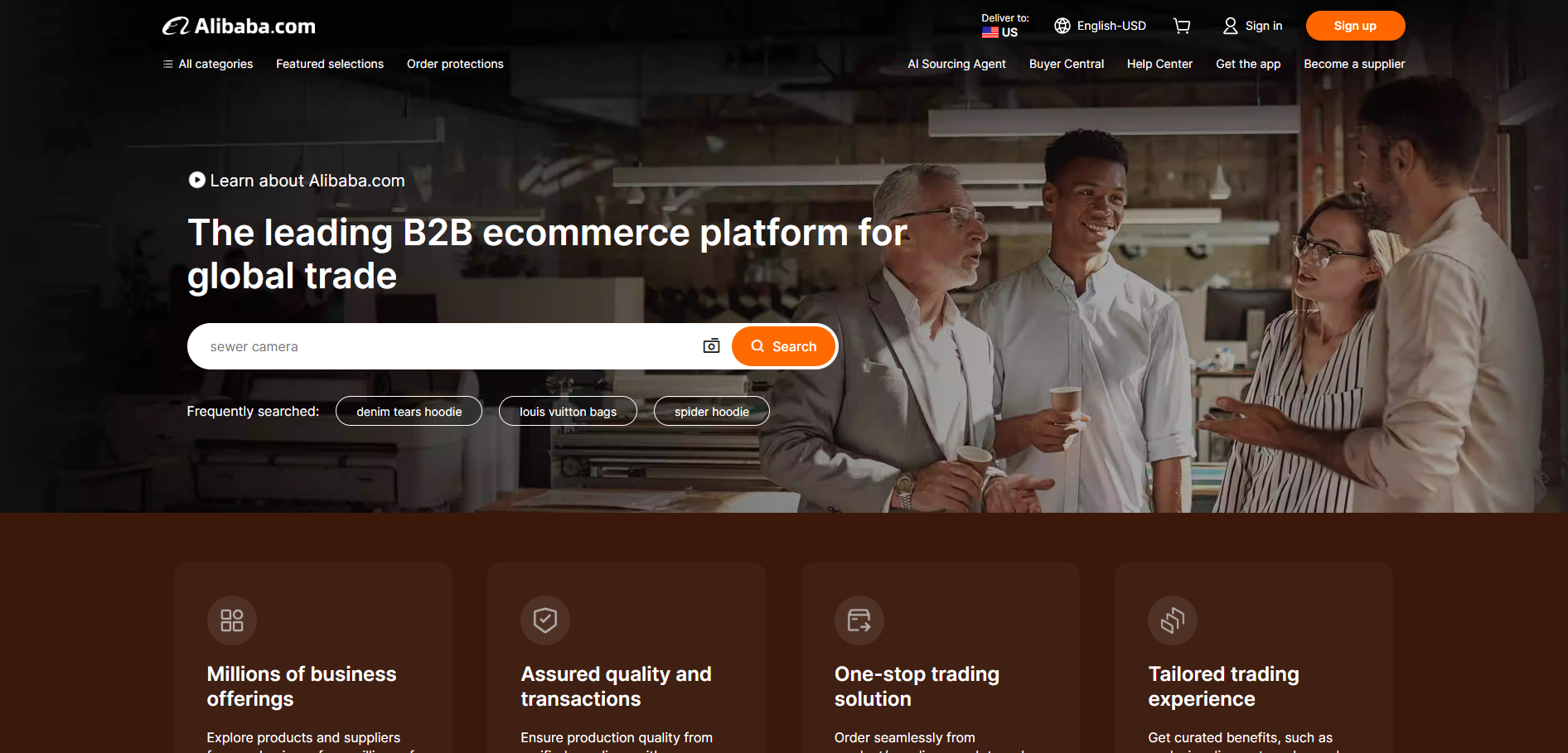
Alibaba stands as the largest marketplace for connecting sellers with manufacturers worldwide. It offers access to thousands of suppliers across China, Hong Kong, Korea, Japan, the Netherlands, Germany, throughout Europe, and even Australia and New Zealand. This platform has helped countless Amazon FBA sellers find reliable manufacturing partners. But success requires following a specific process to avoid costly mistakes.
Start by visiting alibaba.com and searching for your product type. For example, if you’re creating a potty training product like Mindy did, type “potty training” into the search bar. Thousands of results will appear. Don’t get overwhelmed. Immediately apply two critical filters: “Trade Assurance” and “Verified Suppliers.” Trade Assurance means Alibaba protects your money if anything goes wrong. Verified Supplier indicates someone from Alibaba actually visited the factory and confirmed quality standards.
Here’s the key that separates successful sellers from those who waste money on bad suppliers. Contact at least 20 to 30 manufacturers before making any decisions. Yes, this takes time. But it’s absolutely essential. From those initial contacts, narrow down to your top three. Base this on customer service quality, pricing, and their ability to meet your specific needs. Next, order samples from all three finalists. Choose your number one based strictly on sample quality, not just price.
Travis teaches this exact process in the Passion Product Formula. Students like AJ have used it to find excellent suppliers. AJ discovered a manufacturer on Alibaba for his cocktail flashcard recipes. That product generated over $500,000 in sales during the first year alone. When researching manufacturers, prioritize those with strong ratings and years of experience. Longevity indicates reliability. Click through to their profiles. Read reviews carefully. Don’t hesitate to ask detailed questions about their processes, quality control measures, and previous experience with Amazon FBA sellers.
Method Two: Thomas Net for US-Based Manufacturing
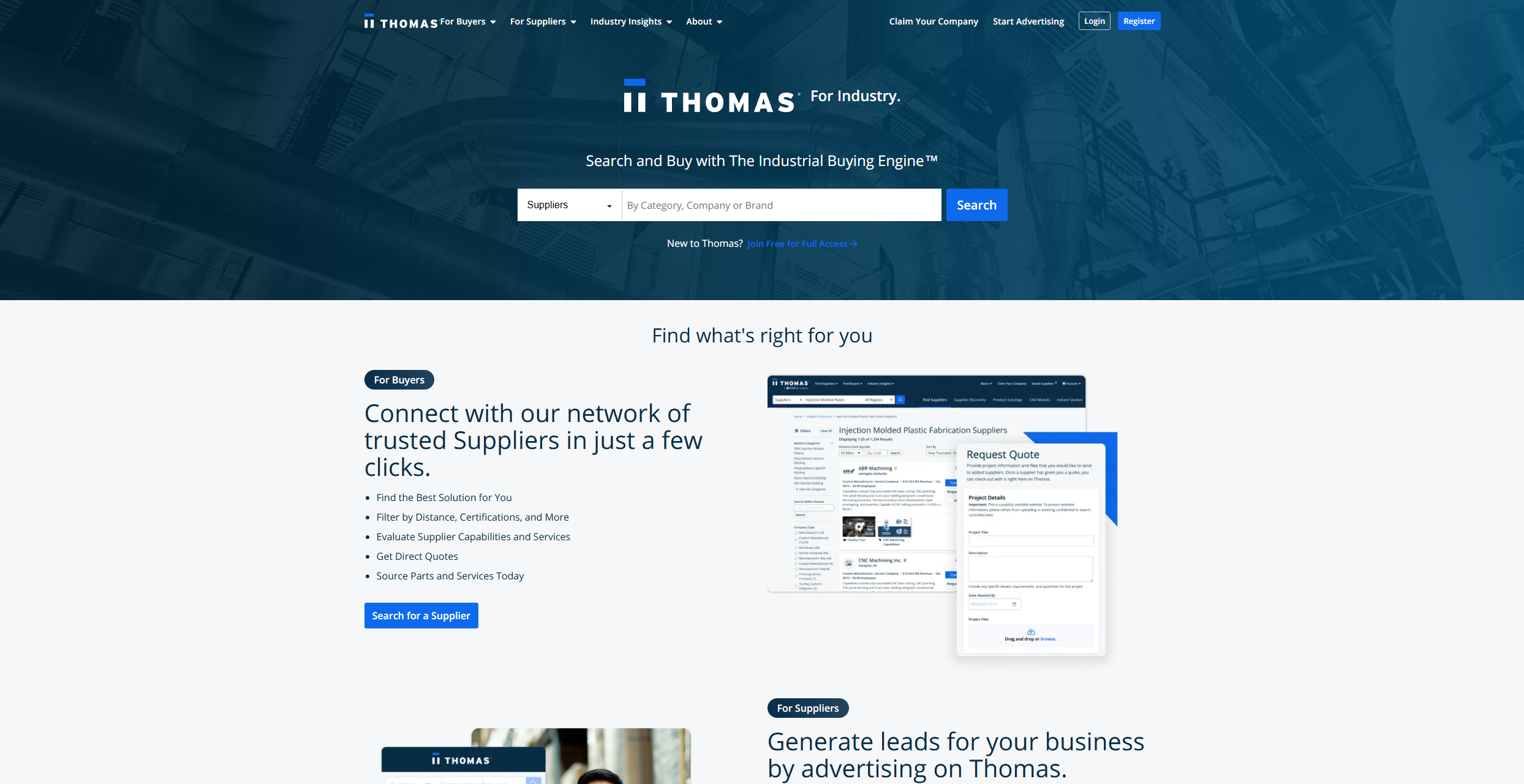
Alibaba works wonderfully for most products. However, you should never manufacture consumable products overseas. Anything customers eat, drink, or consume requires production within the United States. This ensures compliance with health and safety standards. Furthermore, if anything goes wrong with a consumable product, you want a US-based company you can communicate with easily and hold accountable.
Travis recently manufactured his carnivore electrolytes in the United States. He has experienced zero issues with quality or compliance. This simple product generated over $100,000 in just six months. This proves that US manufacturing doesn’t limit profitability. Thomas Net (thomasnet.com) serves as the American equivalent of Alibaba. It connects sellers with verified US-based manufacturers across all categories.
The interface looks remarkably similar to Alibaba’s platform. Simply type your product into the search bar. For instance, “fruit puree” if you’re creating a toddler food product. Review the list of suppliers that appears. Not every manufacturer will perfectly fit your needs. Scroll carefully and evaluate each option. Click on promising manufacturers to explore what they create and verify their certifications.
When you find a Thomas Net verified supplier, you have strong reasons to trust their capabilities and reliability. Click “Contact Supplier” and provide detailed information about your product vision. Include specific requirements, desired quantities, and timeline. Create a spreadsheet to track every manufacturer you contact. Note their minimum order quantity (MOQ), production timeline, pricing, and any special capabilities they offer. This organizational habit saves enormous time and prevents confusion when you’re comparing multiple quotes.
Method Three: Google Search

Most Amazon sellers never consider this incredibly simple method. Yet it often produces excellent results. Just use Google. Type your product name followed by “manufacturers” into Google’s search bar. You’ll receive pages of potential partners. For example, search “fruit puree manufacturers” and Google returns numerous companies you can contact directly.
Visit each manufacturer’s website. Learn about their company history, production capabilities, certifications, and specialties. Most sites feature clear contact buttons or forms. This makes it easy to reach out. This manufacturer, for instance, displays their contact form at the bottom of their homepage with straightforward fields for your inquiry. Browse their site thoroughly to assess whether they seem like a strong potential partner for your specific product.
Google searches often uncover smaller manufacturers who don’t advertise on Alibaba or Thomas Net. They offer exceptional quality and personalized service. Additionally, you might discover manufacturers already working with major brands. This validates their capabilities and reliability. Don’t overlook this simple strategy. Sometimes the best solutions hide in plain sight.
Method Four: The Verified Manufacturer Spreadsheet
The fourth method represents the most powerful way to find a manufacturer. It’s exactly what Mindy used to build her business. She had a friend who knew a trusted manufacturer and made that crucial introduction. Similarly, Travis Marziani has compiled a comprehensive spreadsheet. It contains direct contact information for every manufacturer and supplier that he and over 2,000 Passion Product Formula students have used and verified.
This exclusive resource offers the best possible path. You know these manufacturers are trusted, reliable, and produce premium products. Instead of cold-calling 30 unknown factories and hoping for the best, you’re connecting with suppliers who have already proven themselves with real Amazon FBA sellers. They understand Amazon’s requirements. They ship on time and maintain consistent quality standards.
Access to this verified manufacturer database comes with enrollment in the Passion Product Formula program. Many students consider it worth the investment by itself. When you’re betting your business on getting manufacturing right, working with pre-vetted partners dramatically reduces risk. It accelerates your timeline. Consequently, you spend less time researching and more time building your business.
Creating Your Optimized Amazon Listing

Listing your product correctly makes absolutely everything in your Amazon business work better. Once your product arrives and goes live on the marketplace, Amazon’s algorithm immediately starts evaluating its performance. If you generate a surge of sales early on, the algorithm recognizes that customers want your product. It begins showing your product to even more buyers without you spending a dime on advertising. This creates a powerful snowball effect that separates thriving products from struggling ones.
Therefore, you can’t just throw up a basic listing and hope for success. You need a strategic launch that signals to Amazon that your product deserves visibility. Furthermore, every element of your listing works together. Your title, images, and backend keywords all determine whether customers find you and whether they buy when they do.
Travis emphasizes this constantly in the Passion Product Formula. Your listing is your silent salesperson. It works 24/7, answering questions, building trust, and converting browsers into buyers. Consequently, investing time to optimize every element pays dividends for years to come. Let’s walk through exactly how to create a listing that converts.
The Power of Keywords

Amazon FBA operates fundamentally as a search engine, not just a shopping platform. When customers want to buy something, they type specific words into Amazon’s search bar. They hope to find the perfect product. Those words they type are called keywords. Understanding which keywords your customers use determines whether they ever see your listing.
Helium 10‘s Magnet tool reveals exactly what people search for when looking for products like yours. When Travis created his Burberry tea product, he used Magnet to identify every relevant keyword variation people searched. This included “Burberry tea,” “herbal tea for digestion,” and dozens of other specific phrases. He incorporated all those keywords strategically throughout his listing. This ensured Amazon’s algorithm showed his product for every relevant search.
Similarly, Mindy discovered that customers searching for potty training solutions used specific phrases. “Potty training toddlers,” “potty training chart,” “potty training rewards,” and “behavior chart for kids” all showed high search volumes. She made absolutely certain to include all these high-volume keywords naturally throughout her listing. Consequently, when parents searched any of those terms, her Potty Time Adventures appeared in their results.
The difference between keyword-optimized listings and generic ones is dramatic. Products with proper keyword integration get ten times more visibility. They appear for more searches. Therefore, before writing a single word of your listing, spend serious time researching keywords using Magnet. Build a comprehensive list of every relevant term customers search. Then strategically incorporate them throughout your title, bullet points, and description.
Crafting Your Title
Your product title serves multiple purposes simultaneously. It tells customers what you’re selling and tells Amazon’s algorithm when to show your product. It provides your first opportunity to stand out from competitors. Amazon FBA allows up to 200 characters in your title. You should use most of that space strategically to include important keywords while remaining clear and readable.
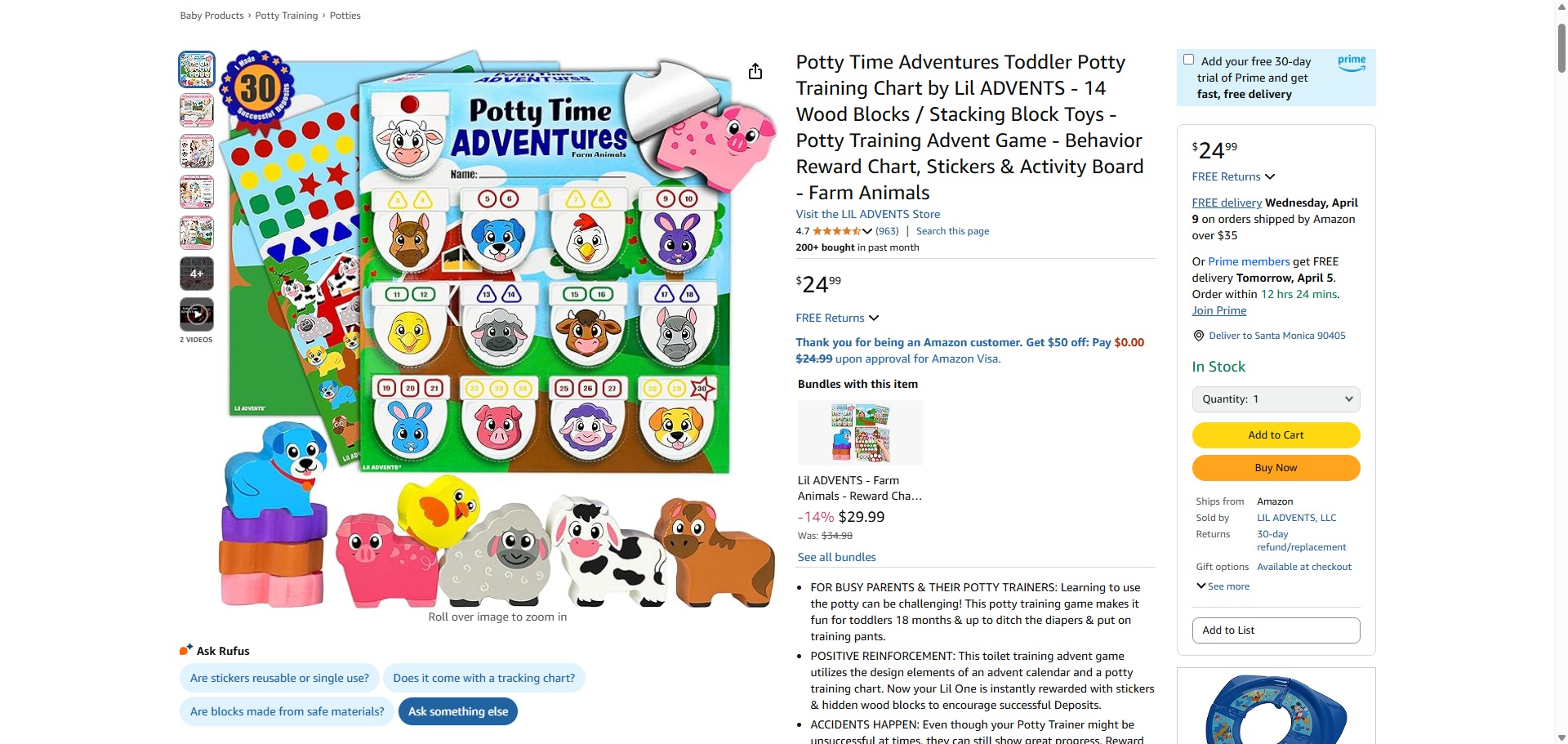
Mindy’s final title for Potty Time Adventures demonstrates this perfectly. “Potty Time Adventures Potty Training Chart for Toddlers by Little Advents – 14 Wooden Stacking Block Toys, Potty Training Advent Game, Behavior Reward Chart, Car Stickers, Activity Board, Busy Vehicles.” At first glance, it might seem overstuffed. However, every single phrase serves a purpose. Each one represents a keyword phrase that parents actually search for.
Notice how the title includes the brand name (Little Advents), the main keyword (potty training chart for toddlers), and the key features (14 wooden stacking block toys). It also includes multiple related keywords (behavior reward chart, activity board, busy vehicles). This keyword-packed approach gives Amazon’s algorithm maximum information about when to show this product. It still communicates clearly to human readers.
Your title needs to strike a balance between search optimization and readability. Include your main keyword early in the title. Add your brand name. Highlight key features and benefits. Incorporate additional high-value keywords naturally. Don’t sacrifice clarity for keyword stuffing. Customers still need to understand what you’re selling at a glance. Research competitor titles in your category to see what works. Then create something similar but better by including more relevant keywords your research revealed.
Category Selection, Variations, Brand Name, and UPC
After setting your title, Amazon asks you to select a product category. The platform provides suggestions based on your title and product type. Don’t accept their suggestion blindly. Research your main competitors and see which categories they use. Some categories perform significantly better than others for specific products.
Travis selected “Herbal” for his Burberry tea. This placed it in the Groceries and Gourmet Food category. This is a highly profitable subcategory where customers regularly spend money. Similarly, Mindy’s product landed in the Baby category under the Potties subcategory. She now ranks in the top 45 there. Categories matter because they determine which browsing customers see your product. They also determine which competitors you’re compared against.
Next, indicate whether your product has variations like different colors, sizes, or styles. Some products benefit from variations by giving customers choices. This allows you to capture more search results. However, for your first product, keeping things simple with a single variation often makes more sense. Mindy’s Little Advents launched with just one version. This allowed her to focus all her effort on perfecting that single product.
You’ll also enter your brand name and obtain a UPC code (Universal Product Code). This is essentially the barcode scanned at stores. Visit gs1.org to purchase legitimate UPC codes for your products. Never buy cheap UPC codes from third-party resellers. Amazon increasingly cracks down on invalid codes and can suspend listings that use them. Investing in proper UPC codes from the official source protects your business long-term.
Bullet Points: Your Silent Sales Team
Amazon FBA allows up to five bullet points on your listing. These critical elements often determine whether customers click “Add to Cart” or move on to a competitor. Think of bullet points as your opportunity to answer the top five questions every customer has before buying. Therefore, each bullet point should highlight a specific benefit while naturally incorporating relevant keywords.
Mindy’s bullet points for Potty Time Adventures strategically included keywords. “Busy parents,” “accidents,” and “positive reinforcement” all appeared because her keyword research showed parents searched for solutions to these specific problems. However, she didn’t just stuff keywords randomly. She crafted each bullet point to emphasize real benefits that resonated with her target customer.
Effective bullet points follow a proven formula. Start with a benefit or solution. Explain how your product delivers that benefit. Include relevant keywords naturally within the explanation. For example, instead of writing “Made with wood,” write “Made with premium solid wood blocks that withstand enthusiastic toddler play for years of potty training success.” The second version provides more information. It creates more value in the customer’s mind. It incorporates keywords like “toddler play” and “potty training success.”
Your bullet points should address common customer concerns. Highlight unique features competitors don’t offer. Build confidence in your product’s quality and value. Avoid generic claims that could apply to any product. Instead, focus on specific, tangible benefits that matter to your target customer. Additionally, frontload important information at the beginning of each bullet point. Many mobile customers only read the first few words before deciding.
Product Photography That Converts
Your product images represent the first thing potential customers see when browsing Amazon. This makes them arguably your most important listing element. Great photos grab attention, communicate value, and answer questions without requiring customers to read anything. Conversely, poor photos kill sales faster than anything else. This happens regardless of how good your product actually is.
When Mindy first listed Potty Time Adventures, she photographed everything herself. She used just her smartphone and natural lighting. This cost her nothing but time and effort. Yet her images stood out because she focused on showing the product clearly and demonstrating its benefits visually. Your main image should feature your product on a pure white background with no additional text or graphics. Amazon requires this for the primary photo.
However, your additional images tell your product’s story. Upload the maximum number of images Amazon allows (currently seven plus the main image). Show your product from multiple angles. Demonstrate how it’s used. Highlight special features. Display size comparisons. Include lifestyle images showing real people using your product in realistic settings. These help customers envision themselves benefiting from your product.
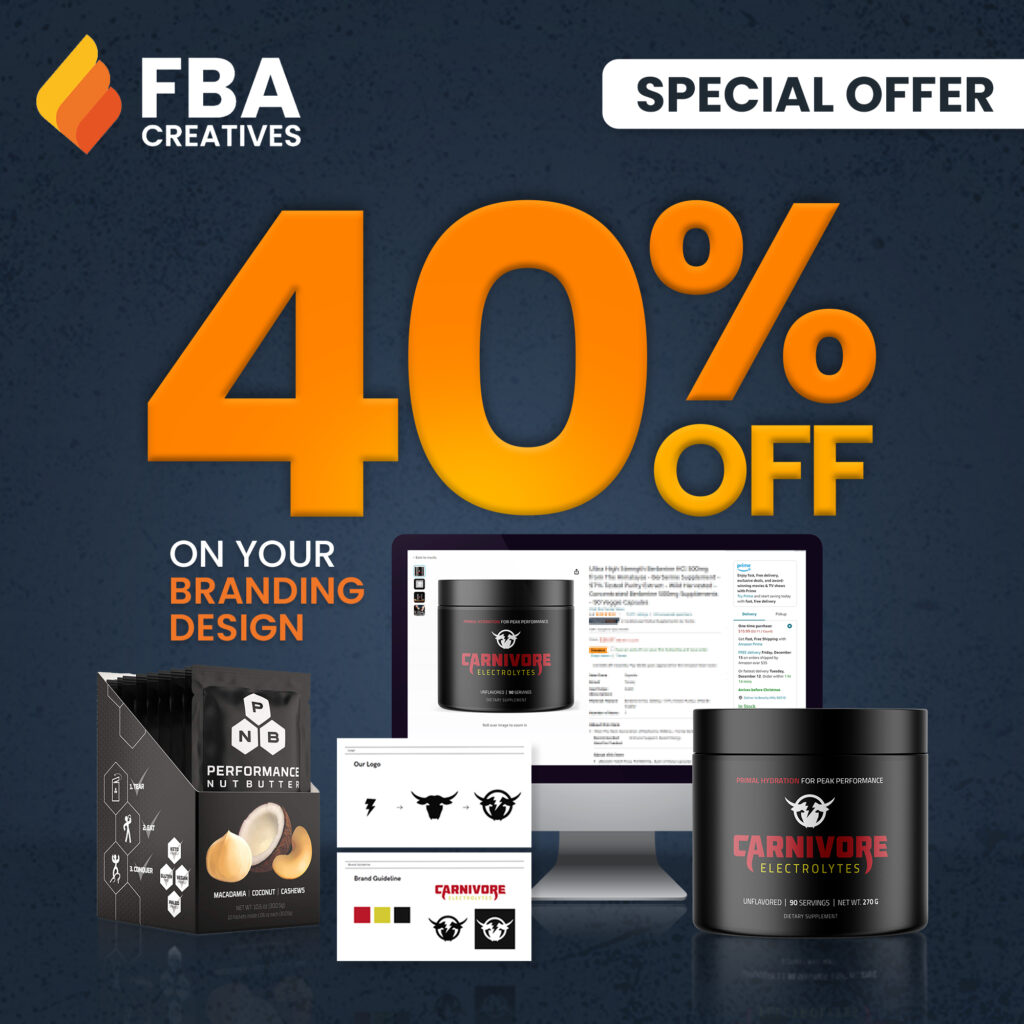
If you need professional help creating compelling listing images, services like FBA Creatives specialize in Amazon FBA product photography. They can handle everything from main images to lifestyle shots to infographic images that highlight key features. Use code TRAVIS for 40% off their services. Alternatively, start by creating your own images. Many successful sellers photograph their first products themselves before investing in professional photography once sales justify the expense. The Passion Product Formula includes detailed training on creating effective product images, whether you’re doing it yourself or hiring professionals.
Product Description and Final Details
Your product description functions similarly to your bullet points but allows for more detailed storytelling and keyword inclusion. Many customers don’t read the full description. However, those who do are often your most serious buyers. These are people genuinely interested and comparing options carefully. Therefore, craft a description that incorporates additional keywords while explaining your product’s benefits and building trust in your brand.
Include relevant information about how to use your product. Explain what makes it unique. Share why you created it. Describe what results customers can expect. Mindy’s description tells the story of why she invented Potty Time Adventures. It explains how it helps stressed parents. It details what makes it more effective than competing potty training methods. This narrative approach builds connection while naturally incorporating keywords the Magnet tool revealed.
After completing your description, you’ll fill out manufacturing information. This can be generic initially. Next, specify the number of items customers receive when they purchase one unit. For Potty Time Adventures, that’s one complete potty training kit. If you’re selling consumable products, you’ll need additional information. This includes ingredients, storage temperature requirements, and whether the product is heat-sensitive.
Finally, add backend search terms. These don’t appear visibly on your listing but help Amazon’s algorithm understand when to show your product. Use this field to include additional keywords you couldn’t fit naturally into your title, bullets, and description. Avoid repeating keywords already used elsewhere. Instead, add variations, misspellings customers might search, and related terms that didn’t fit elsewhere. When that’s done, click “Save and Finish” to create your live Amazon listing.
Pricing Strategy

Setting the right price for your Amazon FBA product requires balancing multiple factors. These include manufacturing costs, Amazon’s fees, competitive pricing, and perceived value. However, one simple rule provides an excellent starting point. Price your product at three times your manufacturing cost. This 3X rule ensures you maintain healthy profit margins even after accounting for all expenses.
For example, if your product costs $8 to manufacture, sell it for approximately $24 on Amazon. This pricing covers Amazon’s 15% referral fee (roughly $3.60). It also covers FBA pick and pack fees (typically $2-4 depending on size and weight). Factor in shipping from your manufacturer to Amazon’s warehouse (varies). Include advertising costs if you run PPC campaigns. After all expenses, you should retain 25-30% profit margin. This allows for sustainable growth and provides buffer for inevitable unexpected costs.
Mindy priced Potty Time Adventures at $25. This fits perfectly in the recommended $15-85 range while maintaining strong margins. This price point positions the product as a premium solution without becoming so expensive that parents hesitate to buy. Furthermore, $25 feels like an impulse purchase for most parents desperate for potty training help. A $60 price tag would trigger more comparison shopping and slower purchase decisions.
Select “New” for the condition field. Then decide between Fulfilled by Amazon (FBA) or Fulfilled by Merchant (FBM). Most sellers choose FBA because Amazon handles all picking, packing, and shipping. This saves enormous time and earns you the Prime badge that dramatically increases sales. Mindy uses FBA specifically because she doesn’t have time to fulfill orders herself while managing her business and raising two children. However, if you prefer controlling the fulfillment process personally or selling products that don’t fit FBA’s requirements, FBM remains a viable option. Your backend keywords complete the optimization process. Add all remaining relevant search terms here to maximize your listing’s visibility.
Shipping to Amazon FBA Warehouse
Getting your finished products from your manufacturer into Amazon’s warehouses represents an exciting milestone. Your hard work is becoming tangible reality. Fortunately, this process flows smoothly when you follow Amazon’s specific requirements carefully. Start by logging into Amazon Seller Central. Click “Manage Inventory” from the main dashboard.
Scroll through your inventory list until you find the product you want to send to Amazon’s fulfillment centers. Click the small dropdown arrow next to the “Edit” button. Then select “Send Replenish Inventory.” This launches Amazon’s shipment creation workflow. It guides you through each required step with clear instructions.
Pay extremely close attention to the “Ship From” address field. Entering the wrong address causes significant problems. If you’re shipping directly from your manufacturer’s location, enter their complete address instead of your home address. Many new sellers mistakenly use their home address out of habit. Then they struggle when shipments get rejected or delayed. Double-check this address carefully before proceeding.
Amazon recently introduced an incredible new feature. They now handle shipments directly from Chinese manufacturers to US fulfillment centers. Simply change the ship-from address to your manufacturer’s location in China. Amazon arranges pickup and delivery through their logistics network. This service eliminates the complexity of working with freight forwarders and customs brokers. It saves you time and often money compared to traditional shipping methods.
Case Pack Requirements and Prep Specifications
Amazon’s fulfillment centers operate with strict requirements for the boxes (called case packs) that contain your products. Understanding these requirements before your manufacturer ships prevents costly delays. It prevents rejection of your inventory. First, no single side of your box can exceed 25 inches in length. Second, each box cannot weigh more than 50 pounds when fully packed with your products.
These restrictions exist because Amazon’s warehouse workers and automated systems are optimized for handling standardized box sizes. When you exceed these limits, your shipment may be refused at the warehouse. This forces you to repackage everything at significant expense. Therefore, discuss these requirements with your manufacturer early in the production process. They can pack your products correctly from the start.
For Potty Time Adventures, Mindy’s case packs measure 13.5 inches by 12.6 inches by 19.8 inches. This stays safely within Amazon’s limits. Each case holds 12 units and weighs approximately 14.4 pounds. This is well under the 50-pound maximum. She worked with her manufacturer to design packaging that maximized units per case while staying within Amazon’s requirements.
Next, you’ll create a case pack template. Give it a descriptive name like “Potty Time Test Shipment.” Most products require no extra prep beyond basic packaging. You’ll typically select “No extra prep needed.” However, certain product categories require special handling. Adult items, baby products, and fragile or liquid items often need additional protective prep. This might include bubble wrap, bagging, or specific labeling. Review Amazon’s current prep requirements for your specific category to ensure compliance. Taking these prep requirements seriously the first time saves you from expensive problems later.
Understanding Critical Labeling Requirements
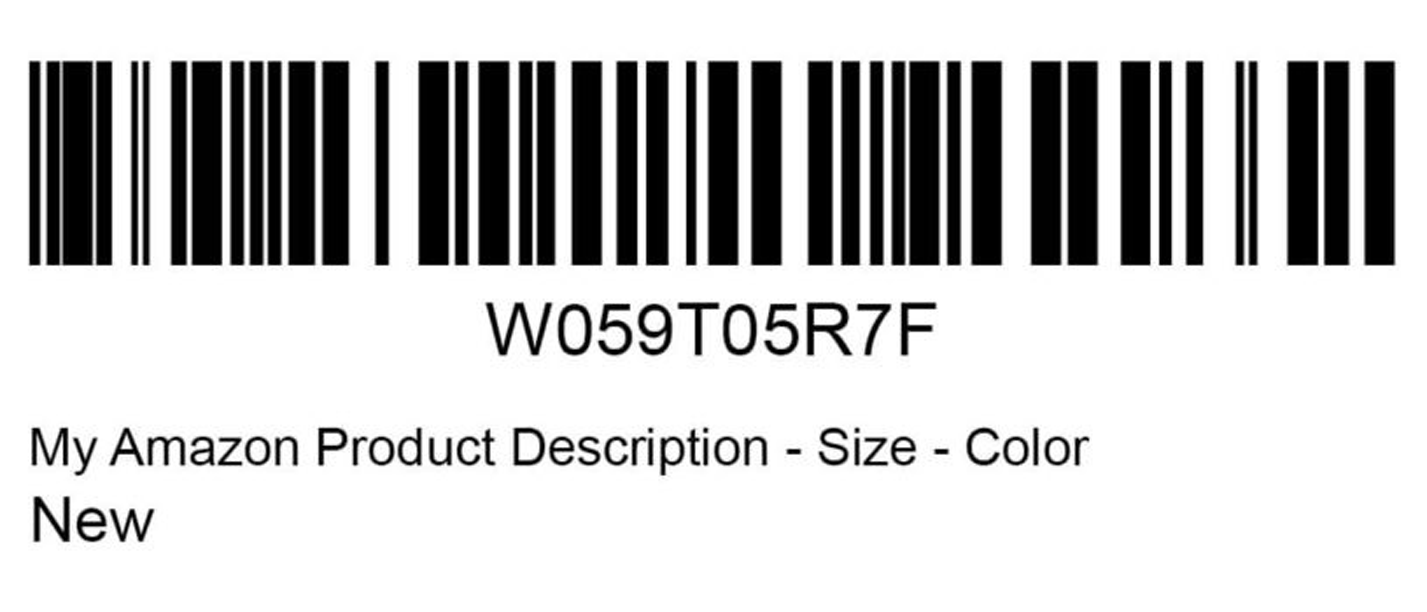
Amazon’s fulfillment network relies on specific barcodes to track every product throughout their system. This makes proper labeling absolutely critical for successful inventory management. The FNSKU (Fulfillment Network Stock Keeping Unit) is a unique barcode Amazon assigns to your specific product. Every single unit you send to Amazon must have its FNSKU barcode clearly visible. It can be on a sticker attached to the product or printed directly on the packaging.
You have three options for applying FNSKU labels. Each has different cost and time implications. First, you can print FNSKU stickers yourself. Manually apply them to every unit before shipping. This works for small quantities but becomes impractical as you scale. Second, you can have Amazon apply FNSKU labels for you. But they charge $0.50 per unit. This significantly reduces your profit margins. Third and this is the smart approach have your manufacturer print the FNSKU directly onto your product packaging during production.
Mindy uses the third method for Potty Time Adventures. She has the FNSKU printed directly on each box during manufacturing. This one-time setup saves her 50 cents per unit. That’s hundreds of dollars per shipment. It eliminates the tedious work of manually sticking labels on every product. Discuss this option with your manufacturer early. Most experienced factories that work with Amazon sellers handle this routinely.
After handling individual product labels, you’ll specify how many cases you’re sending in this shipment. For example, shipping 10 cases with 12 units per case equals 120 total units. Click “Confirm and Continue.” Then select your ship date. Choose between two delivery methods: Small Parcel Delivery (using carriers like UPS for boxes) or Less Than Truckload (LTL freight for pallets). Your first shipment will likely use Small Parcel Delivery since you won’t have enough inventory to fill a pallet. Amazon negotiates exceptional rates with UPS. They’re often 50-70% cheaper than retail UPS rates. This makes this service very cost-effective. Accept the shipping charges. Then print two essential labels: the UPS tracking label that UPS uses to route your package, and the Amazon FBA Box ID label that identifies your shipment within Amazon’s warehouse network. Ensure both labels are clearly visible. Don’t cover them with tape or other materials.
Top Three Mistakes to Avoid

Mistake One: Quality Control Issues – $5,000 Loss
Trusting your manufacturer to deliver perfect products every time seems reasonable. This is especially true when you’ve carefully vetted them and ordered excellent samples. However, Mindy learned this expensive lesson the hard way. Even great manufacturers sometimes let quality slip over time. Those defects directly translate into negative customer reviews. Those reviews kill your sales momentum.
Mindy worked with a toy mogul who connected her with what seemed like the perfect production partner. Initial shipments arrived flawlessly. But subsequent orders contained defects that customers quickly noticed. They reported these issues in reviews. These quality issues cost her approximately $5,000 in lost sales, returns, and damaged reputation. This happened before she identified and resolved the problem.
The solution involves implementing rigorous quality control measures throughout your manufacturing relationship. First, break large orders into smaller batches. Don’t order your entire inventory at once. This approach allows you to catch quality issues quickly before they affect thousands of units. Second, hire independent inspectors to examine your products before they ship from the factory. These inspectors cost money upfront. But they save far more by catching problems before customers do.
Third, maintain constant communication with your manufacturer about quality expectations. Conduct random quality checks on inventory after it arrives at Amazon’s warehouse. When you find issues, address them immediately and firmly with your manufacturer. Quality problems that go unaddressed always get worse, never better. The Passion Product Formula includes detailed training on quality control procedures. It provides inspector recommendations to help students avoid this costly mistake entirely.
Mistake Two: Licensing Characters – $40,000 Loss
Sometimes our best business ideas turn out to be expensive lessons in humility. Mindy invested $10,000 in year one to license Peppa Pig and My Little Pony characters for her potty training products. Then she paid an additional $15,000 annually for the next two years. She believed this was a brilliant move. Kids love these popular characters. Naturally parents would choose her products over competitors, right?
Wrong. The data proved that children actually preferred Mindy’s own unique character designs. They liked them more than the licensed characters she paid tens of thousands of dollars to use. This realization stung her ego initially. But it taught her an invaluable lesson about trusting her creative instincts over assumptions about what customers want.
Licensing deals seem attractive because they leverage existing brand recognition and customer affinity. However, they come with significant costs, strict usage restrictions, and risks. The risk is that customers don’t actually value the licensed character as much as you assume. Furthermore, you’re building someone else’s brand rather than your own. This makes it nearly impossible to create long-term brand equity and customer loyalty.
Before pursuing any licensing deals, test your own unique branding first. You might discover, as Mindy did, that customers appreciate original creativity more than recognizable characters. Additionally, original branding gives you complete control. You have flexibility to evolve your products without negotiating with licensors. This mistake taught Mindy that believing in your unique vision often produces better results than borrowing someone else’s. It was a lesson worth every penny she spent learning it.
Mistake Three: Not Creating a Passion Product – $200,000 Loss
This mistake represents the biggest and most painful lesson in Mindy’s Amazon journey. It’s the reason she emphasizes passion products so strongly now. For years, she sold generic products on Amazon that worked reasonably well. She made money, built a business and felt successful. Then Amazon Basics started selling nearly identical products for half her price. Her entire business crumbled practically overnight.
Watching Amazon destroy her business by simply copying her products and undercutting her prices cost Mindy approximately $200,000. This included lost revenue and inventory that became worthless. This devastating experience forced her to completely rethink her approach to selling on Amazon. She realized that generic products, no matter how well they sell initially, offer zero protection from competition. This is especially true when that competition is Amazon itself.
The revelation that saved her business came from a place of genuine need and creativity. Her daughter’s potty training struggles inspired her. By creating an entirely unique product that solved a real problem in an innovative way, Mindy built something Amazon Basics couldn’t easily copy. Little Advents represents true intellectual property. It has unique features, branding, and customer relationships that protect it from commoditization.
This is precisely why Travis Marziani developed the Passion Product Formula methodology. Generic private label products face inevitable price compression and competition. But truly unique products that solve specific problems for defined audiences create defensible businesses. When you build something unique that you’re genuinely passionate about, you create barriers to entry. These protect your investment and allow long-term growth. This single lesson learned through $200,000 of pain represents the most important insight in this entire guide. Don’t repeat Mindy’s mistake. Create something unique from the beginning.
Your Amazon FBA Journey Starts Now

You now possess the complete roadmap for building a successful Amazon FBA business from absolute scratch. We’ve covered everything from finding profitable products using data-driven tools like Helium 10, to setting up your seller account correctly. We explored finding reliable manufacturers through Alibaba, Thomas Net, Google, or Travis’s verified supplier network. You learned about creating optimized listings that convert browsers into buyers. You understand shipping your inventory to Amazon’s fulfillment centers without costly mistakes.
Moreover, you’ve learned the three most expensive mistakes that trip up new sellers. Neglecting quality control, wasting money on character licensing, and selling generic products instead of unique passion products all cost real money. Each of these lessons cost Mindy tens of thousands of dollars to learn. But you can avoid them entirely by following the proven system outlined in this guide.
However, reading this guide represents just the first step. Real success comes from taking action. Taking action becomes significantly easier with proper guidance and support. If you’re serious about building your own Amazon FBA business, consider joining Travis Marziani’s Passion Product Formula program. Travis is a seven-figure Amazon seller and YouTuber. He’s spent over a decade refining his teaching methods and helping students achieve real results.
Inside the Passion Product Formula, you receive two private one-on-one coaching calls with experienced mentors. You get weekly live Q&A sessions where you can ask questions about your specific situation. You access over 100 step-by-step video tutorials covering every aspect of finding, manufacturing, and launching your product. Additionally, you gain access to the exclusive verified manufacturer spreadsheet. It contains pre-vetted suppliers that Travis and over 2,000 students have successfully used. This resource alone saves months of research. It dramatically reduces your risk of working with unreliable manufacturers. Students like AJ have used these exact resources to build products generating $500,000 in their first year. Travis’s own carnivore electrolytes product made $100,000 in just six months using this methodology. Check out the link to apply for the Passion Product Formula. Take your first step toward building a real Amazon business with proven support and systems.
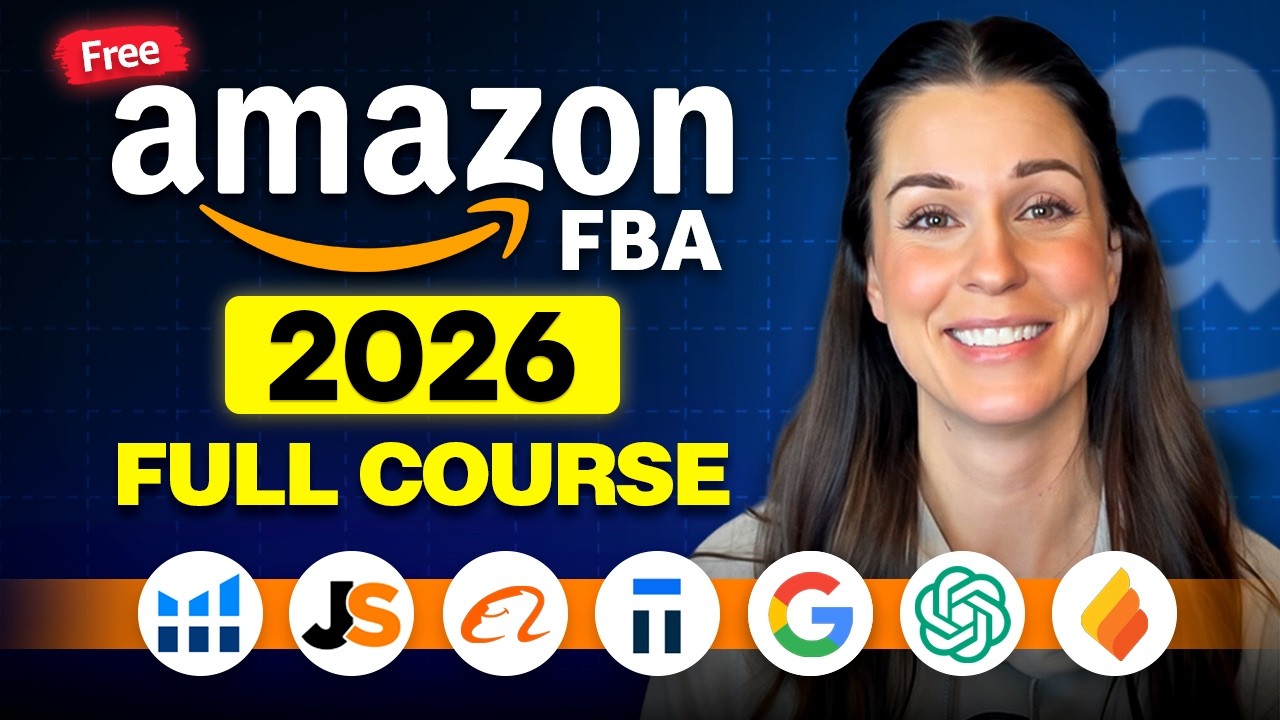
If you’re not quite ready for the full program, Travis also offers a comprehensive 10-hour Amazon FBA course completely free on YouTube. This extended tutorial dives even deeper into specific topics. It provides additional examples and case studies. Start learning today at your own pace. Then upgrade to the full program when you’re ready for personalized support. Mindy believes strongly in the power of mentorship because mentors save you time, money, and painful mistakes. They share lessons they learned the hard way. If you’re thinking about starting your own business, seriously consider having an experienced mentor guide you through the process. It’s one of the best investments you can make in your future success.
Frequently Asked Questions
How much money do I need to start an Amazon FBA business?
Most sellers need between $3,000 and $5,000 to launch their first product successfully. This budget covers manufacturing your initial inventory (typically 200-500 units). It covers shipping to Amazon’s warehouse, professional product photography, UPC codes, and your first month’s Professional seller account fees. However, you can start smaller with around $1,500-2,000 if you choose a simpler, lighter product. Handle photography yourself to save money. The key is choosing a product with low minimum order quantities. This lets you test the market without overextending financially.
How long does it take to make my first sale on Amazon?
Timeline varies significantly based on your product and launch strategy. Expect 3-6 months from initial idea to first sale. This includes 2-4 weeks for product research and validation. Add 1-2 weeks finding and vetting manufacturers. Factor in 4-8 weeks for manufacturing and shipping from overseas. Allow 1-2 weeks for inventory to arrive and become live at Amazon’s warehouse. Once your product goes live, you might see sales within days. This happens if you’ve optimized your listing properly and chosen a product with existing demand. Using the systems Travis teaches in the Passion Product Formula can significantly accelerate this timeline.
Do I need a trademark or LLC to sell on Amazon?
No, you can start selling immediately as an individual seller. You don’t need to form a business entity or register trademarks. However, establishing an LLC provides legal protection and tax advantages worth considering as your business grows. Similarly, while not required initially, trademarking your brand name protects you from competitors copying your brand. It allows you to enroll in Amazon’s Brand Registry program. This provides additional selling benefits and protections. Many sellers start as individuals. They form LLCs and register trademarks once they validate their product and start generating consistent revenue.
What if Amazon Basics copies my product?
This represents a real risk with generic, easily-copied products. This is exactly why Mindy emphasizes creating unique passion products. Amazon Basics typically targets high-volume commodity items with minimal differentiation. Think phone cables, batteries, basic kitchen tools, and similar products. When you create something truly unique with distinctive features, strong branding, and genuine intellectual property, you make yourself a much less attractive target. Additionally, products serving niche audiences (like Mindy’s potty training advent calendar) rarely attract Amazon Basics’ attention. The market size doesn’t justify their investment. Focus on uniqueness and innovation rather than competing on commodity products.
Can I really make six figures selling on Amazon?
Yes, thousands of third-party sellers make over $100,000 annually on Amazon. Many make significantly more. However, reaching six figures requires choosing the right product. You must execute your launch properly. You need to continuously optimize your listing and advertising. Often you’ll expand to multiple products over time. Most sellers who hit six figures do so with 2-4 successful products rather than a single product. Some achieve it with one exceptionally successful item. The key is treating this as a real business requiring consistent effort. It’s not a get-rich-quick scheme. Students in the Passion Product Formula who follow the system consistently and take action on feedback from coaches see the fastest path to significant income.
Should I use Jungle Scout or Helium 10 for product research?
Both tools offer excellent product research capabilities. However, Helium 10 provides more comprehensive features overall. This is particularly true for listing optimization and keyword research. Helium 10‘s Magnet tool and Blackbox functionality deliver deeper insights into search volume and product opportunities. Additionally, most successful Amazon sellers and educators, including Travis Marziani, primarily use and recommend Helium 10. The learning curve is steeper than Jungle Scout. But the additional capabilities justify the investment for serious sellers. Mindy and Travis both built their businesses using Helium 10 exclusively. Check the description for a significant discount code. It makes Helium 10 more affordable when you’re starting out.
What’s the difference between FBA and FBM?
FBA (Fulfilled by Amazon) means Amazon stores your inventory in their warehouses. They handle all picking, packing, shipping, and customer service when orders come in. FBM (Fulfilled by Merchant) means you store inventory yourself. You ship orders directly to customers. FBA costs more per unit but earns you the Prime badge. This dramatically increases sales since most Amazon customers filter specifically for Prime-eligible products. Additionally, FBA frees up your time to focus on growing your business rather than fulfilling orders. Most successful sellers use FBA. The sales increase from Prime eligibility far exceeds the additional fulfillment costs. FBM works better for very large or heavy items where FBA fees become prohibitive. It also works for sellers who already have efficient fulfillment operations in place.
How do I handle negative reviews?
Negative reviews happen to every seller eventually. They don’t destroy your business when handled properly. First, respond professionally and helpfully to every negative review. Offer to resolve the customer’s issue. This shows future customers that you care about satisfaction. Second, focus on generating more positive reviews through excellent products and customer service. A 4.5-star rating with 200 reviews sells better than a 5.0-star rating with only 10 reviews. Third, learn from negative reviews by identifying patterns. These patterns indicate product improvements you should make. Finally, ensure your product quality remains consistently high. This prevents negative reviews from accumulating. The Passion Product Formula includes specific training on review management. It covers using Amazon’s policies to remove reviews that violate their guidelines.