
Everyone keeps telling me that Amazon FBA is dead. They say it’s too saturated and they say it’s too late. They say there’s no room left for the little guy to make money on Amazon. However, I made over $900,000 on Amazon last year. I then taught the exact same method to a student who started with nothing. He went on to make over $500,000 in his very first year. So clearly, the “it’s too late” narrative doesn’t add up.
To prove that Amazon FBA is still a real opportunity, I decided to launch a brand-new product from scratch. I documented every single step along the way. Throughout this article, I’ll walk you through how I found the idea, how I sourced it, and how much I spent. Most importantly, I’ll share the honest results. No sugarcoating, no cherry-picking, just the real numbers.
Before we dive into the exciting part, though, we need to address something important. If you want to succeed on Amazon, you first have to understand why so many people fail. And spoiler alert: it usually has nothing to do with saturation.
- Why Most People Fail at Amazon FBA (And It's Not Saturation)
- Why These Three Methods Won't Work Long-Term
- The Proof That Amazon FBA Is Still a Massive Opportunity in 2026
- Introducing the Niche Branding Method (The Passion Product Formula)
- Step 1 – Finding a Winning Product Idea
- Step 2 – Branding, Design, and Packaging
- Step 3 – Manufacturing and Launch
- The Honest Month-One Results
- Why This Is Only the Beginning
- How to Get Started With the Passion Product Formula
- Final Thoughts: The Old Methods Are Dead, Not Amazon FBA
- Frequently Asked Questions
Why Most People Fail at Amazon FBA (And It’s Not Saturation)

Most people who fail on Amazon don’t fail because the platform is too crowded. Instead, they fail because they do it the wrong way. They also sell the wrong type of product. It’s a subtle difference. Yet it separates a real business from months of spinning your wheels.
When you understand the type of product you should sell, everything changes. Unfortunately, most new sellers gravitate toward three common approaches. These approaches feel easy on the surface. However, they quietly work against you in the long run. Therefore, let’s break down each method so you can see exactly where it falls short.
Retail Arbitrage
The first method is retail arbitrage. Here, you find a discounted product in retail stores or online, then flip it on Amazon for a profit. For example, you might buy a product for $200 somewhere. Then you sell that exact same product on Amazon for almost $500. In that scenario, you keep the difference as profit. It sounds fantastic on paper.
Because it requires very little upfront knowledge, retail arbitrage attracts a lot of beginners. However, you’re constantly hunting for deals. And those deals dry up fast the moment other sellers catch on.
Wholesale
The second method is wholesale. Here, you buy products at a wholesale discount, then resell them at the full retail price. For instance, you can head to sites like globalsources.com and buy a product for just $25 wholesale. Meanwhile, that same product sells on Amazon for $110. That kind of margin looks undeniably attractive at first.
Nevertheless, wholesale carries the same underlying flaw as arbitrage. You sell the exact same product that dozens of other sellers can also access. As a result, you have no real control over what makes your listing stand out.
Private Label
The third common method is private label, and this one gets interesting. First, you find a product that already sells well. Here’s a little secret: you can actually find out how much any product on Amazon makes. You simply go to the product and scroll down to the Best Sellers Rank number. Then you copy it and paste it into the free Jungle Scout sales estimator tool. After you select the marketplace and category, you hit estimate. You might discover that a product moves over 11,000 units per month. That’s more than $100,000 in monthly sales.
Once you spot a winner, you go to a site like Alibaba.com and search for the product. There, you find a similar version selling for as little as 6 cents apiece. Then you customize it slightly, add your own branding, and list it on Amazon. Private label is a step in the right direction because you add a brand. Still, it has a critical weakness. We need to talk about that next.
Why These Three Methods Won’t Work Long-Term

Retail arbitrage, wholesale, and private label are probably the easiest ways to start on Amazon. However, they aren’t the best ways to build something that lasts. Frankly, these methods make it very hard to protect your profit over the long term. The reason comes down to sheer competition.
Consider the numbers for a moment. There are over 1.1 million active Amazon sellers. Roughly 4,000 brand-new sellers join every single day. On top of that, around 85% of all sellers do either private label or wholesale. Consequently, imagine you find a good product using these methods. Sooner or later, someone else stumbles across the exact same product. Then they undercut you on price.
The core problem is that nothing makes your product truly unique. Your item looks identical to what a hundred other sellers offer. So the only lever left is price. And competing on price is a race straight to the bottom. As a result, these three approaches simply aren’t sustainable for a lasting, profitable business.
So if these easy methods lead to a dead end, what actually works? That’s exactly where everything changes. It starts with recognizing how much opportunity still exists on Amazon today.
The Proof That Amazon FBA Is Still a Massive Opportunity in 2026
Let’s put the “Amazon is dead” myth to rest with some cold, hard facts. Amazon will do over $800 billion in sales on its website this year alone. That figure should climb to around $900 billion next year. Clearly, this isn’t a shrinking market. It’s a rapidly growing one.
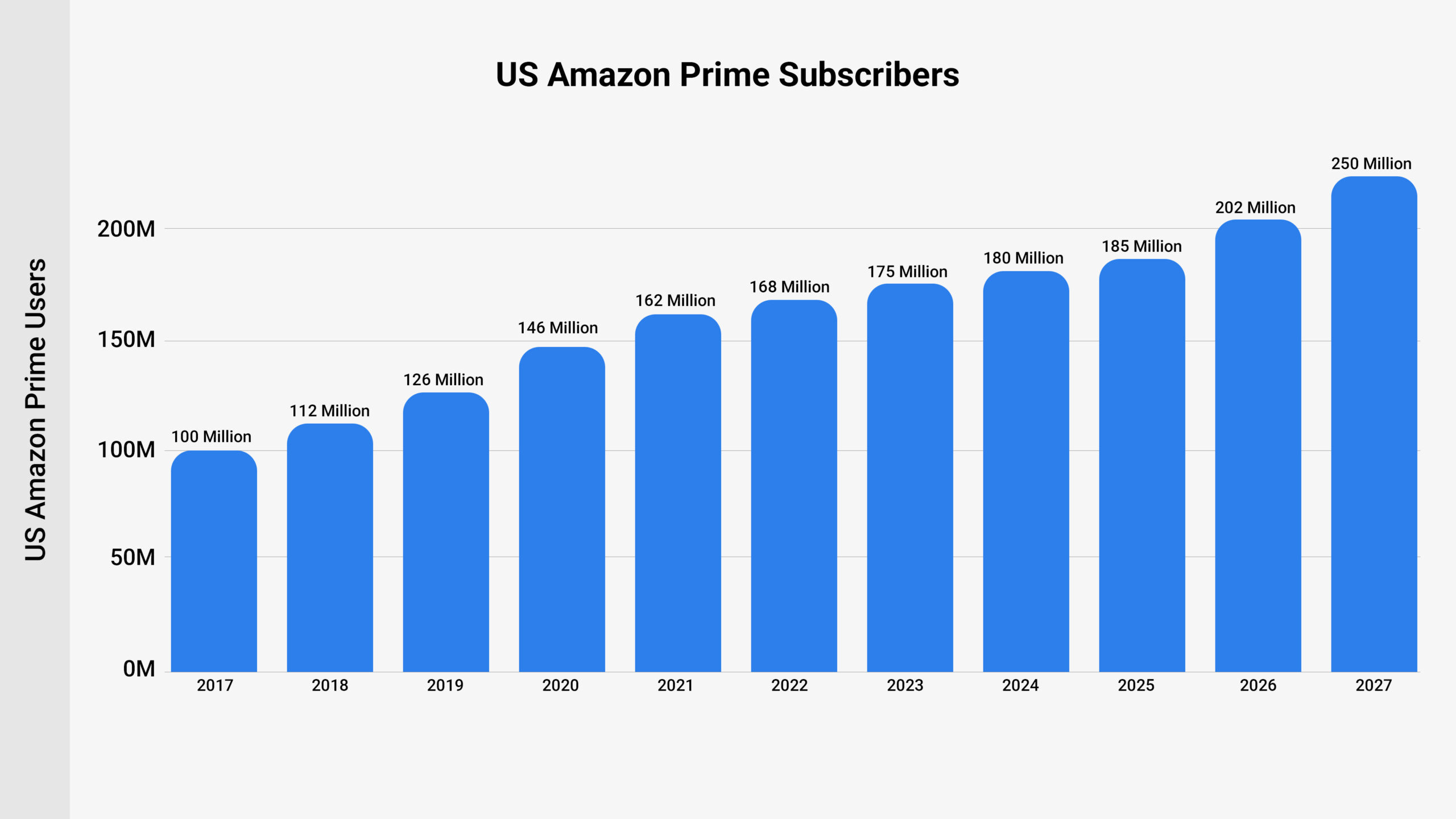
Furthermore, over 180 million Prime customers shop on Amazon this year. That number keeps growing. What makes this especially exciting? Ordinary people like you and me can sell to all of them. In fact, over 60% of all sales on Amazon’s website come from third-party sellers, not from Amazon itself.
I also know Amazon FBA is a real opportunity because I’ve lived it and built an Amazon FBA business in just 7 days. I did over a million dollars in sales. Then I sold that business for $840,000. Moreover, I don’t treat that as a one-time fluke. I’m doing it again with this new product and several others I’m launching this year.
Given all of that, the conclusion is obvious. Hundreds of billions of dollars flow through Amazon every year. Therefore, there’s still plenty of money to make, as long as you know the right method. The difference between my success and everyone else’s frustration wasn’t luck. It was the method itself.
Introducing the Niche Branding Method (The Passion Product Formula)
I call the method I use today niche branding. It forms the foundation of what I call the Passion Product Formula. The core idea is beautifully simple. You take a big, established category. Then you niche down to serve a specific, underserved audience within it. Rather than competing head-on with everyone else, you carve out a corner of the market that’s practically yours.
Let me give you a real example. With my last product, I looked at the electrolyte category. However, I didn’t launch just another generic electrolyte like everyone else. Instead, I niched down and created an electrolyte specifically for people on the carnivore diet. On the surface, that sounds like such a tiny niche. You’d think you could never make real money from it. Yet that single product ended up doing over a million dollars in sales.
Why does this work so well? Over 350 million people live in America. Even if only a small percentage want your specific product, you can still generate massive revenue. In other words, a “small” niche isn’t small at all. Not when you scale it against a population that size.
This is precisely why the Passion Product Formula works so well. You don’t build a forgettable commodity that anyone can copy and undercut. Instead, you build a genuine brand around a passion or a niche. As a result, you create something that’s uniquely yours. And that’s exactly what protects your profits over the long haul.
Step 1 – Finding a Winning Product Idea
Everything starts with the right idea, so let me show you exactly how I found this one. I noticed a growing trend around a concept called “looksmaxxing.” Essentially, it’s the movement of men trying to look as good as they possibly can. One recommendation within that trend is for men to start wearing makeup. That observation sparked something.
Makeup, after all, is an enormous category. Billions and billions of dollars flow through it every year. However, almost every product in that space targets women. Therefore, I decided to take the massive category of makeup and create a product just for men. Virtually no one was doing this on Amazon at the time.
Next, I needed to confirm that real demand existed. To do that, I used a tool called Smart Scout. It shows you how many people per month search for different terms. When I dug in, I found that thousands of people searched for men’s makeup. Specifically, over 300 people searched for “men’s eyebrow brush” every month. Yet almost no results served that demand. That gap was my green light.
Smart Scout even offers a free trial, so it costs $0 to get started. There’s also a discount code if you decide to continue with it. As a result, at this stage of building my business, I had spent absolutely nothing. With a validated idea in hand, it was time to bring the brand to life.
Step 2 – Branding, Design, and Packaging
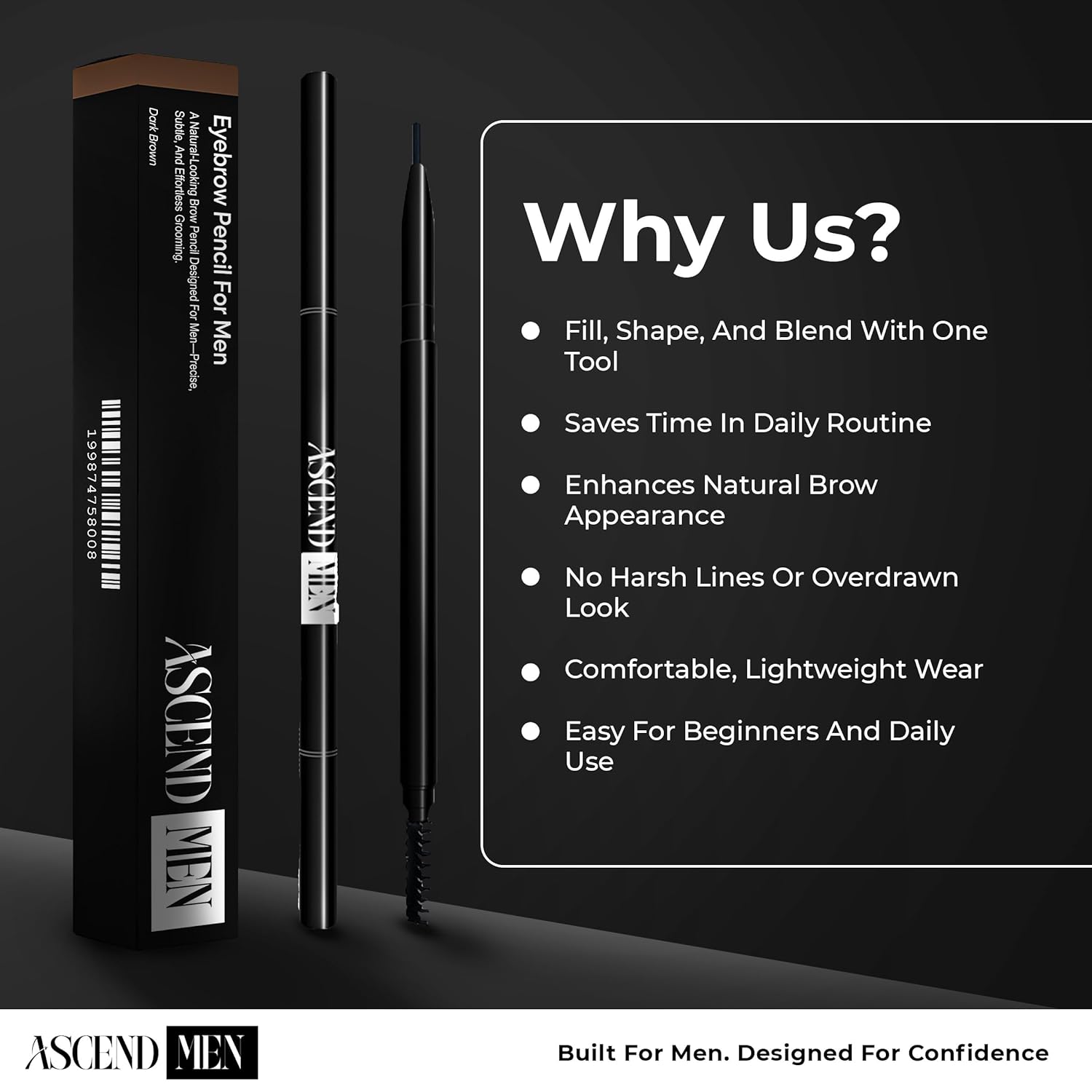
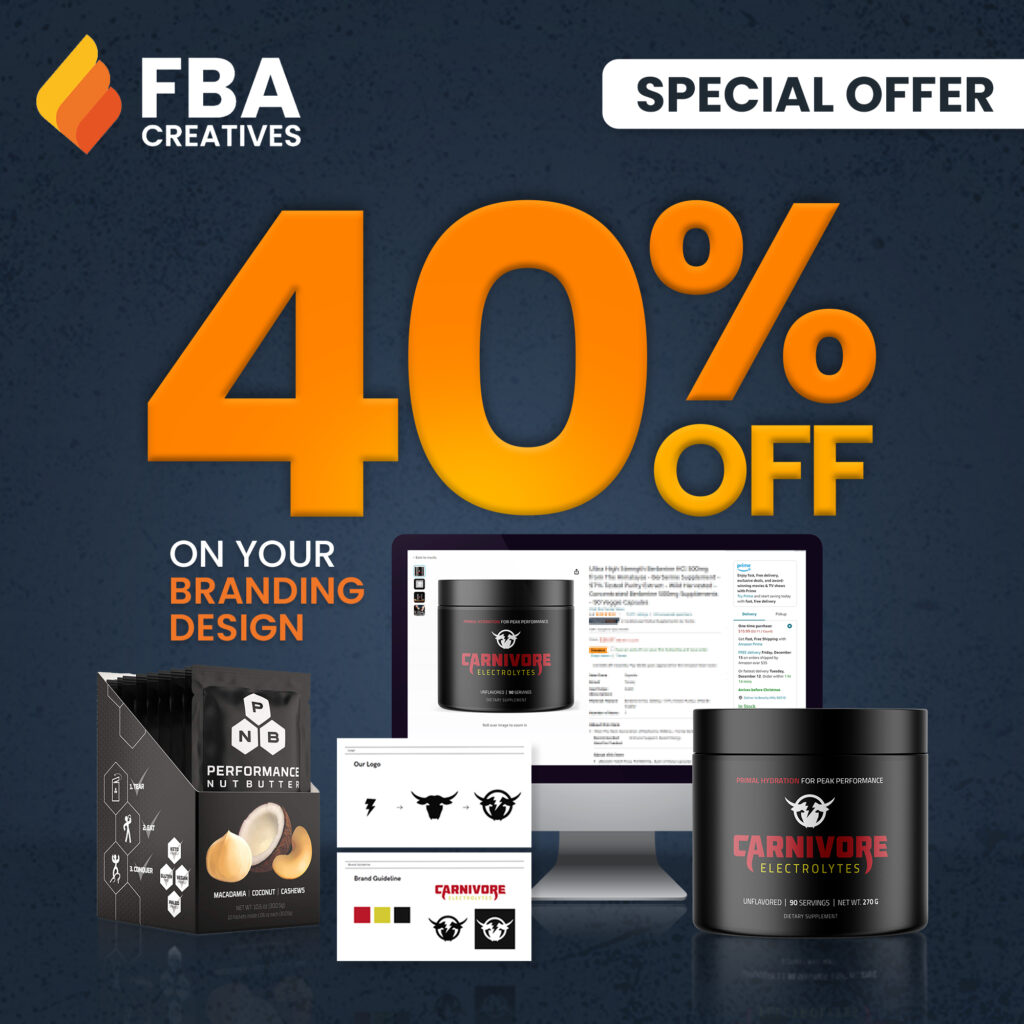
Once I confirmed real demand, I moved on to the branding. I needed a logo, product packaging, and an overall design. Rather than piece it together myself, I used a company called FBA Creatives. They designed everything for me, my listing, my packaging, all of it. There’s a link below and a coupon code (“Travis”) if you’d like a significant discount on their services.
Now, you might feel tempted to skip this step to save money. However, I’d strongly encourage you not to. Professional branding separates a forgettable listing from a memorable brand. When your product looks polished and intentional, customers trust it more. And that trust directly translates into sales.
More importantly, strong branding protects you from copycats. Anyone can source a similar product. Yet a well-crafted brand identity is far harder to replicate, the name, the design, the packaging, the story. Consequently, when you invest in this step, you invest in the long-term defensibility of your business.
Step 3 – Manufacturing and Launch
With the branding locked in, I moved on to manufacturing. I went to Alibaba.com and typed in “eyebrow pencil.” There, I found a manufacturer already producing an eyebrow pencil for women. Then I told them I wanted a few modifications and different packaging to fit my brand. After that, I ordered 900 units at a little over $1 per unit. That came out to $1,080 to manufacture all 900 pencils.
From there, I had to ship the products from China to the United States. That cost me $150. Additionally, I spent another $75 on three GS1 barcodes. I sold the pencil in three different colors, so each variation needed its own barcode. Adding it all up, my total upfront investment stayed remarkably lean.
Finally, I listed the product on Amazon. I uploaded a main image, wrote a title, and added some bullet points. Just like that, the product went live on the platform. The whole process felt far more approachable than most people imagine.
Now for the moment everyone waits for, the honest results. Talking about theory is easy. Yet real numbers actually prove whether this method works.
The Honest Month-One Results

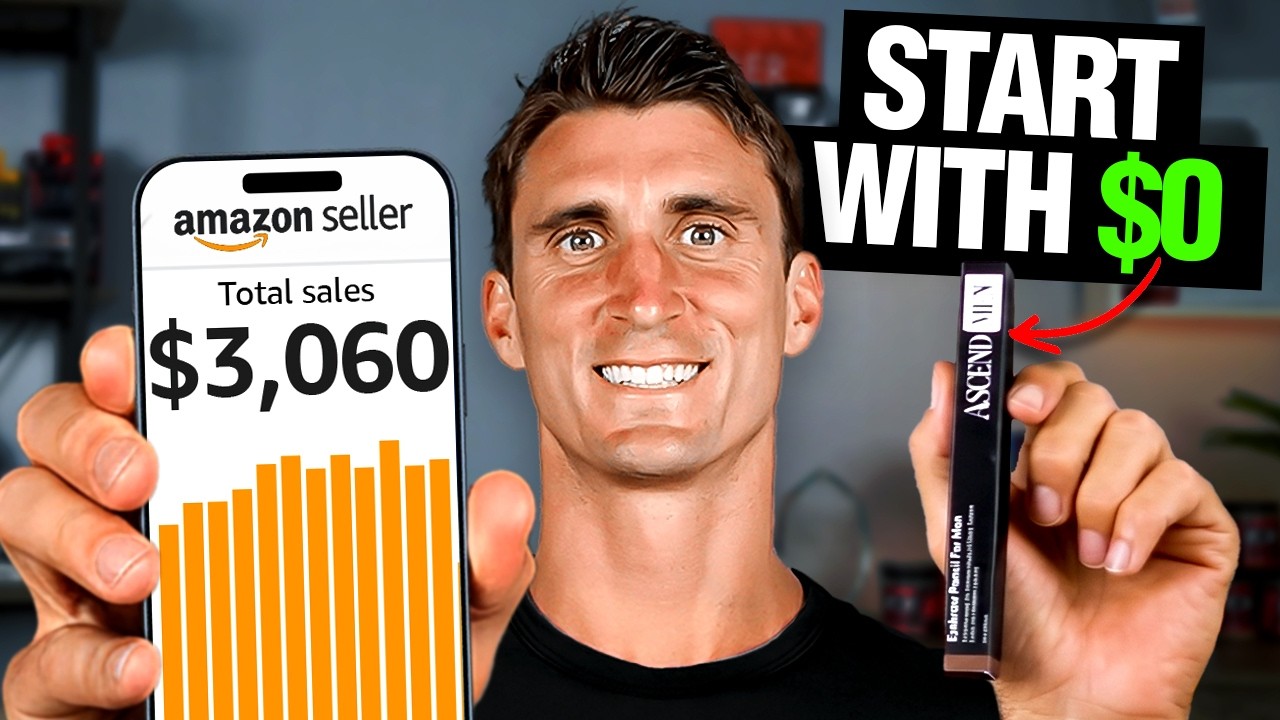
In my very first month selling these eyebrow pencils on Amazon, I did over $3,000 in sales. At first glance, that might not sound like much. However, context matters enormously here. My million-dollar carnivore electrolyte product only did $6,000 in its first month. Then it climbed to $10,000, then $20,000, then $30,000 for several months. Eventually, it hit $100,000 per month by month 10. With Amazon, things take time to build momentum.
To be completely transparent, that $3,000 was revenue, not profit. Real costs came with it. First, I spent a few hundred dollars on the actual products I sold that month. Next, I paid over $400 in Amazon referral fees. Amazon takes 15% of your revenue for using their multi-trillion-dollar platform. Honestly, given everything they provide, that cut feels reasonably fair. On top of that, I paid over $700 for the Amazon FBA pick-and-pack fee. That fee covers Amazon picking, packing, and shipping each product from their warehouse to the customer.
After I accounted for all those costs, I still walked away with over $1,500 in profit in my very first month. Now, let me ask you something. If you made an extra $1,500 every single month, would you feel happy about that? For most people, the answer is a resounding yes. And remember, this took very little work. I’ve just walked you through the entire process from start to finish.
What excites me most is that this is only month one. Look at how carnivore electrolytes performed. By month 10, the numbers were over 15 times higher. Therefore, profitability right out of the gate isn’t just good. It’s a genuinely strong signal of what’s to come.
Why This Is Only the Beginning

The best part about the niche branding method? We’re not going to stop at eyebrow pencils. Instead, we’ll expand into all kinds of makeup products for men. We’ll build out a full brand within that underserved niche. One validated product is simply the first domino in a much larger strategy.
Amazon FBA rewards patience. So early profitability points to strong long-term potential. Most businesses aren’t profitable for a year or two. Yet this product was already in the green during month one. Now combine that early traction with a category that has room to grow. The upside becomes genuinely exciting.
So have you worried that it’s too late to sell on Amazon? I hope these numbers put your mind at ease. The opportunity is wide open. It’s there for anyone willing to use the right method. Just don’t cling to the outdated, saturated approaches that everyone else fights over.
How to Get Started With the Passion Product Formula
Let’s quickly recap the winning path. First, you take a big category. Then, you niche down to a specific, underserved audience. After that, you build a real brand around it. Finally, you launch lean, just like I did with these eyebrow pencils. That’s the Passion Product Formula in a nutshell. And it’s exactly what turned a small niche into over a million dollars in sales for me.
Maybe you’ve thought about how to make money online or how to sell on Amazon. Maybe you just haven’t taken your first step yet. If so, I genuinely want to help you. That’s why I’m giving away a limited number of free strategy calls. On this call, either I or someone from my team will talk with you live for about an hour. Then we’ll hand you a personalized game plan for selling on Amazon.
During that call, we’ll also show you how to work with me and my team. From there, we can walk you step by step through launching your very own passion product. Maybe you decide the mentorship program isn’t for you. Even then, you’ll still walk away with an enormous amount of free value. That value helps you avoid the costly mistakes so many beginners make. There’s a link where you can apply.
Ultimately, the barrier to entry has never been lower. The opportunity has rarely been clearer. All you have to do is take that first step.
Final Thoughts: The Old Methods Are Dead, Not Amazon FBA
Here’s the truth so many people miss: Amazon FBA isn’t dead, the old methods are. Retail arbitrage, wholesale, and cookie-cutter private label have run out of road. They leave you competing on price against a million other sellers doing the exact same thing.
The niche branding method, on the other hand, offers a sustainable and profitable path forward in 2026 and beyond. You take a large category, niche down, and build a genuine brand. As a result, you create something uniquely yours that competitors can’t easily copy or undercut. That’s the entire philosophy behind the Passion Product Formula. And that’s why it keeps working when other methods fall apart.
So don’t let the naysayers convince you that you’ve missed your window, because you haven’t. Instead, take advantage of the free strategy call. Get your personalized game plan. Then start building your own passion product today. The opportunity sits right in front of you. All that’s left is to seize it.
Frequently Asked Questions
Is Amazon FBA still worth it in 2026? Absolutely. Amazon will do over $800 billion in sales this year and should climb toward $900 billion next year. On top of that, more than 180 million Prime customers shop there. Over 60% of Amazon’s sales come from third-party sellers. So the opportunity remains enormous, as long as you use a differentiated method like niche branding instead of competing on commodity products.
What is the niche branding method? Niche branding means you take a large, established category and narrow it down to a specific, underserved audience. For example, instead of selling generic electrolytes, you might create an electrolyte for people on the carnivore diet. This approach forms the foundation of the Passion Product Formula. It also helps you build a brand that’s genuinely yours.
How much money do I need to start selling on Amazon? You can start remarkably lean. In this example, manufacturing 900 units cost about $1,080. Shipping from China to the U.S. cost $150. Three GS1 barcodes cost $75. Meanwhile, the product research using Smart Scout cost $0 thanks to free trials. Overall, the upfront investment stays far more accessible than most people assume.
Why shouldn’t I just do retail arbitrage, wholesale, or private label?
Those methods are the easiest ways to start, but they aren’t sustainable long-term. Over 1.1 million active sellers compete right now, and around 4,000 new ones join daily. So sooner or later, someone finds the same product and undercuts you on price. Because nothing makes your product unique, you end up in a race to the bottom.
How long does it take to become profitable with Amazon FBA? It varies. However, this eyebrow pencil product turned a profit in month one, over $1,500 on $3,000 in revenue. That said, most Amazon products build momentum over time. The carnivore electrolyte product started at $6,000 in month one and grew to $100,000 per month by month 10. Patience plus early profitability is a very strong signal.
What are the main Amazon selling fees I should know about? Two main fees apply. First, Amazon takes a 15% referral fee on your revenue for using the platform. Second, the FBA pick-and-pack fee covers Amazon picking, packing, and shipping each product from their warehouse to your customer. These fees add up. Even so, using FBA typically costs less than handling shipping and fulfillment yourself.
How do I get personalized help launching my product? Travis and his team offer a limited number of free strategy calls. On these roughly one-hour calls, you’ll get a personalized game plan for selling on Amazon. You’ll also learn how to work directly with the team through the mentorship program. Maybe you don’t join. Even then, you’ll walk away with valuable guidance that helps you avoid common beginner mistakes.