

Most people assume that building a multi-million dollar business requires relentless entrepreneur habits and working around the clock. Travis Marziani’s week tells a different story. He works roughly 10 hours a week and generates about $2.5 million a year doing it, which works out to somewhere near $5,000 of value created for every hour he spends on the business. That number alone reframes the conversation, because it shows that the goal was never to do more. It was to design a system where less effort produces more result.
What follows is a breakdown of exactly how that system works, hour by hour and day by day. None of it depends on rare talent or unlimited resources. It depends on a handful of repeatable entrepreneur habits, a clear sense of what his time is worth, and a business model built to run without him standing over every piece of it.

- Starting the Day with Tiny Habits, Not Big Commitments
- Removing Friction from Food and Health
- The Hourly Rate Rule That Changes How You Delegate
- Building a Team So the Business Doesn't Depend on One Person
- Treating Rest as Part of the Productivity System, Not a Break From It
- Inevitability Thinking: Designing Goals So They're Hard to Miss
- Giving Every Day of the Week a Purpose
- The Sunday Ritual That Powers Everything Else
- What Almost Quitting Taught Him About Systems and Support
- Turning These Systems Into a Business of Your Own
- Frequently Asked Questions
Starting the Day with Tiny Habits, Not Big Commitments

Travis opens most mornings with meditation, some breathwork, a bit of yoga, and either a walk or a run, depending on how he feels. On paper, that sounds like a lot to fit in before breakfast. In practice, he leans on an idea called tiny entrepreneur habits: instead of committing to a 20-minute meditation, he commits to just one minute. Once he is there and in the flow, he often keeps going, but the one-minute version is the only promise he actually has to keep.
The same logic carries into the rest of the morning. Some days yoga is a couple of quick moves. Some days the walk is nothing more than a short trip down to the boardwalk to look at the ocean, and other days it turns into a full 30-minute run. Either way, the habit survives, because the bar to start is so low that skipping it never feels like an option.
That small shift matters more than it seems. Consistency, not intensity, is what compounds over months and years, and tiny entrepreneur habits protect consistency even on the days motivation is low.
Removing Friction from Food and Health

Once the morning movement is done, breakfast follows the same “remove the friction” philosophy. Rather than doing traditional meal prep, Travis has his food pre-sourced so all he has to do is open it, put it in a bowl, and heat it up. His supplements are handled the same way: his assistant batches everything in advance, so his only job is to dump it into water and drink it.
Neither habit takes willpower, because neither one requires a decision in the moment. The work of planning, sourcing, and preparing has already happened somewhere else, which frees up mental energy for the parts of the day that actually need it.
The Hourly Rate Rule That Changes How You Delegate

This is where Travis’s real leverage shows up. He calculates his hourly rate, roughly $5,000 based on his current numbers, though he often uses a more conservative $1,000 an hour as a working threshold. From there, the rule is simple: anything another person can do for less than that hourly rate, and that also saves him time, is worth paying for.
That single rule reshapes almost every decision in his day. He keeps a running to-do document where tasks get organized, and he records himself explaining things once using OBS so he never has to repeat an explanation twice. He also brought on Dave, found through Task Rabbit, who handles a running checklist of household tasks (refilling supplements, changing the water, watering the plants) in about four hours a week. That is four hours Travis never has to spend himself.
The bigger idea underneath all of this is systemizing and automating the routine, repeatable pieces of life so that a person’s highest-value hours stay protected for the highest-value work.
Building a Team So the Business Doesn’t Depend on One Person

Every Monday, Travis meets with two key people: Connor, who oversees essentially everything on the operations side, and Beltran, the creative director. The purpose of that meeting is simple: set the strategy for the week and decide what actually needs to get done.
The bigger insight behind that meeting is even more useful. At some point, Travis looked at everything he was doing weekly and asked what genuinely required him specifically. The answer was filming. Everything else could be delegated or systematized, which is exactly why he was able to build a team around the one thing only he can do.
His studio makes that point visually. The walls are lined with past products he has launched and products his own students have built, including Brent, a first responder and helicopter pilot with two kids and little spare time, who did over a million dollars in his first year selling on Amazon. Surrounding himself with that proof keeps him focused on who he is actually filming for every time he sits down in front of the camera.
Treating Rest as Part of the Productivity System, Not a Break From It

After a morning of calls, Travis often takes a short nap, sometimes 10 minutes, sometimes closer to 30. He has a dedicated nap room for exactly this purpose, complete with earplugs and a sleep mask. The habit exists to interrupt a specific pattern: when he feels tired, his instinct is to reach for his phone and scroll. Instead, he removes all stimulation and lets his brain reset.
Most of the time he does not even fall asleep. What happens instead is that the racing, burnt-out feeling clears, and he comes out of the nap knowing exactly what needs to happen next. Rest, in this system, is not the opposite of productivity. It is one of the tools that makes productivity possible.
Inevitability Thinking: Designing Goals So They’re Hard to Miss

From the nap room, Travis heads to his trainer, and he gets there by Uber rather than driving himself. Both choices come from the same underlying idea. Taking an Uber costs $20 to $25 each way, but it also means he can work during the ride instead of focusing on the road, responding to messages he intentionally ignored earlier in the day. Given his hourly rate, that trade is an easy one to make.
Working with a trainer follows a concept Travis calls inevitability thinking. He has worked out his entire life and could easily train alone for free. But when he precommits to paying for sessions four times a week, showing up stops being a choice he has to renegotiate every day. It becomes inevitable. On top of that, working with an expert protects him from the mediocre results and injuries that came from training on his own in the past.
Taking a real midday break for exercise also does something for his mental state that meetings alone cannot. He points to movement as one of the clearest antidotes to the overwhelm and anxiety that so many entrepreneurs carry, and treats the hour or two at the gym as an investment in how productive the rest of his day will be.
Giving Every Day of the Week a Purpose

Zooming out from any single day, Travis’s calendar assigns a distinct purpose to each day of the week. Monday is for meetings and admin work. Tuesday is deep work. Wednesday is rest and restoration. Thursday and Friday are for filming and more deep work, with Friday carrying a slightly lighter, more fun tone. Saturday is social time, and Sunday combines planning with more time to unwind.
He also protects a hard stop after five or six o’clock most evenings. Once that time hits, he steps away from work entirely, including the mental habit of thinking about it. His reasoning is that without genuine off time, the focused, high-output time cannot exist either. He considers “always on” one of the most common mistakes entrepreneurs make.
Wednesdays carry an extra layer: a dopamine detox at the beach, with no phone, no screens, and nothing resembling work. Before bed on other nights, he also spends 30 minutes to an hour downregulating with a podcast or some stretching, deliberately avoiding anything stimulating so his mind actually gets the chance to disengage.
The Sunday Ritual That Powers Everything Else

If there is one habit Travis credits most, it is the Sunday review. Every week, he spends a couple of hours going through a set of questions he has tracked in a spreadsheet for roughly eight years: what was the most impactful thing he did that week, what would have made the week even better, and what lessons came out of it.
From there, he plans the upcoming week across categories like social life, dating, and fitness, using entrepreneur habits that ask what would genuinely make the week amazing. He also goes through his notes app and lays out exactly what he plans to accomplish each day, Monday through Friday, including which tasks he plans to delegate. The one caution he repeats often is not to overload Monday. Once the week is mapped out, he looks for anything that is not actually essential and pushes it to the following week rather than cramming everything in at once.
That same review habit scales up over longer stretches of time. Every couple of months, Travis takes a real trip away from his routine specifically to look back at his weekly reviews, assess the bigger picture, and ask what his future ideal life actually looks like. He is candid that this kind of reflection almost never works at home, since the pull of daily routine makes it too easy to skip.
What Almost Quitting Taught Him About Systems and Support

None of these systems existed from day one. When Travis first left his corporate job, he describes the period as genuinely difficult, admitting he felt depressed and unsure whether entrepreneurship was even the right path for him. Even so, going back was never really on the table, so he kept working through years of uncertainty before figuring out how to build something that worked.
His first business, a dance clothing company he started with his mom, taught him one of the entrepreneur habits that still shapes how he operates today. Whenever he felt like quitting, she would remind him the business was doing fine, and whenever she felt like quitting, he would do the same for her. That back-and-forth support carried them through the low points neither of them could have pushed through alone, and it is part of why he now emphasizes surrounding yourself with the right people rather than trying to figure everything out in isolation.
Turning These Systems Into a Business of Your Own
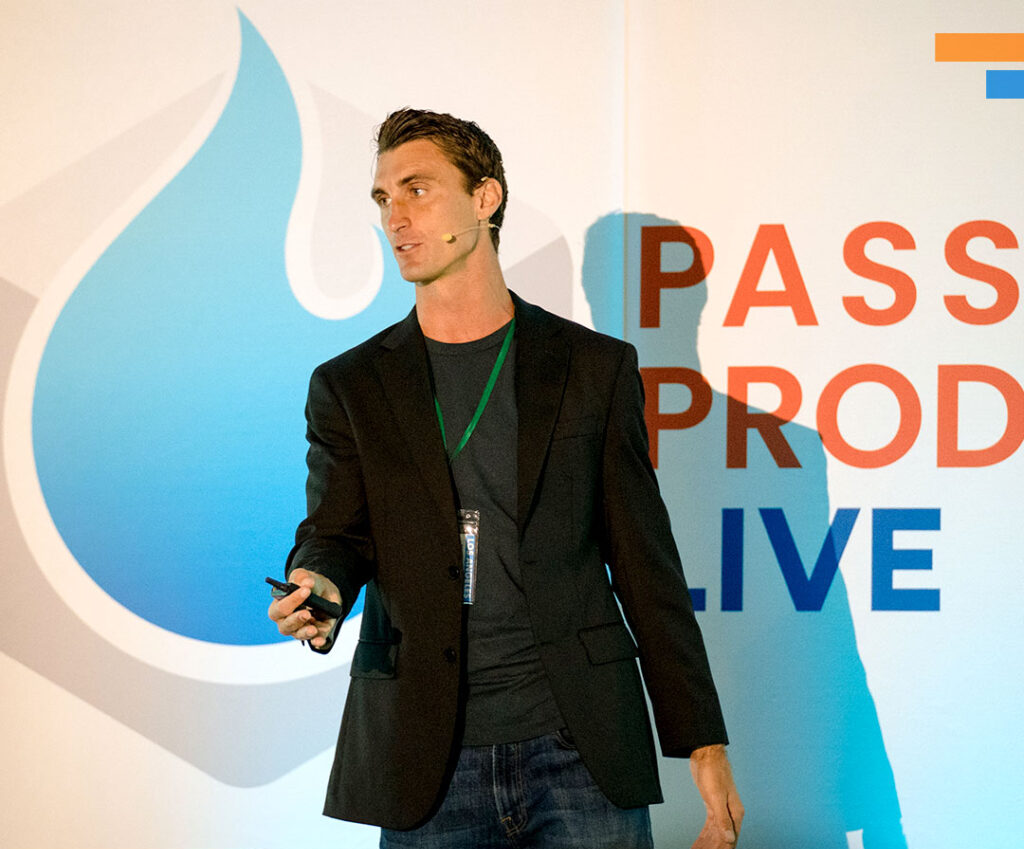
Every hack in this breakdown, from tiny entrepreneur habits to inevitability thinking to the Sunday review, only works because it sits on top of a business built to generate income without requiring Travis’s constant attention. That business is Amazon FBA, and the framework behind it is the Passion Product Formula, the same model Travis has used to launch, grow, and in some cases sell his own products for well into six and seven figures.
For anyone who wants to understand that model before committing to anything, Travis put together a free 12-hour YouTube course that walks through the entire process from the ground up. For those who are ready to move faster and get personalized guidance, there is also a free strategy call available through the Passion Product Accelerator, where his team builds out a complete launch plan and evaluates fit for the program.
Time freedom is not something that only shows up after a business is already successful. It is something that gets built into the business from the start, through the systems and structures behind it. The entrepreneur habits in this article are proof of what that looks like in practice, and the Passion Product Formula is the starting point for building a business capable of running the same way.
Frequently Asked Questions
What is the “tiny entrepreneur habits” method Travis uses every morning? It means committing to a version of a habit so small it is almost impossible to skip, such as one minute of meditation instead of 20. Once the habit is underway, it is far easier to keep going if there is time and energy for it.
How do you calculate your own hourly rate? Divide your annual income by the number of hours actually worked in a year. Once that number is clear, it becomes a practical filter for deciding which tasks are worth delegating and which are worth doing yourself.
What is inevitability thinking? It is the practice of structuring commitments so that reaching a goal stops depending on willpower. Prepaying for a trainer four times a week, for example, removes the daily decision of whether to show up.
How can someone just starting out build a business with this kind of structure? The systems in this article assume there is already a business generating consistent income. The Passion Product Formula, taught through Travis’s free YouTube course and the Passion Product Accelerator, is designed to help people build that foundation on Amazon FBA before layering in these kinds of productivity systems.