
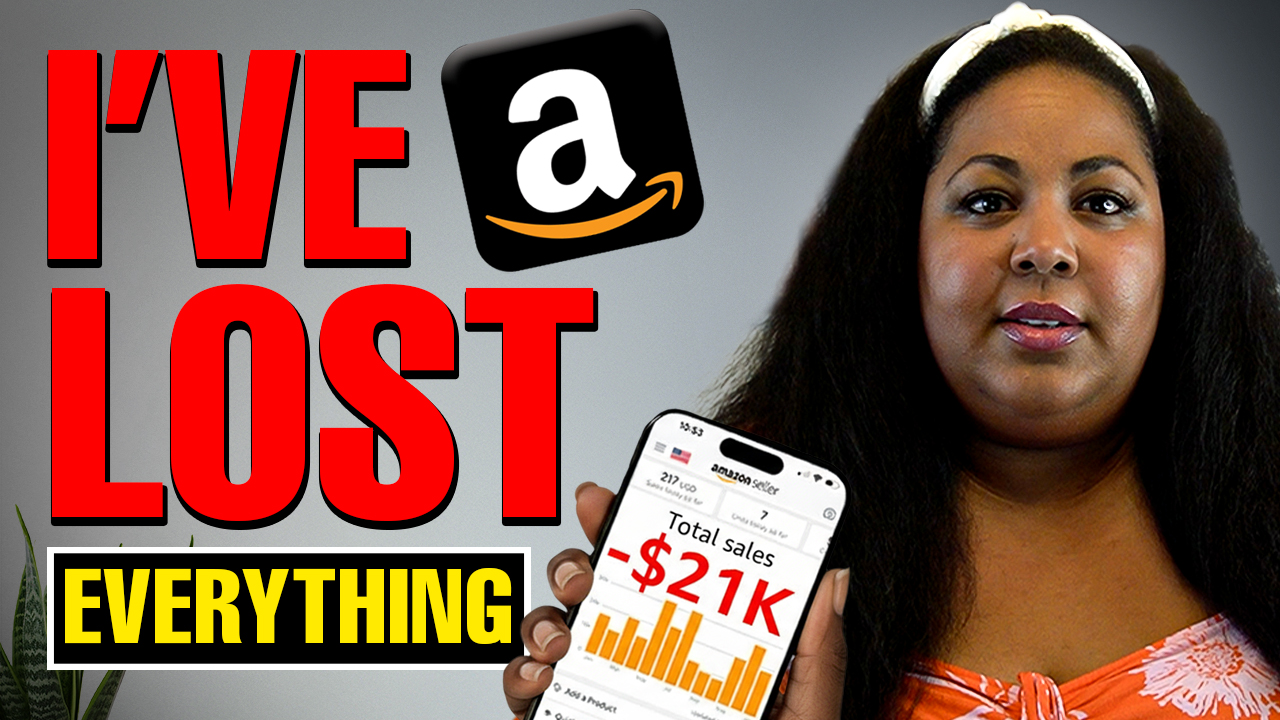
Starting an Amazon FBA business sounds like a dream come true, but Amazon FBA mistakes can cost you thousands. You can work from home, be your own boss, and build a profitable income stream. However, the reality can be much harsher than the fantasy, especially without proper guidance. Antoinette, a stay-at-home mom desperately seeking additional income while homeschooling her kids, learned this lesson the hard way. Despite investing nearly $30,000 into her Amazon FBA business, she lost over $3,000 in just her first two months of selling.
Nevertheless, her story isn’t one of failure – it’s one of resilience and valuable lessons. You can learn from her experience and avoid the same costly mistakes. Antoinette made three critical errors that drained her profits and nearly destroyed her business before it could gain momentum. Moreover, she discovered one powerful secret that completely transformed her trajectory and set her on the path to success.
The good news is that you don’t have to lose thousands of dollars to learn these lessons. Furthermore, with the right mentorship and proven system like the Passion Product Formula, you can start your Amazon FBA business smartly. You can avoid the expensive pitfalls that trap so many new sellers. In fact, some entrepreneurs have started their Amazon businesses with zero upfront capital. They now generate over $200,000 annually.
- The Origin Story – From Blowout to Business Idea
- Breaking Down the $30,000 Investment
- The Confidence Trap: Skipping Product Research and Validation
- Mistake #2 – Ordering Too Many Units with Poor Packaging
- The $900 PPC Disaster: Spending Without Strategy
- The Real Numbers – Revenue vs. Profit
- The Comeback Strategy
- The Ultimate Secret – The Power of Mentorship
- How the Passion Product Formula Delivers Results
- Your Amazon FBA Journey Starts Here
- Frequently Asked Question
The Origin Story – From Blowout to Business Idea

Antoinette’s journey began during one of those chaotic parenting moments that every mom knows too well. While dining at a restaurant with her family, her baby had a diaper blowout. Thinking quickly, she grabbed one of her grandmother’s incontinence pads to create a clean surface. In that stressful moment, inspiration struck – not the blowout, but a genuine business idea that would change her life.
She immediately recognized a significant gap in the market for toddler care products. Parents needed a bigger, more absorbent changing area when dealing with growing toddlers. This was especially true during the challenging potty training phase. The standard changing pads available simply weren’t cutting it. They were too small, too thin, and they leaked. Consequently, Antoinette envisioned creating the Potty Pad with Pockets. This was a large absorbent changing pad with built-in pockets for disposing of wipes and dirty diapers.
With her product concept firmly in mind, Antoinette knew she needed expert guidance. She wanted to turn her idea into reality. She discovered Travis Marziani’s YouTube channel, which featured hours of valuable material about selling on Amazon. After absorbing the free content, she realized she wanted more than just information. She needed a mentor who could answer her specific questions and guide her through every critical decision.
Therefore, Antoinette took the leap and signed up for Travis’s Passion Product Formula course. She was ready to manufacture her product and start selling thousands of units overnight. Little did she know that her enthusiasm would lead to some expensive mistakes. Combined with skipping crucial lessons in the course, these decisions nearly derailed her entire business.
Breaking Down the $30,000 Investment

The Initial Creative Costs
Understanding where every dollar goes is crucial when starting an Amazon FBA business. Antoinette’s total investment reached nearly $22,000 before she even made her first sale. Additional costs continued mounting afterward. The breakdown reveals both necessary expenses and areas where better planning could have saved thousands of dollars.
Her journey began with package design, which cost $300. She was lucky to have a creative friend who helped with her logo and packaging. Subsequently, she spent $700 on professional product photos. This came after realizing her own photography wasn’t up to Amazon’s standards. Fortunately, she managed to secure a trademark and patent attorney completely free. She simply asked lawyers to help pro bono – a strategy that saved her potentially thousands of dollars. The Amazon seller account fee added another $39.99 to her startup costs.
Manufacturing and Shipping Expenses

The biggest expense by far was manufacturing, which consumed $14,600. This produced 1,600 packs of toddler changing pads. Each pack contained 30 individual pads, resulting in over 50,000 changing pads total. Before committing to the full production run, Antoinette wisely spent $360 on samples. She also spent another $113 on product inspection. Additionally, she invested $50 in creating an LLC to protect her personal assets. She spent $30 for UPC codes required to list products on Amazon.
However, the costs didn’t stop at production. Shipping her products from the Chinese manufacturer to Amazon’s warehouse cost a staggering $5,300. She used Global Logistics through Amazon. This covered everything from pickup at the factory in China to delivery at the Amazon FBA warehouse. Furthermore, once her products arrived at Amazon, the storage fees began accumulating immediately. This is where one of her biggest mistakes became painfully expensive. In just her first month, storage fees alone exceeded $1,700. Her packaging was bulky and heavy, eating directly into her profit margins.
The Confidence Trap: Skipping Product Research and Validation

Why Gut Feeling Isn’t Enough
Confidence in your product idea is essential, but overconfidence can be devastating. Antoinette was absolutely certain that parents needed her Potty Pad with Pockets. She needed it herself, after all. She asked other moms and dads in her circle, and they all agreed they would buy it. With 100% positive feedback from her small test group, she felt completely validated. She was ready to move forward immediately.
Nevertheless, this approach contained a critical flaw that cost her dearly. Antoinette admits she skipped an entire lesson in Travis’s Passion Product Formula course. Why? She had already made up her mind about her product. That lesson covered Helium 10, an incredibly powerful tool. It helps sellers find and validate product ideas based on actual Amazon search data. Instead of relying on gut feeling and a small sample size, Helium 10 reveals the truth. It shows exactly how many people are searching for products like yours every single month.
Understanding Amazon as a Search Engine

Understanding that Amazon is fundamentally a search engine changes everything. It transforms how you approach product selection. Customers type keywords into the Amazon search bar looking for specific solutions to their problems. Helium 10 shows you precisely how popular certain keywords are. This allows you to determine real customer demand before investing thousands of dollars. Moreover, it helps you identify powerful keywords to strategically place in your title and bullet points. This positions your product at the top of search results where customers actually click and buy.
This validation process could have revealed crucial insights. She would have learned about market demand, competition levels, and keyword opportunities. Furthermore, Antoinette could have discovered which specific features customers were searching for. She could have adjusted her product accordingly. The Passion Product Formula teaches this systematic approach to product validation. It ensures you’re not gambling with your hard-earned money. Instead, you’re making data-driven decisions. In fact, proper validation often means the difference between a product that struggles to sell and one that generates consistent revenue from day one.
Mistake #2 – Ordering Too Many Units with Poor Packaging

Manufacturing decisions can make or break your Amazon business before you sell a single unit. Travis specifically recommends that new sellers keep their first order between 300 and 500 units. This minimizes risk while testing the market. However, Antoinette ordered 1,600 units right out of the gate – more than triple the recommended amount. This decision alone tied up significant capital. That money could have been used more strategically elsewhere in her business.
Compounding this mistake was her packaging design. It turned out to be a profit-killing nightmare. Her original packaging was huge, heavy, and extremely bulky. Consequently, Amazon charged her $21 in storage fees for each unit. This came out of her $40 revenue per sale. Think about that math for a moment. More than half of her revenue disappeared immediately into storage costs. This happened before accounting for any other fees or expenses.
The Amazon revenue calculator is a free tool. It shows you exactly what fees you’ll pay based on your product’s weight and dimensions. If Antoinette had used this calculator before finalizing her packaging design, she would have immediately seen the impact. She would have understood how devastating bulky packaging could be. Instead, she learned this expensive lesson after her products were already manufactured, shipped, and sitting in Amazon’s warehouse. This cost her over $3,000 in unnecessary fees and lost income during those first two months.
Fortunately, Antoinette worked with her manufacturer to completely redesign her packaging. She made it smaller and much lighter. This optimization dramatically reduced her storage fees. It put her on track toward profitability. The lesson here is crystal clear: packaging matters just as much as the product itself when selling on Amazon. The Passion Product Formula includes detailed tutorials on shipping and packaging optimization. This ensures you get it right the first time. You can avoid throwing away thousands of dollars on avoidable mistakes.
The $900 PPC Disaster: Spending Without Strategy

The Appeal of Instant Visibility
Pay-per-click advertising on Amazon seems like the perfect solution for new sellers. It offers immediate visibility. After all, PPC places your listing at the top of search results where customers are most likely to see and click on it. You simply pay a small fee each time someone clicks on your listing. This sounds reasonable in theory. However, without proper strategy and knowledge, PPC becomes an expensive black hole. It drains your budget while delivering minimal results.
Antoinette poured over $900 into PPC advertising during her first month. She believed it would generate massive sales and launch her business successfully. She thought it would be easy and straightforward. The reality proved far more complex. Effective PPC requires targeting specific keywords and search terms. These are the terms that customers actually use when looking for products like yours. Moreover, you need to understand bid strategies, negative keywords, and campaign structures. You need conversion optimization to make PPC profitable rather than just expensive.
The Power of Organic Growth
The consequences of her unfocused PPC spending became painfully clear when she analyzed her results. Despite investing heavily in advertising, she was hemorrhaging money. She didn’t understand which keywords worked, which ads converted, or where her budget was being wasted. In her second month, Antoinette made a crucial decision. She dramatically pulled back on PPC spending to stop the bleeding. Interestingly, she discovered that her product continued selling organically. This proved that throwing money at PPC wasn’t the solution she needed.
This experience taught her a valuable lesson. Organic growth, built on proper keyword optimization and quality listings, provides more sustainable long-term success. It works better than expensive advertising campaigns. The Passion Product Formula includes comprehensive PPC training with proven strategies. It shows you exactly how to harness Amazon advertising effectively. Furthermore, Travis offers free PPC tools on his YouTube channel. These help sellers avoid wasting money on ineffective campaigns. Learning PPC strategy before spending money saves thousands of dollars. It builds a foundation for scalable, profitable advertising.
The Real Numbers – Revenue vs. Profit

Month One: The Harsh Reality
Understanding the difference between revenue and profit is absolutely critical for Amazon sellers. Revenue represents the total money that comes in from sales. Profit is what you actually keep after paying all expenses. Antoinette’s first month selling on Amazon generated $2,559 in revenue from 64 units sold. This initially seemed like an encouraging start. However, the excitement quickly faded when she calculated her actual profit.
The cost of goods sold for those 64 units was $951. This seemed reasonable on the surface. Nevertheless, Amazon’s fee structure began eating away at her revenue immediately. The Amazon referral fee, which is 15% for most categories, cost her $383. Then came the FBA fees of $955. This covers Amazon’s fulfillment services including picking, packing, and shipping products to customers. Additionally, her bulky packaging resulted in storage fees exceeding $1,700 in just that first month alone.
The Silver Lining in the Losses
After accounting for $96 in PPC advertising and all the other fees, the numbers were devastating. Antoinette’s exciting first month ended with a loss of over $2,300. She had sold more units than expected. She initially hoped for only 10 to 20 sales. But her business was bleeding money. The second month showed slight improvement with $839 in revenue from 21 organic sales. However, she still lost over $700. Consequently, her first two months of selling on Amazon resulted in a combined loss exceeding $3,000.
Despite these harsh numbers, something important was happening beneath the surface. Antoinette’s product was ranking on the first page of search results. Organic sales were growing without expensive PPC advertising. This organic growth indicated that customers were finding and purchasing her product naturally. This provides a foundation for long-term profitability. Furthermore, each sale and positive review improved her product’s ranking over time. This created a compounding effect that would eventually lead to sustainable success.
The Comeback Strategy

Faced with mounting losses and expensive mistakes, Antoinette had a crucial decision to make. She could give up or double down on fixing what was broken. She chose to fight back by completely rebranding her business and refocusing her strategy. Using Fiverr, she hired talented freelancers to redesign her branding. She wanted to create a more professional, targeted image that would resonate with her specific niche market.
Simultaneously, she worked closely with her manufacturer to streamline her packaging as much as possible. The new packaging design dramatically reduced both her storage fees and shipping costs. This addressed one of the biggest profit killers in her business. This optimization meant that significantly more of each sale went into her pocket rather than Amazon’s. It fundamentally changed her profit margins and made success actually achievable.
Most importantly, Antoinette returned to the Passion Product Formula course. She committed to actually watching the lessons she had previously skipped and focused particularly on the sections about selling in a niche. She also studied understanding Amazon’s search algorithm. By applying these fundamental principles that Travis teaches, she began seeing improvements. Her organic rankings improved and her sales became more consistent and predictable.
The results of her comeback strategy are already showing promise. Her product maintains its first-page ranking. Organic sales continue growing steadily. She’s integrating social media marketing to drive additional traffic to her Amazon listing. Furthermore, with lower fees and proper niche targeting, everything is building organically. It’s moving toward the profitable business she originally envisioned. Her story proves that mistakes don’t have to be fatal. You just need to be willing to learn, adapt, and implement proven strategies.
The Ultimate Secret – The Power of Mentorship

Having Resources Isn’t Enough
After analyzing everything that went wrong in her first two months, Antoinette discovered a profound truth. This truth was so simple yet so powerful that it changed her entire trajectory. The secret to having a successful Amazon FBA business isn’t just having access to information. It’s having a mentor and actually listening to them. This revelation seems obvious in hindsight. However, many entrepreneurs make the same mistake she did.
When Antoinette signed up for the Passion Product Formula, she gained access to incredible resources. She had two personalized one-on-one mentor sessions. In these sessions, she could ask specific questions about her business. Additionally, she could attend live weekly Q&A sessions with experienced coaches and fellow students. The course included over 100 hours of step-by-step tutorial videos. These covered every aspect of building a successful Amazon business from product research to scaling.
The Transformation Through Implementation
However, having these resources available didn’t help her. Why? Because she didn’t use them properly. Antoinette admits she skipped lessons that seemed irrelevant to her situation. She also skipped topics she thought she already understood and rushed ahead, eager to start making money. She didn’t build the proper foundation that would make success possible. Consequently, she played catchup after losing thousands of dollars on completely preventable mistakes.
The transformation happened when she finally embraced the mentorship she had been paying for all along. By going back through the course systematically, she started seeing changes. She asked coaches specific questions and implemented their guidance. She began seeing real improvements in her business. This experience mirrors what countless successful Amazon sellers have discovered. Mentorship from someone who has already achieved what you’re trying to accomplish is invaluable. In fact, Travis has helped students like AJ start Amazon businesses with zero upfront capital. He used crowdfunding strategies, and AJ now generates over $200,000 every year from Amazon sales alone.
How the Passion Product Formula Delivers Results
Comprehensive Training That Prevents Costly Mistakes
The Passion Product Formula succeeds where so many Amazon courses fail. It provides comprehensive, step-by-step training that covers every single aspect of building a profitable business. Unlike generic courses that teach outdated strategies or focus only on theory, this program gives you proven processes. These processes prevent costly mistakes before they happen. Moreover, Travis and his team continuously update the content. They keep it current with Amazon’s latest policies, algorithm changes, and best practices.
One of the program’s most valuable features is access to resources that would otherwise cost thousands of dollars. For example, FBA Creatives is a team of Amazon experts. They can create your product images, logo, branding, and packaging for far less than what Antoinette paid. They’ll also build your entire listing description and bullet points. They use proven templates that convert browsers into buyers. Furthermore, these professionals understand Amazon’s specific requirements and optimization techniques. This ensures your listing performs well from day one.
Community Support and Massive Market Opportunity

The Passion Product Formula also provides community support and accountability. This keeps you moving forward even when challenges arise. Weekly live sessions allow you to ask questions, troubleshoot problems, and learn from other students’ experiences. This community aspect prevents the isolation and overwhelm that causes many new sellers to quit before achieving success. Additionally, the program offers budget-friendly options for entrepreneurs at every stage. This includes a completely free 10-hour Amazon FBA course for those who want to test the waters before fully committing.
Perhaps most importantly, the program teaches you how to tap into Amazon’s massive customer base. There are over 230 million users in the United States alone. Research shows that 56% of online shoppers start their product searches on Amazon rather than Google or other search engines. This represents an enormous opportunity for sellers who understand how to position their products correctly. You need to know where customers are already looking to buy. The Passion Product Formula gives you the exact strategies to capture this demand. You’ll build a business that generates consistent income month after month.
Your Amazon FBA Journey Starts Here

The Three Mistakes You Must Avoid
Antoinette’s journey from a $3,000 loss to a trajectory toward profitability illustrates the power of learning from mistakes. It also shows the importance of implementing proven strategies. Her experience serves as both a cautionary tale and an inspiring roadmap. It helps aspiring Amazon sellers who want to avoid expensive pitfalls. The three critical mistakes she made cost her thousands of dollars. These were skipping product validation, ordering too many units with poor packaging, and wasting money on unstrategic PPC. However, they provided invaluable lessons.
The beautiful truth is that you don’t have to make these same mistakes to learn these lessons. With proper mentorship through programs like the Passion Product Formula, you can benefit from hard-won wisdom. You’ll learn from successful sellers who have already navigated these challenges. Furthermore, you’ll gain access to tools, resources, and strategies that compress years of trial and error. They create a systematic process that works predictably and reliably.
Take Action on Your Dreams Today

Success on Amazon is absolutely possible for anyone willing to follow a proven system. You need to commit to learning the business properly. Whether you’re a stay-at-home parent like Antoinette, someone looking to escape the 9-to-5 grind, or an entrepreneur seeking additional income streams, Amazon FBA offers genuine opportunities. The platform continues growing year after year. Customers are actively searching for products to buy right now.
Your Amazon FBA success story is waiting to be written. It starts with making one crucial decision. Will you try to figure everything out on your own and potentially lose thousands of dollars? Or will you invest in proven mentorship that guides you around the expensive mistakes? Take action today by exploring the Passion Product Formula. Discover how the right guidance transforms your Amazon business dreams into profitable reality. If you’re not quite ready for the full program, start with Travis’s completely free 10-hour Amazon FBA course. Begin learning the fundamentals that successful sellers use every single day.
Frequently Asked Question
How much money do I really need to start an Amazon FBA business?
While Antoinette spent nearly $22,000 on her initial investment, you don’t need anywhere near that amount to start successfully. Many sellers begin with $3,000 to $5,000. They do this by ordering smaller quantities (300-500 units) and optimizing their packaging from the start. Furthermore, some entrepreneurs like AJ have started with zero upfront capital. They used crowdfunding strategies taught in the Passion Product Formula. The key is following proven guidance rather than making expensive mistakes that drain your budget unnecessarily.
What is the Passion Product Formula and how is it different from other Amazon courses?
The Passion Product Formula is Travis Marziani’s comprehensive Amazon FBA training program. It teaches you to create improved products rather than generic private label items. Unlike courses that only provide information, this program includes one-on-one mentor sessions. It offers weekly live Q&As and over 100 hours of step-by-step tutorials. You also get access to resources like FBA Creatives. Additionally, the program focuses on proven strategies that help you avoid costly mistakes while building a sustainable, profitable business.
Should I use PPC advertising when I first launch my Amazon product?
PPC advertising can be valuable, but only when you understand how to use it strategically. Antoinette’s mistake was pouring over $900 into PPC without proper knowledge. She didn’t understand keyword targeting, bid strategies, and campaign optimization. Instead of immediately spending heavily on ads, focus first on optimizing your listing. Use proper keywords, high-quality images, and compelling copy. Then, start with small, targeted PPC campaigns while tracking your results carefully. The Passion Product Formula teaches effective PPC strategies that make advertising profitable rather than just expensive.
How important is product packaging for Amazon FBA success?
Packaging is critically important and directly impacts your profitability. Antoinette’s bulky packaging cost her $21 in storage fees per unit out of her $40 revenue. More than half her income disappeared immediately. Before finalizing your packaging design, use Amazon’s revenue calculator. It shows you exactly what fees you’ll pay based on weight and dimensions. Smaller, lighter packaging means lower storage fees, cheaper shipping costs, and significantly better profit margins. This is one area where getting it right the first time saves thousands of dollars.
Can I really validate my product idea using tools like Helium 10?
Absolutely, and validation is one of the most crucial steps in starting an Amazon business. Helium 10 shows you exactly how many people search for specific keywords each month. It reveals real customer demand rather than relying on gut feeling. Moreover, it helps you identify competition levels. You can discover powerful keywords for your listing and make data-driven decisions about which products to sell. The Passion Product Formula provides detailed training on using these validation tools effectively. This ensures you choose products with genuine profit potential.
What should I do if I’m losing money on Amazon like Antoinette did initially?
First, analyze exactly where your money is going by reviewing all your fees, costs, and expenses. Identify your biggest profit killers. These might be storage fees, PPC spending, or manufacturing costs. Then, take strategic action to address these issues. You might need to optimize packaging, adjust your PPC strategy, or rebrand to better target your niche. Most importantly, seek guidance from mentors who have successfully overcome similar challenges. Antoinette’s turnaround came from returning to the Passion Product Formula course. She actually implemented the lessons she had previously skipped.
Is it too late to start selling on Amazon in 2025?
Not at all – Amazon continues growing with over 230 million customers in the US alone and 310 million worldwide. The platform processes billions of dollars in sales annually. Research shows that 56% of online shoppers start their product searches on Amazon. While competition exists, proper product research, validation, and differentiation strategies help you succeed. These are taught in programs like the Passion Product Formula. They work regardless of when you start. Focus on creating improved products that solve real customer problems rather than competing on generic items. You’ll find profitable opportunities.
How long does it take to become profitable selling on Amazon?
The timeline varies based on several factors. These include your product, pricing, marketing strategy, and how well you avoid common mistakes. Antoinette lost money in her first two months. However, she positioned herself for profitability by month three after fixing her packaging and strategy. Some sellers become profitable immediately. Others take 3-6 months to dial in their approach. Following a proven system from the beginning significantly shortens this timeline. It helps you avoid expensive trial and error that delays profitability.