
The Amazon FBA product opportunity has never been bigger. Yet most beginners stumble at the very first hurdle: finding the right product to sell. You’ve probably heard success stories of sellers making six figures per month. But you might be wondering how they discovered those golden opportunities.
Today, you’ll discover the exact seven-step system that successful Amazon entrepreneurs use. These methods help them uncover profitable products consistently. Throughout this comprehensive guide, you’ll learn techniques that have helped countless sellers build thriving Amazon businesses from scratch.
Moreover, you’ll see real-world examples of products found using these techniques. Several are currently generating over $100,000 per month in revenue. The Passion Product Formula methodology emphasizes finding products you genuinely care about. At the same time, it ensures they meet strict profitability criteria.
By the end of this article, you’ll have a complete framework for conducting professional-grade product research. Whether you’re completely new to Amazon FBA or searching for that perfect product, this guide will transform your approach. Furthermore, you’ll understand exactly what separates winning products from costly mistakes. This knowledge will save you thousands of dollars and countless hours of frustration.

- Understanding Amazon FBA Product Research Fundamentals
- Essential Tools for Amazon Product Research
- Method #1: The Best Sellers Method
- Method #2: The Magnet Tool (Keyword Method)
- Live Product Discovery: Clove Tea Case Study
- Method #3: Trend Riding with Google Trends
- Method #4: The Amazon Search Bar Method
- Method #5: The Cerebro Tool (Reverse Engineering)
- Method #6: The Blackbox Tool (Opportunity Discovery)
- Method #7: The Passion Product Method
- The Complete Product Research Checklist
- Product Research Scorecard Deep Dive
- Common Product Research Mistakes to Avoid
- 2025 Product Trends & High-Demand Categories
- Real Success Stories from the Passion Product Formula
- How to Get Started with Product Research Today
- The Passion Product Formula Program
- Your Amazon FBA Success Blueprint
- Frequently Asked Questions
Understanding Amazon FBA Product Research Fundamentals

How Amazon Works as a Search Engine
Before diving into specific research methods, you need to understand how Amazon actually works as a marketplace. Unlike traditional retail stores, Amazon functions primarily as a search engine. Customers type exactly what they want to buy. Then they choose from the results presented to them. This fundamental difference means that your success depends on creating products. These products must perfectly match what people are actively searching for.
Consequently, the key to winning on Amazon isn’t simply copying existing products or selling generic items. Instead, you need to identify gaps in the market. Customer demand exists but quality solutions remain scarce. For instance, when customers search for “carnivore electrolytes,” they’re looking for a specific solution. This solution addresses their unique dietary needs. If you’re the only brand clearly positioned to serve that niche, you’ll naturally capture a disproportionate share of those sales.
Balancing Data with Creative Thinking
Furthermore, successful product research requires both art and science. On one hand, you need cold, hard data. This includes search volumes, competition levels, and profit margins. On the other hand, you need creative thinking. This helps you spot opportunities that others have overlooked. It also helps you envision how you can make your product stand out. This balance between data and intuition separates consistently successful sellers from those who struggle to gain traction.
That’s precisely why the Product Research Checklist and Product Research Scorecard exist. These tools help you evaluate every product idea objectively across multiple dimensions. These dimensions range from manufacturing complexity to viral potential. Rather than relying on gut feelings alone, you’ll systematically assess each opportunity. You’ll make informed decisions based on proven criteria. These criteria correlate with marketplace success.
Essential Tools for Amazon Product Research

Investing in Professional Research Tools
While you can certainly conduct basic product research using free methods, investing in professional tools dramatically accelerates your success. These tools help you avoid costly mistakes. Helium 10 stands out as the industry-leading software suite. It’s specifically designed for Amazon sellers. It offers everything from keyword research to profitability calculations. Currently, you can access Helium 10 with an exclusive 35% discount for six months. This makes it more affordable than ever to equip yourself with professional-grade research capabilities.
Beyond Helium 10, Google Trends serves as an invaluable free resource. It helps you identify emerging market trends before they reach peak saturation. This powerful tool shows you exactly how search interest for specific topics changes over time. This allows you to spot growing niches early. For example, you can compare the carnivore diet trend against the keto diet trend. You can see which one is gaining momentum and where opportunities might exist.
Understanding Revenue Potential
Additionally, the Jungle Scout Sales Estimator provides quick revenue calculations for any product on Amazon. By simply entering a product’s Best Seller Rank (BSR) and category, you can instantly estimate how many units it sells per month. You can also calculate potential revenue. This tool proves especially valuable when you’re evaluating whether a product opportunity is worth pursuing. It also helps you determine if the market size is too small to justify the investment.
Together, these tools form your product research arsenal. They enable you to make data-driven decisions rather than expensive guesses. While the upfront investment might seem significant, consider that launching the wrong product can cost thousands of dollars. This includes wasted inventory, shipping, and opportunity cost. In contrast, spending a modest amount on research tools helps ensure that when you do invest in inventory, you’re backing a winner. This winner has proven market demand.
Method #1: The Best Sellers Method
Navigating Amazon’s Best Seller Lists
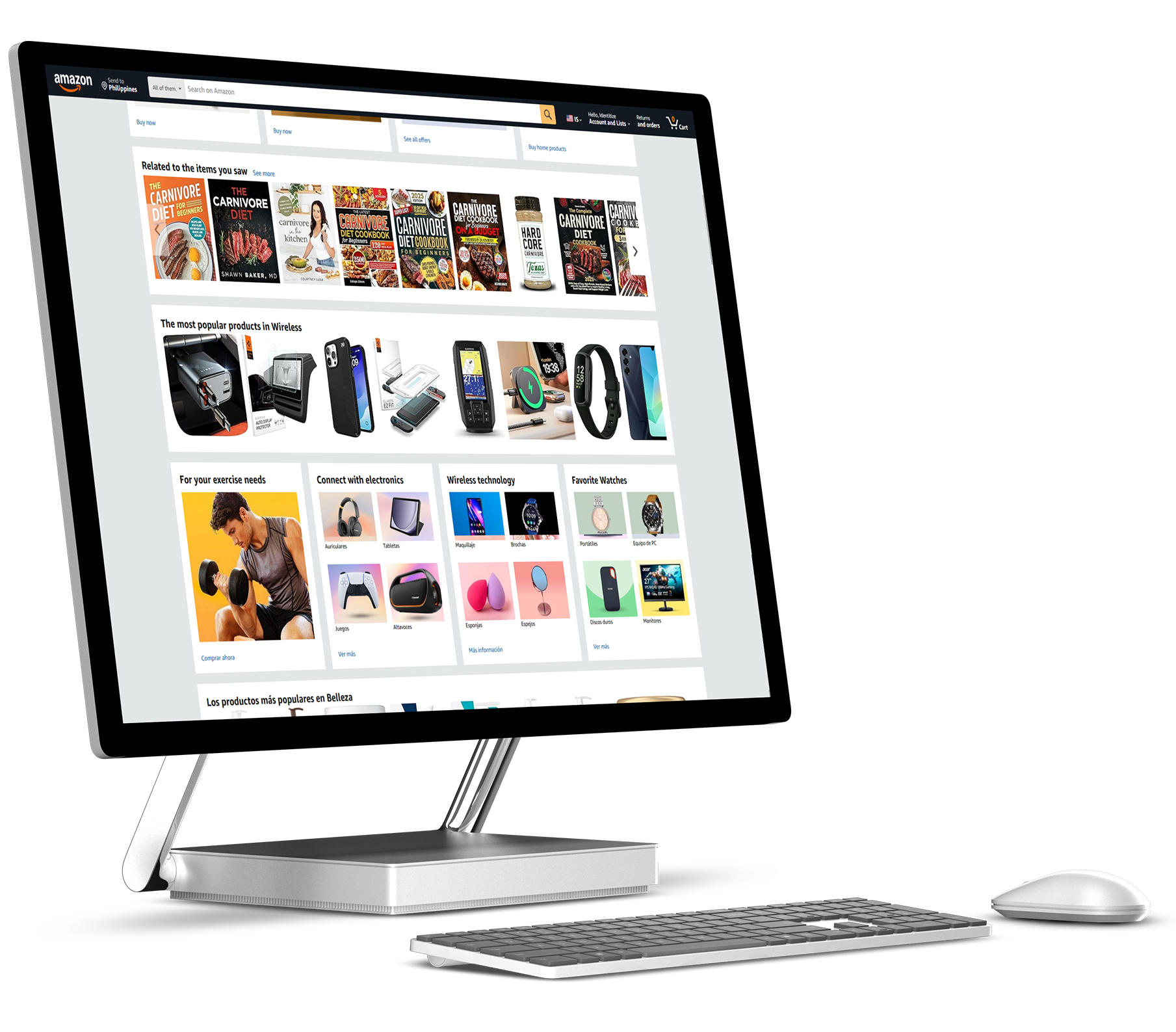
Amazon makes product research surprisingly straightforward. They publicly display their best-selling products in every single category and subcategory. However, the secret lies not in copying the overall bestsellers. Rather, it’s in drilling down into specific niches. This is where you can identify underserved opportunities. This approach follows the timeless principle that “the riches are in the niches.” It allows you to compete effectively even as a new seller.
To implement this method effectively, start by navigating to Amazon’s Best Sellers page. Select broad categories that interest you. Some of the most profitable categories include Beauty and Personal Care, Health and Household, Grocery and Gourmet Foods, Pet Supplies, and Baby Products. These categories typically feature consumable products. Customers reorder them regularly. This creates predictable recurring revenue streams for your business.
Drilling Down into Profitable Niches
Once you’ve selected a category, systematically explore the subcategories to find specific niches. For instance, rather than looking at all products in Health and Household, narrow your focus to Diet and Sports Nutrition. Then drill even deeper into specific segments like electrolyte powders or protein supplements. Interestingly, when examining the top eight bestselling products in Diet and Sports Nutrition, four of them are electrolyte powders. This immediately signals strong market demand in that segment.
Now comes the exciting part: calculating actual revenue potential. Let’s say you find a product ranked #5 in Health and Household selling for $21.59. Using the Jungle Scout Sales Estimator, you enter the category and rank. This reveals this product sells approximately 273,000 units monthly. Multiply that by the price, and you’re looking at nearly $6 million in monthly revenue. While you won’t immediately capture that entire market, these numbers demonstrate the massive opportunity available. This happens when you identify winning product categories.
Method #2: The Magnet Tool (Keyword Method)
Understanding Customer Search Behavior
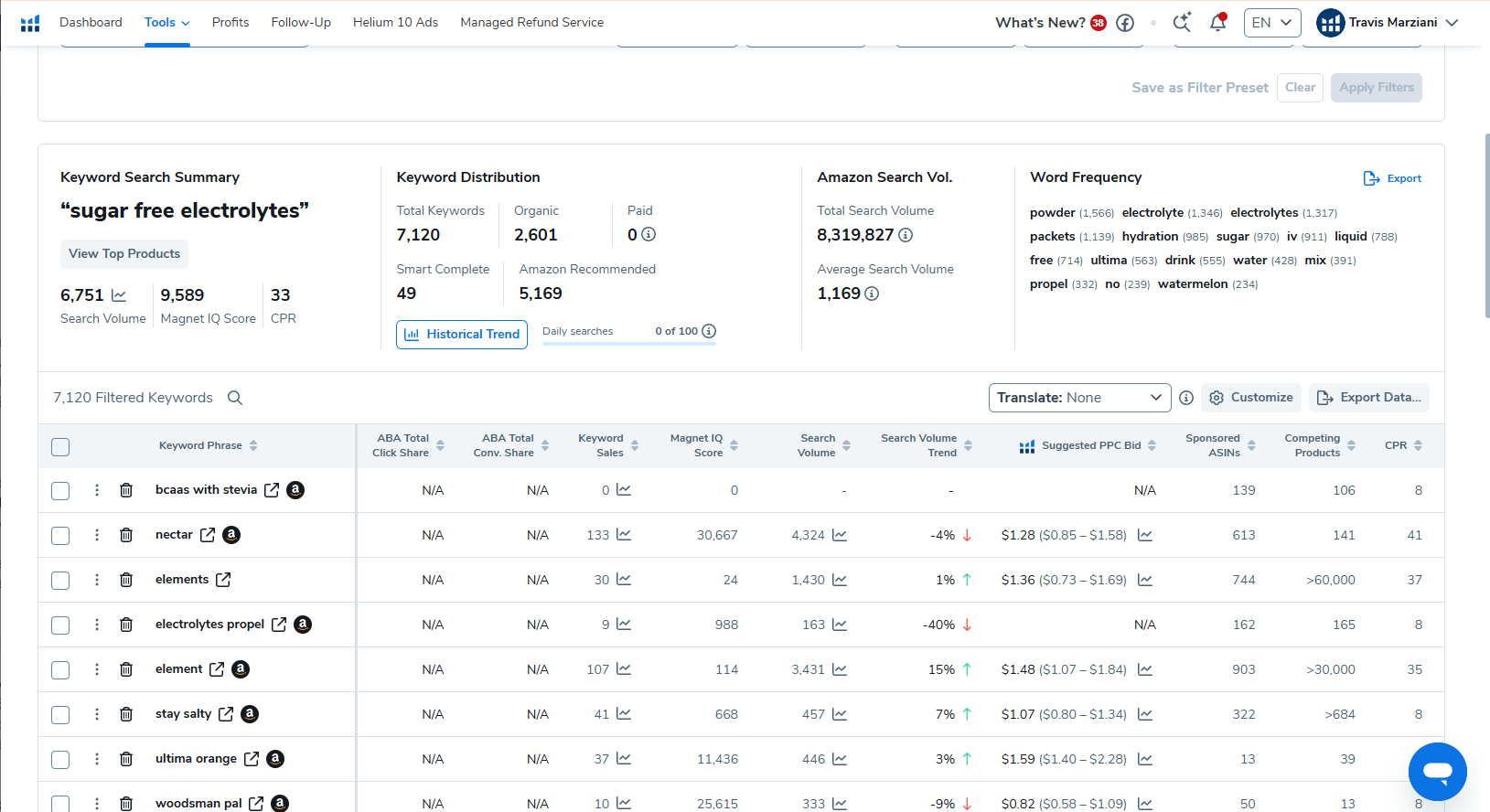
The Helium 10 Magnet tool revolutionizes product research. It shows you exactly what customers are searching for on Amazon. It also reveals how much competition exists for each keyword. This method proves particularly powerful because it reveals actual customer demand through real search data. It eliminates guesswork about whether people want what you’re planning to sell. Moreover, the tool displays related keyword phrases that you might never have considered. This opens doors to product opportunities you wouldn’t have discovered otherwise.
To use Magnet effectively, start by entering a broad keyword related to your interests or expertise. For example, typing “electrolytes” reveals that 200,000 people search for this term monthly on Amazon. However, the real magic happens when you sort results by the Magnet IQ Score. This indicates keywords with high search volume relative to competition. Look for keywords where the IQ Score is at least three times higher than the search volume. This ratio suggests healthy demand with manageable competition.
Using CPR to Identify Achievable Keywords
Furthermore, pay close attention to the CPR (Competitive Performance Rank) metric. This tells you how many sales you need in an eight-day period to rank on the first half of the first page for that keyword. As a beginner, target keywords with a CPR below 25. This means you need fewer than four sales daily to achieve strong visibility. This achievable threshold allows you to gain traction quickly. You can use friends, family, and launch promotions without requiring massive advertising budgets.
Real success stories validate this approach convincingly. The Carnivore Electrolytes product was discovered using the Magnet tool. At that time, the search volume for “carnivore electrolytes” was just 2,000 monthly searches. Today, that same keyword generates 18,000 monthly searches. The product consistently produces over $100,000 in monthly revenue. This exponential growth demonstrates how identifying emerging trends early works. Then riding them as they expand can transform a modest product launch into a thriving business that generates life-changing income.
Live Product Discovery: Clove Tea Case Study
Identifying Market Gaps
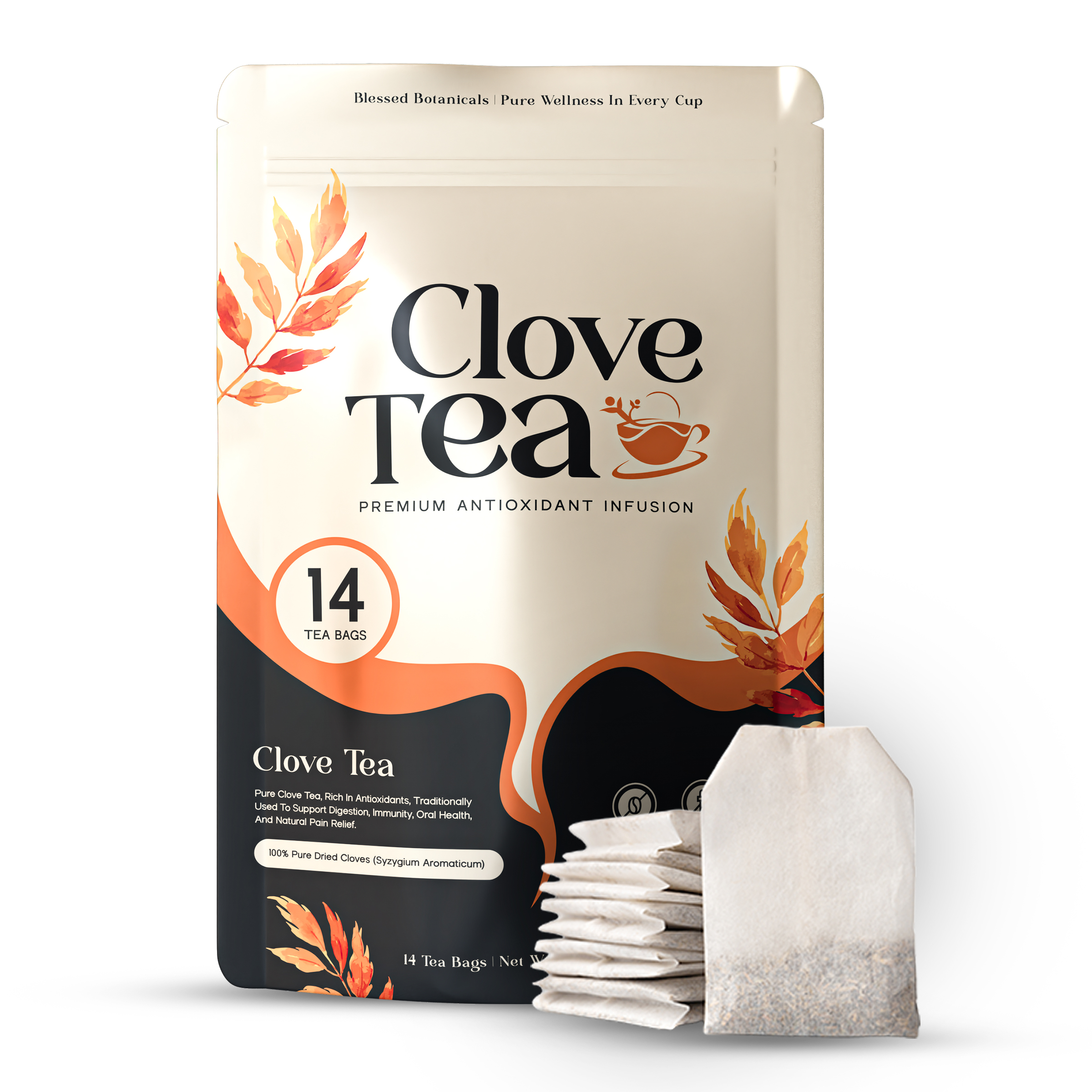
Sometimes the most profitable opportunities hide in plain sight. They’re waiting for someone to connect customer demand with product availability. Clove tea represents a perfect example of this phenomenon. It was discovered through methodical keyword research. This revealed a surprising gap in Amazon’s marketplace. When searching for “clove tea” on Amazon, you’ll find clove essential oils, whole cloves for cooking, and various tea blends containing cloves. But remarkably, no standalone premium clove tea product exists.
Meanwhile, the Magnet tool reveals that over 10,000 people search for “clove tea” monthly on Amazon. That number shows consistent growth over time. Even more compelling, Google Trends data shows search interest for clove tea has been increasing significantly. This particularly spikes during certain months when health-conscious consumers discover its benefits. This combination of growing demand and absent supply creates exactly the type of opportunity that smart Amazon sellers dream about finding.
Scoring the Opportunity
Using the Product Research Scorecard, clove tea scores exceptionally well across multiple criteria. Uniqueness rates a 9 out of 10 because no direct competition exists on Amazon for this exact product. Competition advantage scores a perfect 10 since you’d effectively be creating a new market category. The product is lightweight and easy to ship. It earns an 8 for premium pricing potential. It rates a 9 for reorder potential since tea is inherently consumable. Additionally, viral potential scores an 8 given the current health and wellness trends driving interest in natural remedies.
This discovery process illustrates perfectly how combining multiple research methods leads to breakthrough product ideas. First, the trend was identified through health and wellness monitoring. Then, keyword research confirmed substantial search volume. Finally, competitive analysis revealed the absence of quality solutions. When all three factors align, growing demand, proven search volume, and limited competition, you’ve found a golden opportunity. This is worth pursuing seriously. It potentially represents your next six-figure product launch.
Method #3: Trend Riding with Google Trends

Positioning Ahead of the Competition
Identifying trends before they peak gives you an enormous competitive advantage. This can translate into massive profits. Google Trends serves as your crystal ball. It shows you exactly which topics are gaining momentum and which ones are declining. This allows you to position yourself ahead of the competition. This forward-looking approach means you’re not just reacting to current market conditions. You’re actively anticipating where customer demand will be in six to twelve months.
The carnivore diet provides an outstanding case study in successful trend riding. When examining Google Trends data over the past five years, you can see the carnivore diet’s search volume steadily climbing. It ultimately peaked in January of recent years as people pursue New Year’s resolutions. Most remarkably, the carnivore diet actually overtook the keto diet in search popularity around January 2024. This signaled a major shift in dietary trends. Just as the keto diet created millionaires who launched keto-specific products early, the carnivore trend is creating similar opportunities right now.
Real Revenue from Trend Riding
Capitalizing on this trend has produced impressive results for sellers who took action early. Carnivore Electrolytes launched approximately 14-15 months ago. It now generates over $100,000 monthly in revenue. It sells more than 1,000 units per month at $38 each. Even more impressively, the product maintains over 1,200 subscribers on Amazon’s Subscribe & Save program. This provides predictable recurring revenue. Following that success, Carnivore Jerky launched less than two months ago. It already produces $13,000 monthly in revenue. This demonstrates that the trend still has tremendous growth potential.
Beyond the carnivore diet, Google Trends helps you identify countless other emerging opportunities across all product categories. For instance, pickleball continues showing remarkable growth. Outdoor recreation products spike seasonally. Various health supplements follow predictable interest patterns. By analyzing these trends and cross-referencing them with Amazon keyword data, you can confidently invest in products. You’ll know you’re riding a wave rather than swimming against the current. This strategic timing can be the difference between modest success and building a genuinely transformative business.
Method #4: The Amazon Search Bar Method

Leveraging Free Amazon Data
Sometimes the simplest tools provide the most valuable insights. Amazon’s search bar perfectly exemplifies this principle. As you begin typing any keyword, Amazon’s autocomplete feature automatically suggests the most commonly searched phrases starting with those letters. This functionality essentially gives you free access to Amazon’s vast search data. It reveals exactly what millions of customers are looking for every single day.
To implement this method systematically, start with a single letter. Observe what autocomplete suggests. For example, typing “T” might reveal “toys,” “tablets,” “towels,” and other high-volume searches. Then, add another letter “TA” and watch as the suggestions become more specific: “tape,” “tahini,” “table lamps.” Continue this process through various letter combinations. You’ll uncover surprising product opportunities that most sellers overlook completely.
Validating Search Bar Discoveries
This straightforward approach led directly to discovering Berberine as a product opportunity. By simply exploring different letter combinations and paying attention to supplement-related suggestions, the search bar revealed strong interest in this particular ingredient. Subsequently, launching a Berberine product proved successful. The research had already confirmed that customers were actively searching for it. This method requires zero investment in tools or software. This makes it perfect for absolute beginners who want to start their research journey immediately.
Nevertheless, while this method is completely free, it works best when combined with other research techniques to validate your findings. After identifying interesting keywords through the search bar, use Helium 10‘s Magnet tool to check search volumes and competition levels. Additionally, examine the actual search results to assess the quality of existing products. Identify opportunities for differentiation. This multi-layered validation process ensures you’re not just finding products people search for. You’re finding products where you can realistically compete and win market share.
Method #5: The Cerebro Tool (Reverse Engineering)
Learning from Successful Products
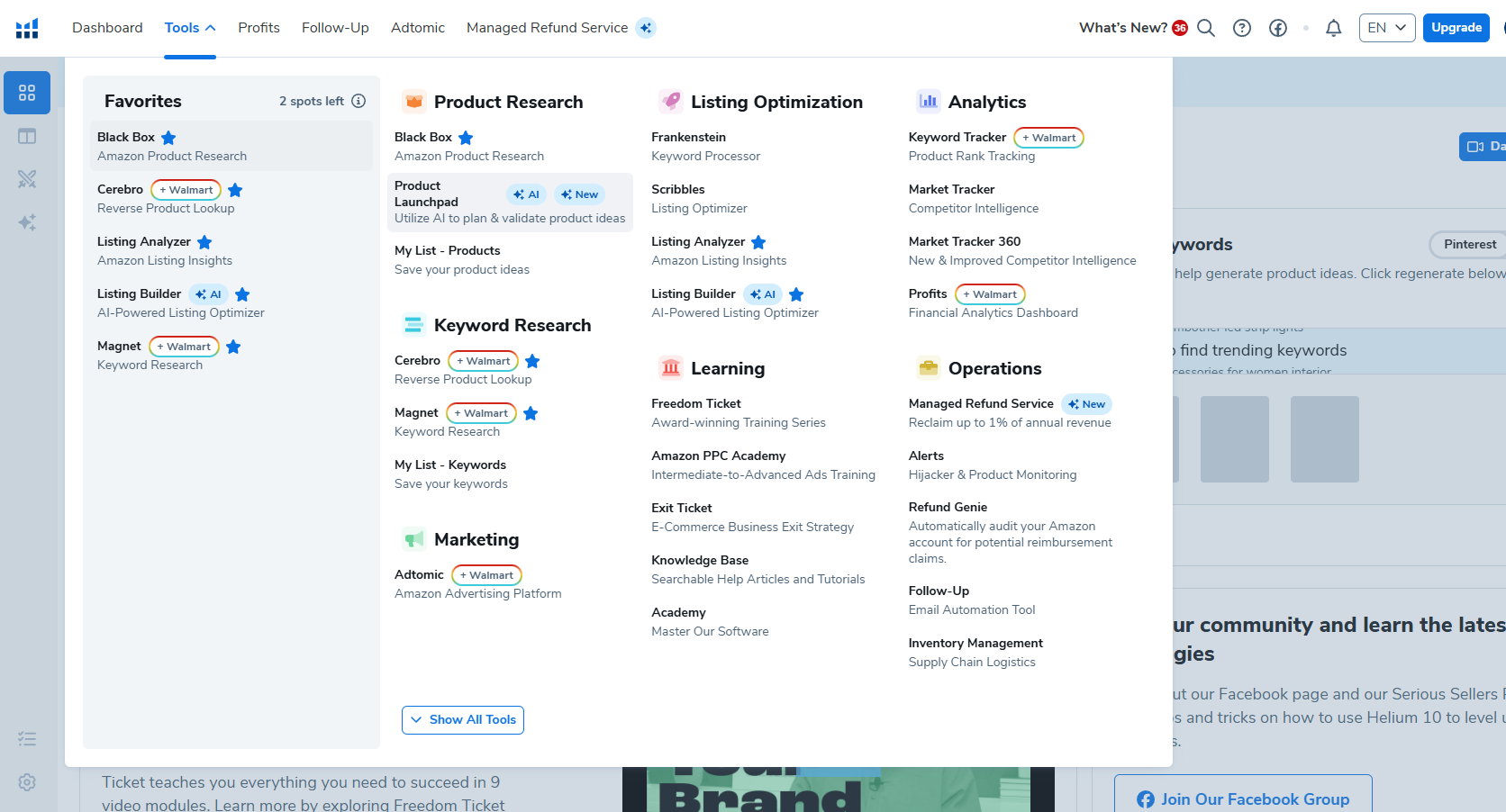
When you find a successful product on Amazon, Cerebro allows you to peek behind the curtain. You can discover exactly which keywords are driving its sales. This reverse-engineering approach proves incredibly powerful. You’re learning from products that have already proven their profitability in the marketplace. Instead of guessing which keywords to target, you’re copying the homework of successful sellers. These sellers have already done the hard work of testing and optimization.
To use Cerebro effectively, first locate a successful product on Amazon. Ideally, choose one with strong sales but fewer than 500 reviews. This indicates opportunity remains. Copy that product’s ASIN (Amazon Standard Identification Number). Paste it into the Cerebro tool. Within seconds, Cerebro generates a comprehensive report. It shows every keyword that product ranks for, along with search volumes, competition metrics, and ranking positions. This data reveals not only the obvious main keywords but also dozens of long-tail keywords. You might never have considered these.
Identifying Seasonal Patterns
Furthermore, Cerebro helps you identify seasonal patterns and market dynamics that aren’t immediately obvious. For instance, when analyzing a horse fly sheet product, Cerebro revealed that search volume for “horse fly sheets with neck” peaks during winter months. It decreases during summer. This insight suggests the product serves a specific seasonal need. This dramatically impacts your inventory planning and marketing strategy. Without this data, you might have invested heavily in inventory during the wrong season. This leads to storage fees and cash flow problems.
Beyond product research, Cerebro serves multiple strategic purposes throughout your Amazon journey. You’ll use it to optimize your product listings. You’ll identify high-volume keywords to include in your title and bullet points. Additionally, it’s invaluable for PPC (pay-per-click) advertising campaigns. It helps you select which keywords to bid on for maximum return on investment. This versatility makes Cerebro one of the most valuable tools in the Helium 10 suite. It essentially gives you X-ray vision into your competitors’ strategies. It allows you to replicate and improve upon their success.
Method #6: The Blackbox Tool (Opportunity Discovery)
Setting Strategic Search Filters
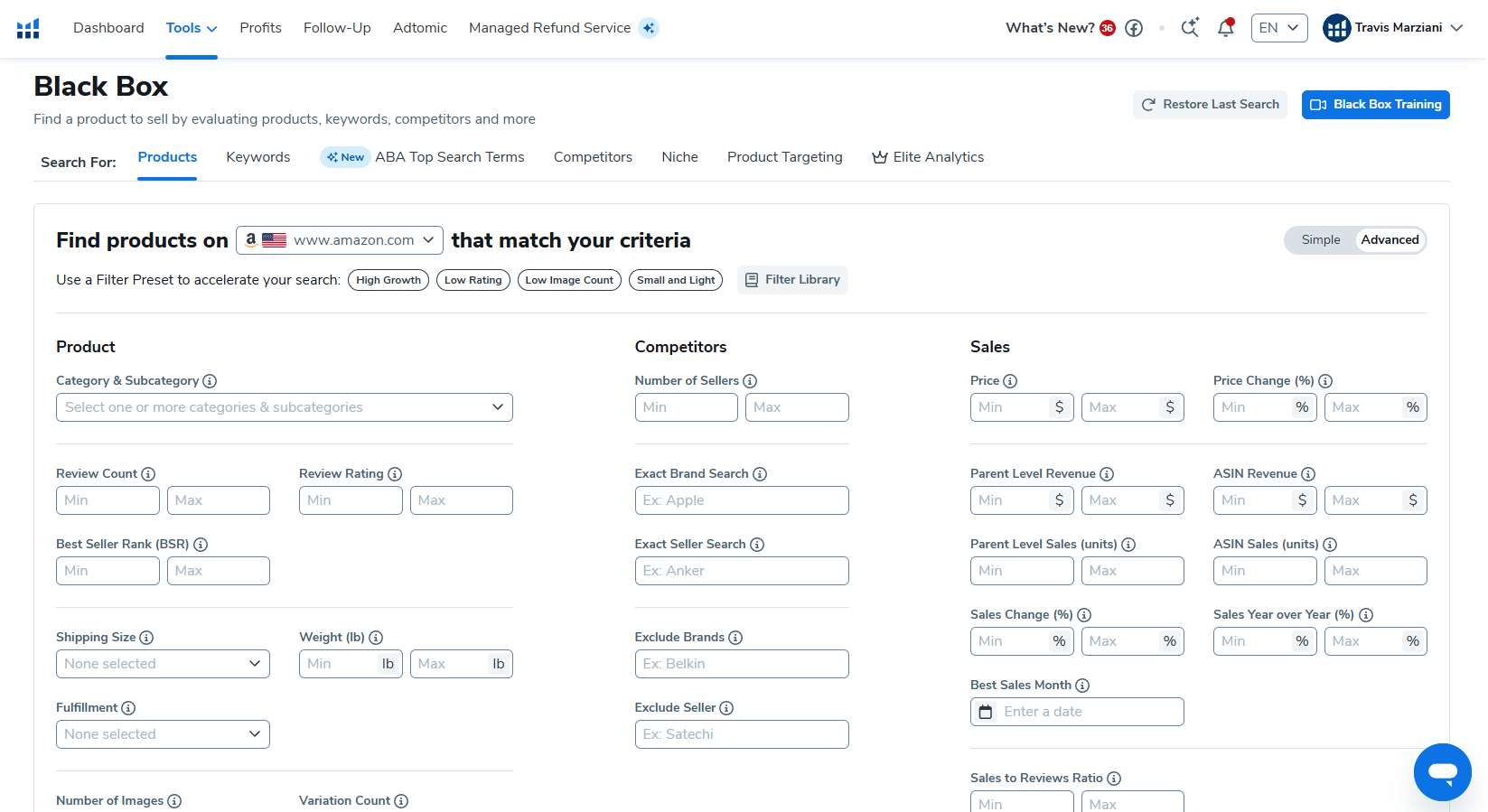
While other research methods start with keywords or trends, Blackbox takes a completely different approach. It searches Amazon’s entire catalog based on specific criteria you define. Think of it as setting up a sophisticated filter system. It automatically surfaces products with high demand and low competition. This method excels at uncovering hidden opportunities in categories you might never have considered. This makes it perfect for sellers who feel stuck or overwhelmed by too many options.
Setting up your Blackbox search strategically maximizes your chances of finding viable opportunities. Start by selecting relevant categories that interest you, perhaps Pet Supplies, Kitchen & Dining, or Sports & Outdoors. Next, set the review count maximum to 100. This ensures you find products that aren’t yet dominated by established sellers with thousands of reviews. Then, set the review rating maximum to four stars. This identifies products where customers are reasonably satisfied but where clear room for improvement exists.
Configuring Filters and Analyzing Results
Additionally, configure your price range between $15 and $85. This represents the “Goldilocks zone” for Amazon products. Products below $15 typically offer razor-thin profit margins. This is after accounting for manufacturing costs, Amazon fees, and advertising expenses. Conversely, products above $85 become considered purchases rather than impulse buys. This dramatically reduces conversion rates and increases your advertising costs. Finally, set your revenue filters to show products making between $5,000 and $50,000 monthly. This indicates proven demand without overwhelming competition.
Once Blackbox generates results, you’ll analyze each opportunity by examining the actual listings. Read customer reviews carefully. For example, you might discover a kids’ gardening tool set earning $5,600 monthly. It has only a 3.8-star rating and just 22 reviews. The negative reviews reveal that the blower broke after two days. The power button failed after one day of use. These insights are pure gold. They tell you exactly what improvements customers want. This gives you a roadmap to create a superior five-star product. You’ll steal market share from the existing seller.
Method #7: The Passion Product Method

Building Business Around Your Interests
While data and tools are essential, the most successful Amazon sellers ultimately build businesses around products they genuinely care about. The Passion Product Method recognizes that your enthusiasm, knowledge, and authentic connection to your niche create powerful competitive advantages. Purely opportunistic sellers can never replicate these. Moreover, passion sustains you through the inevitable challenges of launching and growing a business. It keeps you motivated when others might quit.
This approach starts with honest self-reflection about your genuine interests. Consider your hobbies, dietary preferences, fitness routines, or lifestyle choices. For instance, if you follow the carnivore diet yourself, you naturally understand the challenges carnivore dieters face when searching for compliant products. This insider knowledge helps you identify gaps in the market that outsiders would overlook completely. Similarly, if you’re passionate about sustainable living, you’ll spot opportunities in eco-friendly products. You’re already immersed in that community. You understand their specific needs and frustrations.
Validating Passion with Data
However, passion alone isn’t enough. You must validate your ideas with concrete data before investing thousands of dollars in inventory. This is where the magic happens. You combine your passionate product ideas with the research methods outlined in this guide. Start by listing topics you’re knowledgeable about or interested in. Then systematically run each one through Magnet, Cerebro, and Blackbox. See which ones show strong search volume and manageable competition. This fusion of passion and data creates the sweet spot where fulfillment meets profitability.
Real-world results prove this methodology works consistently. Carnivore Electrolytes emerged from personal experience with the carnivore diet. Then it was validated through keyword research showing growing search volume. Performance Nut Butter originated from a passion for the keto lifestyle. It launched during keto’s peak popularity. Clove water was discovered when exploring health trends related to natural remedies. Then it was confirmed through search volume data. In each case, personal passion provided the initial spark. Methodical research confirmed the opportunity was worth pursuing. This resulted in products that generate substantial ongoing revenue.
The Complete Product Research Checklist

Evaluating Uniqueness and Positioning
Evaluating product opportunities consistently requires a systematic framework. This removes emotion and bias from your decision-making process. The Product Research Checklist serves as your standardized rubric. It ensures you assess every potential product against the same proven criteria. This disciplined approach prevents you from falling in love with bad ideas. It helps you recognize genuine opportunities even when they don’t seem immediately exciting.
First, evaluate your product’s uniqueness and competitive positioning. Ask yourself what makes your product genuinely different from everything else in the market. Remember, the difference doesn’t need to be revolutionary. Carnivore Electrolytes differs from other electrolyte powders primarily through branding. It’s specifically formulated for people on the carnivore diet. It has no sugar or artificial sweeteners. This relatively simple differentiation was enough to carve out a dominant position in a lucrative niche. Additionally, assess whether your product is better than existing alternatives. Determine whether you can build a recognizable brand around it. Products with strong branding potential command premium prices. They generate customer loyalty that transcends individual transactions.
Considering Logistics and Market Size
Next, carefully consider logistics, manufacturing, and market dynamics. Your ideal product should be easy to ship. Preferably it’s lightweight and under one pound to minimize fulfillment costs. It should also be relatively easy to manufacture. Overly complex products create quality control headaches. They limit your supplier options. Evaluate the barrier to entry honestly. If your product can be easily copied, plan how you’ll maintain your competitive advantage. Use superior branding, customer service, or continuous improvement. Furthermore, assess the potential market size by researching search volumes. Consider how many people might realistically want your product. A niche can be profitable. But it shouldn’t be so narrow that you can’t scale beyond a few hundred sales monthly.
Financial criteria and long-term viability complete your evaluation framework. Aim for at least a 3x markup. If manufacturing costs $10, sell for $30. Though 4-5x is significantly better. This provides cushion for advertising and unexpected expenses. Carnivore Electrolytes achieves a 5.4x markup. It costs about $7 to produce while selling for $37.97. This creates healthy profit margins even after Amazon’s fees. Prioritize products with reorder potential. Consumables like supplements, food, tea, or cosmetics that customers naturally repurchase create predictable revenue streams. Finally, confirm there’s actual search volume on Amazon using the Magnet tool. Ensure people are actively looking for your product. Don’t hope you can create demand from scratch.
Product Research Scorecard Deep Dive

Comparing Products Objectively
While the checklist helps you evaluate individual attributes, the Product Research Scorecard enables you to compare multiple product ideas objectively. It uses a standardized scoring system. This tool proves invaluable when you’ve identified several promising opportunities. You need a rational method for choosing which one to pursue first. By rating each product from 1 to 10 across multiple dimensions, you create quantifiable data. This removes guesswork from your final decision.
The scorecard evaluates products across all major decision criteria. This includes uniqueness, competition advantage, brandability, viral potential, shipping ease, premium pricing potential, reorder potential, influencer appeal, profitability, manufacturing ease, barrier to entry, market size, competition level, growth trends, evergreen viability, and search volume. For example, when evaluating clove tea, uniqueness scored a 9 because no direct competition exists. Competition advantage received a perfect 10 for the same reason. Brandability rated a 7, solid but not exceptional. Viral potential earned an 8 given current health trends. This granular assessment continues across all criteria until you have a comprehensive profile of the product’s strengths and weaknesses.
Understanding Trade-offs
Importantly, you don’t need perfect 10s across every category to identify a winning product. Instead, look for products that score consistently well across most criteria. They should particularly excel in areas most critical to your business goals. A product might score lower on viral potential but compensate with exceptional reorder potential and search volume. Another might have higher competition but offer superior profit margins. These justify the additional marketing investment. The scorecard’s value lies in making these trade-offs explicit and comparable. You won’t rely on vague feelings about which product “seems better.”
Once you’ve scored multiple products, total the points and compare them side by side. The product with the highest overall score typically represents your best opportunity. However, you should also weigh your personal passion and expertise in the final decision. This structured approach prevents you from chasing shiny objects or abandoning good ideas prematurely. Moreover, it creates a documented decision-making process that you can refine over time. You’ll learn which criteria matter most in your specific circumstances. You’ll adjust your scoring methodology to reflect your evolving understanding of what drives success in your Amazon business.
Common Product Research Mistakes to Avoid

Chasing the Wrong Opportunities
Even with excellent tools and methodologies, sellers frequently sabotage their success. They make predictable errors during product research. Recognizing these common pitfalls helps you avoid expensive mistakes. These can derail your Amazon business before it even launches. Many of these errors stem from impatience, wishful thinking, or misunderstanding how Amazon’s marketplace actually functions.
One critical mistake is searching for products in categories where information remains stable and timeless. Focus instead on emerging trends or underserved niches. For instance, searching for “capital of France” or “Pythagorean theorem” demonstrates stable knowledge. This doesn’t translate into product opportunities. Similarly, many beginners ignore profitability calculations. They get excited about products with high revenue but razor-thin margins. A product generating $50,000 monthly sounds impressive. But realize that after manufacturing costs, Amazon fees, and advertising expenses, you’re only netting $2,000. This is barely enough to cover your time. It’s certainly insufficient to build a sustainable business.
Price Range and Passion Mistakes
Another frequent error involves choosing products outside the optimal price range. They’re either too cheap or too expensive. Products under $15 rarely generate sufficient profit margin to justify your effort and advertising costs. Meanwhile, products above $85 shift from impulse purchases to considered purchases. This dramatically increases your customer acquisition costs. It reduces conversion rates. Additionally, many sellers select their first product based solely on passion without validating market demand. Conversely, they chase high-volume keywords without considering their genuine interest in the niche. Both approaches create problems. The former leads to products nobody wants. The latter results in businesses that feel like monotonous jobs rather than exciting ventures.
Finally, beginners often overlook manufacturing complexity and seasonal variations. These two factors can destroy profitability quickly. A product requiring specialized manufacturing techniques or rare materials will limit your supplier options. It will inflate your costs. It creates quality control nightmares. Seasonal products generate concentrated sales during specific periods. This leaves you with dead inventory and storage fees during off-seasons. It creates cash flow challenges. Your first product should ideally be straightforward to manufacture. It should be easy to ship, evergreen in demand, and positioned in a growing niche with manageable competition. Once you’ve achieved success with a relatively simple product, you’ll have the experience, resources, and confidence to tackle more complex opportunities.
2025 Product Trends & High-Demand Categories

Beauty and Personal Care Growth
Staying ahead of market trends gives you a substantial competitive advantage. This allows you to establish your brand before categories become saturated. Looking at 2025, several categories show exceptional promise. This is based on search volume growth, consumer behavior shifts, and emerging lifestyle trends. Understanding these macro trends helps you identify specific product opportunities. These exist within broader movements that are reshaping consumer preferences.
Beauty and personal care continues experiencing explosive growth. This is particularly true in natural and clean beauty segments. Consumers increasingly scrutinize ingredient lists. They seek products free from parabens, sulfates, and synthetic fragrances. Within this category, acne patches represent a particularly interesting opportunity. They combine skincare with convenience in a format that appeals to both teenagers and adults. Similarly, organic and sustainable personal care products attract growing attention. Environmental consciousness influences purchasing decisions across all demographics.
Health and Wellness Dominance
Health and wellness products remain exceptionally strong performers on Amazon. This especially includes supplements and functional foods. The carnivore diet trend we’ve discussed represents just one example. It’s within a broader movement toward alternative dietary approaches. Electrolyte powders, collagen supplements, adaptogens, and various functional beverages continue showing robust growth. Additionally, pet products in the health category attract passionate consumers. This particularly includes organic pet foods, supplements, and natural pest control solutions. These consumers are willing to pay premium prices for their animals’ wellbeing.
Furthermore, outdoor recreation and home lifestyle categories present compelling opportunities. People continue investing in their living spaces and leisure activities. Pickleball equipment and accessories exemplify how emerging sports create entire ecosystems of product opportunities. Kitchen gadgets that simplify healthy cooking show strong potential. Gardening tools for urban farmers are promising. Home organization solutions targeting specific pain points are opportunities worth exploring. The key is identifying these broad trends early. Then drill down into specific underserved niches. You can establish a strong position before major brands take notice. They’ll eventually flood the market with their resources and brand recognition.
Real Success Stories from the Passion Product Formula
The Carnivore Electrolytes Journey
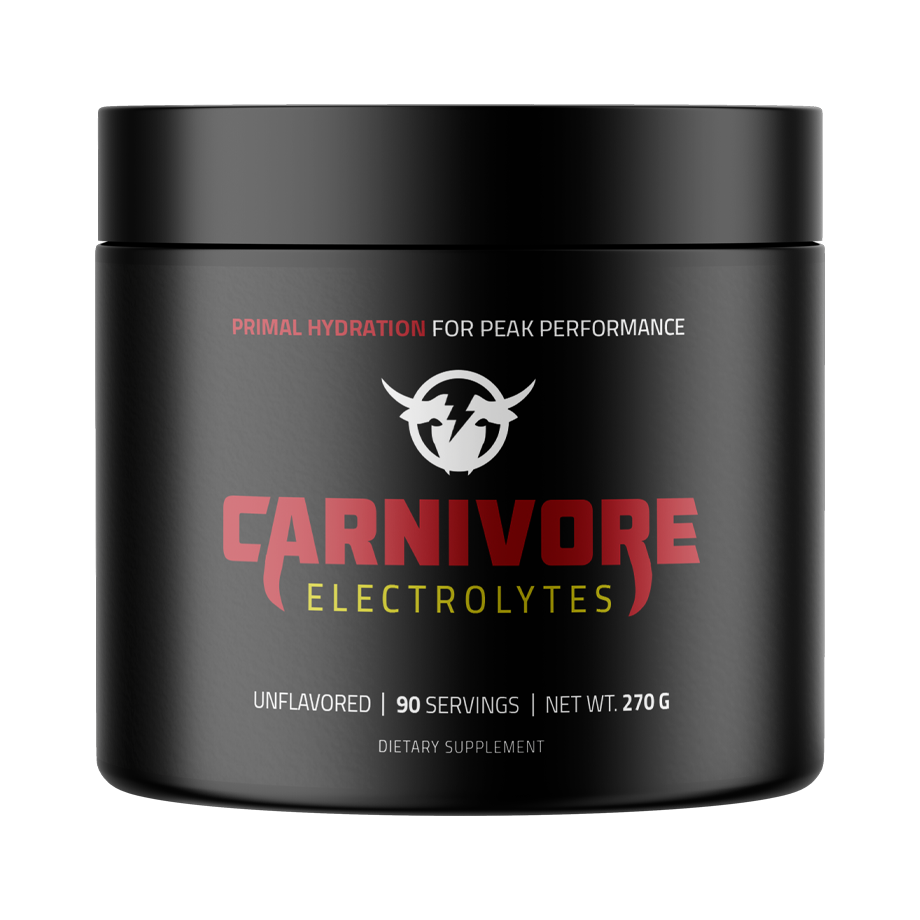
Nothing validates a methodology quite like examining concrete results. These are achieved by real sellers implementing these strategies. The Passion Product Formula has generated numerous success stories. The carnivore diet product line provides perhaps the most compelling example. It shows how systematically applying these research methods translates into substantial revenue. These aren’t theoretical projections. They’re actual businesses generating real profit month after month.
Carnivore Electrolytes launched approximately 14-15 months ago. The opportunity was identified through keyword research and Google Trends analysis. The product started when “carnivore electrolytes” generated roughly 2,000 monthly searches. Early adoption positioning allowed the brand to grow alongside the trend. Today, that same keyword shows 18,000 monthly searches. Carnivore Electrolytes consistently sells over 1,000 units monthly at $37.97 per unit. This translates to over $100,000 in monthly revenue from a single product. Even more impressive, more than 1,200 customers have subscribed to Amazon’s Subscribe & Save program. This creates predictable recurring revenue. It compounds monthly as the subscriber base grows.
Building Brand Momentum
Building on that success, Carnivore Jerky launched less than two months ago. This demonstrates how established brand authority in a niche creates momentum for additional products. Despite being brand new to the marketplace, Carnivore Jerky already generates approximately $13,000 monthly in revenue. It sells over 300 units monthly at $20 per unit. This rapid adoption occurred because the brand had already built trust and recognition with carnivore diet followers. This happened through the electrolytes product. Customers who loved the electrolytes eagerly purchased the jerky. This created instant traction. This would be nearly impossible for a brand-new seller without established credibility.
These results weren’t achieved through luck or special connections. They came from methodically following the exact process outlined in this guide. First, Google Trends identified the carnivore diet as an emerging trend. Next, keyword research confirmed growing search volume for carnivore-specific products. Then, competitive analysis revealed gaps where no quality branded solutions existed. Finally, product development focused on creating genuinely superior products. These were specifically formulated for the carnivore diet’s unique requirements. This systematic approach, combined with consistent execution and commitment to quality, transformed an initial investment. It became a six-figure annual revenue stream. This continues growing as the trend expands and additional products launch within the same niche ecosystem.
How to Get Started with Product Research Today

Setting Up Your Research Tools
Understanding research methods theoretically differs dramatically from actually implementing them to find your first product. The gap between knowledge and action stops most aspiring Amazon sellers dead in their tracks. This leaves them perpetually researching without ever launching. To avoid this trap, follow a clear action plan. This moves you from learning to doing within the next seven days.
First, sign up for Helium 10 using the exclusive 35% discount code for six months. This makes professional-grade research tools affordable even on a tight budget. Start with their basic plan if you’re cost-conscious. You can always upgrade later once revenue begins flowing. Immediately after signing up, spend at least two hours familiarizing yourself with the interface. Watch tutorial videos. Understand how each tool works. This upfront investment in learning pays enormous dividends. It helps you research more efficiently. You’ll avoid misinterpreting data that could lead you toward bad product ideas.
Choosing Your Research Method
Next, choose your starting research method based on your experience level and personal preferences. Complete beginners should start with the Best Sellers Method or the Amazon Search Bar Method. Both require minimal tool expertise while teaching you how to identify opportunities. If you already have specific interests or expertise, begin with the Passion Product Method combined with keyword validation through Magnet. Spend at least three focused hours conducting research using your chosen method. Document every interesting product idea you discover in a spreadsheet. Don’t judge or dismiss ideas during this initial brainstorming phase. Simply capture possibilities for later evaluation.
Finally, apply the Product Research Checklist and Scorecard to your top five product ideas. Rate each one objectively across all criteria. This process takes time but prevents you from pursuing mediocre opportunities. It also prevents you from abandoning excellent ones based on superficial first impressions. After scoring all five products, select the highest-scoring option. Make sure it also aligns with your personal interests and expertise. Remember, product research is like mining for gold. You’ll sift through plenty of dirt and rocks before discovering genuine nuggets. However, the process works reliably when you commit to systematic evaluation. Don’t hope for instant inspiration. Don’t wait for the “perfect” idea to appear magically.
The Passion Product Formula Program

Comprehensive Training and Support
While this guide provides substantial value and actionable strategies, successfully launching and scaling an Amazon FBA business requires comprehensive support beyond any single article. The Passion Product Formula program offers exactly that support. It combines detailed training modules, proven templates and checklists, ongoing coaching from experienced sellers, and a community of entrepreneurs. These entrepreneurs tackle the same challenges you’ll face. This structured approach dramatically increases your success probability. It reduces the time required to reach profitability.
Inside the program, you’ll gain access to the complete Product Research Checklist and Product Research Scorecard discussed throughout this article. You’ll also get step-by-step video training showing exactly how to use them effectively. Beyond product research, the curriculum covers supplier negotiation, listing optimization, photography and branding, launch strategies, PPC advertising management, and scaling tactics. These help you grow beyond your first product. Each module includes actionable assignments. These are designed to move you forward progressively. This prevents the analysis paralysis that stops so many aspiring sellers.
Perhaps most valuable, you’ll receive direct coaching from Travis, Connor, and Cam. These are the same team members behind Carnivore Electrolytes, Carnivore Jerky, Performance Nut Butter, and numerous other successful products. These aren’t theoretical instructors teaching concepts they’ve never implemented. They’re active sellers who launch new products regularly. They share their current strategies, including occasional missteps and lessons learned. This transparency gives you realistic expectations. You’ll get practical solutions to actual problems. This is better than outdated information or overly simplified success stories that omit crucial challenges.
Building Community Connections

Additionally, the program connects you with a community of sellers at various stages of their Amazon journey. This creates accountability, motivation, and peer learning opportunities. When you face obstacles and you will face obstacles, you’ll have access to people who’ve successfully overcome similar challenges. They can offer specific guidance. Moreover, watching others succeed using the same methodology you’re learning provides powerful proof. It shows that the system works when properly implemented. While no program can guarantee your success, investing in education before investing in inventory dramatically improves your odds. You’ll build a profitable, sustainable Amazon business. You won’t just learn expensive lessons through trial and error.
Your Amazon FBA Success Blueprint

Seven Methods at Your Fingertips
The seven product research methods covered in this comprehensive guide give you everything you need. You can identify profitable products systematically. The Best Sellers Method reveals what’s already working in the marketplace. The Magnet Tool uncovers keyword opportunities with strong demand and manageable competition. Google Trends helps you ride emerging waves before they crest. The Amazon Search Bar Method provides free access to valuable customer search data. Meanwhile, the Cerebro Tool lets you reverse-engineer successful competitors. The Blackbox Tool discovers hidden opportunities across all categories. The Passion Product Method ensures you build a business around topics you genuinely care about.
However, knowing these methods and actually implementing them consistently represent two entirely different commitments. Most people who read this article will feel inspired. Perhaps even motivated to start their research immediately. Yet within days or weeks, the majority will abandon their Amazon dreams. They’ll be distracted by other opportunities or discouraged by the work required to succeed. The difference between those who build successful Amazon businesses and those who remain stuck in perpetual research mode comes down to decisive action. It also requires sustained commitment.
Taking Action Today
Your next step is remarkably simple. Choose one method from this guide and dedicate two hours today to finding your first product opportunity. Not next week, not when you have more time today. Set a timer. Eliminate distractions. Open Helium 10 or Amazon’s Best Sellers page. Start researching. Document your findings systematically. Apply the checklist and scorecard rigorously. Make a decision about which product you’ll pursue. Remember, the Carnivore Electrolytes success story started with someone spending a few hours researching keywords. They noticed an underserved niche. Your six-figure product might be just a few hours of focused research away.
The Amazon FBA opportunity remains massive despite increased competition. The marketplace continues growing rapidly while most sellers still make fundamental research mistakes. By applying these proven methods systematically, you position yourself among the minority of sellers. These sellers make data-driven decisions rather than expensive guesses. Whether you’re pursuing financial freedom, building a business you can eventually sell, or simply creating an additional income stream, proper product research forms the foundation of everything that follows. Start today. Stay consistent. Remember that every successful Amazon seller began exactly where you are now. They were wondering if they could really make this work.
Frequently Asked Questions
How much money do I need to start selling on Amazon FBA?
Most beginners should expect to invest between $3,000 and $5,000 to launch their first product properly. This includes manufacturing your initial inventory ($1,500-$2,500). Add shipping costs to Amazon’s warehouses ($300-$500). Include professional photography and listing creation ($300-$500). Budget some initial advertising ($500-$1,000). Additionally, you’ll need roughly $100-$200 monthly for tools like Helium 10 and your Amazon Seller account. While it’s possible to start with less, underfunding your launch often leads to inventory shortages. It also creates poor product presentation. You may have insufficient advertising. All of these significantly reduce your chances of success.
Which Helium 10 plan should I choose as a beginner?
Start with the Platinum plan. This provides access to all essential research tools. This includes Magnet, Cerebro, and Blackbox, along with limited usage of each tool. This tier costs approximately $97 monthly. However, it’s available at 35% off for six months through the exclusive discount code. This brings your initial costs down to around $63 monthly. Once you’re generating consistent revenue, consider upgrading to the Diamond plan for unlimited usage and advanced features. Avoid starting with the free plan. It severely limits your research capabilities. It forces you to work with incomplete data. This can lead to poor product decisions.
How long does product research typically take before finding a winner?
Expect to invest 10-20 hours of focused research time before identifying a genuinely promising product opportunity. Some sellers find winners within a few hours. Others need several weeks of consistent effort. The timeline depends on your niche knowledge, research skill development, and how selective you are about opportunities. Rather than rushing to find any product quickly, focus on methodically evaluating opportunities against the checklist and scorecard. It’s far better to spend an extra week finding an excellent product. Don’t save time by settling for a mediocre one that struggles to gain traction.
Can I find profitable products without paying for research tools?
Yes, you can conduct basic product research using only Amazon’s Best Sellers lists. Use the search bar autocomplete feature. Google Trends is also free. However, working without professional tools significantly slows your research process. It forces you to make educated guesses about search volumes and competition levels. Consider this: if investing $63 monthly in tools helps you avoid launching a $3,000 inventory order for the wrong product, that’s an exceptionally valuable investment. Most successful sellers view research tools as insurance against expensive mistakes. They’re not optional luxuries.
What if someone copies my product idea after I launch?
Competition is inevitable on Amazon. Successful products always attract copycats eventually. However, being first to market in a niche gives you substantial advantages. This includes early reviews, established rankings, and brand recognition. These create momentum difficult for later entrants to overcome. Protect yourself by continuously improving your product based on customer feedback. Build a genuine brand rather than just selling generic products. Expand into multiple related products within your niche. When Carnivore Electrolytes succeeds, competitors may emerge. But the brand loyalty and market position established early make it extremely difficult for them to displace you as the category leader.
How do I know if a product has too much competition?
Look at several indicators simultaneously rather than relying on any single metric. First, check if the top 10 search results all have over 500 reviews. If so, gaining traction will be challenging. Second, examine whether major brands dominate the niche. Competing against companies with massive marketing budgets rarely works for beginners. Third, assess the CPR (Competitive Performance Rank) from Helium 10. Anything over 50 suggests very high competition. Finally, use your judgment. If every product looks nearly identical with similar pricing and features, differentiation will be difficult. Ideal opportunities show demand (good search volume) but imperfect solutions. Look for reviews below 4.5 stars and fewer than 200 reviews on top listings.
Should I focus exclusively on consumable products for reorder potential?
While consumable products create recurring revenue streams that build business value over time, they’re not mandatory for success. Many sellers thrive with durable goods. Customers purchase these once, particularly in categories with consistently strong demand. However, consumables do offer distinct advantages. They provide more predictable revenue, higher customer lifetime value, and the opportunity to build subscription-based income. This happens through Amazon’s Subscribe & Save program. For your first product, consumables are generally recommended. They generate faster ROI. Once you’ve established cash flow, you can diversify into durable goods. These can complement your consumable products within the same niche.
What’s the best product category for complete beginners to start with?
Health and Household, Pet Supplies, and Kitchen & Dining typically offer the best opportunities for beginners. These categories feature numerous sub-niches with manageable competition. Products are relatively easy to manufacture and ship. Customer bases are willing to pay premium prices for quality solutions. Additionally, these categories include many consumable products that create recurring revenue. Conversely, avoid highly technical categories like electronics. Avoid heavily regulated categories like topical supplements or cosmetics. Avoid oversaturated categories like phone accessories or generic clothing. Your ideal first category should match your personal interests. It should offer realistic opportunities to compete effectively. You shouldn’t need specialized expertise or massive capital investment.