
Making money with Amazon FBA in 2026 has never been more accessible, as the platform experiences unprecedented growth and presents extraordinary opportunities for aspiring entrepreneurs. The platform now integrates seamlessly with TikTok Shop, creating a powerful flywheel effect that amplifies sales across both channels. Moreover, artificial intelligence has revolutionized the entire process, automating tasks that previously required extensive manual effort. This comprehensive guide will walk you through every step needed to launch a successful Amazon business, from product research to your first sale.
The landscape of online selling has transformed dramatically, making 2026 the ideal year to start your Amazon journey. Traditional barriers to entry have crumbled thanks to AI-powered tools and streamlined processes. Additionally, the synergy between social media marketing and e-commerce platforms has opened new revenue streams that savvy sellers are already exploiting. Throughout this article, you’ll discover proven methods that have helped thousands of entrepreneurs achieve six and seven-figure incomes selling on Amazon.
Why 2026 Is the Perfect Year for Amazon FBA
Amazon’s customer base continues to expand at an impressive rate, with over 100 million Prime members actively searching for products daily. This massive audience represents built-in traffic that traditional businesses spend fortunes trying to acquire through advertising. Furthermore, these customers already trust Amazon’s platform and eagerly purchase products that meet their specific needs. The infrastructure Amazon provides handles everything from payment processing to customer service, allowing you to focus exclusively on finding great products and building your brand.
The integration of TikTok Shop has fundamentally changed the game for Amazon sellers in 2026. Sellers who launch products on both platforms are seeing 10-15% additional sales on Amazon, plus substantial revenue from TikTok Shop itself. This creates a virtuous cycle where TikTok drives product awareness, customers purchase on Amazon for fast Prime shipping, and those satisfied customers then create user-generated content on TikTok. Consequently, your product gains momentum organically without requiring expensive advertising campaigns.
Artificial intelligence has eliminated many of the technical challenges that previously discouraged new sellers from entering the market. Tasks like product research, manufacturer sourcing, and listing optimization can now be accomplished in hours rather than weeks. Moreover, AI tools provide data-driven insights that help you make smarter decisions about which products to launch and how to position them. These technological advances have leveled the playing field, allowing beginners to compete effectively against established sellers.
The shift toward niche branding has created unprecedented opportunities for sellers who understand how to identify underserved markets. Consumers increasingly seek specialized products that address their specific needs rather than generic options. Therefore, sellers who create targeted products for passionate communities can build loyal customer bases and command premium prices. This trend shows no signs of slowing, making 2026 the perfect time to establish your niche brand before competition intensifies.
Understanding Amazon FBA: The Basics

Amazon FBA stands for “Fulfilled By Amazon,” a business model that allows entrepreneurs to sell products without handling inventory or shipping logistics. You simply ship your products in bulk to Amazon’s warehouses, where they’re stored until customers place orders. Subsequently, Amazon’s team picks, packs, and ships each order directly to your customers, often with Prime two-day shipping. This arrangement transforms your products into Prime-eligible items, dramatically increasing their appeal to Amazon’s most loyal shoppers.
The passive income potential of Amazon FBA in 2026 distinguishes it from traditional retail businesses that require constant hands-on management. Once you’ve selected your product, found a manufacturer, and created your listing, Amazon handles the operational heavy lifting. Nevertheless, launching a successful product requires significant upfront effort including research, planning, and initial setup. The key difference is that this work happens once, whereas the income can continue flowing for months or years with minimal ongoing involvement.
Amazon’s platform provides built-in marketing advantages that would cost tens of thousands of dollars to replicate independently. Millions of shoppers visit Amazon daily with credit cards ready, actively searching for products to purchase. Therefore, ranking well for relevant search terms can generate consistent sales without requiring extensive advertising budgets. Amazon’s sophisticated algorithm also recommends your products to potential customers based on their browsing and purchase history, creating additional sales opportunities you didn’t directly pay for.
The FBA system scales effortlessly as your business grows, accommodating everything from a few dozen units to thousands of products monthly. Amazon’s vast warehouse network ensures fast delivery across the country without requiring you to maintain inventory or hire staff. Additionally, Amazon handles customer service inquiries and returns, removing another time-consuming aspect of traditional retail. This infrastructure allows you to focus on strategic decisions like product selection and brand building rather than operational minutiae.
The Four Ways to Sell on Amazon: Ranked and Reviewed
Understanding the different approaches to selling on Amazon helps you choose the strategy best aligned with your goals and resources. Each method offers distinct advantages and challenges, with varying potential for scalability and profitability. Furthermore, the effectiveness of these strategies has shifted over time as the marketplace has evolved. By examining each approach carefully, you’ll make an informed decision that sets your business up for long-term success.
Retail Arbitrage (A Rating)
Retail arbitrage involves purchasing discounted products from retail stores or websites and reselling them on Amazon at higher prices. For example, you might find an outdoor storage cabinet selling for $139 on Walmart.com that retails for $321 on Amazon. By purchasing the Walmart product and sending it to Amazon’s warehouse, you can capture that price difference as profit. This straightforward approach appeals to beginners because it requires minimal upfront investment and teaches fundamental Amazon selling skills.
The primary advantage of retail arbitrage is its accessibility, requiring only enough capital to purchase your first batch of products. Additionally, finding arbitrage opportunities is relatively simple with the right tools and knowledge of where to look for deals. This method allows you to test Amazon’s platform without committing to large inventory purchases or complex manufacturing relationships. Consequently, many successful sellers start with retail arbitrage to learn the basics before graduating to more sophisticated strategies.
However, retail arbitrage presents significant limitations that prevent it from becoming a truly scalable business. If you can easily find a profitable arbitrage opportunity, countless other sellers can likely find the same deal. Therefore, competition quickly erodes profit margins as multiple sellers race to the bottom on price. Moreover, this approach requires constant hunting for new deals since opportunities disappear quickly once other sellers discover them.
Retail arbitrage rarely develops into passive income because you must continually source new inventory to maintain sales. Unlike branded products where you can reorder from the same manufacturer, arbitrage relies on one-time deals that don’t repeat. Nevertheless, this method earns an A rating for 2026 because it still works effectively for generating side income and learning Amazon’s systems. Just don’t expect to build a six-figure passive income business using retail arbitrage alone.
Wholesale (C Rating)
Wholesale selling involves purchasing products in bulk from manufacturers or distributors at discounted prices and reselling them on Amazon. Websites like GlobalSources.com connect you with suppliers offering wholesale pricing on various products. For instance, a baby high chair might cost $15.30 wholesale but sell for $86 on Amazon, creating substantial profit potential. Unlike retail arbitrage, wholesale requires purchasing larger quantities – typically 12, 24, or 100+ units to qualify for discounted pricing.
The wholesale model offers slightly better scalability than retail arbitrage because you can establish ongoing relationships with suppliers. Once you identify a profitable product, you can simply reorder inventory as needed rather than hunting for one-time deals. Additionally, the barrier to entry is somewhat higher due to bulk purchase requirements, which naturally limits competition compared to retail arbitrage. These factors make wholesale more attractive than arbitrage for sellers seeking to build a sustainable business.
Despite these advantages, wholesale presents serious vulnerabilities that limit its long-term viability. Nothing prevents other sellers from contacting the same suppliers and selling identical products in direct competition with you. As more sellers enter the market, prices inevitably decline until profit margins evaporate completely. Furthermore, manufacturers eventually realize they can bypass middlemen and sell directly on Amazon themselves, potentially eliminating your business overnight.
This method receives a C rating for 2026 because while you can occasionally find profitable wholesale opportunities, it’s not a reliable foundation for building wealth. The lack of brand differentiation leaves you vulnerable to competition and manufacturer decisions beyond your control. Moreover, wholesale doesn’t allow you to leverage emerging opportunities like the TikTok Shop integration discussed later. Therefore, while wholesale can work in specific situations, far better strategies exist for serious entrepreneurs.
Private Label (B Rating)
Private label selling involves sourcing generic products from manufacturers, adding your own branding, and selling them on Amazon as unique products. This approach has generated significant success stories, with some products generating over $400,000 monthly. Tools like Jungle Scout‘s free sales estimator allow you to research any product’s revenue by entering its Best Seller Rank number. Simply scroll down to find this number, paste it into the estimator, select your marketplace and category, and discover exactly how many units sell monthly.
The profit potential of private label can be substantial when you find the right product. For example, a patio product selling for $138 might generate over 31,000 sales monthly, totaling more than $400,000 in revenue. That same product is available on Alibaba.com for just $3.50, meaning you could source it cheaply, add your branding, and capture healthy profit margins. This mathematical reality has attracted thousands of sellers to the private label model over the past decade.
However, the traditional “boring” private label approach has largely become oversaturated and ineffective. Simply slapping your logo on a generic product from Alibaba no longer differentiates you sufficiently in crowded markets. Consequently, competition has intensified to the point where only sellers with substantial advertising budgets can compete effectively. The barriers to entry are too low, allowing anyone with a few thousand dollars to enter the same markets you’re targeting.
Private label earns a B rating because it can still succeed when executed with strategic differentiation and niche targeting. The key lies in evolution toward “niche branding,” which we’ll explore next. Standard private label where you merely rebrand generic products is dying, but sophisticated approaches that create genuine value for specific customer segments remain highly profitable. Therefore, if you pursue private label, you must do so strategically rather than following outdated generic formulas.
Niche Branding (S Tier)
Niche branding represents the evolution of private label, focusing on creating specialized products for specific sub-markets rather than competing in broad categories. Instead of selling generic creatine alongside thousands of competitors, you might create creatine specifically formulated for women. This targeted approach allows you to dominate smaller markets rather than fighting for scraps in oversaturated ones. Subsequently, you can build a loyal customer base that sees your product as the obvious choice for their specific needs.
The carnivore electrolytes example perfectly illustrates the power of niche branding. Rather than competing against the thousands of generic electrolyte products, this approach targeted the specific carnivore diet community. By tweaking the formula to eliminate sugar and artificial ingredients that conflict with carnivore diet principles, the product became the obvious choice for that audience. Moreover, the branding specifically called out the target market, making it instantly recognizable to the right customers.
This niche branded product generated over $700,000 in sales during the last year and surpassed $1 million in total revenue within the first two years. Profit margins ranged between $300,000 and $500,000, demonstrating the financial potential of this approach. Remarkably, the business launched in just seven days from concept to live listing, proving that niche branding doesn’t require years of preparation. Services like FBA Creatives can handle the branding work professionally, allowing you to focus on strategy and execution.
Niche branding achieves S-tier status because it combines the scalability of private label with genuine competitive advantages. Your niche focus creates barriers to entry that protect your market position, while your specialized branding builds customer loyalty. Furthermore, niche products often work perfectly for the TikTok Shop integration strategy, as passionate communities love sharing discoveries on social media. Therefore, niche branding represents one of the two best approaches for Amazon sellers in 2026.
Passion Products (S Tier)
Passion products take niche branding even further by identifying what customers are actively searching for on Amazon where no adequate solution exists. This approach recognizes that Amazon functions primarily as a search engine where customers have specific purchase intent. By discovering high-volume search terms without obvious product matches, you can create the perfect solution that captures all that demand. Consequently, your product becomes the obvious choice when customers search for exactly what you’re selling.
The critical insight here is that demand already exists, you’re not creating it through marketing. Customers are literally typing search terms into Amazon, finding inadequate results, and either settling for suboptimal products or leaving empty-handed. When you create a product that precisely matches their search intent, conversion rates skyrocket because you’re giving people exactly what they want. Moreover, you’re not relying on expensive advertising to generate awareness since customers are already looking for your product.
The key to success with passion products lies in finding the intersection of high search volume and low competition. Thousands of people searching monthly for a product is meaningless if ten established brands already dominate that market. Conversely, zero competition is worthless if nobody is searching for the product. Therefore, product research tools become essential for identifying these golden opportunities where demand exceeds supply.
Passion products earn S-tier ranking because they represent the ultimate strategic advantage on Amazon. You’re entering markets with proven demand but minimal competition, giving you first-mover advantage. Additionally, these products typically inspire customer passion, making them perfect for generating reviews and user-generated content on platforms like TikTok. The combination of search demand, competitive gaps, and viral potential makes passion products the most powerful strategy available to Amazon sellers today.
Step-by-Step: Launching Your Amazon FBA Business in 2026

Successfully launching an Amazon FBA in 2026 requires following a proven sequence of steps that maximize your chances of success. Each phase builds upon the previous one, creating a solid foundation for sustainable profitability. Furthermore, skipping steps or rushing through the process often leads to costly mistakes that could have been avoided. By systematically working through each stage, you’ll launch with confidence and clarity.
Sign Up for Your Amazon Seller Account
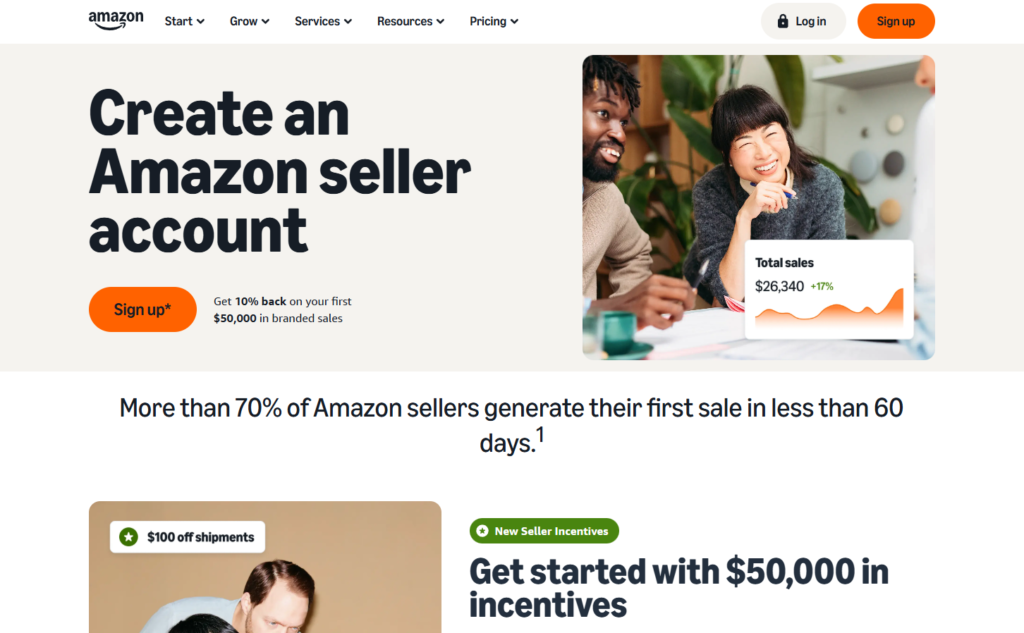
Your first action should be visiting sell.amazon.com and registering for an Amazon seller account. The signup process asks for basic business information, tax details, and banking information for receiving payments. Sometimes approval happens instantly, while other applications require a few days for Amazon to verify your information. Therefore, starting this process immediately ensures you’re ready to list products as soon as you complete the other preparation steps.
The seller account registration requires you to choose between an Individual plan and a Professional plan. Individual accounts cost nothing monthly but charge $0.99 per item sold, making them suitable only for sellers moving very few units. Professional accounts cost $39.99 monthly but include no per-item fees and unlock essential features like bulk listing tools and advertising options. Consequently, serious sellers should always choose the Professional plan from the start.
Amazon will ask for various documentation during the registration process, including government-issued ID and bank account information. Having these documents ready beforehand streamlines the application significantly. Additionally, Amazon may request invoices or receipts from suppliers before approving certain product categories, though most sellers won’t encounter these restrictions initially.
Product Research (The Secret Weapon)

Product research represents the most critical phase of building your Amazon business, determining whether you’ll succeed or struggle. The right product research tool provides invaluable data about search volume, competition levels, and revenue potential. While specific tool names aren’t important, using professional software designed for Amazon sellers dramatically improves your odds of finding winning products. Many tools offer free versions for basic research, with premium versions unlocking advanced features.
Investing in a premium product research subscription for at least one month makes sense during your initial research phase. The depth of data available through paid tools far exceeds what free versions provide, helping you make more informed decisions. Moreover, most reputable tools offer money-back guarantees, so you can try them risk-free. After finding your product, you can downgrade to free versions since you’ll no longer need constant access to advanced research features.
The initial investment in research tools pays for itself many times over by helping you avoid costly mistakes. Launching the wrong product can cost thousands of dollars in inventory and advertising with little revenue to show for it. Conversely, finding a well-researched product with proven demand dramatically increases your profitability from day one. Therefore, view research tools as essential investments rather than optional expenses.
Using the Magnet Tool
The Magnet tool reveals exactly what customers are typing into Amazon’s search bar, providing direct insight into market demand. This keyword data shows monthly search volume for any term, helping you identify opportunities where customer demand exists. By analyzing these search patterns, you can discover product ideas you might never have considered through traditional brainstorming. Subsequently, you can validate whether enough people care about a product category to support a profitable business.
Understanding that Amazon functions primarily as a search engine transforms how you approach product selection. Customers arrive at Amazon with specific needs and search for solutions using descriptive keywords. When you create products matching high-volume search terms with limited competition, you’re positioning yourself to capture that traffic. Moreover, ranking well for relevant searches provides long-term sustainable traffic without ongoing advertising costs.
Before diving into keyword research, establish criteria for what constitutes a viable product opportunity. Ideally, you want products selling between $15 and $85, though exceptions exist at both ends of this range. Products under $15 struggle to generate profit after accounting for Amazon’s fees, manufacturing costs, and advertising expenses. Meanwhile, products over $85 typically require more research from customers before purchasing, reducing conversion rates and complicating your launch.
Additionally, focus on evergreen products that sell consistently throughout the year rather than seasonal items. Christmas lights might generate fantastic revenue in November and December but sit idle the rest of the year. Year-round demand ensures steady cash flow and allows you to refine your business operations continuously. Nevertheless, some seasonal products can work if the season is long enough and profit margins are substantial.
Finding Your Passion Product: The Carnivore Electrolytes Story
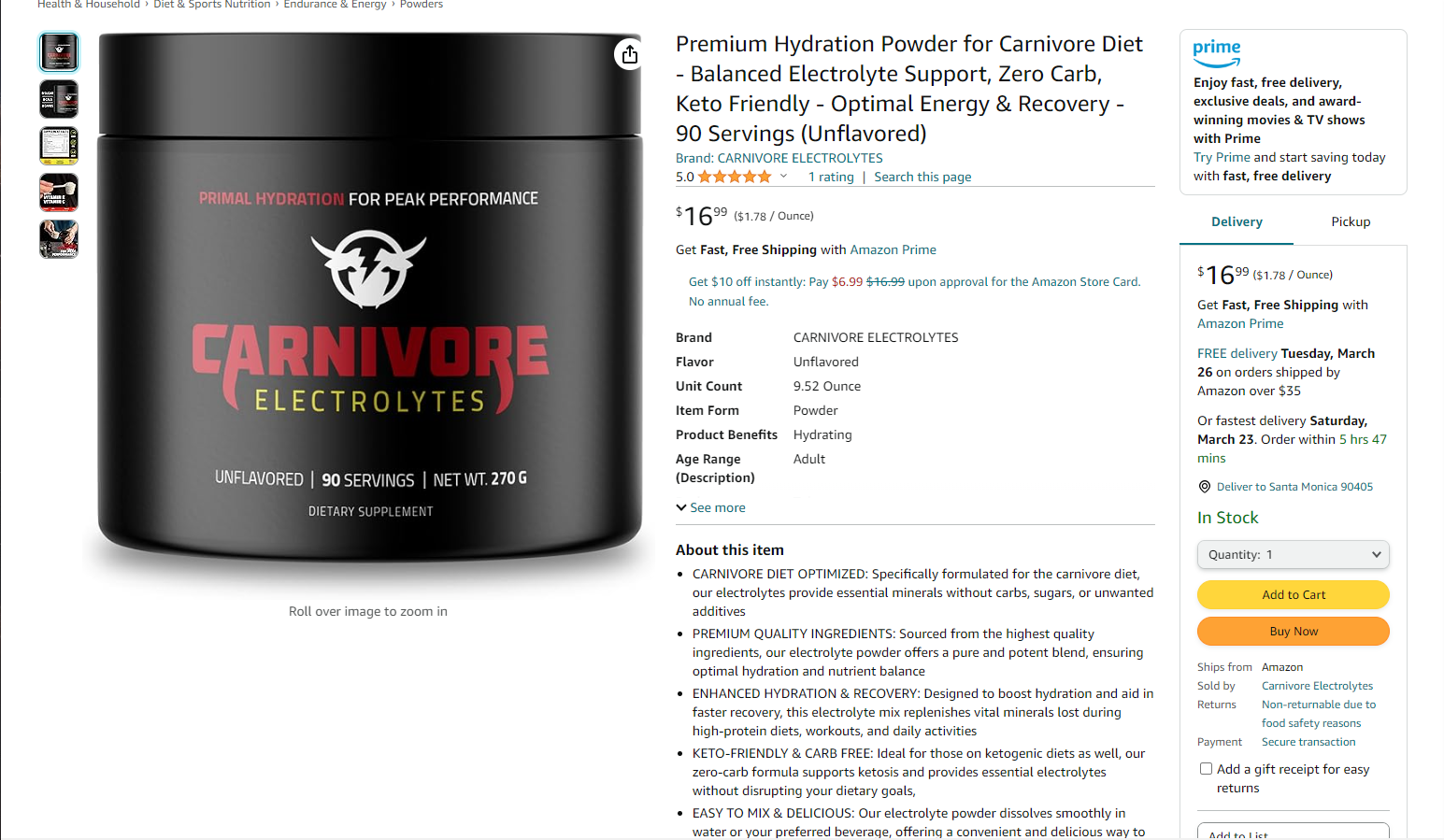
The carnivore electrolytes discovery began with a personal experience on the carnivore diet during a five-day trial. During this experiment, research indicated that electrolyte supplementation was crucial for people following this dietary approach. Naturally, the next step was searching Amazon for “carnivore electrolytes” to find an appropriate product. Surprisingly, the search yielded no obvious results specifically designed for the carnivore diet community.
This observation triggered curiosity about whether others were searching for the same thing. Entering “carnivore electrolytes” into Helium 10‘s keyword research tool revealed that over 2,000 people monthly were searching for this exact product. Even more remarkably, none of the existing electrolyte products specifically targeted this audience with appropriate branding or formula modifications. This perfect storm of demand without supply represented a million-dollar opportunity hiding in plain sight.
The product development process simply involved finding an electrolyte manufacturer and requesting formula modifications. Removing sugar and artificial ingredients aligned the product with carnivore diet principles, creating genuine value for the target audience. Subsequently, creating branding that clearly communicated the product’s purpose made it instantly recognizable to the right customers. Within seven days, the product was live on Amazon and immediately began capturing sales from those 2,000+ monthly searches.
This example demonstrates how simple finding passion products can be when you understand the methodology. You don’t need revolutionary inventions or complex technology, just the ability to identify what people want but can’t currently find. Furthermore, this approach works across countless niches and product categories, limited only by your creativity and research efforts. The carnivore electrolytes success proves that million-dollar opportunities still exist for sellers who know where to look.
Using AI for Product Ideas
If you struggle to generate product ideas through personal experience, artificial intelligence can jumpstart your brainstorming process. ChatGPT, Gemini, and similar AI tools can generate extensive lists of potential product categories based on your interests and criteria. Simply describe the type of products you’re interested in selling, specify your budget constraints, and ask the AI to suggest possibilities. Within seconds, you’ll have dozens of ideas to research further using your keyword tools.
Advanced users are developing sophisticated prompts that guide AI toward more profitable product suggestions. These prompts incorporate criteria like price ranges, competition levels, and market size to filter suggestions more effectively. While specific prompts remain proprietary within many coaching programs, the general principle is straightforward, the more specific your instructions, the better the AI’s suggestions. Therefore, experiment with different prompting styles to find approaches that generate the most promising ideas.
AI can also help validate product ideas by providing insights into market trends and customer preferences. Ask the AI about potential challenges with a product category, demographic information about likely customers, or complementary products that could expand your brand. This conversational exploration often reveals angles you hadn’t considered, enriching your product research. Moreover, AI can help you think through positioning and branding strategies before committing resources to product development.
Future developments in AI-powered product research promise even more sophisticated capabilities. As these tools evolve, they’ll likely integrate directly with market data to provide real-time opportunity assessments. Nevertheless, human judgment remains essential for evaluating whether a product aligns with your passions and capabilities. Use AI as a powerful brainstorming partner, but always validate suggestions with thorough keyword research and competitive analysis.
Finding Manufacturers
Once you’ve identified a winning product, sourcing a reliable manufacturer becomes your next priority. AI tools like ChatGPT can generate lists of potential manufacturers when you describe your product specifications and requirements. Simply ask the AI to suggest manufacturers for your specific product type, and it will provide numerous options to explore. This approach saves hours of manual research and often uncovers suppliers you wouldn’t have found otherwise.
Alibaba.com remains the most popular platform for connecting with manufacturers, particularly for sellers sourcing products from Asia. The platform allows you to search for products, view supplier profiles, and request quotes from multiple manufacturers simultaneously. Additionally, Alibaba provides ratings and reviews from other buyers, helping you assess manufacturer reliability. Nevertheless, always conduct thorough due diligence before committing to any supplier relationship.
Thomasnet serves as an excellent resource for finding domestic manufacturers, particularly if you prefer manufacturing in the United States. While domestic manufacturing typically costs more than overseas production, it offers advantages like shorter shipping times and easier quality control. Furthermore, “Made in USA” labeling appeals to certain customer segments and can justify premium pricing. Google searches also reveal specialized manufacturers that might not appear on larger directories.
Comprehensive video tutorials exist demonstrating the entire manufacturer sourcing process from initial contact through final production. These resources walk through communication strategies, negotiation tactics, and quality control procedures that ensure successful relationships. Therefore, while this article provides an overview, dedicated study of manufacturer sourcing will help you navigate this critical step confidently. The time invested in finding the right manufacturing partner pays dividends through product quality and reliable inventory management.
Creating Your Brand
Professional branding distinguishes successful products from generic competitors, commanding premium prices and customer loyalty. However, attempting to design branding yourself or hiring random freelance designers often produces disappointing results. Unless you have professional design experience, your DIY branding will likely look amateurish compared to established competitors. Similarly, budget freelancers on platforms like Fiverr frequently deliver generic work that fails to capture your brand’s unique value proposition.
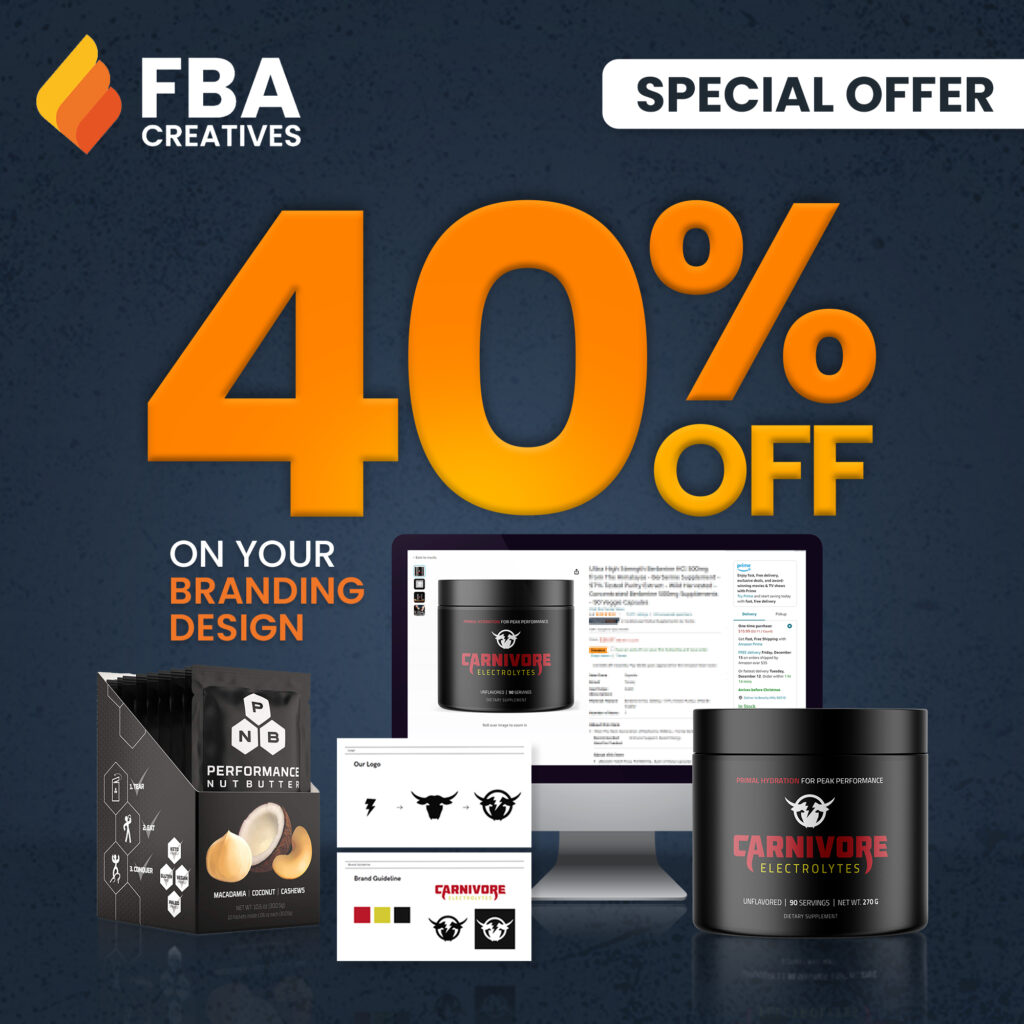
FBA Creatives specializes in creating high-converting branding specifically for Amazon products, understanding the unique requirements of the platform. Their team knows exactly what resonates with Amazon shoppers and how to differentiate products in crowded markets. Moreover, they offer discounted rates through special partnership codes, making professional branding affordable even for beginners. This investment in quality branding pays for itself many times over through higher conversion rates and premium pricing power.
Strong branding extends beyond just an attractive logo to encompass your entire visual identity and messaging strategy. Your packaging, product images, brand story, and customer experience all contribute to brand perception. Therefore, thinking holistically about how customers will perceive and remember your product ensures cohesive branding. Professional services handle these complex considerations, ensuring every element works together harmoniously.
The branding process typically begins with understanding your target customer and what appeals to them aesthetically and emotionally. Subsequently, designers create concepts that resonate with that audience while standing out from competitors. Multiple revision rounds ensure the final product perfectly captures your vision and market positioning. Once complete, you’ll have all the assets needed for Amazon listings, packaging, social media, and future brand expansion.
Creating Your Amazon Listing

Your Amazon listing serves as your virtual storefront, persuading shoppers to choose your product over competitors. The main image must immediately communicate what the product is and how it solves customer problems. Shoppers scroll quickly through search results, so your main image has just seconds to capture attention and generate clicks. Therefore, investing in professional product photography or digitally rendered images dramatically impacts your click-through rate.
Gallery images should showcase the product from multiple angles while highlighting key features and benefits. Include lifestyle images showing the product in use, infographics explaining unique advantages, and size comparison images when relevant. Each image should serve a specific purpose in your sales narrative, moving customers closer to purchase. Moreover, Amazon allows up to nine images, so use all available slots to thoroughly present your product.
The title must balance keyword optimization with readability, incorporating the terms customers search for while remaining comprehensible. Bullet points should highlight benefits rather than just features, explaining how the product improves customers’ lives. The description provides space for deeper storytelling and additional keyword optimization. Furthermore, enhanced brand content (A+ Content) allows brand-registered sellers to create richer visual descriptions that significantly boost conversion rates.
For beginners, outsourcing listing creation to professionals like FBA Creatives makes sense for your first product launch. They understand Amazon’s algorithm and what persuades customers, creating listings that convert at higher rates. As you gain experience and launch subsequent products, you can gradually take over these tasks yourself. However, main image creation typically remains best left to professionals unless you develop genuine design expertise, as this single element dramatically impacts your success.
Sending Products to Amazon
After finalizing your product with the manufacturer, you’ll receive inventory that needs shipment to Amazon’s fulfillment centers. Amazon provides detailed instructions for preparing and shipping inventory, including labeling requirements and box specifications. Following these guidelines precisely ensures your inventory is received quickly without issues. Additionally, Amazon’s partner carrier program often provides discounted shipping rates, reducing your costs compared to standard shipping services.
The FBA system automatically distributes your inventory across multiple warehouses to optimize delivery speeds. This distribution happens behind the scenes, you simply ship to designated receiving centers and Amazon handles the logistics. Once received and processed, your products become available for Prime shipping, dramatically increasing their appeal. Subsequently, when customers place orders, Amazon’s fulfillment team picks, packs, and ships within hours, often delivering within two days.
Understanding Amazon’s inventory management system helps you maintain optimal stock levels without overstocking or running out. Tools within Seller Central show inventory levels, sales velocity, and projected stock-out dates. Monitoring these metrics allows you to reorder inventory proactively, preventing lost sales from stock-outs. Moreover, maintaining consistent inventory levels signals Amazon’s algorithm that your product is reliable, potentially improving your search rankings.
Your business now operates largely on autopilot, with Amazon handling the fulfillment operations that would normally consume hours daily. This passive income structure allows you to focus on strategic growth activities like expanding your product line or launching on additional platforms. Nevertheless, regular monitoring ensures everything runs smoothly and allows you to address any customer service issues promptly. The combination of passive operations and strategic oversight creates the ideal business model for long-term wealth building.
Three Ways to Guarantee Amazon FBA Success in 2026
Implementing proven success strategies dramatically increases your likelihood of building a profitable Amazon FBA in 2026. These aren’t theoretical concepts, they’re battle-tested approaches that have generated millions in revenue for successful sellers. Furthermore, combining multiple strategies creates synergistic effects that multiply your results beyond what any single approach could achieve. By committing to these three principles, you’ll position yourself among the top performers in the Amazon marketplace.
The TikTok Shop Halo Effect
The integration between TikTok Shop and Amazon FBA in 2026 represents the most significant opportunity for sellers in 2026. Many sellers debate whether to focus on TikTok Shop or Amazon FBA, but this creates a false dichotomy. Smart sellers launch on both platforms simultaneously, leveraging each platform’s strengths to create a powerful flywheel effect. Products gain visibility on TikTok through viral content and influencer partnerships, driving curious viewers to Amazon where they actually make purchases.
This cross-platform strategy generates 10-15% additional Amazon sales beyond what you’d achieve through Amazon alone. Customers discover products through entertaining TikTok content, then visit Amazon for the security and convenience of Prime shipping. Subsequently, satisfied customers often create their own TikTok content showcasing their purchases, further amplifying your product’s visibility. This organic cycle continues perpetually, with each platform feeding growth on the other without requiring proportional increases in advertising spend.
The flywheel effect accelerates as your product gains momentum, with reviews and rankings on Amazon improving while TikTok content proliferates. More reviews lead to higher conversion rates, which improves your Amazon ranking, which generates more sales. Simultaneously, more TikTok content creates broader awareness, driving additional traffic to your Amazon listing. Moreover, influencers naturally gravitate toward products gaining traction, often creating content without requiring payment or outreach.
This strategy only works with the right product, specifically niche branded or passion products that inspire customer enthusiasm. Boring commodity products don’t generate user-generated content on TikTok, limiting your ability to leverage this flywheel. Therefore, product selection becomes even more critical in 2026, as viral potential now significantly impacts long-term profitability. Products that solve specific problems for passionate communities naturally perform best across both platforms.
Get a Mentor or Coach

Statistical analysis reveals that sellers who invest in coaching are 25 times more likely to succeed than those attempting to learn exclusively from free content. This dramatic difference stems from the personalized guidance, accountability, and troubleshooting that coaching provides. Furthermore, coaches help you avoid costly mistakes that can derail your business before it gains traction. While free resources provide valuable information, they can’t replace the tailored advice and support that comes from working directly with experienced mentors.
The car rebuilding analogy perfectly illustrates this principle, imagine trying to completely disassemble and rebuild a car using only YouTube videos. You might eventually succeed, but the process would take far longer and involve numerous expensive mistakes. Conversely, having an experienced mechanic standing beside you, pointing out exactly where each part goes and why, dramatically increases your success rate. Similarly, building an Amazon business involves numerous interconnected components that must work together perfectly.
Real success stories demonstrate the power of proper mentorship. Troy successfully sells products at just $8 each, a price point most people assume can’t be profitable, yet he’s generated substantial income. Brent, a helicopter pilot with a full-time career and two young children, built his Amazon business to over $1 million in annual sales. Remarkably, his Amazon income now exceeds his aviation salary, despite maintaining his demanding career and family responsibilities.
The Passion Product Formula program offers multiple tiers designed to accommodate different budgets and support needs. Every applicant receives a free consultation call where coaches develop a customized action plan for building an Amazon business. Additionally, the program includes an unprecedented guarantee, if you don’t generate at least $10,000 in sales during your first year while following the program’s guidance, you’ll receive $10,000 directly. This guarantee has never been claimed because the program consistently delivers results for committed students.
Start Today, Not Tomorrow

Procrastination kills more dreams than failure ever will, as countless aspiring entrepreneurs perpetually postpone their launch. Common excuses include waiting until February, or next month, or after some arbitrary life event concludes. However, perfect timing never arrives, there will always be reasons to delay. Therefore, successful entrepreneurs take action immediately despite imperfect circumstances, knowing that progress beats perfection every time.
The psychological barrier of getting started often seems larger than the actual work involved. Once you take that first step, whether it’s signing up for a seller account, scheduling a coaching call, or beginning product research, momentum builds naturally. Moreover, the learning process itself requires time, so starting today means reaching profitability weeks or months sooner. Every day of delay represents lost opportunity as the market continues evolving and competitors establish stronger positions.
Booking a free consultation call provides accountability and direction without requiring financial commitment. During these calls, experienced coaches assess your situation, answer questions, and develop a roadmap customized to your circumstances. Additionally, applicants receive access to the comprehensive 12-hour Amazon FBA course completely free. This resource alone provides enough information to launch a product independently, though most people find that coaching accelerates their progress dramatically.
The consultation process helps identify which program tier best suits your needs and budget. Some sellers require comprehensive hand-holding through every step, while others need occasional guidance and accountability. Regardless of your starting point, options exist to support your journey. Nevertheless, the first step remains the same for everyone, clicking the link to apply for that initial call. Your future as a successful Amazon seller begins with this single action.
Your Path Forward Starts Now

The Amazon FBA in 2026 combines unprecedented advantages that have never existed simultaneously before. The TikTok Shop integration creates viral marketing potential while AI automation handles previously time-consuming tasks. Moreover, the marketplace continues growing as more consumers shift their purchasing to online platforms. These converging trends create ideal conditions for new sellers to establish profitable businesses quickly.
Success on Amazon requires choosing the right strategy from the outset, as not all approaches deliver equal results. Niche branding and passion products represent the highest-potential strategies, offering competitive advantages that protect your market position. Furthermore, these approaches align perfectly with emerging opportunities like TikTok Shop integration, multiplying their effectiveness. By focusing your efforts on these proven methods, you’ll avoid the frustration of struggling with outdated strategies.
The three pillars of guaranteed success, TikTok Shop integration, mentorship, and immediate action that work synergistically to accelerate your results. Each element strengthens the others, creating momentum that carries you through inevitable challenges. Therefore, committing to all three principles simultaneously positions you for exceptional outcomes. Thousands of students have proven these methods work when applied consistently and diligently.
Your Amazon FBA journey awaits, ready to transform your financial future and provide the freedom you’ve been seeking. The tools, knowledge, and support systems exist to guide you through every step of the process. All that remains is your decision to begin today rather than joining the countless dreamers who perpetually postpone their success. Click the link to schedule your free consultation call, claim your complimentary 12-hour course, and take the first step toward building your profitable Amazon business.
Frequently Asked Questions
How much money do I need to start an Amazon FBA business in 2026?
Starting an Amazon FBA in 2026 typically requires between $2,000 and $5,000, though some sellers launch with less. This budget covers your first inventory order, professional branding, product photography, and initial Amazon fees. Additionally, you should maintain a reserve for unexpected expenses and potential reorders. However, retail arbitrage can start with just a few hundred dollars if you want to test the platform before committing larger amounts. The investment varies based on your chosen product and strategy, but generally, more initial capital allows for faster growth and better product quality.
How long does it take to start making money with Amazon FBA in 2026?
Most sellers make their first sale within 30-90 days after launching their product, depending on their preparation and product selection. The timeline includes product research (1-4 weeks), manufacturer sourcing and production (4-8 weeks), shipping to Amazon (1-2 weeks), and initial sales velocity building (2-4 weeks). Nevertheless, reaching consistent profitability typically takes 3-6 months as you optimize your listing and build reviews. Sellers who invest in coaching and choose well-researched products often reach profitability faster than those learning entirely through trial and error. Patience during the initial months is crucial, as building a sustainable business requires time.
Do I need to quit my job to start selling on Amazon?
Absolutely not, most successful Amazon sellers launch their businesses while maintaining full-time employment. The FBA model specifically enables this by handling fulfillment operations, allowing you to manage your business during evenings and weekends. In fact, keeping your job initially reduces financial pressure and allows you to reinvest profits for faster growth. Several case studies in this article feature sellers who built six and seven-figure businesses while working demanding careers. Only after your Amazon income consistently exceeds your employment income should you consider transitioning to full-time entrepreneurship.
What’s the difference between niche branding and passion products?
Niche branding involves taking existing products and positioning them specifically for targeted sub-markets, like creatine for women instead of generic creatine. Passion products go further by identifying what customers are actively searching for on Amazon where no adequate solution exists. Both strategies achieve S-tier status and often overlap in practice, a passion product typically benefits from niche branding. The key distinction is that passion products start with keyword research to find proven demand, while niche branding starts with products you then position for specific audiences. Both approaches dramatically outperform generic private label and wholesale strategies.
Is Amazon FBA in 2026 still profitable with all the competition?
Amazon FBA in 2026 remains highly profitable in 2026 despite increased competition, particularly for sellers who implement niche branding or passion product strategies. While generic private label products face intense competition, specialized products targeting specific customer segments thrive. Moreover, the TikTok Shop integration has opened new growth channels that most competitors haven’t exploited yet. The key to profitability lies in product selection, finding underserved markets with proven demand. Sellers who compete on price in crowded categories struggle, but those creating unique value for passionate communities build sustainable profitable businesses. The marketplace continues growing, creating space for well-positioned new entrants.
How does the TikTok Shop integration actually work?
The TikTok Shop integration creates a virtuous cycle where both platforms reinforce each other’s sales. You launch your product on both TikTok Shop and Amazon FBA in 2026 simultaneously, using TikTok for awareness and Amazon for conversion. Customers discover your product through TikTok content (both your own and user-generated), then often purchase on Amazon due to Prime shipping and buyer trust. Subsequently, satisfied customers create TikTok content about their purchase, driving more awareness and repeating the cycle. This strategy generates 10-15% additional Amazon sales plus separate TikTok Shop revenue, significantly increasing total profitability without proportional marketing cost increases.
What happens if my product doesn’t sell?
If your product doesn’t sell, several strategies can salvage the situation before considering it a complete loss. First, optimize your listing by improving images, title, and bullet points to increase conversion rates. Second, run targeted Amazon PPC advertising to drive initial traffic and gather data. Third, consider adjusting your price point to find the sweet spot for your market. If these efforts fail, you can liquidate inventory through Amazon’s deals programs or external liquidation services. However, proper product research dramatically reduces this risk, products validated through keyword research and competitive analysis rarely fail completely. Coaching programs help you avoid this scenario entirely through proper validation before investing in inventory.
Do I need to register a business or LLC to sell on Amazon?
You can start selling on Amazon as an individual without forming a business entity, though many sellers eventually create LLCs for liability protection and tax benefits. Initially, operating as a sole proprietor simplifies the startup process and reduces costs. However, as your business grows and inventory values increase, forming an LLC protects your personal assets from business liabilities. Additionally, LLCs can provide tax advantages depending on your situation. Consult with an accountant or attorney about the right timing for your specific circumstances. Amazon accepts both individual and business seller accounts, so you can always transition to a formal business structure after validating your product’s success.