
Setting up an Amazon seller account represents one of the most exciting opportunities available to entrepreneurs today. However, many aspiring sellers hesitate at the very first step. They worry that creating their seller account will be complicated, overwhelming, or require technical expertise they don’t possess. Fortunately, the truth is far more encouraging than you might think.
This comprehensive guide walks you through every single step of creating your Amazon seller account. You’ll learn everything from clicking that initial signup button to entering your final piece of information. Furthermore, we’ll reveal insider tips that most beginners miss. These include how to save thousands of dollars on banking fees and how to leverage Amazon’s $50,000 incentive program from day one. Whether you’re based in the United States or anywhere else in the world, this guide ensures you can confidently set up your account the right way.
Before diving into the step-by-step process, you should know that thousands of successful Amazon sellers have followed this exact path. Moreover, the Passion Product Formula has helped countless entrepreneurs navigate this process. They’ve built thriving businesses selling unique products that customers genuinely love. With that foundation in mind, let’s explore your options and get your account set up properly.
- Understanding Amazon Seller Account Options
- Getting Started: The Initial Steps
- How to Register Your Business
- Bank Account & Payment Setup: Why Your Bank Account Matters
- The Smart Solution: Airwallex
- Store Information & Final Steps
- Common Questions & Concerns: What if I'm Not in the US?
- Your Next Steps: Setting Yourself Up for Success
- What the Passion Product Formula Teaches
- Taking Action on Your Amazon Business Journey
- Frequently Asked Questions
Understanding Amazon Seller Account Options

Amazon seller account offers two distinct types of seller accounts. Notably, choosing the right one significantly impacts your business from the start. First, the Individual Seller Plan costs nothing upfront. Therefore, this makes it appear attractive to budget-conscious beginners. However, this plan charges you $0.99 for every single item you sell. Consequently, this quickly adds up once you start moving inventory.
In reality, this option truly makes sense only if you’re planning to sell just a handful of items per month. For example, perhaps you’re clearing out personal belongings rather than building a legitimate business. In contrast, the Professional Seller Plan requires a $39.99 monthly subscription. Nevertheless, this plan allows you to sell unlimited items without any per-item fees. Beyond that flat monthly rate, you’ll only pay Amazon’s standard 15% referral fee on each sale.
Interestingly, you can actually reduce this fee down to 5%. This happens through brand registry and other strategies. Typically, serious sellers implement these as they grow their businesses. Furthermore, the Professional plan also unlocks a game-changing benefit. Unfortunately, individual sellers completely miss out on this. Specifically, Amazon’s incentive program gives you 10% back on your first $50,000 in branded sales. In other words, this means you could potentially receive up to $5,000 back as you launch and scale your business.
Additionally, professional sellers gain access to advanced features. These include promotional tools, advertising options, and detailed analytics. Ultimately, these prove essential for growth. For anyone serious about building an Amazon business, the Professional plan represents the only logical choice. After all, you’re not just making occasional sales. Therefore, the Passion Product Formula specifically teaches students how to leverage all the benefits of the Professional plan from day one. As a result, this ensures you maximize every advantage Amazon offers to growing businesses. Consequently, as we move forward with this tutorial, we’ll focus on setting up a Professional seller account.
Getting Started: The Initial Steps
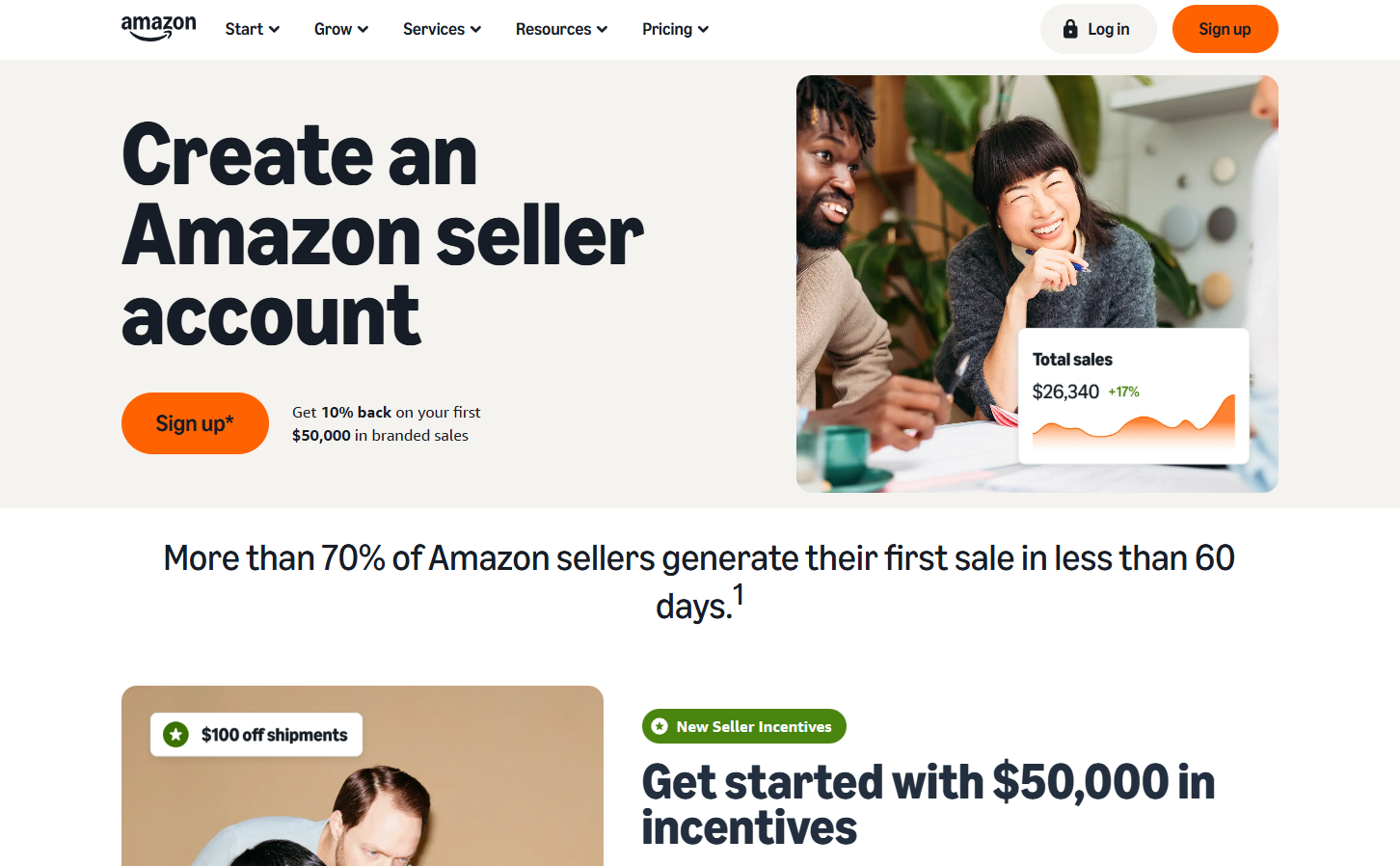
Beginning your Amazon seller journey requires nothing more than visiting sell.amazon.com. Then, click the prominent “Sign Up” button. If you already have a regular Amazon shopping account, you can use those same credentials to log in. Thus, this streamlines the process. However, if you’re creating a brand new account specifically for your business, you’ll need to click “Create your Amazon account” instead.
First, the account creation process asks for basic information. Specifically, you’ll provide your full name, a professional email address, and a secure password. For instance, you might enter your business email like yourname@yourbusiness.com. Instead, don’t use a personal Gmail account. Indeed, this small detail immediately establishes a more professional foundation for your seller account. Once you submit this information, Amazon sends a verification email. Subsequently, this confirms your email address is valid and belongs to you.
After verifying your email, you’ll return to the seller signup page. Next, enter your credentials again. Then, Amazon sends a one-time password to your mobile phone as an additional security measure. Importantly, this two-factor authentication protects your account from unauthorized access. Furthermore, this becomes increasingly important as you start processing thousands of dollars in sales. Additionally, this security layer gives you peace of mind. As a result, you know your business and financial information stays protected.
Once you’ve confirmed your identity through the one-time password, you’re ready to move forward. At this point, the actual business setup begins now. Subsequently, the process becomes more detailed from this point. Nevertheless, remember that each piece of information serves a specific purpose. Ultimately, it establishes your legitimate presence on Amazon’s marketplace.
Business Registration: Where and What Type
Amazon’s first major question asks where your business is registered. Unfortunately, this is where many international sellers feel discouraged. However, here’s the encouraging truth: even if you live outside the United States, you can absolutely sell on Amazon’s US marketplace. In fact, thousands of successful sellers from the UK, Pakistan, India, and Australia operate thriving US-based Amazon businesses. Moreover, they do this every single day. Therefore, don’t let your location hold you back from this opportunity.
Next, the critical decision involves selecting your business type. Initially, Amazon presents several options that might seem confusing at first. First, state-owned businesses refer to companies wholly or partially owned and operated by the government. Obviously, this doesn’t apply to independent entrepreneurs like you. Similarly, publicly listed businesses include major corporations like Nike or Apple. Typically, these trade on stock exchanges. Meanwhile, charities represent non-profit organizations that sell on Amazon to raise funds for their causes.
Notably, the two options most relevant to new sellers are “Privately Owned Business” and “Individual.” Specifically, selecting “Individual” means you don’t have a registered business entity yet. Instead, you’ll use your Social Security Number instead of a business identification number. While Amazon allows this approach, it’s not the smartest path forward. Indeed, we’ll explore several important reasons why shortly.
Consequently, most serious sellers choose “Privately Owned Business.” Then, they register either a DBA (Doing Business As) or an LLC (Limited Liability Company). Importantly, they do this before completing their Amazon account setup. As a result, this choice provides legal protection, professional credibility, and essential separation. Furthermore, it keeps your personal and business finances separate. Fortunately, the Passion Product Formula covers all the legal setup details in depth. Therefore, this removes any guesswork. Ultimately, it ensures you establish your business correctly from the foundation.
Why You Should Get Proper Business Registration
Technically, you can start selling on Amazon as an individual. In that case, you’d use your Social Security Number. However, this approach creates unnecessary risks and limitations. Instead, establishing a proper business entity, particularly an LLC, provides crucial legal protection. Specifically, this safeguards your personal assets. For instance, if someone files a lawsuit against your business, an LLC creates a legal barrier. As a result, it separates your business from your personal bank accounts, home, car, and other assets.
Beyond legal protection, having a registered business dramatically enhances your professional credibility. Consequently, suppliers, customers, and even Amazon itself take you more seriously. For example, manufacturers and wholesalers respond better when you approach them with a legitimate business entity. Indeed, this works better than operating as an individual. Moreover, this professional structure becomes absolutely essential if you’re selling consumable products. Specifically, these include supplements, foods, or anything people ingest. Notably, liability concerns increase significantly with these products.
Perhaps most importantly, registering your business allows you to open dedicated business bank accounts. Additionally, you can also get business credit cards. As a result, this separation keeps your finances clean and simplifies tax preparation. Furthermore, it makes tracking business expenses infinitely easier. In addition, business credit cards often provide valuable rewards. Typically, they offer higher credit limits and benefits specifically designed for business spending. In contrast, these differ from personal purchases.
Alternatively, a DBA offers a cheaper alternative to an LLC. Generally, it typically costs under $100 to register. However, a DBA provides zero legal protection. Unfortunately, it doesn’t create a separate legal entity. Therefore, your business and personal finances remain legally intertwined. Consequently, this exposes you to the same risks as operating as an individual. For most sellers, especially those building long-term businesses, an LLC represents the superior choice. Indeed, this remains true despite the slightly higher initial cost.
How to Register Your Business

Fortunately, setting up your LLC is surprisingly straightforward. Moreover, you have several excellent options depending on your location. For instance, websites like LegalZoom.com simplify the entire process. Specifically, they use a user-friendly questionnaire. Typically, this takes just 10 to 20 minutes to complete. First, you’ll navigate to their LLC formation section and click “Start My Business.” Then, follow the step-by-step prompts. Subsequently, these guide you through every necessary detail.
However, keep in mind something important about costs. While the online service itself might be free or low-cost, you’ll still pay state filing fees. Specifically, these officially register your LLC. Notably, fees vary significantly by state. For example, California charges $800 annually for an LLC. In contrast, other states like Wyoming charge considerably less. Therefore, many entrepreneurs choose to form their LLC in their home state for simplicity. Particularly, this especially applies if they physically live and operate in the United States.
However, if you’re based outside the United States, Wyoming offers an incredibly popular option. Indeed, international Amazon sellers frequently choose this route. For instance, services like WyomingRegisteredAgent.com provide registered agent services. Typically, these cost approximately $49 per year. Overall, the total cost to establish a Wyoming LLC typically runs around $200. As a result, this approach allows international sellers to legally operate a US-based business. Furthermore, they can sell on Amazon’s US marketplace. Importantly, they don’t need to physically reside in the country.
Furthermore, once you’ve established your LLC through either method, you’ll receive important documents. Subsequently, these confirm your business registration. Indeed, the documents prove essential for the next critical step. Specifically, you’ll need them to obtain your Employer Identification Number (EIN) from the IRS. Ultimately, Amazon seller account requires this to verify your business legitimacy.
Getting Your EIN (Employer Identification Number)
Essentially, your EIN functions as a Social Security Number for your business. Fortunately, obtaining one from the IRS is completely free and relatively simple. First, start by searching “EIN IRS” in Google. Subsequently, this takes you directly to the IRS website. Then, you’ll click “Get Employer Identification Number” followed by “Begin Application.” Meanwhile, don’t let the government website’s somewhat dated appearance intimidate you. Indeed, the process is more straightforward than it appears.
Initially, the IRS application asks you to select your business type. Specifically, you’ll choose LLC if you’ve registered a limited liability company. Alternatively, select sole proprietor if you’ve established a DBA. Otherwise, you might still be operating as an individual. Subsequently, you’ll indicate how many members your LLC has. Typically, most new sellers have just one. Next, select which state you registered your business in. Finally, provide your registered business address.
Overall, the entire application takes approximately 10 to 15 minutes to complete. Remarkably, the IRS immediately issues your EIN upon submission. Therefore, this instant approval means you can continue setting up your Amazon account. Consequently, there’s no waiting period. However, make absolutely sure you save your EIN documentation in a secure location. Indeed, you’ll need this number repeatedly throughout your business operations.
Additionally, the Passion Product Formula walks students through this exact process. Specifically, it includes detailed video tutorials and screenshots. As a result, this ensures you never feel lost or confused at any step. Furthermore, the comprehensive guidance proves especially valuable for first-time business owners. Notably, many have never navigated government websites or business registration before. Finally, with your EIN secured, you’re ready to enter your business information. Subsequently, you’ll do this in Amazon’s seller portal.
Entering Your Business Information
At this point, Amazon seller account now requires you to enter your company registration number. Specifically, this is simply the EIN you just obtained from the IRS. Therefore, copy this number exactly as it appears on your IRS documentation. As a result, this avoids any verification issues. Additionally, you’ll enter your business name. Importantly, make sure it appears exactly as it does on your LLC or DBA registration documents. Ultimately, consistency across all these documents prevents complications down the road.
Next, you’ll provide your registered business address. Specifically, this needs to match the address you used when forming your LLC. For instance, if you registered your LLC at your home address, that’s perfectly acceptable to use here. Alternatively, some entrepreneurs prefer to use a business address or registered agent address instead. Indeed, this provides an extra layer of privacy and professionalism.
Importantly, Amazon takes business verification seriously. Therefore, ensuring all your information matches across documents is crucial. Otherwise, any discrepancies between your LLC paperwork, EIN documentation, and Amazon seller account application can trigger delays. Furthermore, they may require additional verification. Consequently, double-check every detail before moving forward to the next section.
Finally, with your business details accurately entered, Amazon shifts focus. At this stage, they now verify your personal identity as the business owner. Notably, this transition represents a critical security measure. Ultimately, it protects both Amazon and legitimate sellers from fraud. Additionally, it prevents unauthorized account creation.
Personal Information & Verification
At this stage, Amazon seller account requires detailed personal information. Specifically, this is about the primary contact person for the account. Typically, this means you as the business owner. First, you’ll enter your full legal name. Importantly, make sure it appears exactly as it does on government-issued identification. Next, select your country of citizenship. Then, indicate your country of birth. Subsequently, provide your date of birth. Furthermore, you’ll enter your current residential address. Notably, this can differ from your business address. Particularly, this applies if you’ve registered your LLC elsewhere.
Admittedly, these requirements might seem invasive. However, they serve essential purposes. Indeed, Amazon seller account operates in a highly regulated environment. Therefore, the company must comply with financial regulations. Additionally, it must follow anti-money laundering laws and consumer protection standards. Consequently, Amazon needs to verify something important. Specifically, real, identifiable people stand behind every seller account on their platform.
Moreover, you’ll also need to provide a valid government-issued ID or passport. Importantly, this is part of the verification process. Subsequently, Amazon seller account uses this documentation to confirm your identity. Specifically, they check that it matches the information you’ve entered. Ultimately, this security measure protects everyone on the platform. As a result, it prevents fraud and reduces counterfeit products. Furthermore, it ensures accountability if issues arise with any seller.
Admittedly, gathering all this documentation might feel tedious. Nevertheless, remember that you’re building a legitimate business. Indeed, it could generate substantial income for years to come. Therefore, investing an hour or two to set everything up correctly now saves countless headaches later. Moreover, once you complete this initial setup, you’ll rarely need to revisit these details. Specifically, you’ll only return if you make significant changes to your business structure.
Bank Account & Payment Setup: Why Your Bank Account Matters
At this critical juncture, setting up your bank account information represents one of the most important steps. Indeed, this is part of your Amazon seller journey. However, it’s where many beginners unknowingly lose significant money. Specifically, Amazon seller account requires a valid bank account to deposit your sales proceeds. Furthermore, this account must be in the name of the primary contact person. Alternatively, it can also match the business name you provided earlier. Additionally, you’ll need online banking credentials to verify the account. Typically, the process involves Amazon making small test deposits. Subsequently, you then confirm these amounts.
Unfortunately, most beginners simply connect their regular personal checking account. Furthermore, they never think twice about it. However, this approach misses a crucial opportunity. Instead, you should properly separate your business and personal finances. Therefore, opening a dedicated business bank account provides clear separation. As a result, this simplifies bookkeeping and makes tax preparation easier. Moreover, it reinforces the legal protection your LLC provides.
Additionally, establishing business credit through a business credit card allows something important. Specifically, you can build your company’s credit profile. Notably, this operates independent of your personal credit score. Furthermore, this separation proves increasingly valuable as your business grows. Eventually, you’ll need to make larger inventory purchases. Subsequently, you’ll negotiate better terms with suppliers. Potentially, you may secure business loans for expansion. In addition, many business credit cards also offer rewards programs. Specifically, these are designed for business spending. For example, these include higher cashback on shipping, advertising, or office supply purchases.
Beyond these fundamental benefits, your banking setup directly impacts your profitability. Particularly, this becomes especially true if you’re selling internationally. Similarly, it also applies if you’re based outside the United States. Indeed, this is where most sellers leave substantial money on the table every single month. Unfortunately, they pay hidden fees they don’t even realize exist.
The Banking Trap for International Sellers
Specifically, if you’re based outside the United States, using a regular bank account creates a devastating profit leak. Similarly, this also applies if you plan to sell on Amazon marketplaces in multiple countries. Unfortunately, traditional banks and Amazon’s default currency converter charge conversion fees. Moreover, this happens every single time you receive a payment in a foreign currency. Typically, these fees range from 3% to 5% of every transaction. Initially, this might not sound terrible until you calculate the actual dollar amount.
For example, consider a practical scenario. If you generate $10,000 in monthly sales, a 3% conversion fee costs you $300 every month. Consequently, over a year, that’s $3,600 vanishing into bank fees. Worse yet, you receive absolutely no benefit to your business. Furthermore, as you scale to $50,000 or $100,000 in monthly sales, these conversion fees can easily cost you more. Specifically, you might pay $1,500 to $5,000 monthly. Ultimately, that’s money that should be staying in your pocket as profit.
Additionally, traditional banks also impose transfer fees. Specifically, these apply each time money moves from Amazon to your account. Initially, these fees might seem small individually. For instance, perhaps $15 to $30 per transfer. However, they compound rapidly with multiple payouts throughout the month. Moreover, banks typically offer terrible exchange rates. Unfortunately, these favor them significantly. Consequently, this adds another hidden cost layer. Sadly, most sellers never even notice on their bank statements.
Ultimately, the frustrating reality is that these fees are completely unnecessary. Indeed, this applies if you use the right financial infrastructure. Unfortunately, many sellers operate for months or even years bleeding thousands of dollars to banking fees. Simply put, they didn’t know better alternatives existed. Fortunately, there’s a significantly smarter solution. As a result, it keeps dramatically more money working for your business. Finally, banks won’t enrich themselves at your expense.
The Smart Solution: Airwallex
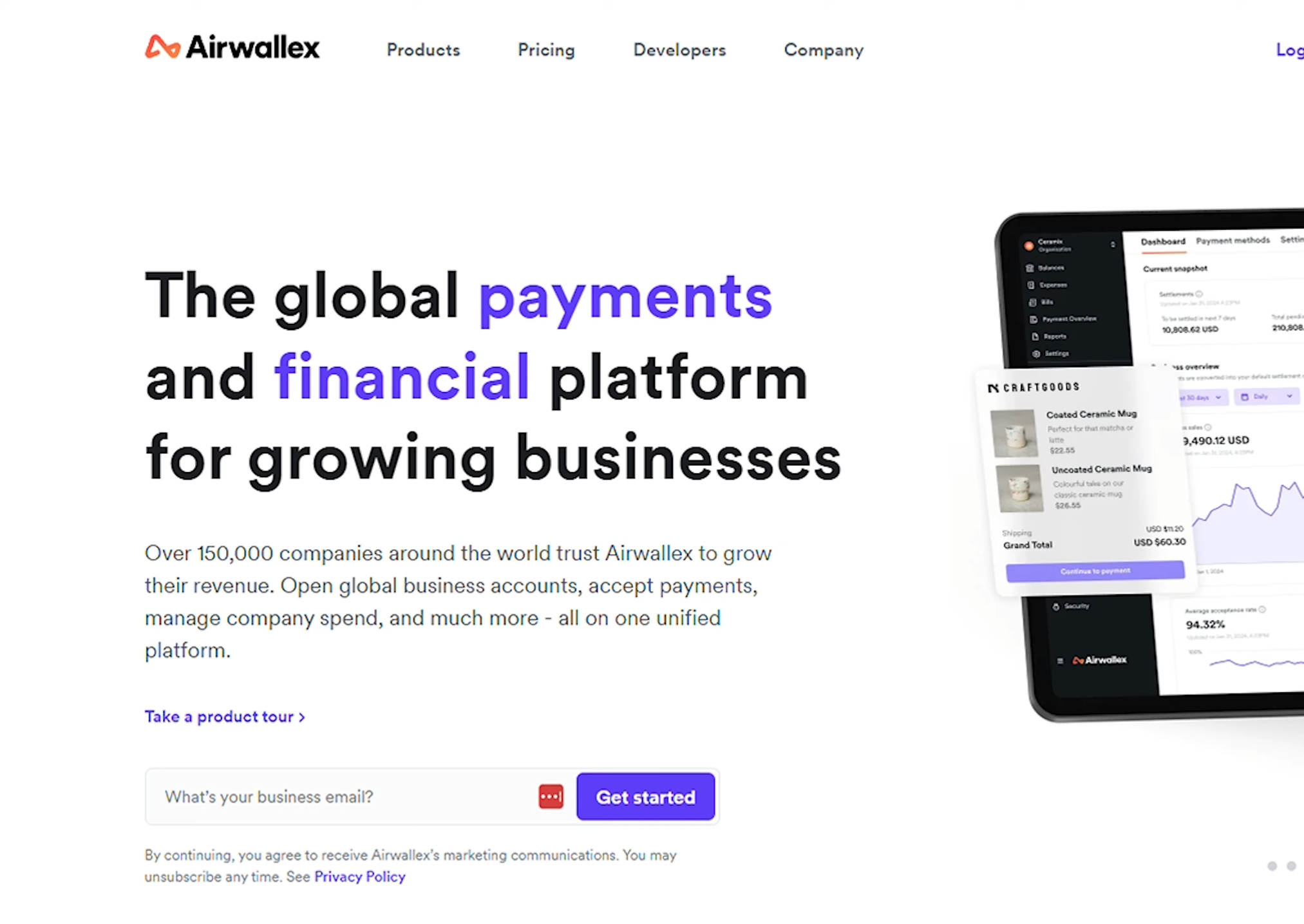
Notably, Airwallex represents a game-changing platform. Specifically, it’s designed for businesses operating across borders. Indeed, it solves the currency conversion problem elegantly. Instead of forcing you to convert currencies every time you receive a payment, Airwallex works differently. Specifically, it allows you to receive funds in local currency. Then, you hold them until you decide to convert. Importantly, this fundamental difference gives you control over when and how conversion happens. As a result, you can wait for favorable exchange rates. Therefore, you don’t have to accept whatever rate your bank offers.
Furthermore, the conversion rates themselves make an enormous difference. Specifically, Airwallex charges just 0.4% to 1% above the interbank rate. In comparison, compare this to the 3% to 5% that traditional banks typically charge. Consequently, this means if you’re processing $50,000 in monthly sales, you could save significantly. Indeed, you might save $1,000 to $2,000 monthly on conversion fees alone. As a result, switching to Airwallex can immediately increase your profit margins by several percentage points. Moreover, you don’t need to change anything else about your business.
Beyond currency conversion, Airwallex functions as a comprehensive all-in-one business platform. For instance, you can use it to pay overseas suppliers directly in their local currency. Therefore, this eliminates another layer of conversion fees. Similarly, you can pay virtual assistants in the Philippines, Pakistan, or anywhere else. Notably, there are no expensive wire transfer fees. Additionally, you can issue corporate cards to team members. Furthermore, you can manage company spending across your entire organization.
Ultimately, once you start scaling your Amazon business, how you collect and manage money becomes critical. Indeed, it’s just as important as the products you sell. Fortunately, Airwallex ensures you keep thousands of dollars. Otherwise, these would disappear into banking fees. As a result, that extra profit provides crucial runway for inventory purchases. Moreover, it supports marketing investments. Alternatively, it can simply reward yourself for building a successful business.
Entering Bank Details
Whether you choose a traditional business bank account or a more sophisticated solution like Airwallex, entering your banking information follows a straightforward process. First, you’ll provide the bank account holder name. Importantly, this must exactly match either your personal name or your registered business name. Next, you’ll enter your bank’s routing number and your specific account number. Conveniently, you can find both on your checks. Alternatively, you can also access them through your online banking portal.
Typically, Amazon verifies your bank account through one of two methods. First, the initial method involves Amazon depositing two small amounts into your account. Usually, these are less than $1 each. Then, you confirm these through your seller dashboard. Alternatively, some banks allow instant verification. Specifically, this happens through your online banking credentials. Consequently, this speeds up the process considerably.
Critically, make absolutely certain you enter these numbers accurately. Indeed, even a single digit error can cause verification to fail. As a result, this delays your account approval. Furthermore, triple-check that the account name matches your Amazon seller account registration information precisely. Otherwise, any mismatch between names can trigger additional verification requirements. Worse yet, it may even prevent you from completing your account setup.
Finally, once your bank account is verified, Amazon seller account can begin depositing your sales proceeds directly. Typically, this happens every two weeks. Importantly, this regular payment cycle becomes the lifeblood of your business. Ultimately, it provides the cash flow you need. Specifically, you can reorder inventory, scale your advertising, and grow your operation systematically.
Credit Card Information
Additionally, Amazon seller account also requires a valid credit or debit card. Specifically, you need this to complete your seller account setup. Indeed, this card serves multiple purposes. First, Amazon uses it to verify your identity. Then, they charge your monthly Professional seller subscription fee. Furthermore, it may also charge other fees like shipping costs or Amazon advertising spend. Therefore, you’ll want to use a card that you control and actively monitor.
Notably, many successful sellers recommend using a dedicated business credit card. Specifically, use this for your Amazon seller account rather than a personal card. As a result, this approach maintains clean separation between your business and personal finances. Moreover, it simplifies expense tracking for tax purposes. Additionally, business cards often provide valuable rewards on business spending. For instance, several business credit cards offer attractive cashback or points specifically on advertising spend. Consequently, this becomes increasingly valuable as you scale your Amazon PPC campaigns.
When entering your credit card information, you’ll provide the card number. Additionally, include the expiration date, billing address, and CVV security code. Importantly, make sure the billing address matches exactly what your credit card company has on file. Therefore, this avoids any verification issues. Furthermore, ensure this card has available credit. Otherwise, it won’t decline when Amazon attempts to charge the monthly subscription fee.
Finally, with your payment methods configured correctly, you’re approaching the finish line. Indeed, your seller account setup is almost complete. Subsequently, the remaining steps focus on your store information. Additionally, you’ll answer final verification questions. Ultimately, these help Amazon understand your business better.
Store Information & Final Steps

At this stage, Amazon’s store setup questionnaire asks straightforward questions. Specifically, these cover your business intentions, product categories, and seller experience level. First, you’ll indicate whether you already have a brand name. Next, describe what types of products you plan to sell. Then, estimate your expected monthly sales volume. However, don’t worry about being perfectly accurate here. Indeed, Amazon seller account uses this information to tailor your seller experience. Furthermore, they provide relevant resources. Importantly, they don’t hold you to specific commitments.
Additionally, the process also asks if you own or have rights to sell the products you’ll list. Similarly, it inquires whether you manufacture your own products. Furthermore, you’ll indicate if you plan to use Fulfillment by Amazon (FBA). Consequently, answering these questions honestly helps Amazon provide appropriate guidance. As a result, it ensures you understand their policies. Specifically, these cover product authenticity, intellectual property, and fulfillment options.
Interestingly, completing this final questionnaire truly is simple. Indeed, it’s like signing up for an email account or creating a social media profile. Fortunately, Amazon has streamlined the process significantly over the years. Indeed, the company recognizes that unnecessary complexity creates barriers. Ultimately, it prevents legitimate entrepreneurs from joining. Therefore, simply read each question carefully. Then, provide honest answers and proceed confidently through each screen.
Finally, once you submit your final information, Amazon reviews your application. Typically, the company approves new seller accounts within 24 to 48 hours. Meanwhile, during this waiting period, you can familiarize yourself with Seller Central. Additionally, watch tutorial videos and start researching products to sell. Congratulations! You’ve completed the most administrative part of starting your Amazon business. Now, you’re ready to focus on the exciting work. Ultimately, you can now build a profitable product line.
Common Questions & Concerns: What if I’m Not in the US?

Notably, one of the most common concerns potential sellers express is about location. Specifically, they wonder if they can actually sell on Amazon if they don’t live in the United States. Fortunately, the answer is absolutely yes. In fact, thousands of successful Amazon sellers operate from countries all over the world. Indeed, Amazon’s marketplace is global. Moreover, the company actively encourages international sellers to participate.
If you’re based outside the US, you’ll follow the same basic process outlined in this guide. However, there’s one key difference. Specifically, you’ll likely want to establish a Wyoming LLC. Indeed, this works better than an LLC in a state where you don’t actually live. Notably, Wyoming offers inexpensive registration fees and no annual franchise taxes. Furthermore, it provides strong privacy protections. Consequently, these appeal to international entrepreneurs. For instance, services like WyomingRegisteredAgent.com specifically cater to international sellers. As a result, they simplify the entire process.
Additionally, international sellers should pay extra attention to their banking setup. Indeed, this is where using the right platform becomes even more critical. Unfortunately, converting foreign currency payments through traditional banks will destroy your profit margins quickly. Therefore, platforms like Airwallex aren’t just nice to have for international sellers. Instead, they’re practically essential for maintaining healthy profitability.
Ultimately, your physical location doesn’t limit your ability. Indeed, you can build a thriving Amazon business. Specifically, with the right business structure, proper banking infrastructure, and quality products that solve customer problems, you can compete successfully. Importantly, it doesn’t matter where you’re sitting while managing your business.
Do I Really Need an LLC?
Notably, the question of whether you truly need an LLC comes up constantly among new sellers. Indeed, the answer depends on your specific situation and risk tolerance. Technically, Amazon allows you to sell as an individual. In that case, you’d use your Social Security Number. Therefore, you don’t absolutely need an LLC to get started. However, skipping this step creates unnecessary legal and financial risks. Unfortunately, these could prove devastating if something goes wrong.
Importantly, an LLC provides crucial legal protection. Specifically, it creates a separate legal entity for your business. For instance, if someone files a lawsuit against your business, the consequences differ significantly. Perhaps they claim your product caused harm. Alternatively, maybe they say you violated intellectual property. Fortunately, the LLC structure protects your personal assets. Specifically, these include your home, car, and personal bank accounts. However, without this protection, a lawsuit against your business becomes a lawsuit against you personally. Consequently, this puts everything you own at risk.
Beyond legal protection, having an LLC significantly enhances your professional credibility. As a result, manufacturers, suppliers, and even customers take you more seriously. For example, when you approach a factory about producing your product, presenting yourself matters. Indeed, an established business works better than an individual. Consequently, this dramatically improves your negotiating position. Furthermore, they view you as more serious. Moreover, this professional structure becomes absolutely critical if you’re selling consumable products. Indeed, it’s essential for anything where liability concerns exist.
Ultimately, the bottom line is this: while you technically can start without an LLC, establishing one costs relatively little. Typically, the entire process costs under $200. Moreover, it provides enormous protection and benefits. Therefore, for anyone serious about building a real business, an LLC represents a foundational requirement. Indeed, you’re not just making hobby money. Consequently, it’s not an optional extra.
What About the $50,000 Incentive?
Notably, Amazon’s incentive program offering 10% back on your first $50,000 in branded sales represents a phenomenal opportunity. Unfortunately, many new sellers don’t fully understand it. Specifically, this program essentially gives you up to $5,000 in credits. Furthermore, these apply toward future Amazon fees as you grow your business. Consequently, this can significantly reduce your costs during the crucial early growth phase.
Importantly, to qualify for this incentive, you need to enroll in Amazon’s Brand Registry program. Specifically, this requires having a registered trademark for your brand. Fortunately, this requirement aligns perfectly with the Passion Product approach. Indeed, it emphasizes creating unique branded products. Instead, you’re not selling generic items. Consequently, if you’re following best practices for building a sustainable Amazon business, you’ll naturally qualify. As a result, this incentive program becomes available to you.
Additionally, the incentive credits apply to various Amazon fees. Specifically, these include referral fees, FBA fees, and other selling costs. Furthermore, as you generate sales of your branded products, Amazon seller account automatically calculates your 10% credit. Then, they apply it to offset future fees. Consequently, this system creates a powerful momentum effect. Indeed, your early sales directly reduce your costs on subsequent sales. As a result, this improves your profitability and cash flow as you scale.
Ultimately, this is precisely where having the right product strategy becomes crucial. Specifically, the Passion Product Formula teaches you how to identify, develop, and launch unique products. Furthermore, these qualify for Brand Registry. Consequently, you’ll maximize this incentive. Instead of selling commodity products that compete solely on price, you’ll build a brand. Indeed, customers recognize and trust it. Therefore, this not only unlocks this financial incentive. Moreover, it creates long-term sustainable business value.
Your Next Steps: Setting Yourself Up for Success

Indeed, completing your Amazon seller account setup represents a significant accomplishment. However, honestly, it’s just the foundation of your journey. Typically, the account approval process takes 24 to 48 hours. Meanwhile, during this time you should resist the urge to simply wait passively. Instead, use this period to educate yourself. Specifically, learn about Amazon’s policies. Additionally, familiarize yourself with Seller Central’s dashboard. Furthermore, begin researching potential product opportunities.
Once Amazon approves your account, you’ll face the most critical decision. Specifically, what product should you sell? Unfortunately, this is where most new sellers make devastating mistakes. Indeed, these doom their business before it even starts. Typically, the majority of beginners make one of two errors. First, they either choose overcrowded commodity products where competition crushes margins. Alternatively, they select items without validating actual customer demand first.
Notably, the difference between successful Amazon sellers and those who struggle often comes down to product selection strategy. Unfortunately, generic private label products that you simply slap your logo on no longer work well. Indeed, today’s competitive marketplace requires more. Furthermore, customers have countless options. Therefore, without genuine differentiation, you’re forced to compete purely on price. Consequently, this destroys profitability and creates a miserable race to the bottom.
Ultimately, this is exactly why the Passion Product Formula exists. Specifically, it teaches you a fundamentally different approach to Amazon selling. Instead of chasing trendy products or copying what everyone else sells, you’ll learn something better. Indeed, you’ll identify unique product opportunities. Furthermore, these solve real customer problems. Additionally, you’ll discover how to validate demand before investing a single dollar in inventory. Moreover, you’ll learn how to work with manufacturers. Subsequently, you’ll create truly differentiated products. Finally, the program shows you how to launch and scale profitably. Importantly, this works even in competitive categories.
What the Passion Product Formula Teaches

Notably, the Passion Product Formula provides comprehensive training. Specifically, it takes you from complete beginner to confident Amazon seller. Moreover, it offers a clear roadmap for every single step. First, the program starts with the complete legal setup walkthrough. As a result, this ensures you establish your business correctly from day one. Furthermore, you won’t leave any crucial details to chance. Additionally, you’ll watch over-the-shoulder videos. Specifically, these show exactly how to register your LLC, obtain your EIN, and configure everything properly.
From there, the program dives deep into product research and validation methodologies. Importantly, these separate winning products from money-losing disasters. Specifically, you’ll learn proprietary frameworks for analyzing competition. Additionally, you’ll estimate demand, calculate profitability, and identify opportunities. Indeed, these are ones that other sellers completely overlook. Moreover, you’ll discover how to validate product ideas before committing to inventory. Consequently, this dramatically reduces your risk. Therefore, you won’t launch a product nobody wants.
Furthermore, the sourcing and manufacturing modules reveal how to find reliable suppliers. Subsequently, you’ll learn to negotiate favorable terms. Additionally, you’ll create product specifications. Indeed, the program shows how to manage the entire production process professionally. Moreover, you’ll learn how to protect yourself from scams. Furthermore, you’ll ensure quality control. Similarly, it teaches how to build relationships with manufacturers. Importantly, these support your long-term growth. Additionally, the program covers Amazon optimization strategies. Specifically, these include keyword research, listing creation, photography, and launch sequences. Ultimately, they maximize your visibility and conversion rates.
Perhaps most importantly, the Passion Product Formula includes ongoing support. Additionally, you join a community of fellow sellers. Indeed, they share insights, celebrate wins, and help each other navigate challenges. Consequently, you’re not just buying a course. Instead, you’re joining a community of entrepreneurs. Specifically, they’re committed to building sustainable, profitable Amazon businesses. Moreover, they use proven strategies that work in today’s marketplace.
Who It’s For and How to Get Started
Notably, the Passion Product Formula is designed for serious entrepreneurs. Specifically, these are people who want to build a legitimate business. Indeed, it’s not for hobbyists looking for quick money. However, if you’re willing to invest time learning the right strategies, this program is for you. Furthermore, you need to follow proven systems. Additionally, put in the work required to succeed. As a result, this program provides everything you need. Ultimately, you can build a thriving Amazon business. Indeed, it generates reliable income for years to come.
Particularly, the program benefits certain people. Specifically, those who feel overwhelmed by the complexity of Amazon selling. Similarly, those who’ve tried before and failed. Perhaps they had poor product selection or inadequate guidance. Instead of piecing together information from random YouTube videos or outdated blog posts, you get something better. Indeed, a complete, structured curriculum. Consequently, this addresses every aspect of building your business. Moreover, it follows the right sequence.
Currently, a limited number of spots are opening. Specifically, these are for one-on-one calls with the Passion Product Formula team. Furthermore, during these free consultation calls, you’ll discuss your specific situation. Additionally, get answers to your questions. Subsequently, determine whether the program is the right fit for your goals. Indeed, these personalized sessions provide tremendous value. Specifically, they give you expert insights. Consequently, these address your specific challenges and opportunities.
If you’re ready to stop researching and start building, click the link in the description. Then, apply for your free one-on-one call. Importantly, the team reviews each application individually. Therefore, this ensures they can provide genuine value. Furthermore, it confirms the program aligns with your goals. Ultimately, don’t let the hard work of setting up your seller account go to waste. Instead, take the next step. Finally, start building the Amazon business you’ve been dreaming about.
Taking Action on Your Amazon Business Journey

Indeed, you’ve now learned exactly how to set up your Amazon seller account from start to finish. Moreover, you’ve discovered insider strategies that most beginners never find. Fortunately, setting up your account is genuinely simpler than most people expect. Furthermore, you’ve removed any mystery about what information you’ll need. Additionally, you know what steps you’ll take. Consequently, armed with this knowledge, you can confidently create your account. Therefore, you won’t second-guess yourself. Moreover, you won’t wonder if you’re doing it correctly.
However, remember that your seller account represents just the foundation. Indeed, it’s the starting point, not the destination. Specifically, the real work of building a successful Amazon business happens after your account is approved. Subsequently, this is when you begin researching products. Furthermore, you’ll validate demand, work with suppliers, and launch your first listing. Importantly, the decisions you make during those critical early stages will determine your outcome. Ultimately, will you build a profitable business or struggle to break even?
Unfortunately, thousands of people set up Amazon seller account every week. However, only a small percentage actually build sustainable businesses. Specifically, these generate meaningful income. Notably, the difference between success and failure rarely comes down to effort or intelligence. Instead, it comes down to having the right strategy. Moreover, it requires following proven systems. Additionally, you need to learn from people who’ve already achieved the results you want.
Ultimately, your Amazon business journey truly starts right now, at this exact moment. Indeed, you can either spend months or years struggling through trial and error. Unfortunately, you’d be learning painful lessons the expensive way. Alternatively, you can invest in proven guidance. Consequently, this fast-tracks your success. Specifically, the Passion Product Formula provides that guidance. Moreover, the limited one-on-one consultation calls offer personalized support. Indeed, these address your specific situation. Therefore, apply for your free call today. Finally, let’s work together. Ultimately, turn your Amazon business goals into reality.
Frequently Asked Questions
How long does it take to get my Amazon seller account approved?
Typically, Amazon reviews and approves new seller accounts within 24 to 48 hours. Specifically, this happens after you submit your complete application. However, if Amazon’s verification system flags any information that needs additional review, the process can take longer. Indeed, it might extend up to a week or occasionally more. Therefore, to avoid delays, ensure all your information matches exactly. Specifically, check across your LLC documents, EIN paperwork, bank account, and Amazon application. Furthermore, if you haven’t heard back within 72 hours, you can contact Amazon Seller Account Support. Then, check on your application status.
Can I switch from an Individual account to a Professional account later?
Yes, you can upgrade from an Individual seller account to a Professional account at any time. Specifically, do this through your Seller Central dashboard. Indeed, the process takes just a few minutes. Subsequently, Amazon will start charging the $39.99 monthly fee from the date you upgrade. However, it’s generally better to start with a Professional account if you’re serious about building a business. Consequently, you’ll immediately gain access to all the advanced features. Additionally, you’ll avoid the per-item fees. Moreover, you’ll qualify for the $50,000 incentive program from your very first sale.
Do I need a US address to sell on Amazon US?
No, you don’t need a US residential address. Fortunately, you can still sell on Amazon’s US marketplace. Indeed, thousands of international sellers successfully operate US-based Amazon businesses. Moreover, they live in other countries. However, you will need a US business entity. Typically, international sellers use a Wyoming LLC. Additionally, you’ll also need a US bank account. Alternatively, use a platform like Airwallex. Specifically, it can receive US dollar payments. Furthermore, for your personal address, you can use your actual international address. Notably, Amazon accepts sellers from virtually every country worldwide.
What if I don’t have a trademark yet? Can I still sell on Amazon?
Yes, you can absolutely sell on Amazon without a trademark or brand registry. However, you won’t qualify for the 10% back incentive on your first $50,000 in sales without brand registry. Nevertheless, you can still build a successful business. Indeed, many sellers start by launching their first product and generating revenue. Then, they invest in a trademark. Specifically, they do this once they’ve validated their product and brand. Typically, obtaining a trademark costs $250 to $500. Specifically, this is through the USPTO. Furthermore, it takes several months to process. Therefore, many entrepreneurs wait until they’ve proven their concept. Subsequently, then they make this investment.
How much money do I need to start selling on Amazon?
Generally, the minimum investment to start an Amazon FBA business typically ranges from $2,500 to $5,000. However, some sellers start with less. Specifically, this budget covers your first inventory order. Typically, this costs $1,000 to $3,000 depending on your product. Additionally, it includes product photography at $200 to $500. Furthermore, you’ll pay Amazon fees including your monthly subscription. Moreover, set aside a small advertising budget. However, having $5,000 to $10,000 available gives you more flexibility. Consequently, you can choose better products. Furthermore, it allows for higher quality. Additionally, it provides runway for testing and optimizing your launch. Ultimately, the Passion Product Formula helps you budget appropriately. Specifically, this depends on your specific product choice and goals.
What’s the difference between FBA and FBM?
Specifically, FBA (Fulfillment by Amazon) means Amazon stores your inventory in their warehouses. Additionally, they pick and pack orders. Furthermore, they handle all customer service and returns. In contrast, FBM (Fulfillment by Merchant) means you store inventory yourself. Subsequently, you handle shipping directly to customers. However, for most new sellers, FBA is strongly recommended. Indeed, it makes your products eligible for Prime shipping. Consequently, this dramatically improves conversion rates. Moreover, it allows Amazon to handle the operational headaches. Notably, the higher fees for FBA are almost always offset by increased sales volume. Additionally, you save time from not managing logistics yourself.
How do I know what product to sell?
Importantly, product selection represents the single most important decision in your Amazon business. Indeed, it’s where most beginners make critical mistakes. Specifically, you should never choose products based purely on passion. Furthermore, don’t rely on personal interest without validating actual demand and profitability. Simultaneously, you shouldn’t just copy what other sellers are doing. Moreover, don’t chase trending products without differentiation. Fortunately, the Passion Product Formula teaches a systematic approach. Specifically, you’ll find products that combine decent demand, manageable competition, and good profit margins. Additionally, you’ll discover opportunities for meaningful differentiation. Consequently, this methodology dramatically increases your chances of success. Indeed, it works better than guessing or following generic advice.
Can I use my personal bank account instead of a business account?
Technically, Amazon allows you to use a personal bank account if selling as an individual. However, using a business bank account offers numerous advantages. Specifically, business accounts clearly separate your personal and business finances. Furthermore, they simplify bookkeeping and tax preparation. Additionally, they enhance your professional credibility. Moreover, they reinforce the legal protection your LLC provides. Furthermore, business bank accounts often come with features specifically designed for business needs. For instance, these include higher transaction limits. Additionally, they offer merchant services integration and better expense tracking. Ultimately, the small effort required to open a business account pays dividends. Indeed, this continues throughout the life of your business.