
I started a $1.3 million Amazon FBA business in seven days. Before you get too excited, though, let me be clear about one thing right away: that number is revenue, not profit. Selling on Amazon involves real expenses, and anyone who shows you a revenue screenshot without the cost breakdown is telling you half the story.
My name is Travis, and I’ve been selling online for over ten years. These days, I teach people how to create their own products and sell them on Amazon. Recently, however, my assistant asked me a question that stopped me in my tracks: “You haven’t launched a new Amazon business in a couple of years. So how do we know Amazon FBA business is still a good opportunity?”
That question deserved a real answer. Therefore, I decided to start a brand-new Amazon business from scratch, on camera, with everything on the line. If it failed, I was going to delete my YouTube channel, because I only want to teach people the best ways to make money online, and I refuse to promote something that no longer works.
What follows is exactly how it went: the seven-day framework, the three secrets behind the results, the honest numbers, and the setbacks I hit along the way. Best of all, every part of this is repeatable.
- First, Let's Talk Real Numbers (Revenue vs. Profit)
- Day 1 – Finding a Product People Are Already Searching For
- Day 2 – Secret #1: Build a Brand That Stands Out
- Day 3 – Sourcing a Manufacturer (Without Alibaba)
- Day 4 – Secret #2: Grow a Tribe Before You Launch
- Day 5 – Building the Amazon Listing
- Days 6 to 7 – Launch Day and the First Month
- The Growth Curve – Month by Month
- Secret #3 – Follow a Proven System
- Ready to Build Your Own Passion Product?
- Frequently Asked Questions
First, Let’s Talk Real Numbers (Revenue vs. Profit)
Let’s start with the costs, because they matter more than the headline. First, I had to manufacture the products I sold, which came to over $240,000. Next came Amazon’s selling fee the cost of using their marketplace which totaled $190,000. On top of that, I paid $165,000 in Amazon FBA business fees, which cover picking, packing, and shipping every order from Amazon’s warehouse directly to my customer.
There’s more. I spent $50,000 on PPC advertising to drive traffic to my listing, plus another $12,000 on miscellaneous fees. Add all of that up, subtract it from the revenue, and the business generated over $500,000 in profit.
Why Transparency Matters
Most people in this space stop at the revenue number, and that’s a genuine disservice. Understanding your margins from day one is precisely what separates sellers who scale from sellers who stall out after their first inventory order. When you know your true cost structure, you can price confidently, reorder intelligently, and reinvest without guessing.
Now that the numbers are clear, let’s walk through how this business actually got built, day by day.
Day 1 – Finding a Product People Are Already Searching For
On day one, I had a single job: find a product. With only seven days on the clock, failing here meant the whole project was over before it started. Fortunately, Amazon hands you an enormous amount of free data if you know where to look.
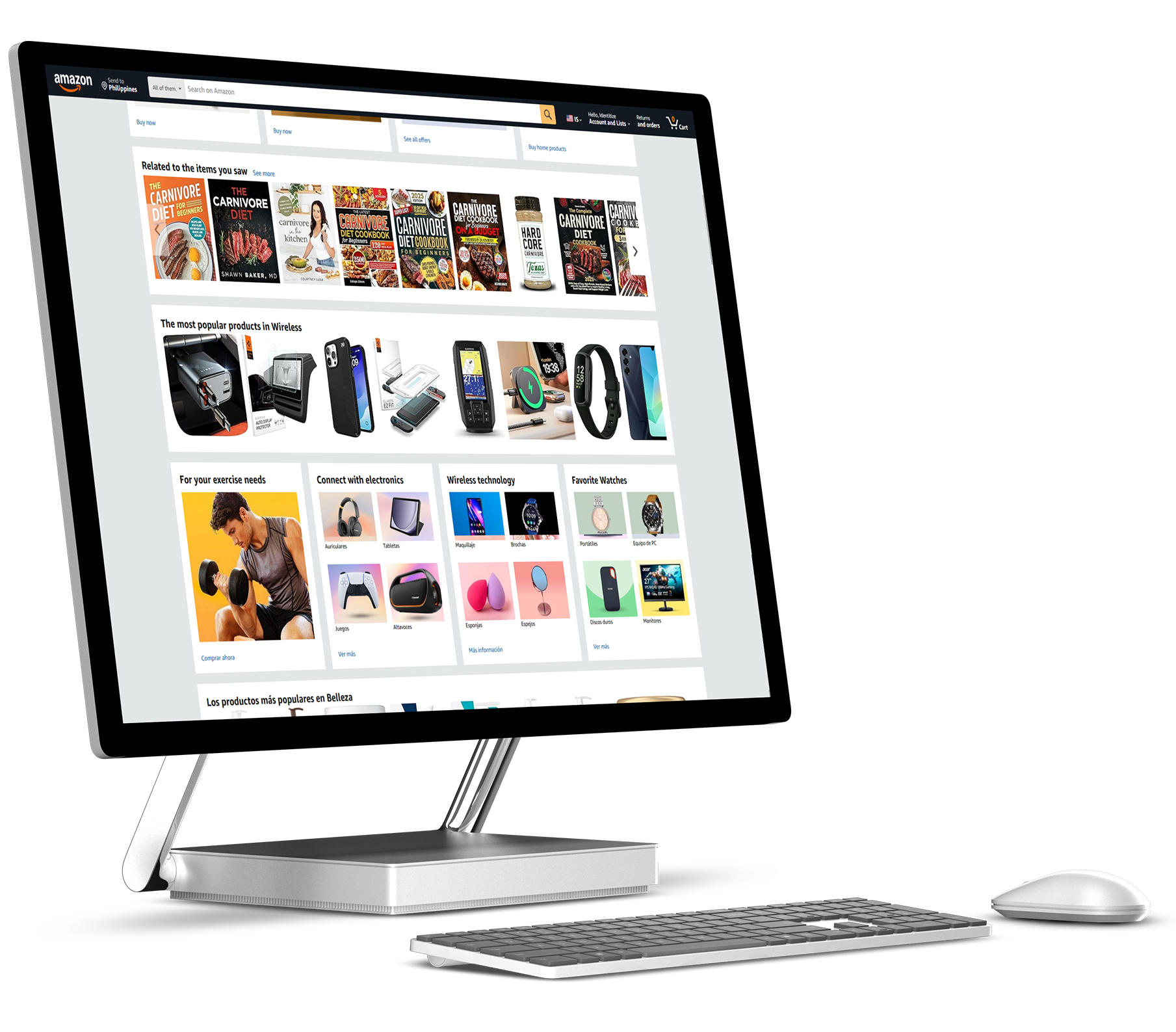
Start by clicking the Bestsellers tab on Amazon. From there, you can browse top-selling products across dozens of categories. Pick any product, scroll down to its Best Sellers Rank, and note that number. Then head to the free Jungle Scout sales estimator, select your marketplace and category, plug in the rank, and click calculate.
Here’s a real example. I ran this on a top beauty product and found it was selling over 170,000 units every month. Multiply that by its $10.77 price point, and that single listing generates over $1.9 million per month. In other words, the money on this platform is very real.
The Winning Discovery – Carnivore Electrolytes
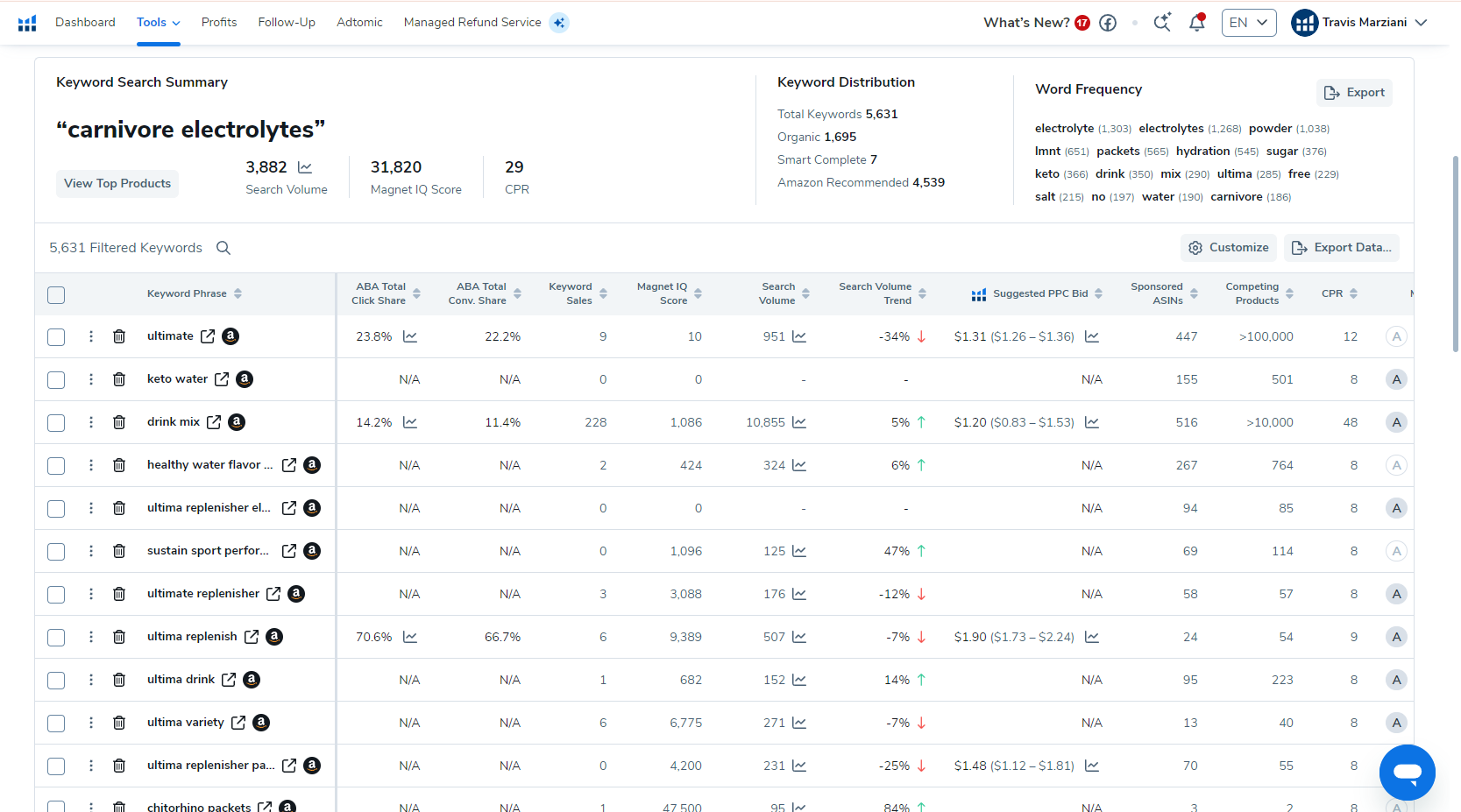
About thirty minutes into my research, I found it. Over 2,000 people per month were searching for “carnivore electrolytes” on Amazon. However, when I actually searched that term, no product matched the intent. Plenty of electrolyte products showed up, but most contained sugar, artificial flavors, and other ingredients that simply aren’t allowed on the carnivore diet.
That gap was the entire opportunity. Demand already existed, and nobody had bothered to serve it properly. Consequently, my plan for the next seven days was simple: create an electrolyte product built specifically for the carnivore diet.
Why This Is the Passion Product Approach
This is the heart of the Passion Product Formula. Rather than guessing what might sell, you find where genuine passion overlaps with underserved demand and then you build the product that fits. Passionate audiences already know what’s missing from the market, and they’re vocal about it. As a result, you’re not creating demand from nothing; you’re answering a question people are already asking.
With the product identified, the next challenge was making sure anyone would actually notice it.
Day 2 – Secret #1: Build a Brand That Stands Out
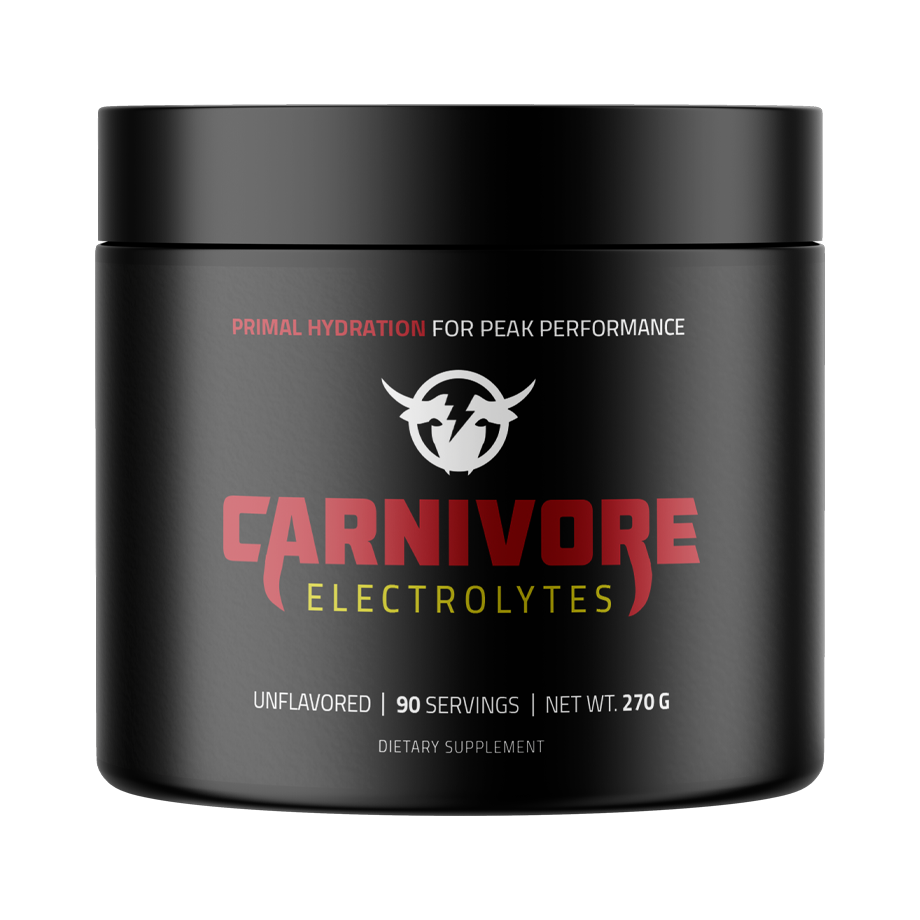
Here’s the second secret to making money on Amazon: your product has to stand out visually. When shoppers search for something they want to buy, Amazon shows them a wall of nearly identical thumbnails. Most of those images blur together completely.
Therefore, if you want any real success, you need a brand that pops one that draws the eye immediately so shoppers click your listing instead of your competitor’s.
The Design Decisions
Since people were already searching for “carnivore electrolytes,” I named the product exactly that. Matching search intent directly removes friction and helps the listing rank for the term that matters most.
For the packaging, I went with all black and put “Carnivore Electrolytes” in bold red type. That choice was deliberate. Nearly every competing electrolyte product uses bright, colorful packaging, so an all-black package with red lettering creates immediate contrast in the search results. We designed the logo first, then built the packaging around it.
Three Ways to Get Your Design Done
You have a few solid options here. First, Canva works well if you want to do it yourself for free. Second, Fiverr lets you hire a graphic designer starting around $5 though be careful, because you usually get what you pay for. I once had a logo designed there for $5, and the result showed it.
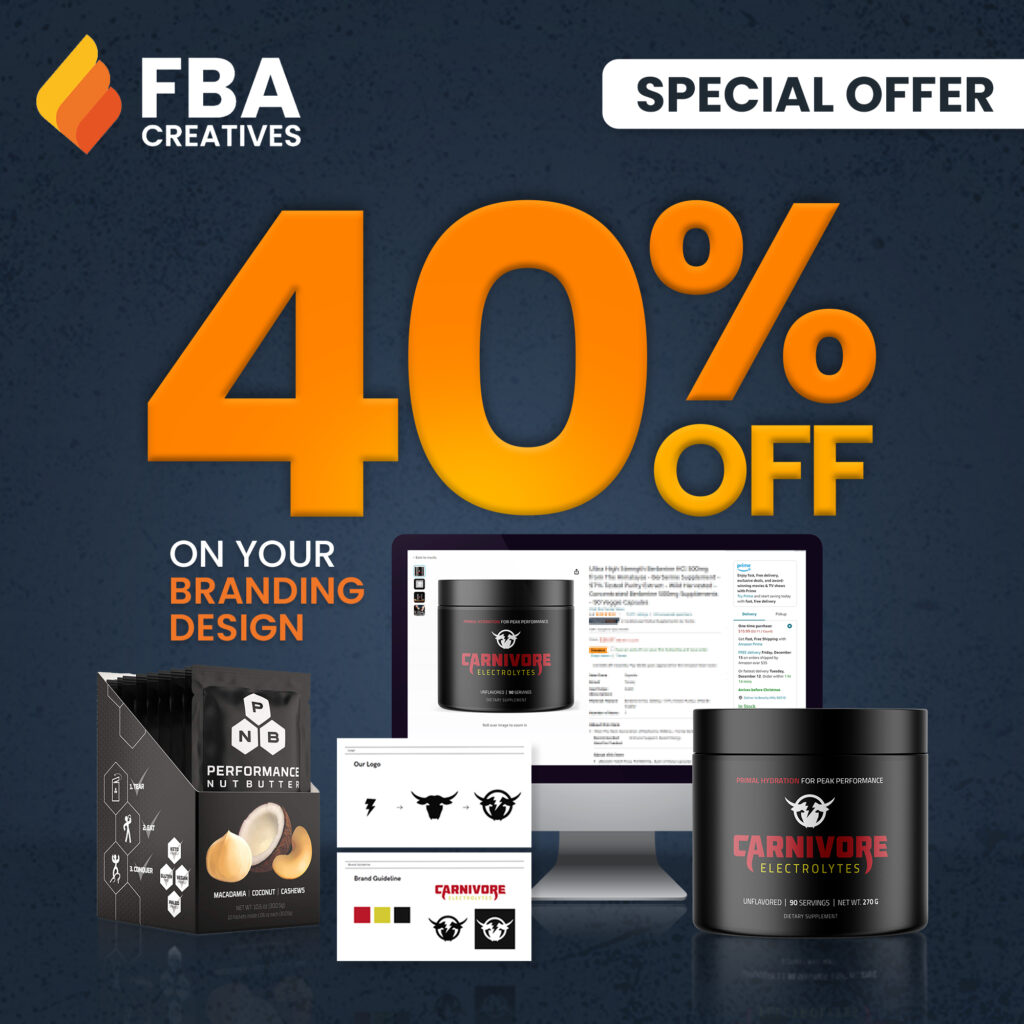
Third, if you’re specifically creating products for Amazon FBA business, I recommend FBA Creatives. They specialize in Amazon listings and understand the platform’s requirements inside and out. I also have the hookup: use code TRAVIS for 50% off your purchase.
Setting Up Seller Central in Parallel
While the designers worked, I didn’t sit still. Time was running out faster than expected, so I went ahead and registered my Amazon seller account at sell.amazon.com.
The signup process itself is straightforward, but you’ll want a few things ready beforehand: a valid ID or passport, a recent bank account or credit card statement, a credit card, and a mobile phone number. From there, Amazon asks a series of questions about your business, and you’re set.
Next up: actually making the product.
Day 3 – Sourcing a Manufacturer (Without Alibaba)

Day three was manufacturer day. Notably, because I was creating a consumable product, I chose not to manufacture overseas in a place like China. That meant skipping Alibaba entirely.
Consumable and ingestible products carry different compliance, testing, and quality-control considerations than a typical physical product. For that reason, domestic sourcing was the deliberate call here not the cheaper option, but the right one.
Four Ways to Find Manufacturers

If you’re sourcing your own product, you have four reliable paths. First, plain Google search still works remarkably well. Second, ThomasNet is an excellent directory for domestic manufacturers. Third, you can reach out directly to brands making similar products.
Fourth and by far the fastest – you can ask your network. Specifically, find someone who has already made a product similar to yours and simply ask who they use.
The Network Advantage in Action
That fourth method is exactly what I did. One of my students, Mina, had launched an electrolyte powder a couple of years earlier. I asked him who manufactured it, and he connected me with his supplier on the spot. What could have taken weeks of cold outreach took a single message.
If you don’t know anyone selling on Amazon yet, don’t worry. Inside my Amazon FBA business training program, you’re connected with over a thousand other sellers, and one of the most valuable features is our shared list of manufacturers that I and my students have personally worked with. Ultimately, community access compresses your timeline more than any software tool ever will.
The Quote and the Order Decision
The manufacturer came back quickly with pricing: $8 per unit at 500 units, or $7 per unit at 2,000 units. Naturally, the larger order looked tempting on paper.
However, I projected we’d sell roughly three to four units per day at launch, which made 500 units about three months of inventory. So I ordered 500 to test the concept properly. Starting small isn’t timid, it’s how you validate demand without tying up thousands of dollars in a product the market hasn’t confirmed yet.
Day 4 – Secret #2: Grow a Tribe Before You Launch

Day four brought a serious problem. The manufacturer told me production would take four to six weeks, which meant this business could not possibly launch within seven consecutive calendar days.
Rather than quietly drop the claim, I adjusted the rule and kept it honest: seven days of work, not seven days in a row. That’s a lesson worth internalizing. Real businesses hit delays constantly, and manufacturing timelines slip. The system still works, it just doesn’t always run on your preferred schedule.
Why Pre-Launch Audience Matters
With extra time on my hands, I turned to the third secret: grow a tribe. When you launch a new product on Amazon, you want as many sales as possible on day one.
Early sales velocity signals to Amazon’s algorithm that your listing is relevant, which improves your ranking and visibility. Consequently, the followers you build before launch become the buyers who create that initial momentum.
The Content Strategy
I started an Instagram account and a TikTok account for Carnivore Electrolytes, using the exact same technique I teach inside the Accelerator program. Then I got to work on content.
To make this as fast as possible, I took existing viral videos about the carnivore diet and spliced our product into them. For example, one popular video format shows what someone eats daily on carnivore, so we simply added Carnivore Electrolytes into that routine and posted it on our own account. The production cost was almost nothing, and the output volume was high.
With an audience forming, the listing itself was the last major piece.
Day 5 – Building the Amazon Listing

Day five delivered good news and bad news. The good news: I woke up, checked our social accounts, and we were already pulling in views and followers. The tribe strategy was working faster than expected.
The bad news: the manufacturer emailed again with another delay. What was originally four to six weeks had become six to eight weeks. Therefore, if this business was going to come together within my seven working days, the Amazon listing had to be built immediately.
Step-by-Step Listing Creation
Creating a listing is more straightforward than most people assume. Log into Seller Central, click the three lines at the top of the screen, and select “Add a Product.” Then choose “I’m adding a product not sold on Amazon” and pick your category.
From there, fill in your title, brand name, description, and bullet points. Upload the images from FBA Creatives, add your price and remaining details, and the listing is live-ready. At that point, the only missing piece was the physical product itself.
Why Listing Copy Deserves Real Effort
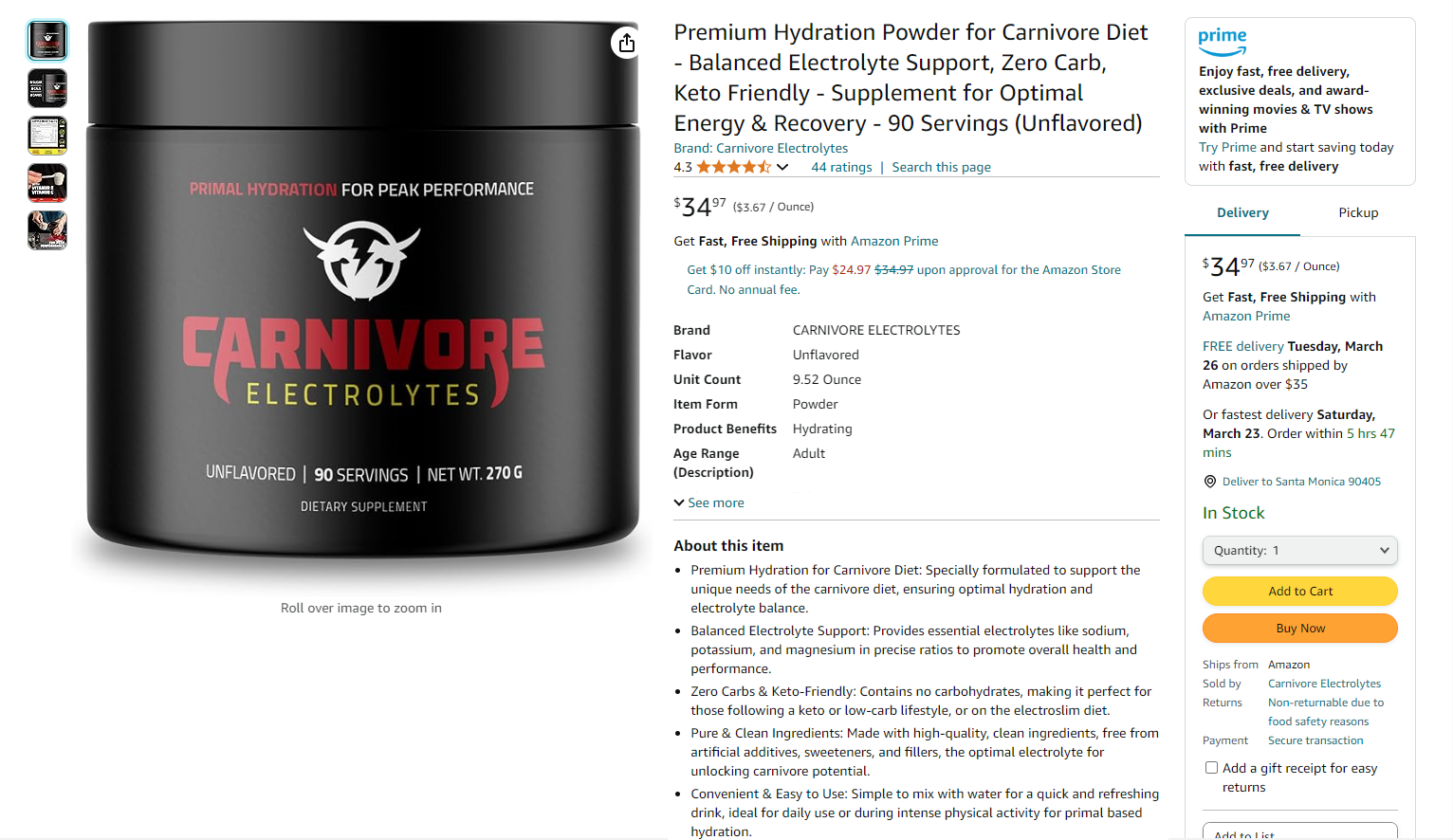
One note before we move on: don’t rush this step. Your images stop the scroll, but your copy closes the sale. Strong bullet points address the specific objections your buyer has, and a well-written description reinforces why your product exists in the first place.
In our case, every bullet reinforced the same message this is an electrolyte built specifically for carnivore, without the sugar and artificial ingredients everyone else includes.
Days 6 to 7 – Launch Day and the First Month
Eventually, the call came in: the production run was finished. I sent Connor to pick up the boxes from the manufacturer directly, and from there we prepped and shipped everything into Amazon’s warehouse.
Then came launch day for Carnivore Electrolytes then six months after I first started the project, but only seven working days of actual effort.
The First Results
On our very first day selling on Amazon, we did over $500 in sales. By the end of month one, we had generated over $6,900 in revenue and nearly $2,000 in profit.
To be clear, that’s a strong signal, not a small win. Most new businesses lose money in their first month; this one was profitable immediately. Even better, the trajectory from there got significantly more interesting.
The Growth Curve – Month by Month
The growth compounded month over month. In month two, we did over $10,000 in sales and more than $3,800 in profit. In month three, revenue climbed past $15,000 with over $5,000 in profit.
Month four brought over $20,000 in revenue and nearly $8,000 in profit, more than most people earn at their full-time job. Month five hit over $28,000 in sales and over $12,000 in profit and month six matched that revenue while profit climbed to over $14,000. Eventually, we crossed $100,000 in a single month.
The Pricing Lesson Most Sellers Miss
Here’s the part almost nobody talks about. When I saw inventory running low in month two, I raised the price from $24.99 to $29.99, fully expecting sales to dip. Instead, sales stayed exactly the same.
Then it happened again in month three. Sales were accelerating and we were headed for another stockout, so I raised the price to $34.99 specifically hoping to slow demand. Once again, sales held steady which meant substantially more profit on identical traffic.
That’s the power of a differentiated brand. A commodity product competes on price and gets punished for every increase. A genuinely differentiated product, built for an audience nobody else is serving, has real pricing power.
The Exit
In under two years, this Amazon FBA business generated over $1 million in revenue and more than $500,000 in profit. Then I listed it on Flippa and sold it for $840,000.
None of that was improvised, though. Every step followed a framework I’d already tested repeatedly.
Secret #3 – Follow a Proven System

When I quit my corporate job, I didn’t find success right away. Honestly, I struggled for years. I tried a long list of business models and watched most of them go nowhere.
Everything changed once I developed a repeatable system for creating products and selling them on Amazon. Since then, I’ve run that same system over and over, and it has held up every single time.
The Passion Product Formula
The Passion Product Formula is that system, distilled. First, start with something you’re genuinely passionate about, because passion gives you insight into what the market is missing. Second, validate real search demand before you spend a single dollar. Third, differentiate through branding rather than competing on price.
Fourth, build an audience before you need one, so launch day starts with momentum instead of silence. Finally, launch with velocity and then optimize your price and margins, exactly as we did going from $24.99 to $34.99 with no drop in sales.
Proof It’s Repeatable
This isn’t a one-off result. Brent, one of my students, is doing over a million dollars a year. AJ crossed $500,000 in his first year alone. Beyond them, hundreds of other students have built profitable businesses using the same framework.
The Carnivore Electrolytes project simply proved, publicly and in real time, that the opportunity is still wide open.
Ready to Build Your Own Passion Product?
Inside the Accelerator program, you get one-on-one coaching along with weekly small-group coaching sessions. You also get a complete, step-by-step screen-recorded tutorial walking you through every stage of starting your Amazon FBA business.
Additionally, you’re connected to our community of over a thousand sellers and gain access to the vetted manufacturer list that saved me weeks on this very project.
The Free Strategy Call
Right now, I’m offering free calls where you can speak with one of my Amazon experts and see whether you’re a good fit for the program. On that call, we’ll walk you through how the Accelerator works and give you a free customized 90-day success plan for launching your own Amazon FBA business.
To be clear, this isn’t a high-pressure sales call. We’ll tell you about the program, and together we’ll assess whether it’s genuinely right for you, because we don’t accept everyone. Our priority is a high success rate, which means only working with people we truly believe will succeed. Spots are limited, so click the link below and apply.
Closing Encouragement
If you take one thing away from this, let it be this: the opportunity is still here. I tested it publicly, with my channel on the line, and the results speak for themselves.
The system works. The demand exists. The only variable left is whether you start.
Frequently Asked Questions
How much money do I need to start an Amazon FBA business?
It depends heavily on your product, but this business began with a 500-unit order at $8 per unit, roughly $4,000 in initial inventory. Add design costs, samples, and an initial advertising budget, and most people can realistically start in the low four figures. Starting with a smaller test order keeps your risk manageable while you validate demand.
Can I really start an Amazon business in seven days?
You can complete seven days of work in seven days, but manufacturing timelines are outside your control. In this case, production stretched from an estimated four to six weeks out to six to eight weeks, and the full journey to launch day took about six months. Plan for delays and use that waiting period productively.
Do I have to manufacture in China?
Not at all. For consumable products in particular, domestic manufacturing is often the better choice due to compliance and quality-control requirements. Google, ThomasNet, direct outreach to similar brands, and referrals from other sellers all work well for finding domestic suppliers.
How do I find a product that will actually sell?
Look for search terms with genuine volume where no existing product truly satisfies the search intent. “Carnivore electrolytes” had over 2,000 monthly searches with no properly matching product – that gap was the entire opportunity. Free tools like Amazon’s Bestsellers list and the Jungle Scout sales estimator help you validate demand before you commit.
Is Amazon FBA business still worth it, or is it too saturated?
Saturation exists at the generic-commodity level, which is exactly why differentiation matters so much. This business launched recently, hit profitability in month one, and sold for $840,000, because it served a specific audience nobody else was serving properly.
How much should I order for my first inventory run?
Order enough to test properly without overcommitting. In this case, 500 units represented roughly three months of projected sales. The larger 2,000-unit order offered a better per-unit price, but tying up that much capital before validating demand introduces unnecessary risk.
What’s the fastest way to get sales on launch day?
Build an audience before you launch. Creating Instagram and TikTok accounts for your brand ahead of time and leveraging proven viral content formats in your niche, gives you buyers ready to purchase on day one, which signals relevance to Amazon’s algorithm and improves your ranking.