

Expanding an Amazon business into a new marketplace feels exciting, especially once your Amazon finance stack is ready to support it. You’ve already proven the product in the US. Now you’re watching orders roll in from Canada, the UK, or wherever you planted your next flag. It feels like validation. It feels like growth. For the most part, it is.
But right around the time that excitement peaks, something quiet starts happening in the background. Most sellers never think to check it. Amazon pays you, the payout hits your account, and everything looks normal. It isn’t quite normal, though. That money didn’t arrive the way you think it did. A small percentage of it disappeared before you ever touched it.
This is the part of scaling internationally that nobody talks about on stage at conferences. Everyone wants to talk about product research, ad strategy, and review velocity. Almost nobody wants to talk about what happens to your money the moment Amazon converts it. By the end of this article, you’ll know exactly what that hidden cost is. You’ll see why it grows right alongside your business. And you’ll know how to set up your Amazon finances so more of what you earn actually stays yours.
This is also exactly the kind of systems-level thinking that separates sellers who scale sustainably from sellers who scale only on paper. If you’ve already built your business using the Passion Product Formula, international expansion is often the next milestone on that roadmap. It deserves the same intentional setup you gave your product launch.

- Why Getting Paid in Local Currency Isn't the Win It Looks Like
- The Double Conversion Trap
- Why the Normal Fixes Fall Short
- Common Mistakes Sellers Make When Expanding Internationally
- A Smarter Way to Hold and Move International Revenue
- One Dashboard for the Whole Business, Not Just Amazon
- Getting Started Without Overcomplicating Things
- Why This Matters More as You Scale
- Turning Global Sales Into Kept Profit
- Frequently Asked Questions
Why Getting Paid in Local Currency Isn’t the Win It Looks Like
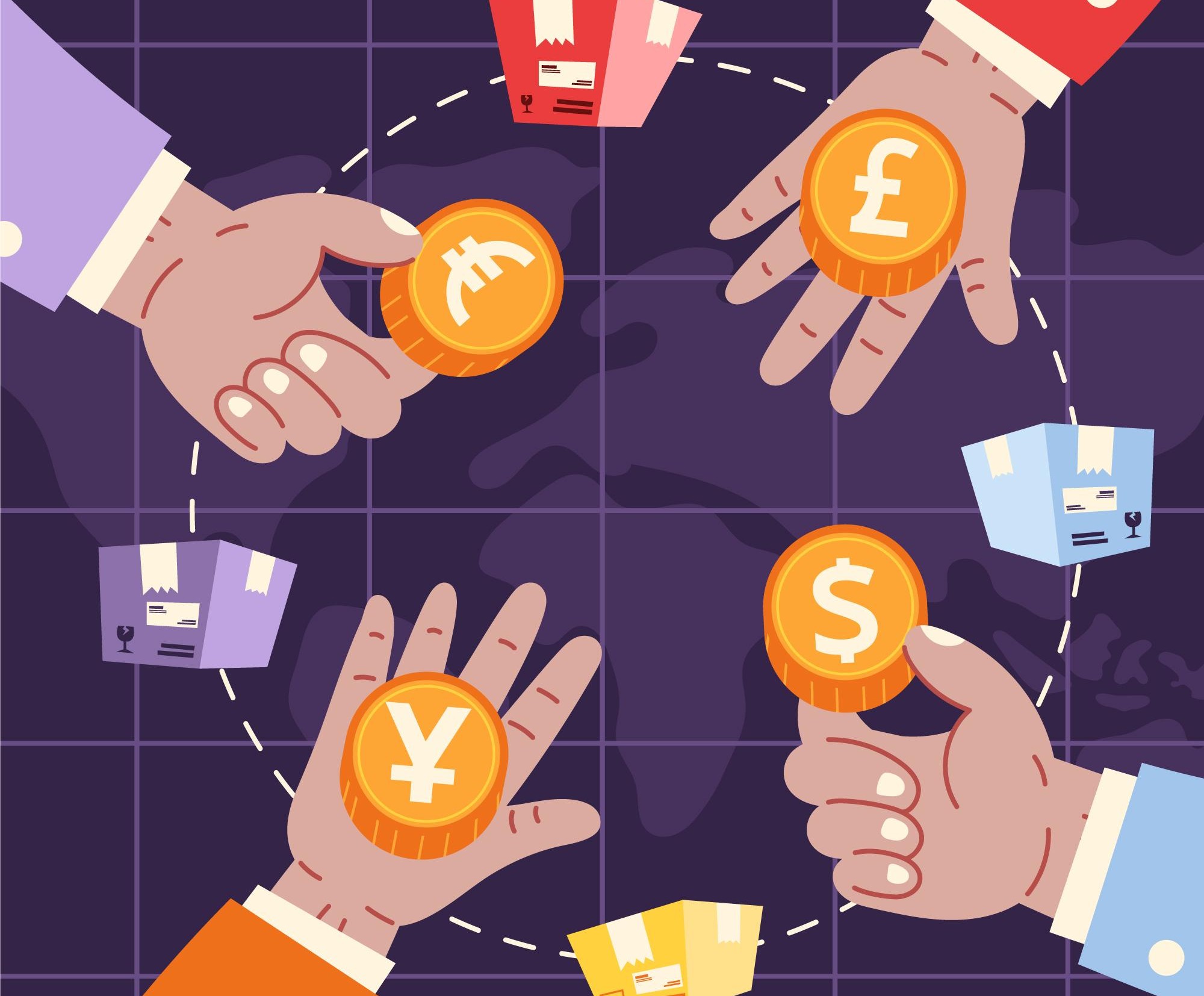
Here’s the part that catches sellers off guard. Once you start selling on Amazon Canada, Amazon UK, or any marketplace outside your home currency, Amazon stops paying you in US dollars. It pays you in the local currency of that marketplace instead. Then, unless you tell it otherwise, Amazon automatically converts that money back to USD before it lands in your account.
That conversion isn’t free. Amazon’s own currency conversion fee typically runs between 0.75% and 1.5%. The rate you get depends on your sales volume: the more you sell, the lower the fee tends to be. If your business does under $500,000 a year, though, you’re likely paying the full 1.5% on every single payout.
On top of that, Amazon sets the exchange rate for your Amazon finance payout on the day it pays you, not the day your customer bought the product. That means you have no say in the timing of the conversion. You can’t wait for a more favorable rate. You simply get whatever the market looks like on payout day.
To put that in perspective, imagine you’re paid $100,000 from an international marketplace. At 1.5%, that’s $1,500 gone instantly. It disappeared simply because of how the money moved. It’s not a mistake, and it’s not a scam. It’s just a fee that quietly eats into margins that took real work to build.
The Double Conversion Trap

As if a single conversion fee wasn’t enough, a second layer to this problem tends to surprise sellers even more: double conversion. Picture the same scenario as before. You’re a US-based seller expanding into Amazon Canada. Amazon converts your Canadian dollar payout back into USD and takes its cut along the way.
Now fast-forward a month. You need to pay a supplier based in Canada, or you owe a Canadian tax bill, or you’re paying a contractor who works there. To do that, you convert your USD back into Canadian dollars. That’s the same money converted twice, and each conversion charges its own fee.
This is where the cost stops being a one-time nuisance and starts becoming a recurring tax on doing business internationally. Every time money moves across that currency line, a piece of it disappears. Growth means more suppliers, more markets, and more cross-border payments, so this fee doesn’t stay flat as your business scales. It compounds right alongside your success. That’s exactly the kind of hidden friction the Passion Product Formula teaches sellers to design out of their operations before it becomes a habit.
Why the Normal Fixes Fall Short

Once you notice this problem, the instinct is to fix it through your existing bank. Unfortunately, most traditional banks only offer two options, and neither one is particularly good. The first option is to let Amazon handle the conversion automatically. That means accepting the loss on every single payout, with no way to reduce it.
The second option is to open separate local bank accounts in every country you sell in. In theory, this avoids some conversion fees. In practice, it turns your Amazon finance setup into an operational headache. You end up managing multiple logins, statements, and sets of paperwork, then reconciling all of it by hand at the end of the month.
Even after the money lands in a local account, you still have to move it somewhere useful eventually. Traditional international bank transfers tend to be both slow and expensive. For a business just getting started, this friction might not seem urgent yet. But as you add marketplaces, suppliers, and team members in different countries, the financial side of the business can quietly turn into a tangle of accounts, tools, and spreadsheets. Untangling that mess later is nobody’s favorite task.
Common Mistakes Sellers Make When Expanding Internationally

Beyond the fee itself, a lot of the damage to your Amazon finance stack comes from a handful of avoidable habits. The most common one is assuming Amazon’s default payout settings are fine, simply because nobody flagged them as a problem. The money shows up automatically, and the process feels seamless. That makes it easy to treat as solved rather than as a setting worth reviewing.
Another frequent misstep is never calculating what these fees add up to over a full year. A 1.5% hit feels small on any single payout, so it rarely triggers alarm. Add it up across every international sale over twelve months, though, and it becomes a real line item. It’s easy to miss precisely because it never shows up as one obvious charge.
Sellers also tend to react to this problem only after it surprises them, rather than planning ahead. A supplier payment comes due, the conversion fee stings, and only then do they start searching for a better solution. Setting up a smarter system before international sales ramp up is far less stressful than untangling everything after the fact.
Finally, many sellers wait too long to separate their everyday operating currency needs from their long-term holdings. Once volume is high, restructuring feels disruptive. Making these decisions early keeps the transition simple. Wait too long, and it turns into a mid-scale scramble instead.
A Smarter Way to Hold and Move International Revenue
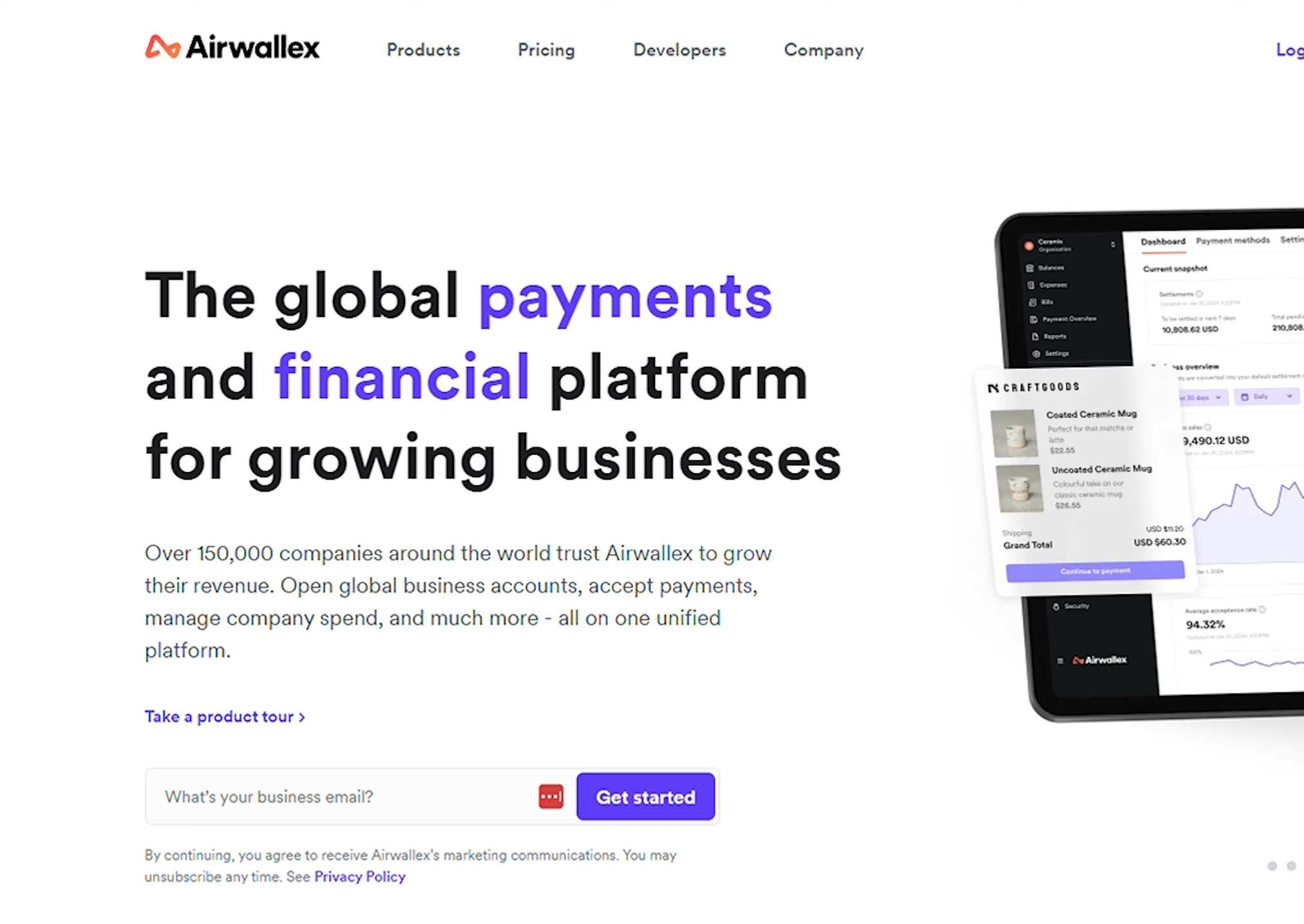
All-in-one financial platforms like Airwallex close exactly this gap. Airwallex isn’t a bank, but it functions as a comprehensive financial hub for businesses that operate across borders. Instead of forcing an automatic conversion on every payout, it lets your Amazon earnings flow into Global Accounts. These are essentially local currency accounts.
You can open Global Accounts in more than 20 currencies and get paid like a local business in over 70 countries. Once the money arrives, it sits in your Amazon finance wallet until you decide what to do with it. If you earn Canadian dollars, you can simply hold Canadian dollars. If you earn euros or British pounds, the same logic applies. Nothing gets converted until you choose to convert it.
That shift, from automatic loss to intentional control, is the whole point. Instead of losing a percentage every payout, you decide when the timing makes sense to convert. When you do convert, Airwallex offers rates close to the interbank exchange rate, with a small, transparent margin. That’s a meaningfully better deal than most traditional banks provide.
For a seller expanding across multiple marketplaces, this single change can protect thousands of dollars a year that would otherwise quietly slip away. It’s not a flashy upgrade, but it’s the kind of foundational fix that pays for itself many times over.
One Dashboard for the Whole Business, Not Just Amazon
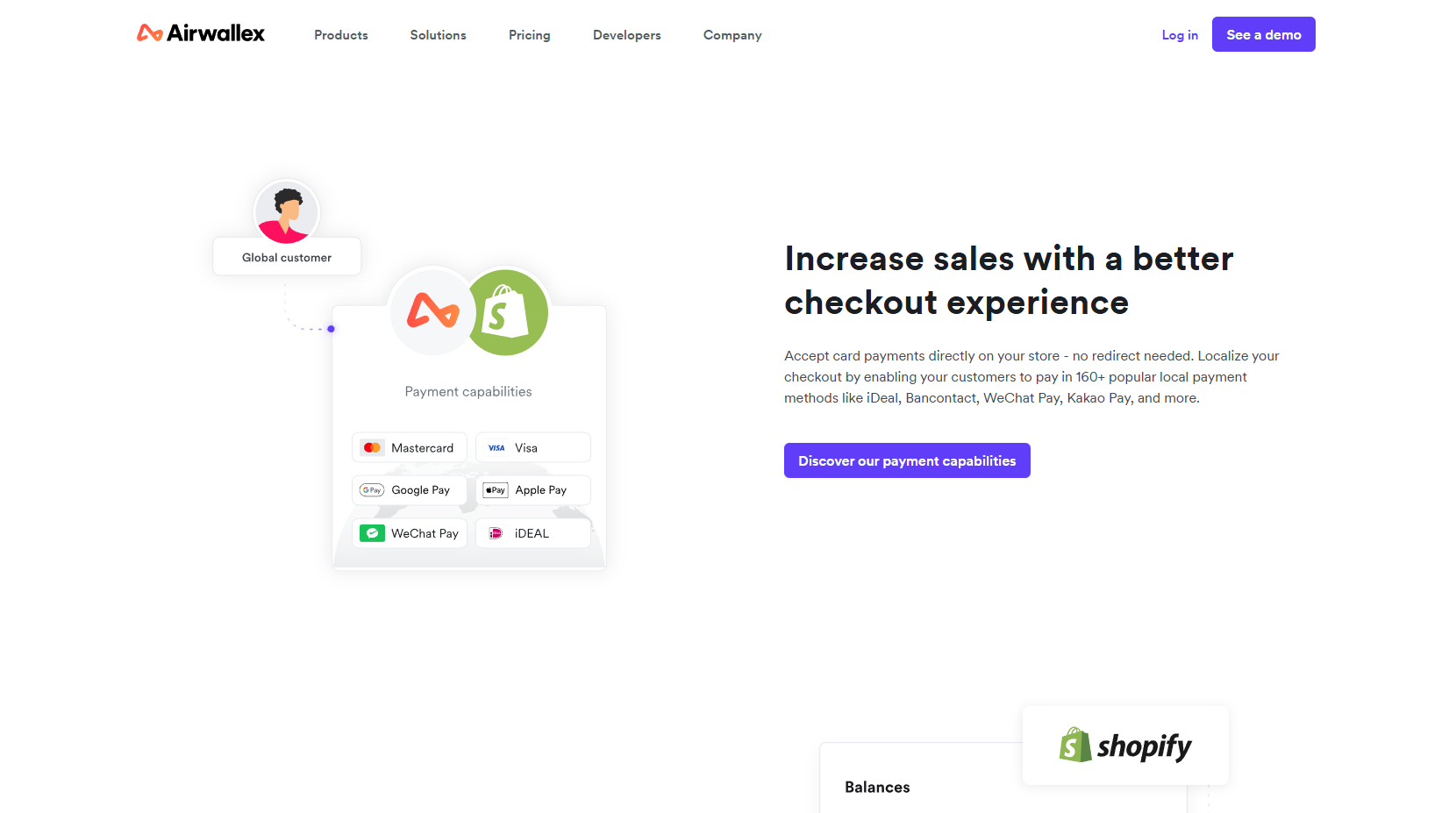
What makes this kind of platform even more useful is that it doesn’t stop at receiving payouts. Most sellers end up juggling one tool to get paid, another to pay suppliers, a separate service for business cards, and a spreadsheet to track it all. Airwallex consolidates that entire workflow into a single place.
Once your money is inside the platform, you can use it to pay manufacturers, shipping partners, and team members almost anywhere in the world. Airwallex supports payments to more than 200 countries and regions. In over 120 of those countries, it routes payments through local payment rails instead of the traditional SWIFT network. Roughly 94% of its transactions move through these local rails, and about 93% arrive the same day.
That speed and reach matter more as your business grows in complexity. Say you run a Shopify or WooCommerce store alongside your Amazon listings. Add ad spend, software subscriptions, and a distributed team, and all of it can flow through the same account. This becomes especially relevant if you’re exploring TikTok Shop, one of the more interesting growth channels heading into 2026.
On top of consolidating payments, the platform offers multicurrency corporate cards for your team. A single Amazon finance dashboard shows exactly where your money is going. Instead of piecing together five different tools to understand your cash flow, you get one clear picture.
Getting Started Without Overcomplicating Things

The good news is that fixing your Amazon finance stack doesn’t require overhauling everything overnight. A simple starting point is opening a Global Account for whichever marketplace currently pays you in a foreign currency — Canada, the UK, or somewhere in the EU. From there, you can let payouts settle in that account instead of accepting an automatic conversion by default.
Once the account is connected, the process becomes largely hands-off. Amazon sends the payout, and the funds land in the matching currency. The money simply waits until you’re ready to use or convert it. That alone removes the guesswork of timing a better rate through a traditional bank.
For supplier and team payments, the same wallet lets you pay directly in the recipient’s currency. You skip converting back and forth through USD entirely. That’s where the double conversion problem quietly disappears, since the money never has to make that unnecessary round trip.
As an added incentive to make the switch now, Airwallex currently offers up to 2% cash back on its business debit cards, on top of everything else the platform handles. It’s a nice bonus. But the real value is still the structural fix underneath it — a setup that lets your international revenue work for you instead of leaking away in the background.
Why This Matters More as You Scale

None of this is the most exciting part of running an Amazon business. That’s exactly why it gets overlooked. Nobody starts an FBA brand because they’re passionate about currency exchange rates and banking infrastructure. Most sellers would rather spend their energy finding winning products, refining listings, and running ads that convert.
But here’s the pattern worth paying attention to. Once a business reaches a certain size, the sellers who keep the most money aren’t always the ones with the highest revenue. They’re the ones who took the time to sort out their Amazon finance systems. That way, the money they earned actually stays earned, instead of leaking away through hidden fees and unnecessary friction.
The Passion Product Formula bakes in precisely this kind of thinking. It isn’t just about finding a product that sells — it’s about building a business with the operational backbone for real, sustainable growth. Sourcing a winning product gets you in the game. Systems like smart currency management are what let you keep what you build once you’re playing at a bigger scale.
If you’re already selling internationally, or planning to expand within the next year or two, it’s worth rethinking this now, before the problem grows larger than it needs to be. Making the sale is only half of the equation. Keeping what you earned after the sale is what actually compounds over time.
Turning Global Sales Into Kept Profit

International expansion is a genuine milestone, and it deserves recognition as a win, not a hidden cost center. The difference between sellers who quietly lose thousands of dollars a year and sellers who protect their margins usually comes down to a handful of intentional Amazon finance decisions. Make those decisions early, and they pay off. Wait too long, and you end up reacting instead.
Currency conversion fees are straightforward once you see how they work. So is double conversion. So is the fix — a platform like Airwallex hands you control over the process. It’s not about finding one more hack. It’s about building a financial foundation that lets every marketplace expansion add to your bottom line, instead of quietly chipping away at it.
As you continue to grow, keep watching how your Amazon finance stack moves money, not just how much of it comes in. That habit alone often separates a business that scales on paper from one that scales in the bank account.
Frequently Asked Questions
What is Amazon’s currency conversion fee, and how much does it cost sellers? Amazon charges a currency conversion fee whenever it automatically converts a payout from a local marketplace currency back into your home currency. This fee typically ranges from about 0.75% to 1.5%. Sellers doing under $500,000 a year generally pay the higher end of that range.
What is “double conversion,” and why does it happen? Double conversion happens when the same money gets converted twice. First, Amazon pays you in a local currency and converts it back to your home currency. Then you convert it back again to pay a local supplier, tax bill, or team member in that country. Each conversion carries its own fee, so the cost effectively doubles.
Is Airwallex a bank? No. Airwallex is an all-in-one financial platform for businesses operating across multiple currencies and countries. It offers banking-like features, including local currency accounts and international payments, without functioning as a traditional bank.
Can Airwallex be used for more than Amazon payouts? Yes. Beyond receiving Amazon payments, you can use Airwallex to pay suppliers, manage ad spend, and issue multicurrency corporate cards. It also consolidates payments from channels like Shopify, WooCommerce, and TikTok Shop into a single dashboard.
How does holding multiple currencies actually help a growing FBA brand? Holding multiple currencies means you don’t have to convert your earnings the moment you get paid. Instead, you can wait for a favorable exchange rate. You can pay local suppliers or team members directly in their currency. And you avoid unnecessary conversion fees altogether.