
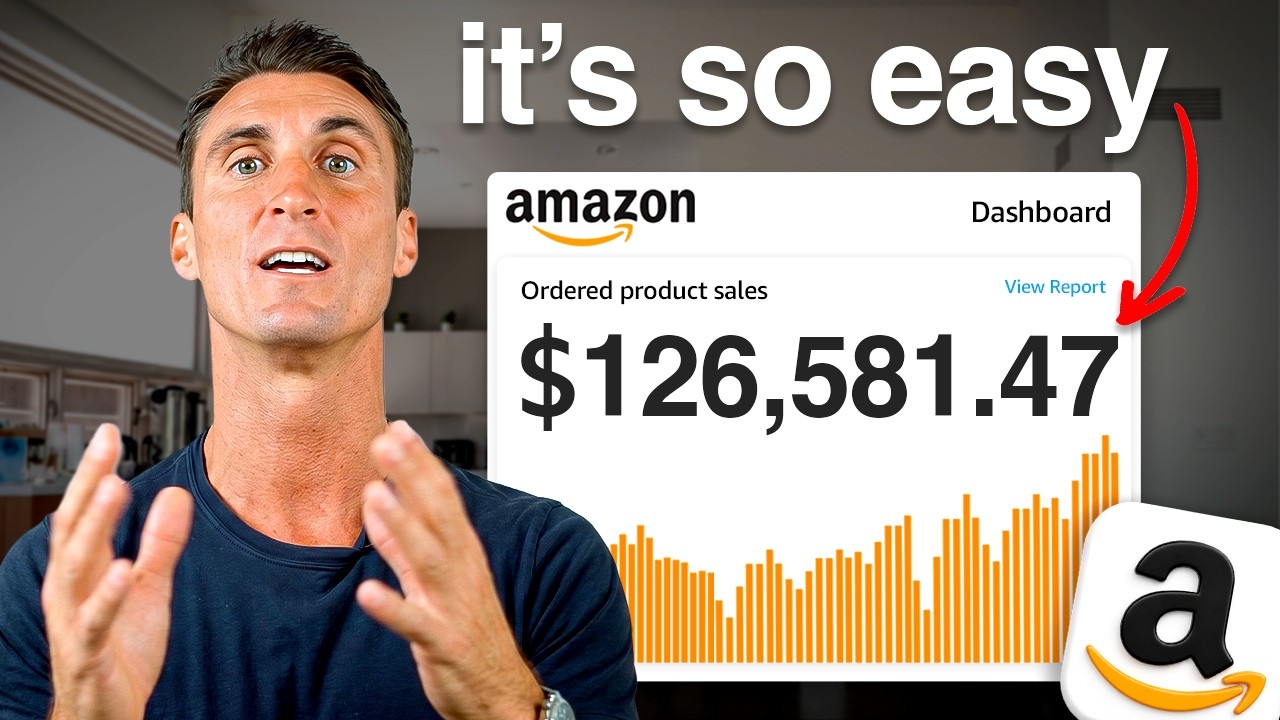
Everyone seems to think Amazon FBA is too crowded to start on today. Yet in a matter of minutes, Travis Marziani pulled up a 3-star product earning over $300,000 a month. Nobody hid it. It sat right on Amazon’s front page, waiting for a seller willing to do a little better. That is the opportunity this post is about.
Travis has done over $10 million in online sales, started multiple Amazon businesses, and helped over 8,000 people launch their own. More importantly, he still uses the same product research methods he teaches. In this post, you will learn 3 of them: mining the New Releases tab, using SmartScout’s Search Term Explorer, and a completely free Amazon search bar trick.
Along the way, you will also get 3 real product ideas that you are free to take. One is doing $300,000 a month right now. Another is a gap Travis believes is worth $1 million a year. The third could reasonably clear $1,000 a month in profit for a beginner. So let’s dig in.
- Why Product Research Is the Whole Game
- Method 1: Mine Amazon’s New Releases Tab for 3 and 4 Star Products
- Method 2: Use SmartScout’s Search Term Explorer to Find Demand With No Supply
- Method 3: The Free Amazon Search Bar Trick
- The Products You Should Never Sell (Travis’s Filter)
- Putting It Together: A 30-Minute Product Research Session
- Beyond Amazon: Owning Your Customer
- The Passion Product Formula: Why These Ideas Work
- Work With Travis and the Passion Product Accelerator
- Your Million-Dollar Product Is Already on Amazon’s Front Page
- Frequently Asked Questions
Why Product Research Is the Whole Game
Most new Amazon sellers do not fail at step 10. They fail at step 1. In other words, they pick a weak product and then spend months trying to force it to work. On the other hand, the right product makes everything after it easier: the listing writes itself, the ads convert, and reviews come in naturally.
Travis learned this with Carnivore Electrolytes. He started the business in 7 days, expected a few sales a day, and instead watched it grow to over 100 sales a day. The brand did over $1 million in revenue in a single year, and he sold it for close to $1 million in profit. Every bit of that success traced back to one decision: picking a product that people were already searching for and nobody was making.
The good news is that you do not need special talent to make that decision. Amazon FBA itself shows you what is working, as long as you know where to look. Consequently, the first method is also the simplest.
Method 1: Mine Amazon’s New Releases Tab for 3 and 4 Star Products
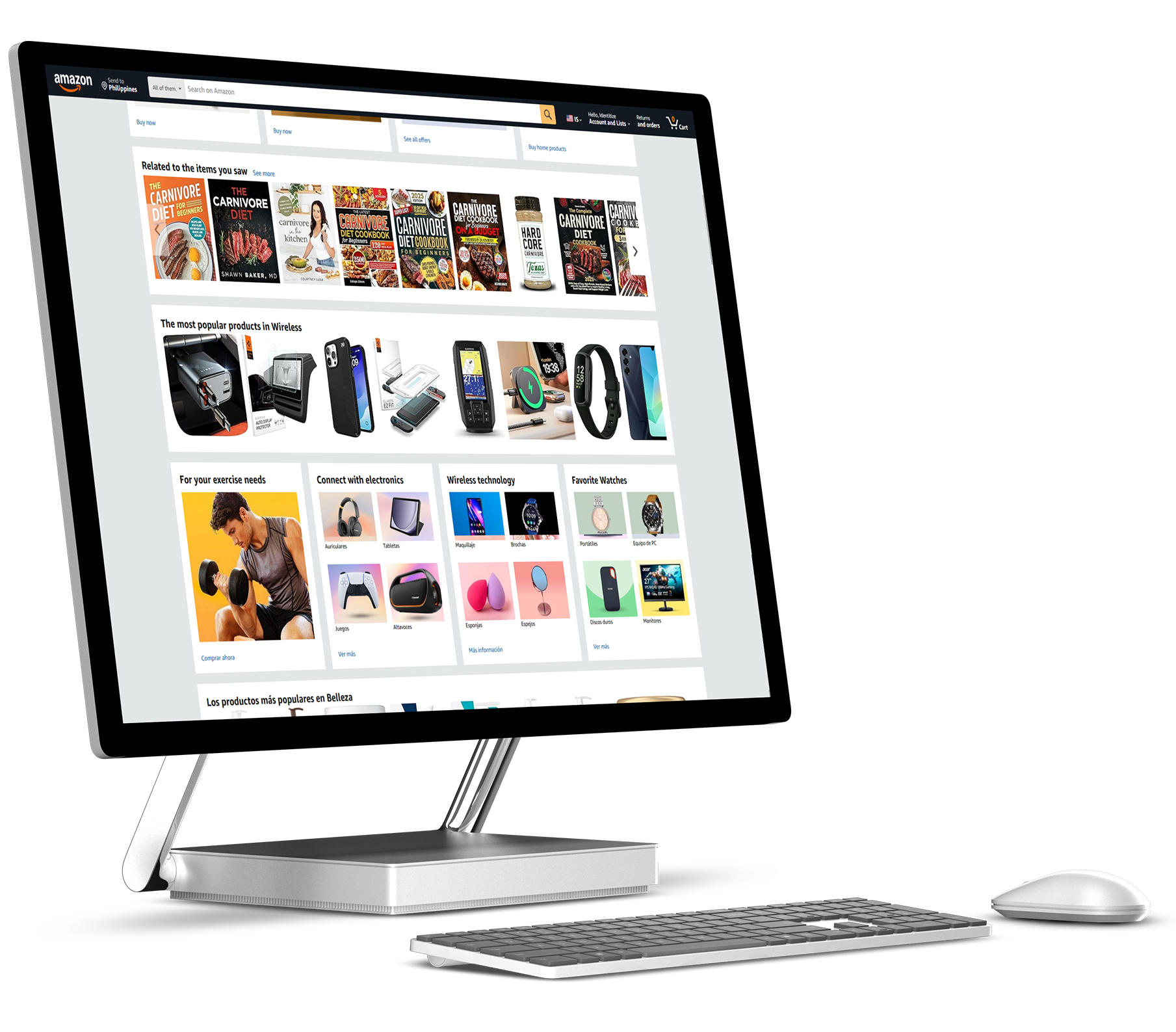
First, open Amazon and go to the New Releases tab. Next, pick a broad category that interests you. Travis chose Patio, Lawn and Garden, but almost any category works. Then scroll slowly through the list and look for products sitting around 3 or 4 stars.
When you find one, click it and check the estimated monthly sales. In the video, a rodent repellent with just 3 stars was pulling in more than $300,000 a month. Read that again. A product that customers actively complain about is generating millions of dollars a year.
Why low-star bestsellers are gold
A low-star bestseller tells you two things at once. First, demand is proven, because people keep buying despite the bad reviews. Second, the current product leaves customers unhappy, which means there is room to win.
Your job is simply to read those reviews, find the complaint that keeps repeating, and fix it. As a result, you enter a market that already wants the product, but you arrive with a better version. Instead of the original seller making millions, you can be the one making millions.
Why Travis would not sell this one
Interestingly, Travis says he would not sell the rodent repellent himself. It fails a few of the rules we will cover later in this post. However, that does not make the idea worthless. For the right seller with the right fix, it remains a completely free, fully validated product idea.
Method 2: Use SmartScout’s Search Term Explorer to Find Demand With No Supply
SmartScout is the paid tool Travis uses, and Search Term Explorer is where the real value lives. It shows you exactly what shoppers type into Amazon’s search bar and how many times they do it each month. In short, it reveals what people want to buy before you spend a dollar on inventory.
Travis’s workflow is simple. He types in a category he is interested in or has noticed trending, then scans the related search terms that appear. He looks for terms with real volume where the results page does not have a product built for that search.
The pre-workout for women example
Pre-workout has grown steadily in popularity over the last few years. When Travis typed it into Search Term Explorer, one term stood out: “pre-workout for women” gets over 5,000 searches every month. Yet when he searched Amazon, no product was specifically built for that shopper.
This is the exact pattern that produced Carnivore Electrolytes. People were searching for electrolytes made for the carnivore diet, and nobody was serving them. He built it, and it took off. For this reason, Travis plans to launch a pre-workout for women and believes it could do $1 million a year.
How to run this yourself
Start by listing 3 to 5 topics you care about or notice people talking about. Search each one in Search Term Explorer. For each result, ask two questions: does this term get meaningful volume, and does the Amazon FBA results page serve it directly?
If the answer is yes and no, write it down. That is a gap. Travis arranged a SmartScout discount for his viewers through the link in his video description, so the tool costs less than you might expect.
Method 3: The Free Amazon Search Bar Trick
If you do not want to pay for a tool yet, this method costs nothing. Go to Amazon and type a large category into the search bar, such as “creatine.” Then add a space and the word “for.” Amazon’s autocomplete will show you how real shoppers finish that sentence.
This matters because autocomplete only suggests terms people actually search. Every suggestion you see is validated demand, straight from Amazon FBA
Niche down twice
For creatine, one suggestion was “creatine for men.” That alone is a niche, but Travis pushes one step further: “creatine for men over 50.” Most creatine on Amazon is already branded loosely toward men. Very little speaks directly to men over 50 and gives them a clear reason to choose it.
Travis estimates this idea at $1,000 a month in profit as a realistic floor for a beginner. Done properly, with strong branding and a clear message, he believes it could grow into a million-dollar-a-year business.
Why impulse buying works in your favor
Shoppers on Amazon do not research the way they do for a car or a laptop. When a product costs under $85, they scan the page, see something that says “this is for me,” and buy it. Therefore, a product aimed precisely at one group wins the click, even in a category full of competitors.
The Products You Should Never Sell (Travis’s Filter)
Finding demand is only half the job. The other half is avoiding the products that bury new sellers. Travis shares 6 rules, and each one comes from a painful lesson he or his students have lived through.
First, never sell cheap, generic products from Alibaba. Customers will dislike them, competitors will undercut you on price, and you will struggle to profit. Second, avoid anything under $15. Amazon FBA fees and product costs leave almost no margin at that price. Third, stay under $85, because above that, shoppers research too much and stop impulse buying.
Fourth, skip trendy products. A trend that started a few weeks ago often dies before your inventory even lands. Fifth, avoid seasonal products. You will never order the right amount, and you will only earn for a few months each year. Finally, stay away from heavy or awkward items. Shipping cheaply and easily is the whole game on Amazon.
Now go back to the 3 ideas above and run each one through this filter. You will quickly see which ones survive and which ones need adjusting.
Putting It Together: A 30-Minute Product Research Session

Here is a simple way to combine all 3 methods in one sitting. For the first 10 minutes, scan the New Releases tab in 2 categories you care about. Note every 3 to 4 star product with strong sales and write down the top complaint from its reviews.
For the next 10 minutes, run 3 queries in Search Term Explorer. Flag any term with roughly 3,000 to 5,000 searches or more where no product on Amazon directly serves it. Then, for the final 10 minutes, take your top 2 terms and run the search bar “for” trick to find a sharper niche.
By the end, your shortlist might look like this: “pre-workout for women” (5,000+ searches, no dedicated product), “creatine for men over 50” (validated by autocomplete, generic competition), and “rodent repellent with a fix for the top complaint” (proven demand, needs a shipping and price check). Three ideas, 30 minutes, zero guesswork.
Beyond Amazon: Owning Your Customer

Once your product is selling on Amazon, the next move is TikTok Shop and your own Shopify store. The reason is simple. When someone buys from you on Amazon FBA, you never get their email, so you cannot contact them again. On your own store, you finally own the relationship.
Omnisend is built for exactly this stage. It automates email and SMS follow-ups based on what a customer bought or left in their cart, and it connects to AI tools like ChatGPT and Claude so you can ask which automations earned the most. Omnisend reports that automated emails were only 2% of emails sent but drove about 30% of revenue. Travis arranged code TRAVIS for 30% off, with free migration offered within 5 days.
Keep this in your back pocket for later. For now, the product comes first.
The Passion Product Formula: Why These Ideas Work
Look closely at the 3 ideas and you will notice they share one pattern. Each targets a specific person with a specific problem, and each is a product built for that person rather than a generic copy. That pattern is the Passion Product Formula.
The formula works in 4 steps. Choose a niche you care about. Find the gap in demand using the methods above. Build the branded solution that speaks directly to that shopper. Then launch it to an audience that is already searching. Carnivore Electrolytes followed this exact path, and the upcoming pre-workout launch will too.
This is also why 2026 is still a great window. Generic sellers are leaving Amazon FBA because they believe it is dead. As a result, more room opens up for niche brands that solve a real problem for a real group of people.
Work With Travis and the Passion Product Accelerator

If you want to follow this process step by step, Travis and his team offer a free strategy call. On the call, they will map out a game plan for your product and see whether you are a fit for the Passion Product Accelerator. Spots are limited and every application is screened, so not everyone who applies gets on a call.
Inside the Accelerator, you get over 20 hours of screen-recorded lessons, weekly Q&A calls, and one-on-one calls that walk you through the entire process. Even better, Travis has said he is open to investing in and partnering on the right product with the right student. The link to apply is in the video description.
After you apply, take advantage of the free 12-hour Amazon FBA course on his channel. Travis could charge for it, but he gives it away so you can start learning immediately.
Your Million-Dollar Product Is Already on Amazon’s Front Page
The 3 methods in this post are not complicated. Scan New Releases for low-star bestsellers, use Search Term Explorer to find demand with no supply, and use the search bar “for” trick to niche down. Then run every idea through the never-sell filter so you avoid the traps that stop most beginners.
Ultimately, the opportunity is visible to anyone willing to look for 30 minutes. Travis found a $300,000 a month product and a likely million-dollar idea in a single sitting, and he shared both freely. Now it is your turn.
Apply for your free strategy call, learn the Passion Product Formula, and build a product that a specific group of people is already searching for.
Frequently Asked Questions
How much does it cost to start with one of these product ideas?
Costs vary by product, but a first branded run in the $15 to $85 price range typically requires a modest inventory order plus listing and launch expenses. The Accelerator call helps you estimate this for your specific idea.
Is SmartScout required, or can I do all of this for free?
No, it is not required. The New Releases method and the search bar “for” trick are completely free. SmartScout speeds things up by showing exact search volumes, which is why Travis uses it.
What star rating should I target with the New Releases method?
Look for products around 3 to 4 stars with strong sales. That combination signals proven demand with a fixable problem.
How do I know if a search term has enough demand?
Travis flagged “pre-workout for women” at over 5,000 searches a month. As a general guide, a few thousand monthly searches with no dedicated product is a strong sign.
Can I really sell the exact ideas from this post?
Yes. Travis openly shared the rodent repellent, pre-workout for women, and creatine for men over 50 ideas for viewers to take. He will likely launch the pre-workout himself, so expect competition there.
What price range works best for a first Amazon product?
Stay between $15 and $85. Below $15, fees erase your margin. Above $85, shoppers stop impulse buying and research too much before purchasing.