
Picture a product that pulls in $11,000 in just 2 weeks and seems to prove that anyone can rank on Amazon with enough ad spend. It sits comfortably at the top of page 1, orders roll in every hour, and the dashboard looks like a dream. However, once every fee and ad dollar gets counted, the same product shows a loss of $2,000. The seller worked hard to rank, and ranking cost them money on every single order.
Unfortunately, this situation plays out far more often than most sellers realize. Many Amazon businesses bleed cash while chasing a top spot, and the owners never see it because they look at revenue instead of profit. The good news is that you can fix this quickly once you understand how Amazon ranking actually works.
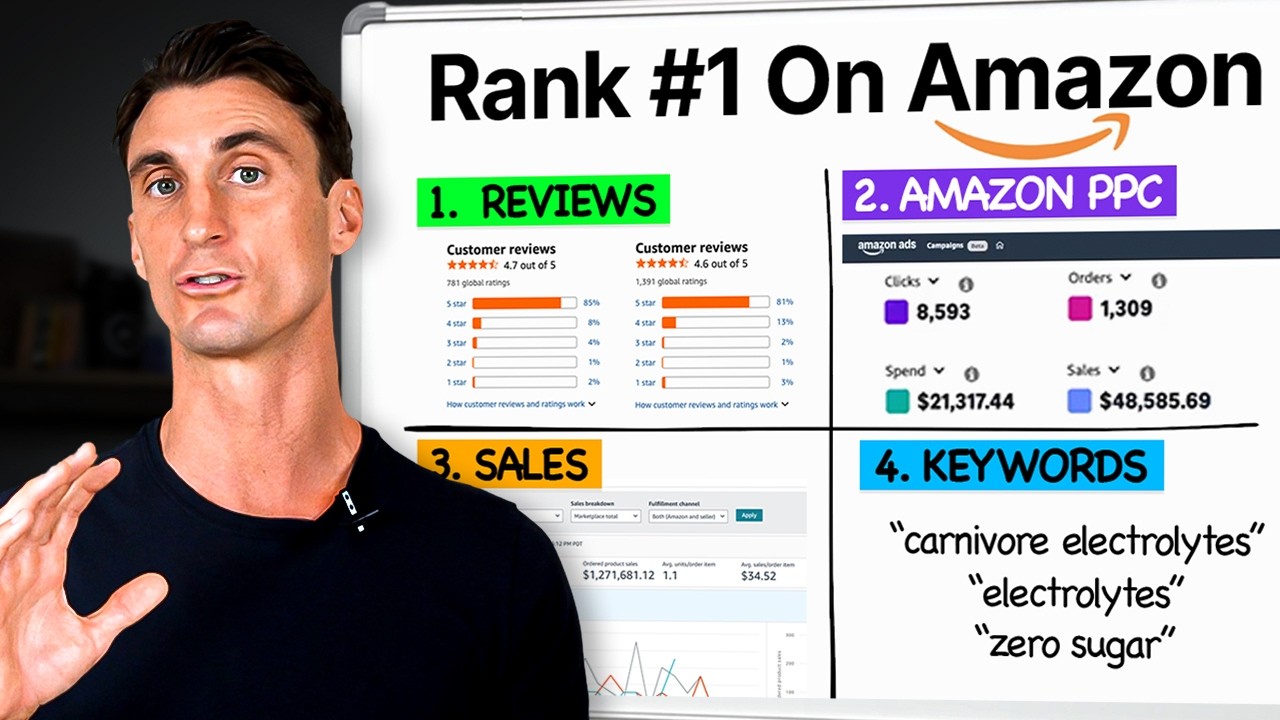
This guide walks through the 4 biggest pillars of ranking on Amazon: sales velocity, Amazon PPC, reviews, and inventory management. More importantly, it shows you how to rank on Amazon profitably, so every spot you climb adds money to your bank account instead of draining it. Travis Marziani has sold on Amazon for over 11 years and generated more than $12 million in online sales, and this is the exact system he uses.
Whether you launched your first product last week or already run a six-figure store, the same system applies. Stick around for the 3 ranking killers at the end, because ignoring them makes everything else in this post worthless. Above all, remember that ranking becomes dramatically easier when you follow the Passion Product Formula and sell something people truly want.
- The Secret Equation Amazon Uses to Rank Products
- The One Number That Decides If Your Business Lives or Dies
- Pillar 1: Sales Velocity Through Profitable PPC
- Pillar 2: Letting AI Do the Heavy Lifting
- Playing Defense: Protecting the Rank You Earned
- The Money Amazon Already Owes You
- Why Ranking Only Works When the Product Is Right
- Work With Travis and His Team
- Start Ranking Profitably Today
- Frequently asked Questions
The Secret Equation Amazon Uses to Rank Products

Amazon does not rank products at random. Instead, its algorithm weighs 3 core factors, and once you understand them, every decision in your business gets clearer. Most sellers never learn this formula, which is exactly why so many of them struggle to climb past page 2.
Think of it as the hidden scoreboard behind every search result. Each factor feeds the others, so improving one tends to lift the rest. Below, you will see what each factor means, how Amazon measures it, and the common mistake that trips up sellers who only focus on the first one.
Sales velocity
First, Amazon looks at sales velocity. In plain terms, this means how many units you sell in a short window of time. A product that moves 50 units in a week sends a stronger signal than one that moves 50 units in a month. Because Amazon wants to show shoppers products that already sell, momentum gets rewarded with better placement.
Relevance
Second, Amazon measures relevance. Selling a lot matters, but selling on the right keywords matters even more. For example, if a shopper types “yoga water bottle” and buys your product, Amazon learns that your listing fits that search. As a result, every conversion on a specific keyword strengthens your rank on Amazon for that exact term.
Customer satisfaction

Third, Amazon tracks customer satisfaction, which comes mainly from your reviews. Strong reviews raise your conversion rate, higher conversion drives more sales, and more sales feed velocity. In other words, these 3 factors compound on each other rather than working in isolation.
The mistake most sellers make
Here is where most sellers go wrong. They focus 100% on sales velocity and try to buy it with heavy PPC spending. That approach worked in easier years, but selling on Amazon in 2026 looks different. Tariffs push costs up, Amazon keeps changing its fees, and ad prices climb every quarter. Consequently, you simply cannot afford to guess anymore.
The One Number That Decides If Your Business Lives or Dies

Before you touch any ad strategy, you need one number locked in. This number forms the foundation of everything else in this post, because every bid, budget, and launch decision depends on it. Skip it, and you end up like the seller from the opening story, ranking at the top while quietly losing money.
Fortunately, the concept is simple, and calculating it takes only a few minutes once you have accurate data. Below, you will learn what the number is, why most sellers get it wrong, and how knowing it lets you make bold ranking moves with total confidence.
What break-even ACoS actually means
ACoS stands for advertising cost of sales. Your break-even ACoS is the point where a sale earns exactly $0 in profit. You did not lose money, but you did not make any either. The math stays refreshingly simple. If your profit margin before ads sits at 30%, your break-even ACoS is 30%. Spend less than 30% on ads and you profit. Spend more and you lose money on that sale.
Why you’re probably calculating your margins wrong

Even though the concept sounds easy, most sellers get the inputs wrong, and it is rarely their fault. Refund costs quietly chip away at margins. Shipping rates rise mid-year. Amazon adds a new fee you never heard about. Therefore, if you track margins in a spreadsheet, you are probably missing something. Travis recommends a tool like Sellerboard, which connects directly to your Amazon account and pulls in every fee automatically. It sees your manufacturing cost, shipping cost, referral fee, and refunds, then calculates your true margin instantly. It even shows a break-even bid for every keyword.
Knowing your number lets you make strategic decisions
Once you know your number, you can make bold moves with confidence. For instance, Travis is often happy to run at 40% ACoS for a few weeks during a launch. He can only make that call because he knows his break-even sits at 35%, so he understands exactly how much he is investing in rank on Amazon. Students who follow the Passion Product Formula enjoy a built-in advantage here. Because they choose high-margin niche products from the start, they have far more room to spend on ranking without crossing into losses.
Pillar 1: Sales Velocity Through Profitable PPC
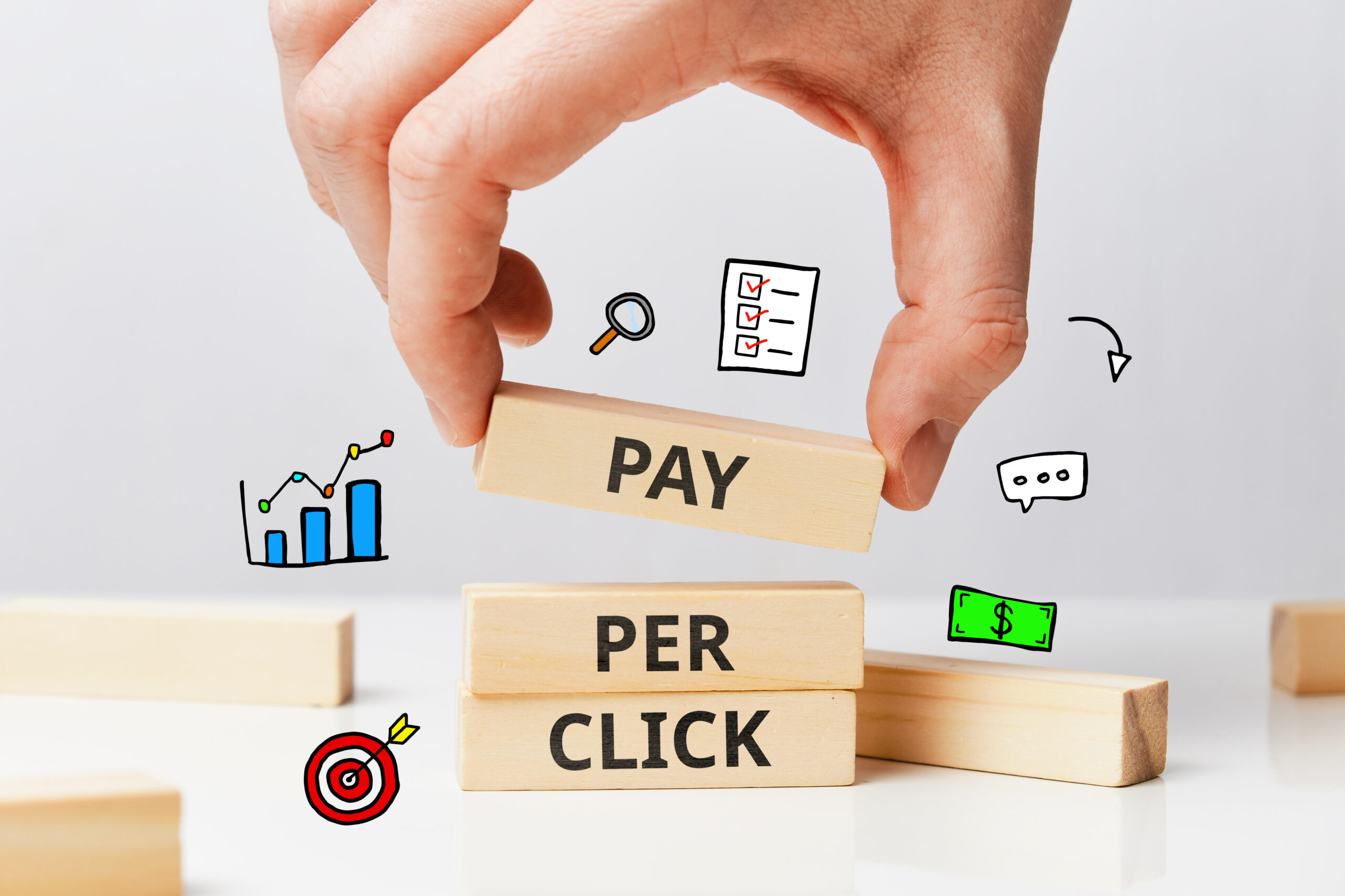
Now that your numbers are clear, it is time to build velocity. Thankfully, sales velocity comes down to just 2 factors, and both sit fully within your control. Once you dial them in, Amazon starts rewarding your listing with better placement almost immediately.
This pillar also happens to be where most of your ranking budget goes, so getting it right protects your profit. Below, you will find a simple 5-step system that uses automation to handle the tedious parts, from keyword discovery to bid adjustments. As a result, you spend less time inside the ad console and more time growing the business.
Where sales velocity comes from
Velocity depends on PPC and on targeting the right keywords in your listing. Get both right and sales flow naturally. Get either one wrong and you burn budget on shoppers who never buy. The following 5-step system uses Sellerboard’s PPC automation so the tool does the heavy lifting for you.
Step 1: Set your target
Begin by telling the system what you want to achieve. You can choose a target ACoS, such as keeping ad spend at 25% of sales. Alternatively, you can set a target profit margin, such as keeping 10% profit on every sale after ads. The tool then studies your data and calculates the exact bid needed to hit that goal. During a launch, you might set your target right at break-even, because the priority is getting velocity flowing before you dial back toward profit.
Step 2: Target the right keywords
Next, you need real keyword data instead of guesses. If you guess, you will spend your whole budget showing ads to people who have no intention of buying. So, start with an auto campaign or a broad match campaign. These cast a wide net and reveal what shoppers actually type. Sellerboard monitors these campaigns, and when a search term proves itself, for example with 3 orders at a healthy ACoS, it harvests that term automatically and adds it as an exact match keyword in your manual campaign.
Step 3: Negative keyword automation
Meanwhile, you also need to cut the keywords that lose money. A single bad keyword can quietly eat your entire profit margin. You can set a rule like this: if a search term gets 20 clicks and 0 sales, stop it. The tool applies that rule on its own. This matters for ranking because every dollar you save on a bad keyword becomes a dollar you can spend on a keyword that actually moves you up the page.
Step 4: Automated bid adjustments
Bidding is a balancing act. Overbid and you rank on Amazon at a loss. Underbid and you disappear from search entirely. Fortunately, the system looks at the target you set in Step 1 and calculates the ideal bid for every keyword. You can run it in test mode, where it recommends changes and you approve them, or switch it to fully automated mode and let it optimize while you sleep.
Step 5: Track profit, not just ACoS
Finally, measure what truly matters. Most tools only show ACoS, but ACoS alone can mislead you. Sellerboard shows profit at the portfolio level, the campaign level, the ad group level, and most importantly the keyword level. This visibility is crucial, because a keyword can look fantastic on paper with a high conversion rate and lots of sales, yet still lose money if it attracts customers who return the product often or if a variation carries unusual fees.
Pillar 2: Letting AI Do the Heavy Lifting
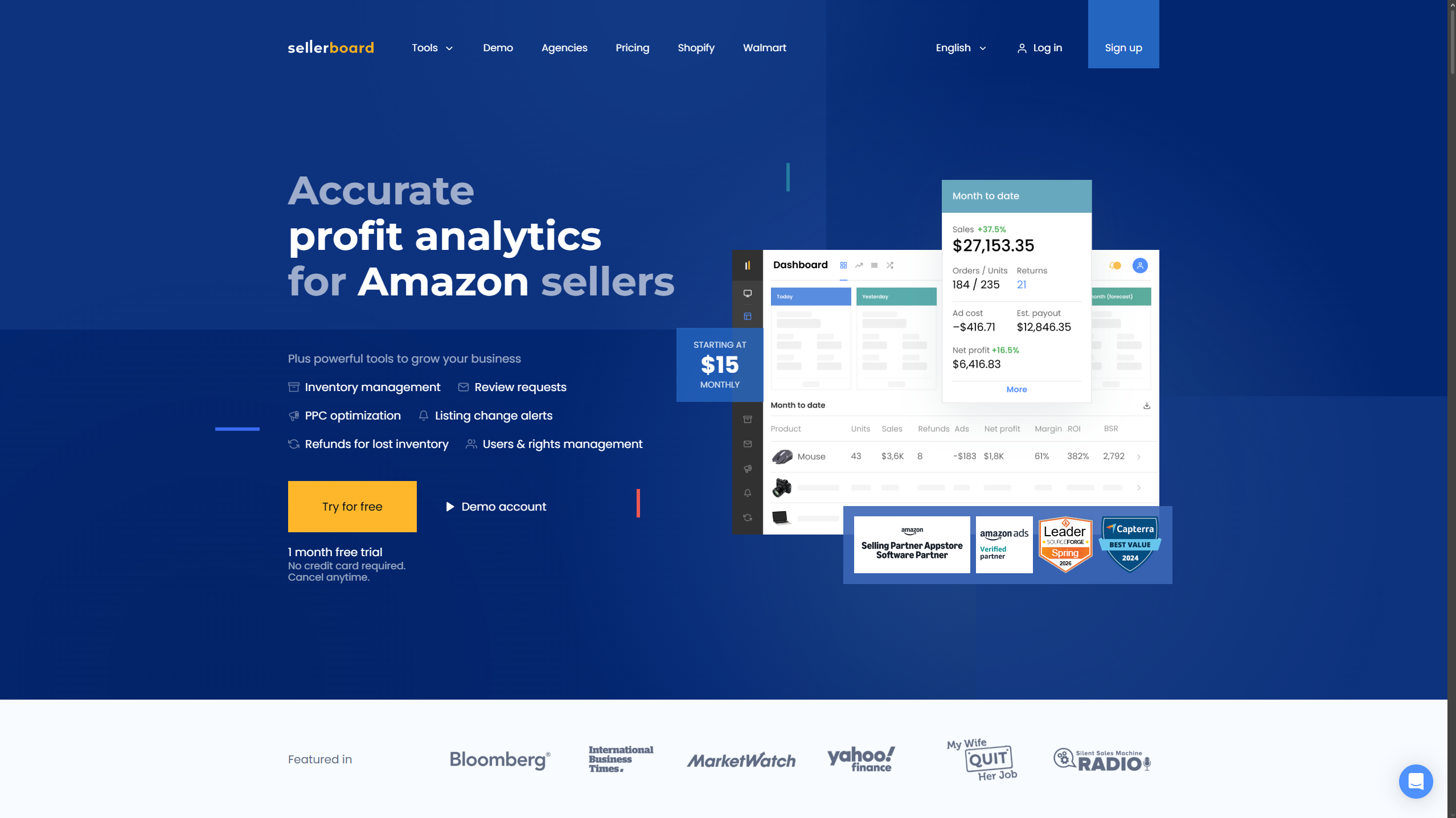
If the 5 steps above sound like a lot to manage, there is encouraging news. Sellerboard recently launched an AI agent that lets you skip Steps 2, 3, and 4 entirely. You pick your product, set one total daily budget, and choose a target margin or target ACoS. From there, the smart portfolio tool builds the campaigns for you.
Specifically, the agent moves every keyword through 3 stages. First, it identifies the keywords that actually convert for your product. Then, it pushes those keywords toward the target you set. Last, once a keyword hits your target, it shifts some of your available budget onto that keyword so you can scale it further.
This level of automation matters more than ever in 2026. Ad costs keep rising, and manual management eats hours you could spend on product development or marketing. By letting AI handle the bidding math, you keep your attention on the parts of the business only you can run.
At this point, if you follow everything above, you will already be ranking on page 1 and making sales. However, reaching page 1 is only half the job. Now you have to play defense and protect the rank on Amazon you earned.
Playing Defense: Protecting the Rank You Earned

Getting to the top feels great, but staying there separates long-term brands from one-hit wonders. The last 2 pillars, inventory management and reviews, protect your position. Getting either one wrong undoes all your effort, and in some cases it costs more to recover than it cost to rank on Amazon in the first place.
The encouraging part is that defense is far more predictable than offense. You already know what to watch for, and the right alerts handle most of the monitoring for you. Below, you will see the 3 ranking killers Travis has watched sink thousands of sellers, along with the simple systems that keep each one from touching your listing.
Pillar 3: Inventory management (ranking killer #1: running out of stock)
The number 1 ranking killer is running out of stock. Imagine finally hitting page 1 with sales flowing, and then your inventory runs dry. Amazon penalizes you, and in extreme cases it can even blacklist your listing. Travis has watched this happen repeatedly. A seller ranks high, sells out, waits 2 weeks for new stock, and lands buried on page 2 when it finally arrives. Afterward, they spend months of ad budget crawling back to position 1.
Thankfully, inventory forecasting solves this. The tool studies your sales velocity and sets alerts so you know exactly when to order your next production run. Beyond that, you can create the purchase order with your supplier and build your FBA shipment inside the same platform. The entire restock loop, from forecast to purchase order to shipment, lives in one place, so nothing slips through the cracks.
Ranking killer #2: listing changes
The second ranking killer is unexpected listing changes. Sometimes a competitor tampers with your listing and some system glitches. Sometimes a hijacker jumps on your listing and sells a fake version of your product. Occasionally your listing simply gets suppressed and vanishes from search results. Listing protection alerts catch all of this. If your title changes, an image disappears, or you lose the Buy Box, you get an alert immediately so you can fix it before sales suffer.
Pillar 4: Reviews (the most important pillar)
In Travis’s opinion, reviews are the most important pillar of all. Two products can run the exact same ads on the exact same keywords, and the one with more reviews converts better, ranks higher, and wins every time. Therefore, you need to keep your review velocity up, because more reviews lead to better conversion, and better conversion leads to better ranking. Be careful, though. You cannot ask buyers directly for reviews, or Amazon may ban your account. Instead, use a compliant autoresponder that sends automated review requests within Amazon’s terms of service. This way, reviews grow on autopilot without putting your account at risk.
The Money Amazon Already Owes You

Here is a pleasant surprise for many sellers. Amazon probably owes you money right now. Lost inventory, damaged products, and returns that never made it back to the warehouse all add up over time. Unfortunately, Amazon does not chase down any of this on your behalf.
For that reason, Travis recommends opening the money-back reports as soon as you sign up for Sellerboard. These reports show exactly how much Amazon owes you so you can file claims and recover it. For a lot of sellers, this recovered cash alone pays for the tool many times over.
When you combine reimbursements with profitable PPC, smart inventory planning, and steady review growth, the results stack up quickly. Travis suggests that following the full tutorial can realistically help you 3x your sales in the next month, and that promise rests on running the whole system rather than any single tactic.
Why Ranking Only Works When the Product Is Right
Every pillar above assumes one thing: a product with real demand and healthy margins. No amount of PPC automation rescues a product nobody wants, and no review strategy fixes a margin that was thin from day one. This is exactly where the Passion Product Formula comes in.
The Passion Product Formula teaches you to build a niche branded product around something you genuinely care about. Rather than guessing, you validate demand before you place a manufacturing order. Then, you launch with an audience that already wants what you made. This approach flips the usual Amazon struggle on its head.
Consider how the formula strengthens each pillar. Higher margins give you room to spend on PPC during a launch. A built-in audience delivers the early sales velocity Amazon rewards. Passionate customers leave better reviews, which lifts conversion and protects your rank on Amazon. In short, the right product makes every ranking tactic in this post easier and more profitable.
Of course, tools can take you far, and the automation above removes most of the daily grind. Still, many sellers reach a point where they want a team of experts beside them rather than another dashboard.
Work With Travis and His Team
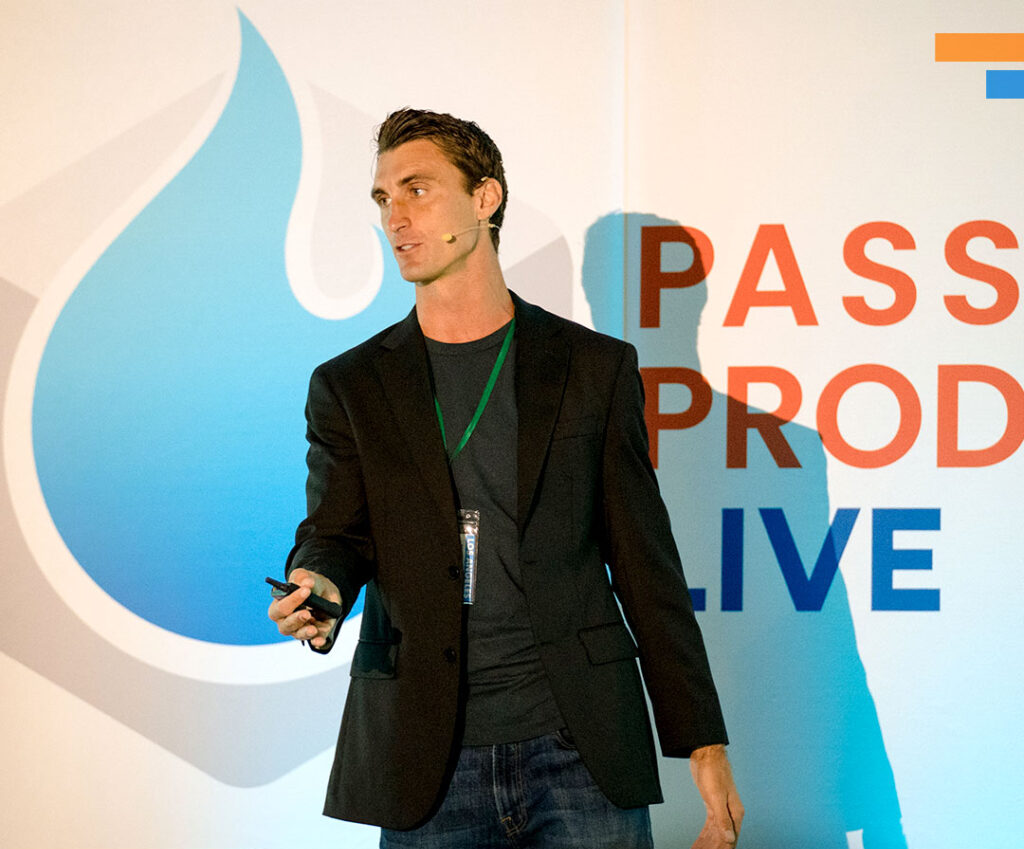
If that describes you, Travis has limited spots available for a free strategy call with himself or his team. On that call, you will talk through how you can work with Travis, how you can work with his team, and how they can help you build a complete Amazon business from scratch or scale the one you already run.
The call is free, and the conversation centers entirely on your situation. Rather than a generic sales pitch, you get a real look at where your business stands today and what needs to happen next. Because the spots are limited, the team can give each call the attention it deserves.
Whether you are still picking your first product or you are a six-figure seller looking for your next level, the team has walked that path many times before. They have helped students validate ideas, launch with an audience, and climb to page 1 using the same ranking pillars covered in this post. As a result, you benefit from experience instead of trial and error.
So, book your call, bring your questions, and leave with a clear plan. Even if you decide to keep going on your own afterward, you will walk away knowing exactly which levers to pull first. That clarity alone is worth the 30 minutes.
Start Ranking Profitably Today

Ranking number 1 on Amazon in 2026 is absolutely achievable, and now you have the full playbook. Start by learning your break-even ACoS, because that single number tells you how much you can invest in rank on Amazon without losing money. Then build sales velocity with profitable PPC, let AI handle the keyword harvesting and bidding, and track profit at the keyword level rather than trusting ACoS alone.
Once you reach page 1, shift to defense. Forecast inventory so you never run out of stock, set alerts to catch listing changes before they cost you sales, and keep review velocity climbing with compliant automation. Along the way, claim the reimbursements Amazon already owes you.
Above all, avoid the 3 ranking killers: stockouts, unexpected listing changes, and chasing velocity without knowing your numbers. Pair this system with a product built through the Passion Product Formula, and every pillar gets easier. Grab the free 12-hour Amazon FBA course, book your strategy call, and start ranking profitably this week.
Frequently asked Questions
What is a good ACoS for ranking a new product on Amazon?
During a launch, many sellers run at or slightly above their break-even ACoS for a few weeks to build velocity. After that, they lower the target toward their desired profit margin. The right number depends entirely on your margins, which is why you must calculate break-even first.
How do I calculate my break-even ACoS?
Your break-even ACoS equals your profit margin before advertising. If you keep 30% profit on each sale before ads, your break-even ACoS is 30%. Make sure your margin includes refunds, shipping, and every Amazon fee, or the number will mislead you.
Can you rank on Amazon without PPC?
Technically yes, but it takes far longer. PPC gives Amazon the early sales velocity and keyword relevance signals it needs. The Passion Product Formula adds a second lever, because launching to an existing audience creates organic velocity from day 1.
How long does it take to recover ranking after running out of stock?
It varies, but Travis has seen sellers spend months of ad budget climbing back after only 2 weeks out of stock. Inventory forecasting prevents the problem in the first place, which is far cheaper than recovering afterward.
Is it against Amazon’s rules to ask customers for reviews?
Asking buyers directly, or asking for positive reviews, violates Amazon’s terms and can get your account banned. Compliant automated review requests that use Amazon’s approved messaging stay within the rules.
Does the Bestseller badge help with ranking?
Yes. The badge boosts click-through and conversion rates, and higher conversion feeds the ranking algorithm. You earn it by combining sales velocity, relevance, and strong reviews in your category.
How is the Passion Product Formula different from private label?
Private label usually means copying an existing product and competing on price. The Passion Product Formula builds a unique niche brand around real demand you validate first, which produces higher margins, stronger reviews, and a far easier path to rank on Amazon.