
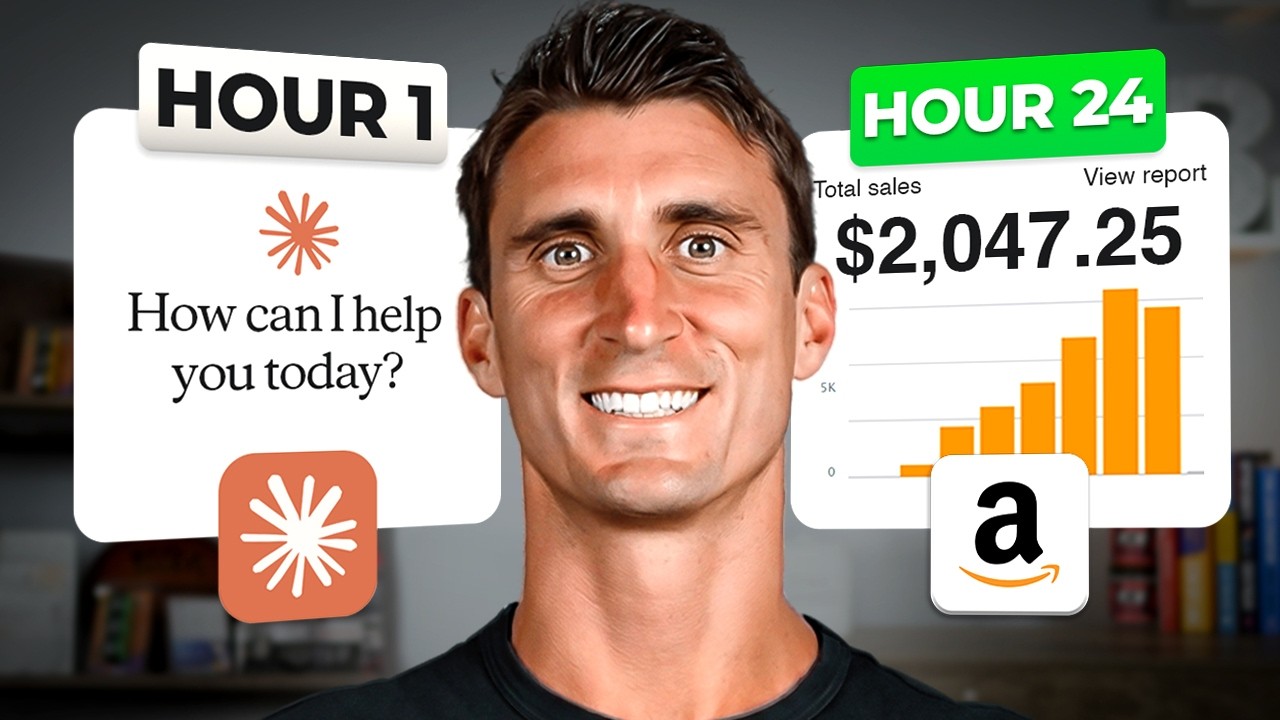
Imagine building an entire Amazon FBA business before your coffee gets cold. That is exactly what Travis Marziani set out to prove in his latest speedrun. He started with no product, no brand, and no manufacturer. Instead, he used Claude AI, a running timer, and a handful of carefully written prompts to go from zero to a live Amazon listing in close to 10 minutes.
This challenge builds on a track record that speaks for itself. Last year, Travis streamed himself launching a business in just 7 days. That business, Carnivore Electrolytes, has since generated over $1.3 million in profit. Now, with AI in the mix, launching an Amazon FBA business is faster and more accessible than it has ever been.
Throughout the run, Claude played four roles at once. It acted as a research specialist, a sourcing agent, a brand designer, and an Amazon copywriting expert. Even better, Travis showed every single prompt on screen. As a result, you can follow along and copy the process step by step, even on the free Claude plan.
The timing could not be better, either. According to Travis, 2026 and 2027 represent a huge opportunity for sellers who get in early. So let’s start the timer. First up is the decision that makes or breaks the entire run: choosing the product.
- Finding a Product With Real Demand and No Competition
- Letting AI Find Your Manufacturer
- Why Most Sellers Fail: The 3 Outdated Ways to Sell on Amazon
- The Niche Branding Method: Private Label 2.0
- Turning Claude Into Your Expert Negotiator
- Naming Your Brand in Seconds
- Creating Listing Images With AI
- Building the Full Amazon Listing With One Prompt
- Should You Really Launch Your First Amazon Business in 10 Minutes?
- Fast-Track Your Results With the Passion Product Accelerator
- Your 10-Minute Head Start Begins Now
- Frequently Asked Questions
Finding a Product With Real Demand and No Competition
Product research is where most Amazon FBA businesses succeed or fail before they ever launch. If you pick the wrong product, it does not matter how fast you complete every other step. Consequently, Travis looks for one specific combination: real demand with little or no competition. That means no trending TikTok products and nothing already oversaturated.
The logic behind this is simple. Amazon is a giant search engine where people type in exactly what they want to buy. Therefore, if you can find something shoppers are searching for right now that nobody is selling yet, you can create that product and sell it without spending a dime on advertising.
Connecting Claude to SmartScout
To find those hidden opportunities, Travis connected Claude to SmartScout, a product research tool built specifically for Amazon. Setting it up takes seconds. Open Claude, click Settings, then Connectors, and connect SmartScout. After that, open a new chat and paste in the first research prompt.
Travis pointed the search at pet supplies for two good reasons. People spend a lot of money on their pets, and pet products are usually easy to manufacture. Once he hit send, Claude pulled real data straight from SmartScout, checked every search term against his rules, and ranked the results. Within moments, he had 10 solid product ideas that had already passed the test for strong demand and manageable competition.
SmartScout is already affordable, and Travis negotiated a special deal for viewers through the link in the video description. Additionally, the tool offers a 7-day free trial, so you can follow along at no cost.
Spotting the winner
Scrolling through the list, one idea stood out immediately: the 55-gallon aquarium lid. It showed a search volume of over 4,000 and an opportunity score of 25,000, roughly 6 times higher than the baseline. In other words, plenty of people want it and very few sellers offer it.
Here is where Travis busts a common myth. You do not need a search volume above 1,000 to make serious money. Carnivore Electrolytes launched with a search volume of just 600, and it still went on to earn $1.3 million in profit. Naturally, that search volume grew over time, which is another factor worth watching. Look for products that are trending upward, not fading.
With the product chosen, Travis was confident it could earn $10,000 in its first month. However, a great idea is worthless until someone actually makes it. That brings us to sourcing.
Letting AI Find Your Manufacturer

Finding a manufacturer used to be one of the most tedious parts of launching a product. Travis admits he used to hate this step because it meant hours of digging through directories and supplier sites. Now, he simply pastes his manufacturer prompt into Claude, hits send, and lets the AI do the searching while he moves on to other tasks.
By the time he finished explaining the next concept, Claude had returned a full list of potential manufacturers. That said, Travis includes an important safety note. AI can still glitch or make mistakes, so always double-check that each company is legitimate before you send money or product specs.
Rather than comparing suppliers one by one, Travis uses a smarter approach. He emails every manufacturer on the list at once. He does not know their minimum order quantities or prices yet, so there is no point guessing. Once the replies come in, he throws all of them into Claude and lets it handle the comparison.
This workflow saves a tremendous amount of time. Still, the outreach email itself is where things get risky, because that is when the negotiation begins. Before we get to that, it helps to understand why so many sellers struggle in the first place.
Why Most Sellers Fail: The 3 Outdated Ways to Sell on Amazon

Before we get to negotiation, it helps to understand why so many Amazon FBA sellers never reach consistent profit. Travis explains that the problem usually starts with the business model, not the effort. Most beginners follow strategies that worked years ago but have since become crowded and easy to copy. As a result, they compete on price alone and struggle to build anything lasting.
Fortunately, recognizing these outdated models is the first step toward avoiding them. Travis breaks down the 3 methods that most people still teach on YouTube, explains why each one caps your growth, and shares the numbers that reveal just how crowded the marketplace has become. Once you see the pattern, the smarter alternative becomes obvious.
Retail arbitrage
The first old method is retail arbitrage. You find a product on sale in a store or online, then flip it on Amazon for a higher price. Travis showed an example of a product he found for $200 that sells for over $500 on Amazon. On the surface, that sounds great.
In reality, though, it is just a job with extra steps. The moment you stop hunting for deals, the income stops with it. Travis wants you to build something that produces passive income, not another job that depends entirely on your time.
Wholesale
The second method is wholesale. You visit a site like Global Sources, buy products at a bulk discount, and resell them at full retail. For instance, Travis found an item for $25 that sells on Amazon for $110.
The problem is that you own nothing. You are simply a middleman between the manufacturer and the customer. If the manufacturer decides to cut you off or sell directly, your business can disappear overnight.
Private label
The third method is the one almost everyone on YouTube teaches: private label. You use SmartScout’s free Chrome extension to find a product already selling well. Travis spotted alphabet flash cards doing over $100,000 a month. Then you go to Alibaba, find nearly identical flash cards for about 6 cents each, add your logo, and list them on Amazon FBA.
It seems like easy money. Unfortunately, it is outdated precisely because it is so easy. Anyone can do it, and nothing makes your product better or different from the competition.
The numbers behind the problem
To be fair, Travis is clear that you can make money with all three methods. The challenge is sustaining profit over the long term. Consider the scale of competition. There are over 1.1 million active Amazon sellers, with roughly 4,000 new ones joining every single day.
Around 85% of those sellers rely on private label or wholesale. So the moment you find a good product, it is only a matter of time before someone else finds the same one and undercuts your price. Nothing makes your product unique, and you cannot win a price war against the factory itself. This is exactly why Travis uses a different model.
The Niche Branding Method: Private Label 2.0
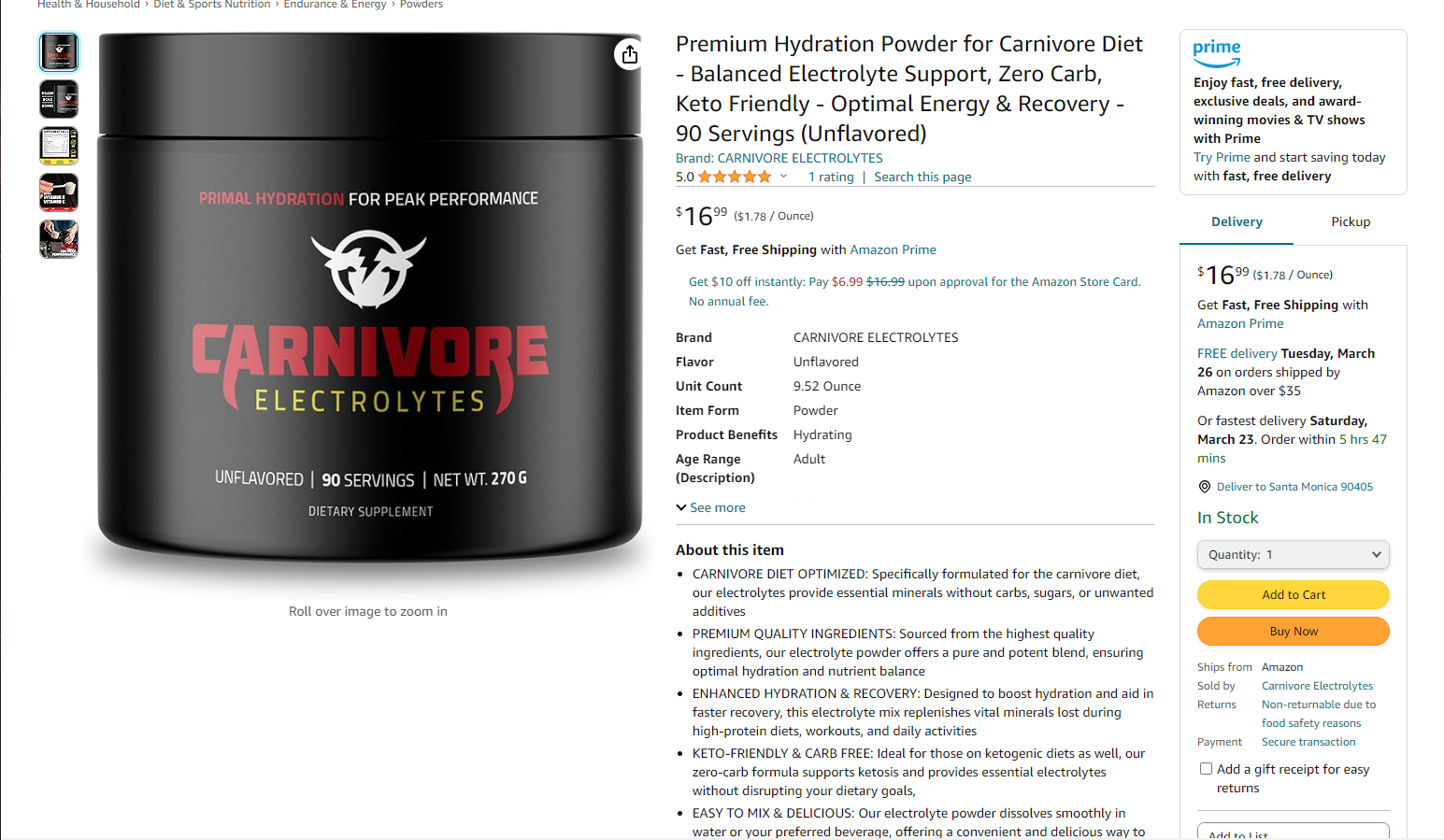
Travis calls his approach niche branding, and he describes it as private label 2.0. Instead of selling a generic product to everyone, you take a large product category and niche it down to a specific group of people. The result is a product that serves one audience exceptionally well.
Carnivore Electrolytes is the perfect example. Rather than launching another generic electrolyte product, Travis created one specifically for people on the carnivore diet. On paper, that sounds like a tiny niche. In practice, it generated over a million dollars in sales last year alone. Even a small slice of a multibillion-dollar industry is still worth a lot of money.
The reason it worked is simple. Nobody else was serving that niche. So anyone on the carnivore diet who searched for electrolytes naturally chose his product. Importantly, Travis did not guess at this demand. He used tools like SmartScout and Helium 10 to confirm that carnivore dieters were actively searching for electrolytes.
This is the heart of the Passion Product Formula. You build a brand around a specific audience you understand deeply, not a commodity anyone can copy. When you combine that strategy with AI tools, you get the speed of automation and the staying power of a real brand. Now, with the model clear, it is time for the riskiest conversation in the entire process.
Turning Claude Into Your Expert Negotiator

Manufacturers negotiate for a living. They talk to buyers every day, and they know every tactic in the book. Travis is honest about this: he cannot beat them on his own. If he says the wrong thing in that first email, he could end up paying far more than necessary to get the product made.
So instead of negotiating alone, he turns Claude into his negotiator. He pastes in a negotiation prompt, clicks send, and instantly has a chat that argues like an expert and pushes for the best possible price. This single prompt gives a complete beginner access to a skill that normally takes years to develop.
From there, Travis sends the email to the entire manufacturer list. He does not sit around waiting for replies, either. While the responses trickle in, he moves on to the next step and keeps the timer running. This parallel approach is a big part of how the whole run fits into 10 minutes.
With outreach handled, the brand finally starts to take shape.
Naming Your Brand in Seconds
Choosing a brand name used to involve brainstorming sessions and endless second-guessing. In the speedrun, it takes a single prompt. Travis typed his brand name prompt into Claude and received a full list of options within seconds. He notes that this prompt, like all the others in the video, follows the exact strategies he teaches inside his mentorship program.
The winner was “No Lift Feeding Lid.” Travis chose it because it is clean, catchy, and instantly tells the customer what the product does. Shoppers should never have to think too hard about what they are looking at.
That leads to one of the most valuable lessons in the video. When nobody knows your brand yet, that is not the time to get creative. Choose a name that describes your product and explains at a glance why it is the best option. After all, your brand name will literally be the first words of your listing title. Clear always beats clever at this stage.
Rather than pausing to write down each prompt, you can grab all of them from the link in the video description. Next, a great name still needs images that stop the scroll.
Creating Listing Images With AI

On Amazon, shoppers cannot pick up your product or feel its quality. Images are the only way they can evaluate it. As a result, high-quality images are essential if you want people to buy. Your main image has one job above all others: make people stop scrolling and click on your listing.
Travis stresses that you should take images very seriously. Mediocre images leave a lot of money on the table, no matter how good the product is.
The AI workflow
Normally, Travis would hire experts for this step. For the speedrun, however, he kept everything AI-driven. Since Claude does not have the strongest image generator, he switched to ChatGPT. He started a new chat, clicked Create an Image, and uploaded a sample dieline along with his listing image prompts.
In a real launch, the manufacturer would send the dieline for packaging design. For the speedrun, Travis used a template he expected to be close to the final version. Before hitting send, he set the intelligence level to high, which he always does for images. If you are on the free plan, that setting may not appear, so results will be decent but less polished. For that reason, he recommends the Pro plan.
The first batch came out surprisingly well. The lifestyle image looked a little too artificial, so Travis asked ChatGPT to make it look like an iPhone photo. ChatGPT excels at fixing one element without disturbing the rest, so he could iterate image by image if needed.
An honest recommendation
Travis is transparent here. He has never actually launched a product with listing images made purely by AI. You can get away with it if you truly have no budget, but spending a little on professional images is almost always worth it.
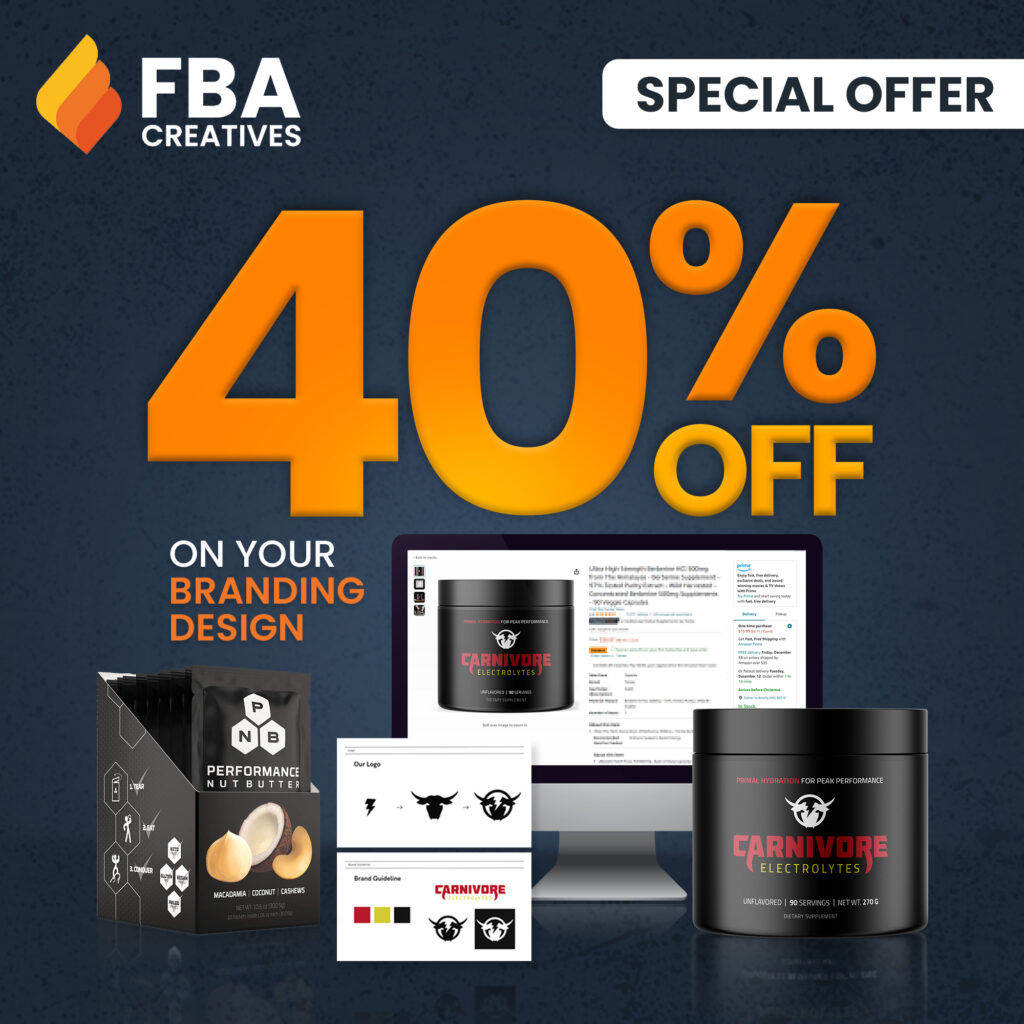
For top-tier listings and images, he recommends FBA Creatives, with a large discount code available in the video description. Either way, the product, brand, and images were done. Only one step remained.
Building the Full Amazon Listing With One Prompt

If you have not set up your Amazon seller account yet, Travis has a separate video that walks through the entire process step by step. You will find the link in the description. For the speedrun, he jumped straight back into the same Claude chat he had been using all along.
He pasted the listing prompt, hit send, and waited briefly. Then Claude delivered a complete listing: title, bullet points, description, and backend search terms. Impressively, Claude went back into SmartScout to select the search terms based on real search volume and competition data.
From there, Travis simply copied and pasted everything into the listing and added the images from ChatGPT. Just like that, he built an Amazon FBA business from scratch to a live listing in close to 10 minutes. No employees, no agency, and no third-party team. AI handled it from start to finish.
Of course, speed is only part of the story. The next question is whether you should actually launch your first business this way.
Should You Really Launch Your First Amazon Business in 10 Minutes?

Travis gives a refreshingly honest answer: probably not. If you have never created an Amazon FBA business before, building your first one with AI in 10 minutes is likely a recipe for failure. The speed in the video is real, but the judgment behind every decision comes from years of experience.
Think about what happened at each step. Travis knew which product metrics mattered, which manufacturer red flags to watch for, and why a clear brand name beats a clever one. AI executed the work quickly, but his strategy guided every prompt.
That is the real takeaway. AI compresses the work, while the Passion Product Formula provides the strategy that makes the work count. Combine the two, and you have a repeatable system for launching products that can actually compete. Fortunately, you do not have to figure that strategy out alone.
Fast-Track Your Results With the Passion Product Accelerator
The Passion Product Accelerator is Travis’s mentorship program, and its goal is ambitious. Within six months, the program aims to help you create a six-figure-plus passive income business on Amazon. Every prompt used in this video follows the same strategies taught inside the program.
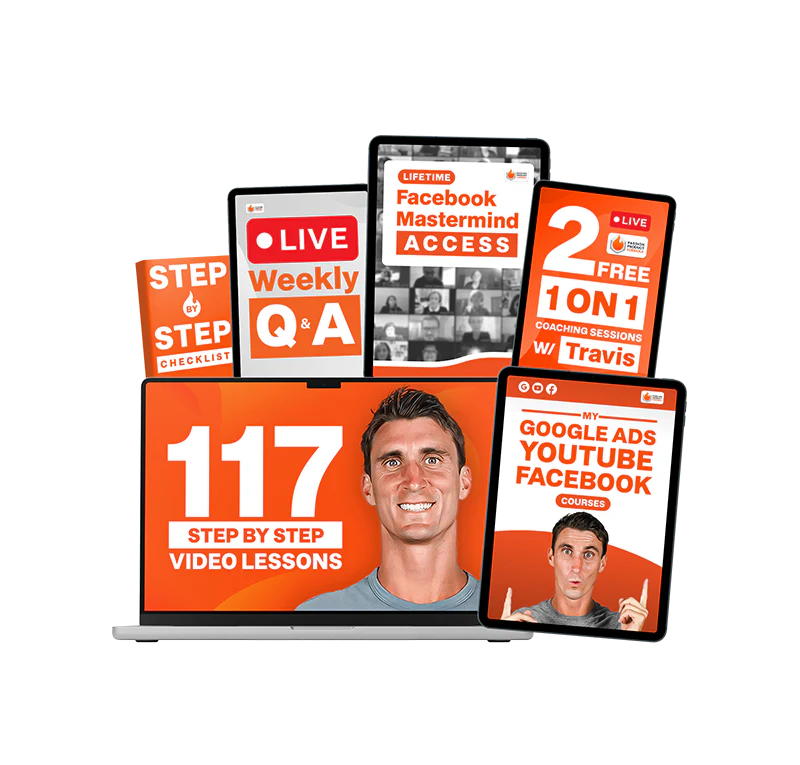
Members get one-on-one calls, small group coaching calls where you meet other students, and access to a full community of everyone who has ever joined. On top of that, you receive over 100 step-by-step screen-recorded videos covering every stage of the process, plus the actual templates and checklists Travis uses when he launches his own businesses.
The results speak for themselves. Students like AJ and Brent have each done over a million dollars in sales. Travis’s stated goal is simple: create more success stories like theirs.
To get started, apply for a free strategy call through the link in the description. A coach from Travis’s team will meet with you, build a custom plan, and explain more about the program. Spots are limited, and the team only works with people who are serious about launching. After you apply, watch the free Amazon FBA course for the full process in detail.
Your 10-Minute Head Start Begins Now
Travis just proved that the barrier to starting an Amazon FBA business has never been lower. In six steps, he went from nothing to a live listing: product research, manufacturer sourcing, negotiation, branding, images, and the final listing. Claude handled the heavy lifting at every stage.
More importantly, the opportunity is wide open. The tools are affordable, the prompts are free, and 2026 is a window that rewards early movers. Niche branding gives you a product people actively search for, and AI gives you the speed to launch it.
So take action today. Start your SmartScout free trial, grab the prompts from the video description, and apply for your free Passion Product Accelerator call. Your 10-minute head start is waiting.
Frequently Asked Questions
Can I really do this on the free Claude plan?
Yes. Travis confirms that the entire process works on Claude’s free plan. The only paid tools he mentions are SmartScout, which offers a 7-day free trial, and ChatGPT Pro for higher-quality images.
Do I need a high search volume to pick a winning product?
No. Carnivore Electrolytes launched with a search volume of just 600 and went on to earn over $1.3 million in profit. Focus on real demand with low competition and an upward trend rather than a big number.
What is niche branding and how is it different from private label?
Private label means copying a popular product and adding your logo. Niche branding means taking a broad category and tailoring it to a specific group of people. That focus makes your product unique and much harder to undercut.
Are AI-generated images good enough for Amazon listings?
They can work if you have no budget, but Travis has never launched with purely AI images. He recommends investing a little in professional images, such as those from FBA Creatives, because images directly drive conversions.
How much does it cost to start an Amazon FBA business with AI?
The research and listing steps cost almost nothing thanks to free plans and trials. Your main expenses will be the product inventory from your manufacturer and, ideally, professional images.
What is the Passion Product Accelerator?
It is Travis Marziani’s six-month mentorship program designed to help you build a six-figure-plus passive income Amazon FBA business. It includes one-on-one coaching, group calls, a community, 100+ training videos, and Travis’s own templates and checklists.