

If you’re selling on Amazon right now, there’s a good chance a sales tax problem is building in the background. You don’t even know it yet. This isn’t a scare tactic. It’s the kind of thing that quietly compounds while your attention stays on the exciting stuff: launching new products, growing revenue, and expanding to new channels. By the time most sellers find out, the problem has already grown into something painful.
The good news is that this is entirely preventable. Sellers who understand multi-channel sales tax can stay ahead of it without much effort. The ones who get blindsided aren’t doing anything wrong. They just never learned how the rules shift as their businesses grow. That’s exactly what this article is here to fix.
Most sellers assume Amazon handles their taxes, so their compliance is covered. When you’re only selling on Amazon, that assumption is mostly correct. However, the moment you start scaling beyond that single channel, which is the right move then the rules change. And they catch people completely off guard.
This guide breaks down what’s happening under the surface and why it matters more as you grow. You’ll also learn what you can do right now to keep your margins clean and your business protected. Whether you’re just getting started or already running a multi-channel operation, this article could save you thousands of dollars and a serious headache.

- The Amazon Tax Illusion: Why Sellers Feel Falsely Protected
- Understanding Economic Nexus
- A Real-World Example That Hits Close to Home
- This Is Exactly the Kind of Problem Serious Sellers Prepare For
- The Solution: How to Automate Your Sales Tax Compliance
- Why Handling This Now Is the Right Move
- Take Control Before It Becomes a Problem
- Frequently Asked Questions
The Amazon Tax Illusion: Why Sellers Feel Falsely Protected

When you first launch on Amazon, the platform does something genuinely helpful. It collects and remits sales tax on your behalf in most U.S. states. Marketplace facilitator laws require platforms like Amazon to take on tax responsibility for third-party sellers inside their marketplace. For new sellers, this feels like a solved problem. For Amazon-only revenue, it largely is.
The issue is that marketplace facilitator laws have a very specific boundary. They apply to sales inside Amazon’s marketplace and they stop exactly there, then do not follow you to your Shopify store. They don’t cover your TikTok Shop sales and don’t apply to wholesale purchase orders or any direct-to-consumer channel outside of Amazon. The moment revenue starts flowing from those sources, you take on full responsibility for collecting and remitting tax.
This is where many sellers run into trouble, because the transition feels seamless. You’re still selling products. You’re still making money. Nothing in your dashboard flags the change. But on the back end, you’ve entered completely new tax territory. Opening a Shopify store, launching on TikTok Shop, expanding internationally, these are all smart moves. They’re exactly what growing a real business looks like. They also change your tax obligations in ways most sellers never watch for.
Furthermore, none of your selling platforms solve this problem for you. Amazon isn’t watching your Shopify revenue. Shopify isn’t watching your Amazon numbers. Each platform operates in its own silo. That means the responsibility for understanding your combined exposure falls on you. Most sellers don’t realize this until they’re already well past the point where it matters.
Understanding Economic Nexus
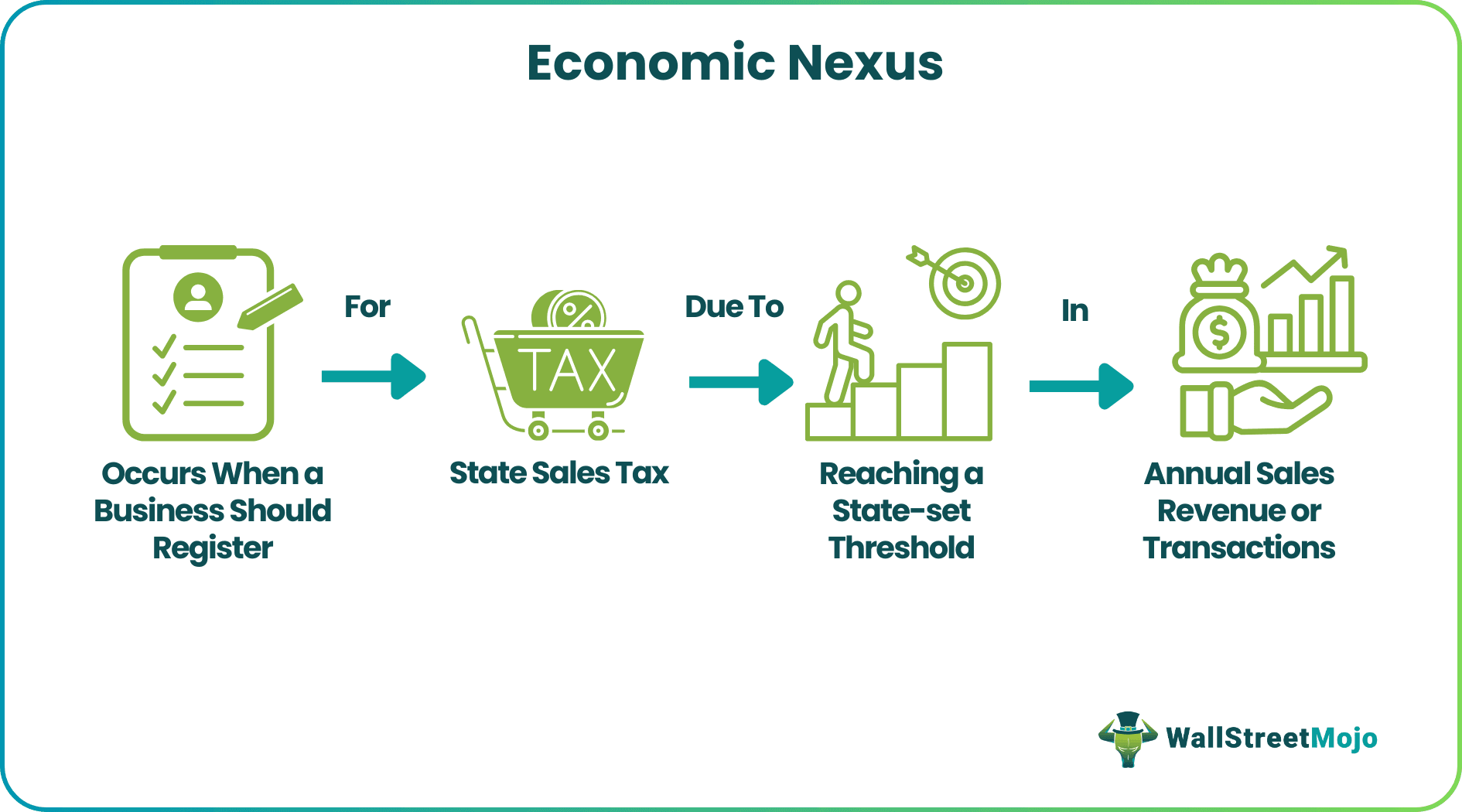
Economic nexus creates a tax obligation based on your sales volume into a specific state. It doesn’t matter whether you have a physical presence there. In plain terms: once your sales into a given state cross a certain threshold, you must register in that state, collect sales tax from customers, and send that money to the state government. This obligation triggers automatically, no notice, no warning, and no grace period.
In most states, the threshold is $100,000 in revenue or 200 transactions. Crossing either one creates the obligation. This sounds simple in isolation. But multi-channel sellers face a serious challenge: none of their platforms automatically add up revenue state by state across all channels. Your Amazon numbers live in Seller Central. Your Shopify revenue lives in Shopify. Stripe and wholesale channels sit somewhere else entirely. Nobody pulls all of that together and tells you when you’ve crossed a threshold in California, Texas, or Florida.
Additionally, thresholds can get crossed in unpredictable ways. A single large wholesale purchase order can spike your revenue in a state overnight. A successful product launch on a new channel can push you over the line within weeks. These spikes happen fast. By the time your accountant catches it in a quarterly review, you may have been out of compliance for months.
With that in mind, it’s worth knowing how sellers typically find out about this problem. It shows up during a financial review, during due diligence before a business sale, or when a state sends an actual notice. In all three cases, the damage is already done. Back taxes, interest, and penalties come straight out of the profit you thought you had. The most powerful thing you can do is understand this before it happens.
A Real-World Example That Hits Close to Home

To understand how this plays out in practice, consider a seller doing $45,000 a month on Amazon. Amazon handles tax on all of that revenue, and everything feels clean. The seller decides, correctly, to launch a Shopify store to build their brand and own their customer relationships. That store starts growing steadily: $6,000 a month, then $8,000, then $10,000. Over the course of a year, their Shopify revenue in Texas crosses $100,000.
At that point, economic nexus kicks in. The seller must now register in Texas, collect sales tax on Shopify orders shipping there, and remit it to the state. But because Amazon handled everything on that side, the seller assumed tax was covered. They weren’t tracking Shopify revenue by state. Nothing flagged the threshold. They’ve been selling into Texas all year without collecting tax and now they owe back taxes on all of it, straight out of pocket.
On top of that, imagine the same seller lands a wholesale account that same year. One large purchase order pushes them over the threshold in another state immediately. Now they have exposure in two states they weren’t watching, for months of revenue. The financial hit isn’t just the back taxes. It also includes interest on late payments and potential penalties. All of it comes out of the profit they thought they had built.
The reason this keeps happening isn’t that sellers are doing anything wrong. The data lives in too many places, and nobody watches the combined picture. This is a structural problem, not a personal failing. Fortunately, understanding it clearly is the first step toward making sure it never happens to you.
This Is Exactly the Kind of Problem Serious Sellers Prepare For

The sellers who build sustainable, sellable businesses aren’t just great at finding products and running PPC campaigns. They think like operators. They understand that growing revenue and protecting revenue are two separate skills, and both matter equally. The most exciting milestone in the world loses its shine when a hidden liability quietly eats into what you’ve built.
This is the mindset at the core of the Passion Product Formula. The program isn’t just about launching a product on Amazon. It’s about building a real brand, the right way, from the foundation up. That means learning the business fundamentals that protect your margins as you scale: how to structure your operation, how to think about multi-channel growth, and how to keep your numbers clean at every stage. Sellers who go through the Passion Product Formula don’t just walk away with a product listing, they walk away thinking like business owners.
If you’re still in the earlier stages figuring out what to sell, how to launch, how to build something that can actually grow, the Passion Product Formula is the clearest path available. It walks you through every step of building a passion-based Amazon business, from product selection through launch and scaling. The operational thinking it builds separates brands that last from brands that stall out. You can learn more and get started at the link below.
For those already scaling and wanting to keep compliance airtight, there’s a tool built specifically for this exact problem and it’s worth knowing about.
The Solution: How to Automate Your Sales Tax Compliance
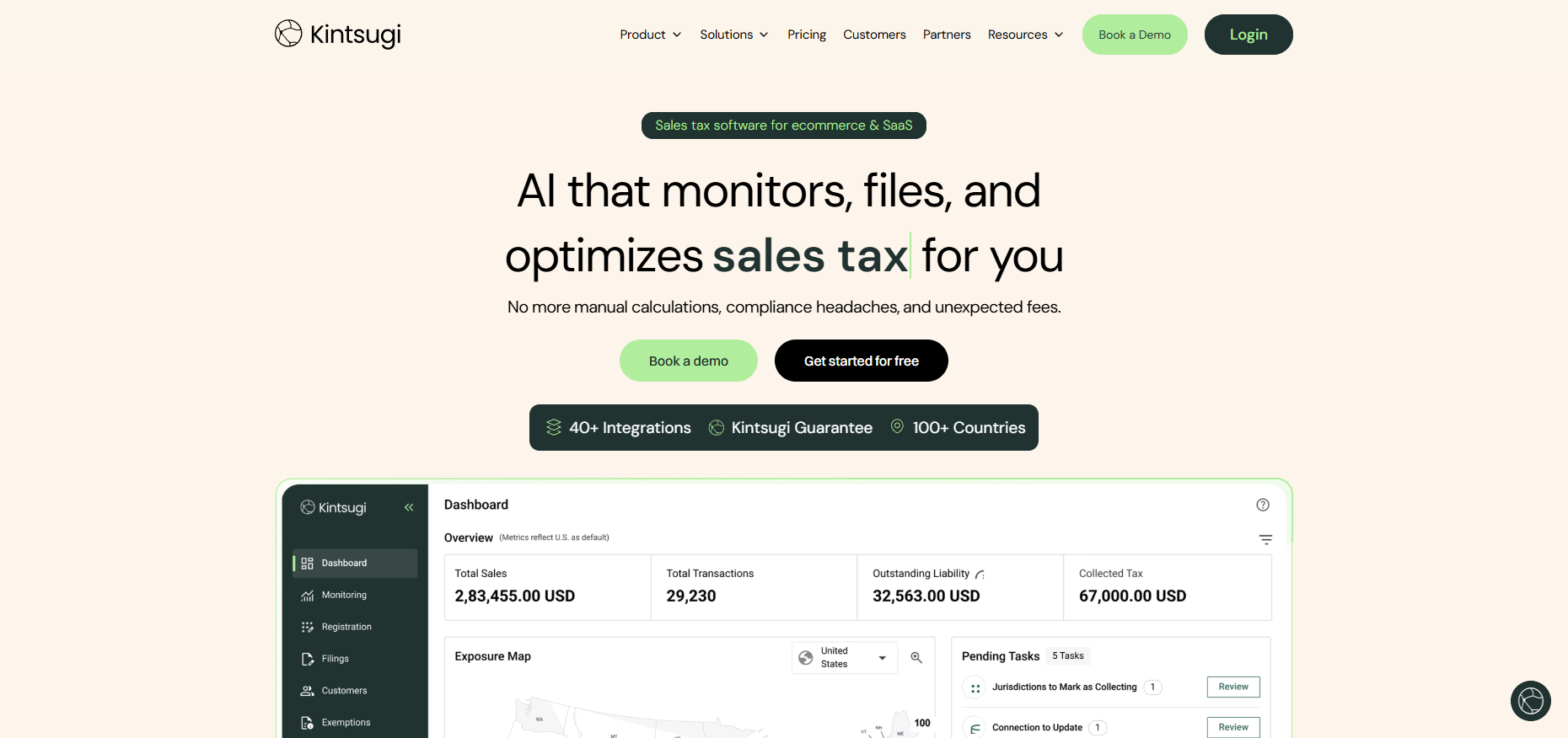
Kintsugi is an AI-powered platform built to automate sales tax compliance for e-commerce businesses. About 80% of their customers run e-commerce brands. Many sell on Shopify. Many run multi-channel operations across Amazon and Shopify simultaneously. In other words, they built this product for exactly the situation this article describes.
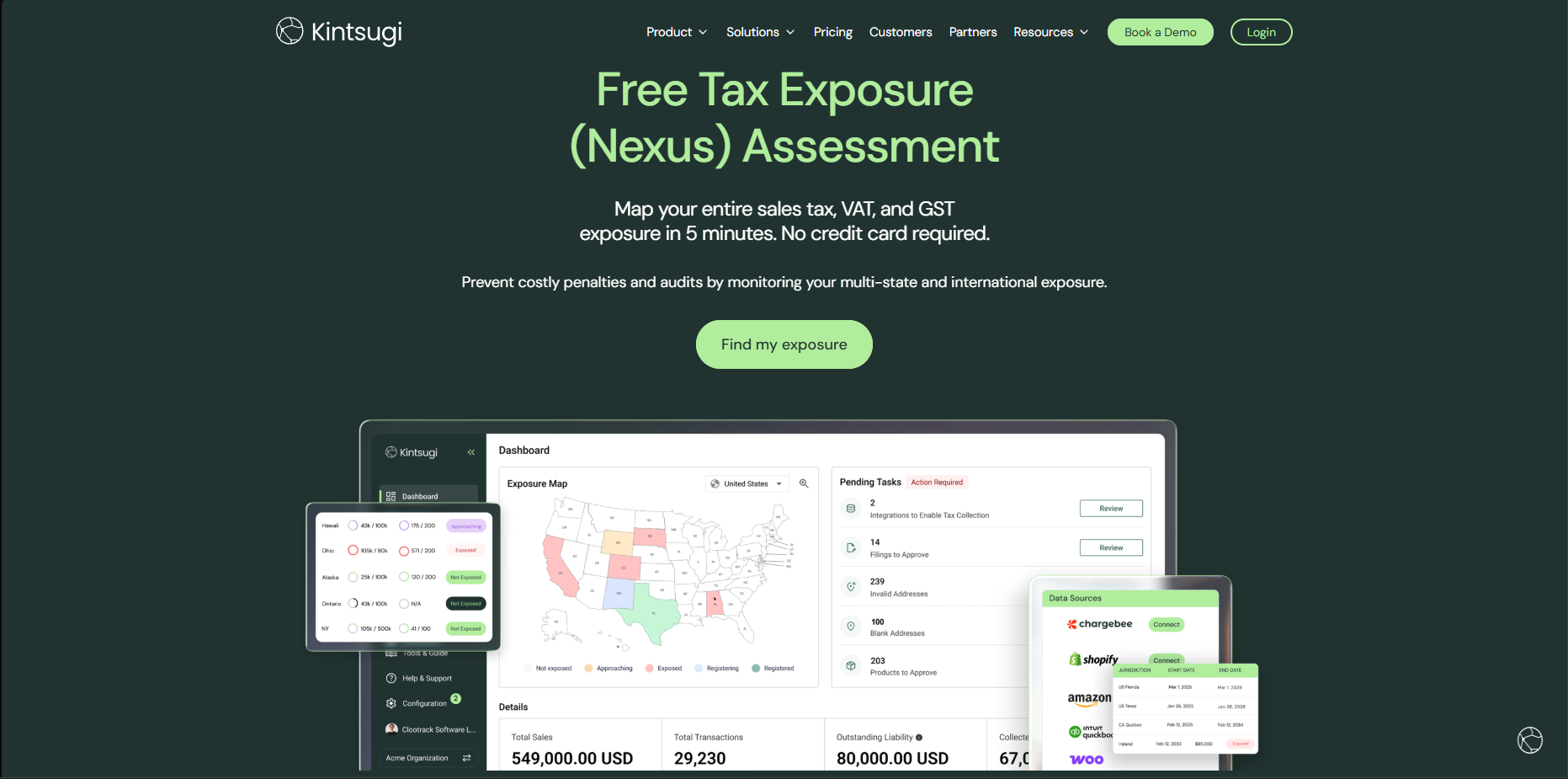
Here’s what it does: Kintsugi connects directly to all your selling platforms like Shopify, Amazon, Stripe, TikTok Shop, WooCommerce, and more. It pulls in your revenue across every channel and monitors your exposure in real time, state by state. You can see where you’re approaching a threshold and where you’ve already crossed one. Instead of finding out months later, you see it as it happens. That visibility alone changes how you manage compliance.
The AI layer handles the messy work: organizing transactions across platforms, classifying products correctly, and cleaning up incomplete address data. The platform runs actual tax calculations using deterministic rules, not guesswork. Human tax experts also validate taxability decisions, so you’re never relying on an algorithm alone. Once Kintsugi confirms your exposure and you need to act, it handles everything: state registration, correct tax calculation per transaction, filing, and remittance. The system runs automatically as your business grows.
Additionally, Kintsugi operates in 35-plus countries the U.S., Canada, Australia, Mexico, and most of the EU. If international expansion is part of your plan, the infrastructure is already there. The first step is to create a free account and run an exposure check. Connect your platforms, and Kintsugi shows you exactly where you’ve crossed thresholds and where you’re getting close. You don’t need to commit to anything, you just get to see clearly where you actually stand.
Why Handling This Now Is the Right Move

Sales tax compliance is not a complicated problem when you stay ahead of it. With the right visibility and systems in place, it becomes a background process that runs while you focus on growth. The only time it gets truly painful is when you find out after the fact. At that point, fixing it costs far more time, money, and stress than it ever needed to.
The alternatives carry real costs. A multi-state compliance specialist doesn’t come cheap. Paying your accountant extra every time your channels change adds up quickly. Manually tracking revenue thresholds across multiple platforms and all 50 states isn’t scalable. Kintsugi replaces that entire cost structure with a platform that runs in the background and scales with your business, without adding to your overhead.
More importantly, clean growth affects the long-term value of your business. When your profit number is real, when no hidden liabilities sit underneath it you make better decisions. You expand into new channels confidently. You pursue international markets without worrying about unknown exposure. And when you eventually want to sell, your financials are clean, your compliance history is solid, and your valuation reflects the actual value you’ve built.
The sellers who build lasting companies aren’t always the ones who work the hardest. They’re the ones who stay ahead of problems others ignore. Sales tax is one of those problems. It’s quiet, invisible, entirely preventable, and completely within your control when you have the right tools.
Take Control Before It Becomes a Problem
Building a real business means caring about all of it, not just the exciting parts. New product launches, new channels, revenue milestones, those things are genuinely exciting, and they should be. But the operators who build something that lasts also take care of the infrastructure underneath their growth. Sales tax is one piece of that infrastructure. Now you know exactly how it works.
You’ve already taken the first step by learning about this. The next step is simple: run a free exposure check with Kintsugi, connect your platforms, and find out exactly where you stand. Even if you think you’re fine, check. This problem builds quietly. You don’t feel it happening. The only way to know is to actually look.
And if you’re still building toward the scale where multi-channel compliance becomes a real concern, start with the right foundation. The Passion Product Formula gives you a complete roadmap for building an Amazon brand designed to grow, with the operational thinking, product strategy, and business fundamentals that make everything else easier. The link is below.
Clean growth is powerful. Go build something that lasts.
Frequently Asked Questions
Does Amazon collect sales tax on all my sales automatically? Amazon collects and remits sales tax under marketplace facilitator laws, but only for sales inside the Amazon marketplace. Any revenue you earn through Shopify, TikTok Shop, WooCommerce, Stripe, or any outside channel is not covered. On those channels, you carry full responsibility for collecting and remitting tax.
What is economic nexus and how do I know if I’ve triggered it? Economic nexus means that once your sales into a specific state exceed a threshold, typically $100,000 in revenue or 200 transactions then you must register, collect sales tax, and remit it to that state. No one sends you a notification when you cross the threshold. It triggers automatically. The only reliable way to know where you stand is to monitor your combined revenue across all channels, state by state.
Does this only apply to large sellers? No. Economic nexus thresholds are low enough that sellers at modest revenue levels can trigger obligations in multiple states. A seller doing $45K per month on Amazon with a growing Shopify store can easily cross the $100K threshold in a major state within a single year.
What happens if I’ve already crossed a threshold and haven’t been collecting tax? You owe back taxes on the uncollected amounts, plus interest and potentially penalties depending on the state and how long you were out of compliance. The best move is to assess your exposure quickly, register in the states where you have obligations, and start collecting correctly going forward. Kintsugi can help you map your past exposure and get back into compliance.
Is Kintsugi only for U.S.-based sellers? No. Kintsugi operates in 35-plus countries, including the United States, Canada, Australia, Mexico, and most of the European Union. Sellers with international ambitions can use the same platform to manage compliance obligations across multiple markets as they expand.
How does the Passion Product Formula help with the business side of Amazon selling? The Passion Product Formula teaches you how to build a real Amazon brand from scratch, from product selection through launch, scaling, and operating like a true business owner. Beyond product and listing fundamentals, the program builds the operational mindset that helps sellers grow sustainably and profitably. It’s for people who want to build something real, not just move a few units.
Do I need an accountant if I’m using Kintsugi? Kintsugi automates the compliance process – registration, tax calculation, filing, and remittance so you don’t need your accountant for ongoing sales tax management. That said, Kintsugi is a compliance platform, not a full accounting service. An accountant still adds value for broader financial strategy and tax planning, especially as your business grows.
What platforms does Kintsugi connect to? Kintsugi connects directly to Amazon, Shopify, Stripe, TikTok Shop, WooCommerce, and several other major e-commerce and payment platforms. It pulls in your revenue data across all connected channels and monitors your combined exposure in real time, giving you a clear picture of where you stand in every state.