

Selling on Amazon FBA offers incredible profit potential, but understanding Amazon FBA fees separates successful sellers from those who struggle. Travis Marziani has generated over $10 million in e-commerce sales over the past decade. With one product alone, he achieved over $2 million in revenue and walked away with more than $650,000 in profit. Travis teaches a simple 33-33-33 rule: roughly one-third of your revenue goes to product costs, one-third covers Amazon FBA fees, and one-third becomes your profit. While this might sound daunting at first, understanding exactly where your money goes empowers you to optimize every aspect of your business and gain a competitive advantage in the marketplace.
Throughout this comprehensive guide, you’ll discover what Amazon charges and proven strategies to minimize these costs. We’ll break down everything from the three major fees that impact every sale to hidden charges that catch beginners off guard. Additionally, you’ll learn insider hacks Travis has developed over 10 years of selling, including methods to cut your referral fee from 15% down to just 5%. Travis and his team at Passion Product Formula offer free coaching calls to help sellers navigate these complexities. This no-catch consultation could save you thousands in unnecessary fees right from the start.

- The Foundation: Amazon Seller Account Fees
- The Big Three: Core Amazon FBA Fees
- The Hidden Danger: Aged Inventory Surcharge
- The Surprise Fees: What Most Sellers Don't Expect
- Proven Strategies to Reduce Your Amazon FBA Fees
- Real-World Example: $2 Million in Revenue Breakdown
- Tools and Resources
- Taking Control of Your Amazon Success
- Frequently Asked Questions
The Foundation: Amazon Seller Account Fees

Starting your Amazon journey begins with choosing the right seller account type. Amazon offers two distinct options. Surprisingly, one of them costs absolutely nothing upfront. The Individual Selling Plan provides free access to the platform. You’ll pay $0.99 every time you sell an item. This option works perfectly for beginners testing the waters or sellers moving fewer than 40 items monthly, though Amazon FBA fees apply separately to all sellers.
The Professional Selling Plan costs $39.99 per month but unlocks unlimited sales without per-item fees. Moreover, this plan grants access to promotional tools, detailed reports, and advanced features. Individual sellers simply cannot use these tools. The math becomes straightforward. Once you’re selling more than 40 items monthly, the Professional plan actually saves you money while providing superior tools.
Most successful Amazon sellers start with the Individual plan to validate their product concept. They then upgrade to Professional once sales gain momentum. This strategic approach minimizes initial investment while maintaining flexibility. However, serious sellers often choose the Professional plan from day one. This investment signals commitment and provides the infrastructure needed for growth.
Consequently, your account fee represents the smallest expense you’ll encounter on Amazon. Nevertheless, choosing the right plan optimizes your foundation before tackling more substantial costs ahead.
The Big Three: Core Amazon FBA Fees

Every single sale you make on Amazon incurs a referral fee. This is essentially Amazon’s commission for accessing their massive platform. This flat 15% charge applies whether you use Fulfillment by Amazon (FBA) or ship products yourself through Fulfillment by Merchant (FBM). For example, if you sell a product for $27.99, Amazon automatically deducts $4.20 as their referral fee. You see the remaining amount as potential profit.
Initially, many sellers balk at giving up 15% of their revenue to Amazon. However, this perspective overlooks the incredible value Amazon provides in return. They’ve spent billions building trust with over 170 million Prime customers. These customers actively search the platform daily. If you attempted to drive equivalent traffic to your own website, your marketing costs would far exceed 15% of sales. Therefore, smart sellers view the referral fee as an investment rather than an expense.
Fortunately, Amazon offers a powerful hack to dramatically reduce this fee. Their Brand Referral Bonus program allows you to slash this cost. When you sign up and create special tracking links, customers who click your link pay only a 5% referral fee instead of 15%. This massive 10-point reduction translates to significant savings. It especially benefits sellers driving traffic from social media, email lists, or other external sources. Essentially, Amazon rewards you for bringing your own customers to their platform.
Furthermore, implementing this strategy requires minimal effort but delivers maximum impact on your bottom line. Sellers moving thousands of units monthly can save thousands of dollars. They simply need to route their marketing traffic through these special links.
Amazon FBA Pick and Pack Fee
The FBA pick and pack fee covers everything involved in getting your product from Amazon’s warehouse to your customer’s doorstep. This includes picking your item from the shelf, packaging it securely, and printing shipping labels. It also handles all logistics through Amazon’s world-class fulfillment network. Unlike the referral fee’s simple percentage, this fee depends on your product’s size and weight. Starting in 2026, the price point also matters.
Amazon introduced significant changes to this fee structure in 2026. They created three price-based tiers. Products listed under $10 receive the most favorable rates. Items priced between $10 and $50 fall into the middle tier. Products over $50 face the highest fees. This makes pricing strategy more important than ever. Additionally, your product’s dimensions determine whether it falls into small standard or large standard categories. Each tier has specific weight and size limits.
Most sellers pay between $3 and $7 per unit for fulfillment. However, the exact cost varies considerably. For instance, Travis’s Cocktail Cards product weighs over one pound and incurs a $5 per unit pick and pack fee. Apparel products face an additional 30 to 40 cents per item. Dangerous goods follow entirely different fee structures. Nevertheless, roughly 98% of sellers fall into either small standard or large standard categories.
The incredible value of FBA becomes clear when you consider the alternative. Travis switched his products from self-fulfillment to FBA. His sales increased four to five times almost immediately. The Prime badge, faster shipping, and higher search rankings that come with FBA create a massive competitive advantage. This more than justifies the fulfillment fee.
Amazon Storage Fee

Beyond shipping costs, Amazon charges monthly storage fees for keeping your inventory in their warehouses. From January through September, the rate sits at $0.78 per cubic foot per month. This typically translates to just pennies per unit for small to medium-sized products. However, during the critical October through December holiday season, storage fees jump to $2.40 per cubic foot. Warehouse space becomes premium real estate during this period.
For most sellers with reasonably sized products, storage fees remain relatively insignificant on a per-unit basis. Nevertheless, these costs accumulate rapidly if you’re selling bulky items. They also add up when maintaining excessive inventory levels for extended periods. Smart inventory management becomes essential. It matters not just for cash flow but also for controlling these ongoing charges.
Amazon provides a free FBA calculator tool. This helps you estimate all your fees before launching a product. Simply find a similar-sized product already selling on Amazon. Input your intended price. The calculator instantly shows your referral fee, fulfillment cost, and monthly storage per unit. This invaluable resource prevents unpleasant surprises after you’ve already invested in inventory.
Ultimately, understanding your storage costs upfront allows you to price products appropriately and maintain optimal inventory levels. However, storage fees can escalate dramatically if you’re not vigilant. One particular Amazon policy catches many sellers completely off guard.
The Hidden Danger: Aged Inventory Surcharge
Amazon recently restructured their long-term storage penalties. The new system is called the aged inventory surcharge. Previously, sellers only faced extra fees after inventory sat unsold for 365 days. Now, Amazon starts charging additional penalties after just 181 days. That’s roughly six months. This creates a much tighter timeline for moving inventory.
The penalty structure escalates in tiers designed to incentivize rapid inventory turnover. Between 181 and 270 days, Amazon adds approximately $0.50 per cubic foot. This comes on top of regular storage fees. From 271 to 365 days, this surcharge jumps to $1.50 per cubic foot monthly. Beyond 365 days, the penalties climb even higher. This makes it financially painful to let products collect dust in Amazon’s warehouses.
Importantly, this surcharge only applies to units that aren’t selling. Consider this scenario: You send in 100 units and sell through them within a few months. You then restock. The clock resets with your new shipment. The system targets stagnant inventory, not products that maintain healthy sales velocity. Consequently, sellers who accurately forecast demand rarely encounter these penalties. Those who maintain appropriate stock levels also avoid them.
One strategic hack helps you avoid the surcharge entirely. Monitor your inventory age closely. If you notice products approaching the six-month mark without selling, request that Amazon return them to you. Even if you simply repackage everything and send it right back in, this action resets the clock. It eliminates the surcharge. However, the better long-term solution involves mastering inventory planning. Maintain between one and six months of stock at all times. This sweet spot avoids both aged inventory surcharges and the low inventory penalties discussed later. Travis covers exact forecasting formulas in the Passion Product Formula coaching program. This helps sellers optimize this critical balance.
The Surprise Fees: What Most Sellers Don’t Expect

Customer returns represent an inevitable part of selling on Amazon. Naturally, Amazon charges fees to process them. When a customer returns a product within 30 days, you pay a fee covering return shipping and processing labor. If the item arrives back in good condition, Amazon can return it to your available inventory. Alternatively, you can request disposal for approximately $0.50 per unit.
Amazon recently restructured return fees using a threshold-based system. This benefits sellers with low return rates. For most categories, Amazon only charges the return processing fee when your return rate exceeds a certain threshold. Therefore, if you maintain excellent product quality and accurate listings, you might avoid return fees entirely. Proper customer expectations also help. However, apparel and shoe sellers face return fees on every single return. They receive no threshold protection.
Small sellers enjoy one significant advantage in this area. If your product ships fewer than 25 units monthly, you’re completely exempt from return processing fees. This exemption helps beginners test products without worrying about return costs. These fees can eat into already-thin margins. Additionally, focusing on product quality dramatically reduces return rates. Detailed descriptions and accurate photos also help across all categories.
Minimizing returns starts long before a customer clicks “buy.” Clear product images matter. Comprehensive bullet points are essential. Honest descriptions ensure customers know exactly what they’re purchasing. Subsequently, this transparency protects your business from unnecessary fees. It also builds the positive reviews that drive long-term success.
The 2026 Game-Changer: Prepping Fee Elimination
Amazon dropped a bombshell on January 1st, 2026. They permanently ended all FBA prep and labeling services in the United States. Previously, sellers could pay Amazon 30 cents per unit to handle labeling, polybagging, and other prep work. This convenient service allowed sellers to ship products directly from manufacturers to Amazon. No additional handling was required. Now, that option has completely disappeared.
Under the new requirements, every single unit you send to Amazon must arrive fully prepped and labeled. The required FN SKU barcode must be present. If your shipment arrives improperly prepared, Amazon can reject it entirely. They’ll send everything back at your expense. This policy shift forces sellers to be more strategic about their supply chain. Prep processes must be considered from day one.
Fortunately, you have two viable solutions. First, and most recommended, have your manufacturer handle all FN SKU labeling and preparation before shipping. Most overseas manufacturers readily accommodate this request. They often do it at minimal additional cost. Second, you can use third-party prep services located near Amazon fulfillment centers. However, this adds another middleman and expense to your operation.
The simplest hack for avoiding prep complications involves using custom packaging. Print the FN SKU barcode directly on the box. This approach integrates labeling into your packaging design. It eliminates separate prep steps entirely. It also creates a more professional, branded unboxing experience for customers.
Low Inventory Level Fee
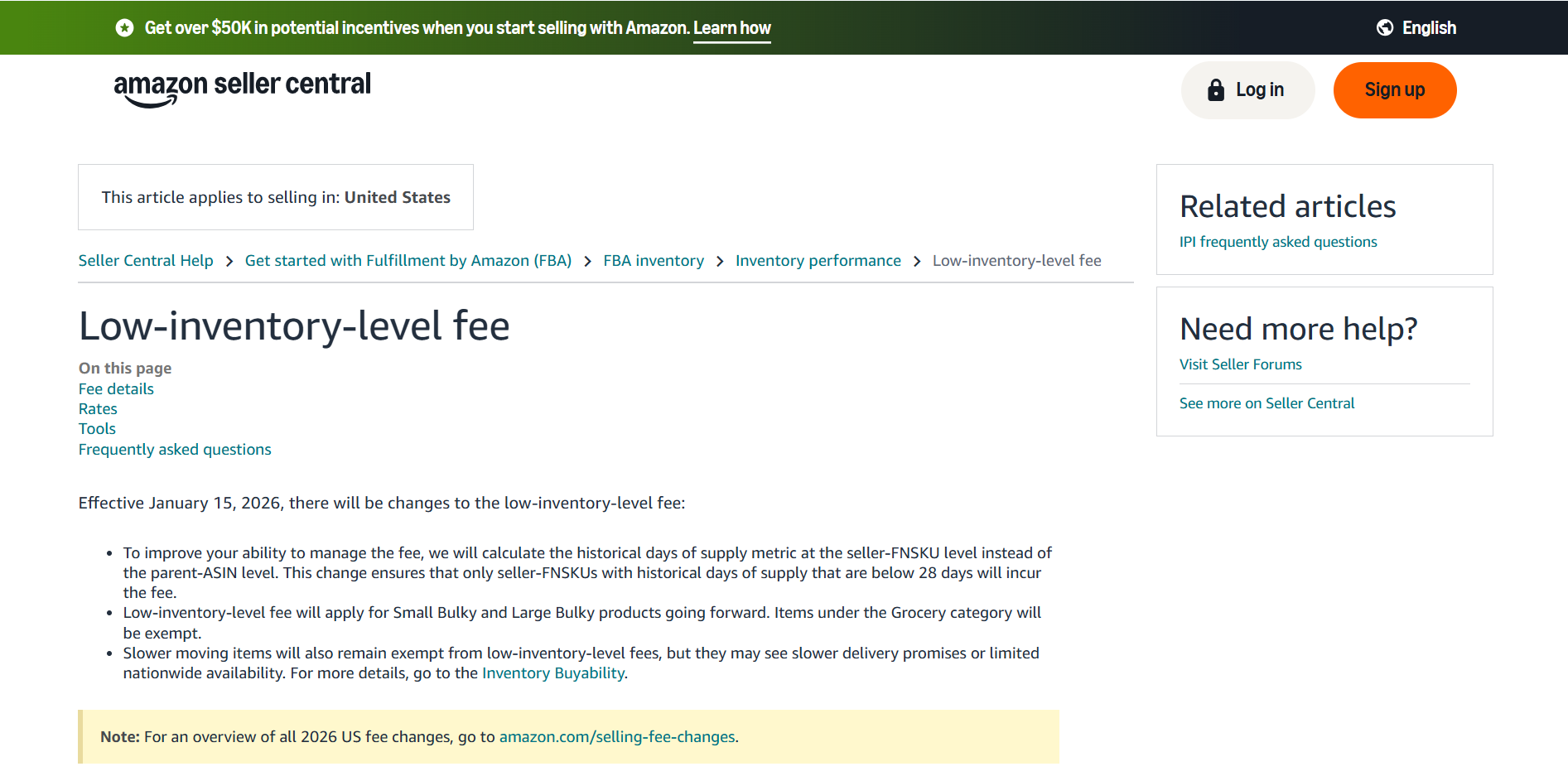
Amazon now charges fees for having too little inventory alongside penalties for having too much. This move frustrated many sellers. The low inventory level fee kicks in when both your 30-day and 90-day supply projections fall below 28 days worth of stock. Once triggered, Amazon charges between $0.32 and $0.90 per unit. This applies to units sold during the low-stock period.
This creates a challenging balancing act for sellers. On one hand, you face aged inventory surcharges if products sit too long. On the other hand, you incur low inventory fees if stock runs too lean. Finding the sweet spot requires careful demand forecasting and proactive inventory management. Amazon made some categories exempt in 2026. These include grocery products and slower-moving items. However, most sellers must navigate this dual-penalty system.
The strategic solution involves maintaining between one and six months of inventory in Amazon’s warehouses at all times. This range provides enough buffer to avoid low inventory fees. It also prevents the aged inventory surcharges that hit after six months. Moreover, healthy stock levels ensure you never miss sales due to stockouts. Stockouts ultimately cost more than any fee.
Mastering inventory management separates amateur sellers from professionals who scale successfully. Consequently, investing time in learning proper forecasting techniques pays dividends. It helps across multiple fee categories while maximizing your sales potential.
Inbound Placement Service Fee
When sending inventory to Amazon, you face a choice that impacts your fees significantly. Amazon operates multiple fulfillment centers across the country. Your inventory needs distribution among them for optimal shipping times. You can either split your shipment yourself across multiple warehouses or send everything to one location. If you choose the latter, you pay Amazon to distribute it for you.
If you choose Amazon’s distribution service, they charge an inbound placement service fee. This varies based on your shipment size and the number of distribution centers involved. However, smart sellers discovered a valuable hack. If you ship directly to five or more Amazon locations yourself, you avoid this fee entirely. Coordinating multiple shipments requires more upfront effort. Nevertheless, the savings add up quickly, especially for high-volume sellers.
The decision between convenience and cost savings depends on your business model and volume. Beginners might prefer paying the fee for simplicity. Established sellers often optimize this process to reduce expenses. Additionally, some prep centers and freight forwarders specialize in multi-location distribution. They handle the complexity for you at costs lower than Amazon’s fee.
Ultimately, every fee you eliminate or reduce flows directly to your bottom line. Therefore, taking time to understand and optimize your inbound shipping strategy represents one of many opportunities. These opportunities improve profitability across your Amazon business.
Proven Strategies to Reduce Your Amazon FBA Fees
The single most impactful change you can make to reduce fees involves optimizing your packaging dimensions. Every FBA charge directly correlates to your product’s size and weight. This includes fulfillment fees, storage fees, and aged inventory surcharges. Even shaving a fraction of an inch from your packaging dimensions can drop you into a lower size tier. This potentially saves a dollar or more per unit.
When you’re moving thousands of units monthly, these seemingly small savings compound dramatically. For example, reducing your packaging by one inch might save $1.25 per unit in fulfillment fees. Over 10,000 units annually, that single inch translates to $12,500 in savings. This flows directly to your profit. Therefore, working closely with your manufacturer to minimize packaging represents one of the highest-ROI activities you can undertake. You still need to protect your product adequately.
Many sellers overlook packaging optimization during the excitement of product development. They only realize later how much extra they’re paying. Smart sellers take a different approach. They request packaging samples in multiple sizes. They run them through Amazon’s fee calculator before finalizing their design. This proactive approach ensures you’re competing in the most favorable fee tier possible.
Furthermore, smaller packaging often improves the customer experience. It makes handling easier and reduces waste. Consequently, optimizing package size creates a win-win scenario. It benefits both your bottom line and customer satisfaction.
Low Price FBA Rates Program
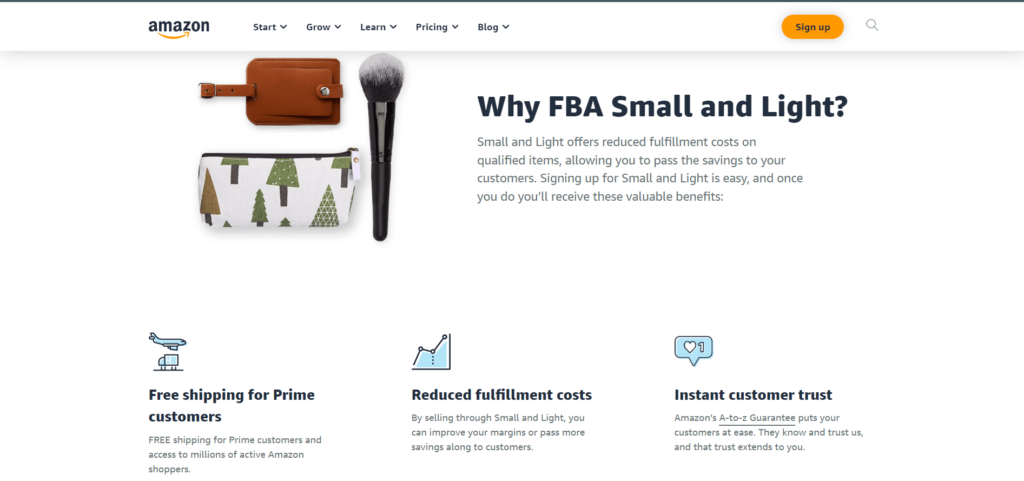
Amazon automatically enrolls products priced under $10 in their Low Price FBA Rates program. This replaced the old Small and Light program in recent years. Enrollment happens without any action required from sellers. It delivers automatic savings of approximately $0.86 per unit on fulfillment fees. For sellers moving high volumes of lower-priced items, this discount adds up. You can save hundreds or thousands of dollars monthly.
However, one important change occurred between programs that impacts some sellers. The previous Small and Light program covered items priced up to $12. The new Low Price FBA Rates only applies to products under $10. Therefore, if you’re selling items priced between $10 and $12, you actually lost access to these preferential rates. This pricing cliff creates a strategic decision point. Do you price slightly below $10 to capture the discount? Or do you price higher and accept standard fees?
The math often favors pricing just under the $10 threshold if your product allows it. Saving nearly a dollar per unit on fees often outweighs the potential profit from pricing a dollar or two higher. Nevertheless, each product and market situation differs. Calculator analysis becomes essential before deciding.
Additionally, this program demonstrates how understanding Amazon’s entire fee structure enables strategic decisions beyond simple product selection. Consequently, sellers who master these details consistently outperform those who ignore fee optimization opportunities.
Verify Amazon’s Dimensional Accuracy
Amazon doesn’t always measure products perfectly. Their occasional errors can cost you substantial money over time. Sometimes Amazon’s system places your product in a higher size tier than it actually qualifies for. This causes you to overpay on every single fulfillment fee. Therefore, regularly auditing your product dimensions in Amazon’s system protects against these costly mistakes.
The verification process requires checking your product’s listed dimensions against your actual measurements. If you discover discrepancies, contact Amazon’s seller support to request corrections. Moreover, Amazon sometimes issues retroactive reimbursements for overcharges. You need to catch errors early enough. These reimbursements can total hundreds or even thousands of dollars. The amount depends on your sales volume and how long the error persisted.
Proactive sellers make dimensional verification part of their product launch checklist. They don’t discover problems months later. Additionally, Amazon periodically updates their fee structure or measurement policies. When this happens, review your entire catalog. This ensures you maintain accurate classifications across all products.
This simple audit takes minimal time but potentially saves significant money. Furthermore, it demonstrates the importance of treating your Amazon business with appropriate diligence. Apply the same care you’d give any serious enterprise.
Strategic Inventory Management
Mastering inventory management represents perhaps the most critical skill for minimizing Amazon fees while maximizing sales. The optimal strategy involves maintaining between one and six months of inventory in Amazon’s warehouses at all times. This range avoids both the aged inventory surcharges that kick in after six months. It also prevents the low inventory level fees triggered by insufficient stock.
Achieving this balance requires accurate demand forecasting. You need to analyze historical sales data, seasonal trends, and market conditions. Beginners often struggle with forecasting. They either order too much inventory that sits unsold or too little that creates stockouts. Both scenarios cost money. You pay either through direct fees or lost sales opportunities. Therefore, developing reliable forecasting skills pays dividends across your entire business.
Additionally, smart inventory management improves cash flow. It prevents capital from sitting idle in slow-moving stock. The money saved on storage fees and surcharges can instead fund new product launches. It can also support marketing campaigns that drive growth. Moreover, consistent stock availability improves your product’s search ranking on Amazon. The algorithm favors listings that reliably ship quickly.
These inventory strategies represent just the beginning of fee optimization techniques. Travis and the Passion Product Formula team teach comprehensive systems for inventory planning and demand forecasting. They cover fee minimization that goes far beyond what any single article can cover. Consequently, sellers serious about maximizing profitability often benefit from expert coaching. This provides personalized strategies for their specific situation.
Real-World Example: $2 Million in Revenue Breakdown

Understanding fees conceptually differs dramatically from seeing them applied to a real business. Travis’s experience with one particular product provides an illuminating case study. This shows how Amazon fees impact an actual seven-figure seller. Over several years, this single product generated over $2 million in total revenue. That’s an impressive number. Unfortunately, it doesn’t tell the complete profit story.
Breaking down the expenses reveals where that revenue actually went. Amazon collected $295,000 in referral fees. This represents the standard 15% cut for platform access. Additionally, pick and pack fees consumed another $255,000 for fulfillment services. Other Amazon fees totaled $39,000. These included storage, returns, and miscellaneous charges. Beyond Amazon’s fees, purchasing the products themselves cost approximately $545,000. Various other business expenses added another $50,000.
After accounting for all expenses, this product delivered over $650,000 in profit. While $650,000 represents substantial success, it illustrates an important reality. Revenue and profit are vastly different numbers. Many beginners see revenue figures and assume they represent take-home pay. This leads to poor business decisions and unrealistic expectations. Furthermore, this breakdown demonstrates how the 33-33-33 rule plays out in practice. Roughly one-third went to Amazon fees. One-third went to product costs. One-third became profit.
This real-world example proves that despite significant fees, Amazon FBA remains highly profitable. This applies to sellers who understand the economics and optimize accordingly. Moreover, Travis achieved these results while continuously improving his fee optimization strategies. This suggests even better margins are possible with the right knowledge and implementation.
Tools and Resources

Amazon provides a free FBA calculator that every seller should use before launching any product. This tool eliminates guesswork by showing exact fees. It bases calculations on your product’s price, size, and weight. To use it effectively, find a product already selling on Amazon. It should closely match your intended product’s dimensions. Input your planned selling price. Click calculate. You’ll instantly view your referral fee, fulfillment cost, and monthly storage per unit.
The calculator’s power lies in its ability to model different scenarios quickly. You can test various price points to see how they impact fees. You can experiment with different package sizes to find optimal dimensions. This testing phase allows you to make informed decisions before investing thousands in inventory. It potentially saves you from costly mistakes that plague less-prepared sellers.
Beyond Amazon’s calculator, successful sellers develop spreadsheets that track all their costs comprehensively. These models include manufacturing costs and shipping to Amazon. They track all Amazon fees, advertising spend, and miscellaneous expenses. Having complete visibility into your unit economics enables data-driven decisions. You can make informed choices about pricing, marketing budgets, and which products deserve continued investment.
While these tools provide valuable assistance, they can’t replace experience and guidance. This comes from working with successful sellers who’ve navigated these challenges before. Consequently, many sellers accelerate their success by combining self-education with expert coaching. This provides personalized strategies and accountability.
Taking Control of Your Amazon Success

Understanding Amazon’s fee structure transforms from an overwhelming obstacle into a manageable aspect of running a profitable business. The fees are substantial. However, they’re predictable and largely controllable. Smart decisions about product selection, packaging optimization, and inventory management make the difference. Moreover, the fees represent your investment in accessing the world’s largest and most trusted e-commerce platform.
Travis Marziani’s decade of experience didn’t happen by accident. His over $10 million in online sales resulted from systematically learning Amazon’s ecosystem. He tested strategies and optimized every controllable variable in the business. The knowledge he’s gained through selling hundreds of thousands of units now helps other sellers. They can avoid expensive mistakes and accelerate their path to profitability.
The Passion Product Formula coaching program offers free consultation calls. Travis’s team analyzes your specific situation and provides customized recommendations. These calls carry no obligation and no catch. They simply offer an opportunity to learn whether the program’s comprehensive training and support align with your goals. Countless sellers have saved thousands of dollars on avoidable fees. They implemented strategies they learned in their initial free consultation.
Additionally, Travis offers a completely free Amazon FBA course through YouTube. This walks beginners through the fundamentals of building a successful Amazon business. This multi-hour training provides enormous value without any cost. It gives you a solid foundation regardless of whether you eventually pursue coaching. However, sellers who want personalized guidance often find the coaching program accelerates their results dramatically. They also get accountability and access to Travis’s full system.
Frequently Asked Questions
What is the typical profit margin for Amazon FBA sellers?
Most successful Amazon FBA sellers target profit margins between 25% and 40% of their selling price. Travis teaches the 33-33-33 rule. Roughly one-third goes to product costs. One-third goes to Amazon fees. One-third becomes profit. However, margins vary significantly based on your product category and pricing strategy. How well you optimize fees also matters. Products with lower competition and strong branding often achieve higher margins. Highly competitive categories may compress margins to 20% or below.
Can I avoid Amazon FBA fees by shipping products myself?
You can avoid FBA fees by using Fulfillment by Merchant (FBM). This means you handle storage and shipping yourself. However, you’ll still pay the 15% referral fee for platform access. Most sellers find that self-fulfillment actually costs more. You need to factor in your time, shipping expenses, and storage costs. Moreover, FBA products receive the Prime badge. They rank higher in search results and convert at significantly higher rates. Travis saw his sales increase 4-5 times when switching from FBM to FBA. The fees are worthwhile despite their cost.
How can I calculate my exact Amazon FBA fees before launching a product?
Amazon provides a free FBA calculator tool. It shows exact fees based on your product details. Find a similar product already selling on Amazon. Input your intended price. Let the calculator compute your referral fee, fulfillment cost, and storage fees. This tool helps you model different pricing and packaging scenarios before investing in inventory. Additionally, create a comprehensive spreadsheet that includes manufacturing costs and shipping. Include advertising and all fees. This gives you complete visibility into your unit economics.
What happens if I can’t sell my inventory before the aged inventory surcharge kicks in?
If your inventory approaches the 181-day mark without selling, you have several options. You can request that Amazon return the inventory to you. This resets the age clock even if you send the same products back later. Alternatively, you can request disposal for approximately $0.50 per unit. Some sellers run aggressive promotions or discounts to move slow inventory. They do this before surcharges apply. The best strategy involves accurate demand forecasting. Maintain 1-6 months of inventory to avoid this situation entirely.
Are there any categories where Amazon FBA fees are lower?
Amazon’s Low Price FBA Rates program provides reduced fulfillment fees for products priced under $10. This saves approximately $0.86 per unit. Beyond this, fees are relatively consistent across categories. However, apparel products face additional fees of $0.30-$0.40 per unit. The most significant fee variations come from your product’s size, weight, and price tier. They don’t come from category selection. Therefore, optimizing packaging dimensions and staying within favorable size tiers impacts your fees more than category selection.
How often does Amazon change their fee structure?
Amazon typically announces major fee changes once annually. They usually implement them at the start of the new year. However, they occasionally introduce mid-year adjustments or new fee types. The 2026 changes demonstrate this. The prepping fee elimination and updated pick-and-pack pricing structure show how significantly these updates can impact sellers. Successful sellers stay informed by monitoring Amazon’s seller forums. They subscribe to official announcements. They also work with communities or coaches who track these changes closely.
Is the Passion Product Formula coaching program worth the investment for new sellers?
The Passion Product Formula offers free consultation calls. You can discuss your specific situation with Travis’s team without any obligation. These calls help you determine whether the program aligns with your goals and current business stage. Many sellers find that avoiding just one or two expensive mistakes pays for coaching several times over. These mistakes include poor product selection, incorrect fee calculations, or inventory management errors. The program provides step-by-step guidance and proven systems. You get direct access to experienced sellers who’ve already achieved the success you’re pursuing. However, the free call helps you evaluate whether coaching fits your learning style and budget before making any commitment.