
Are you trying to figure out the best way to sell on Amazon FBA in 2026? There’s one truth you need to hear before you order samples or burn months on the wrong strategy. The Amazon landscape has shifted dramatically over the past few years, and tactics that built six-figure brands a decade ago no longer produce the same results. However, that doesn’t mean the opportunity has disappeared. In fact, Amazon remains one of the most powerful platforms for new sellers you just need a strategy built for today’s marketplace.
Most beginners struggle on Amazon for one simple reason: they keep repeating outdated playbooks. The pattern looks familiar chase generic products, slap a logo on something, then run aggressive ads and hope for the best. Unfortunately, that approach belongs to a much less competitive era. Fortunately, the sellers winning today have already cracked the code, and the strategy is simpler than you might think. In this guide, you’ll discover the exact 5-step framework successful Amazon sellers use today. Specifically, you’ll learn why niche branding wins, how to validate ideas before spending on inventory, and how to scale once your first product takes off. Let’s dive in.
- Why the Old Amazon FBA Playbook No Longer Works
- The Opportunity in 2026 Is Bigger Than Ever
- The Best Way to Sell on Amazon FBA in 2026: Why Niche Branding Wins
- Real Results and Why Mentorship Changes Everything
- Your Next Move: Take the First Step Toward Amazon FBA Success Today
- Frequently Asked Questions
Why the Old Amazon FBA Playbook No Longer Works
Many beginners enter Amazon FBA expecting retail arbitrage or wholesale to be a fast path to profit. However, retail arbitrage demands countless hours of in-store scanning for thin margins. The model simply doesn’t scale. Wholesale can technically work, but it requires significant capital. It also requires established relationships and the ability to compete on price. For most beginners, neither path delivers the freedom or income they imagined.
Likewise, the classic private label approach has become brutally competitive. The old playbook was simple: find a random product, add a logo, run PPC. Today, the market is flooded with sellers using that exact same playbook. As a result, listings blur together and margins shrink fast. Beginners often spend months pushing products that never gain traction. Their listings simply look like every other option in the category.
So what’s the core mistake? It’s copying strategies from ten years ago. Amazon has matured. Buyer expectations have grown. Competition has intensified. Fortunately, knowing what doesn’t work is half the battle. It saves you from burning thousands on a doomed launch. Even better, it frees you to focus on methods that actually move the needle today.
The Opportunity in 2026 Is Bigger Than Ever

Despite the competition, Amazon remains an extraordinary opportunity for new sellers. In fact, independent sellers now account for more than 60% of all Amazon sales. That means the lion’s share of revenue flows to brands and entrepreneurs. Furthermore, US independent sellers averaged more than $290,000 in annual sales in 2024. Over 55,000 sellers crossed the $1 million milestone. Those numbers tell a very clear story. The gold mine is still wide open.
Moreover, Amazon continues to attract millions of motivated buyers every single day. Unlike social platforms, Amazon shoppers arrive already intending to buy. They type in what they want. Then they scroll through options. Often within minutes, they make a purchase. That intent-driven traffic is one of the most valuable buyer pools online. Even better, it’s available to anyone willing to learn the right approach.
The takeaway is empowering. The opportunity isn’t shrinking. However, the map most beginners use is wrong. Once you swap that outdated map for a modern one, you can step into the same gold mine. That gold mine is producing million-dollar sellers right now. Even better, you can win without competing for the same generic products.
The Best Way to Sell on Amazon FBA in 2026: Why Niche Branding Wins

So what does the modern playbook look like? In short, it’s called niche branding. Niche branding means selling a product designed for a clearly defined group of buyers. Instead of building yet another generic product, you build the product for a smaller, focused audience. As a result, your listing instantly stands out. The buyer feels like the product was made just for them.
For example, consider dog brushes. Selling a generic dog brush means competing with hundreds of nearly identical listings. It’s a race to the bottom on price and reviews. However, a brush designed for Golden Retriever owners changes the entire game. The product images, title, and bullets all signal “this is for you.” Golden Retriever owners choose it over the generic option every time. Similarly, sugar-free electrolytes for the carnivore diet outperform generic electrolytes. The product directly speaks to that audience’s lifestyle.
This works because Amazon is fundamentally a search engine with a checkout page attached. Shoppers type in exactly what they want. Then Amazon shows them the listings that best match. Therefore, the more precisely your product matches a specific search, the more you’ll get clicked. Niche branding lets you win that match before you ever spend a dollar on ads.
Even better, niche branding levels the playing field for beginners. You don’t need a massive ad budget. A team of designers isn’t required either. All it takes is clarity, focus, and a real understanding of the buyer. Ultimately, that’s a competitive advantage anyone can build.
Step 1 – Research: Start With the Buyer, Not the Product
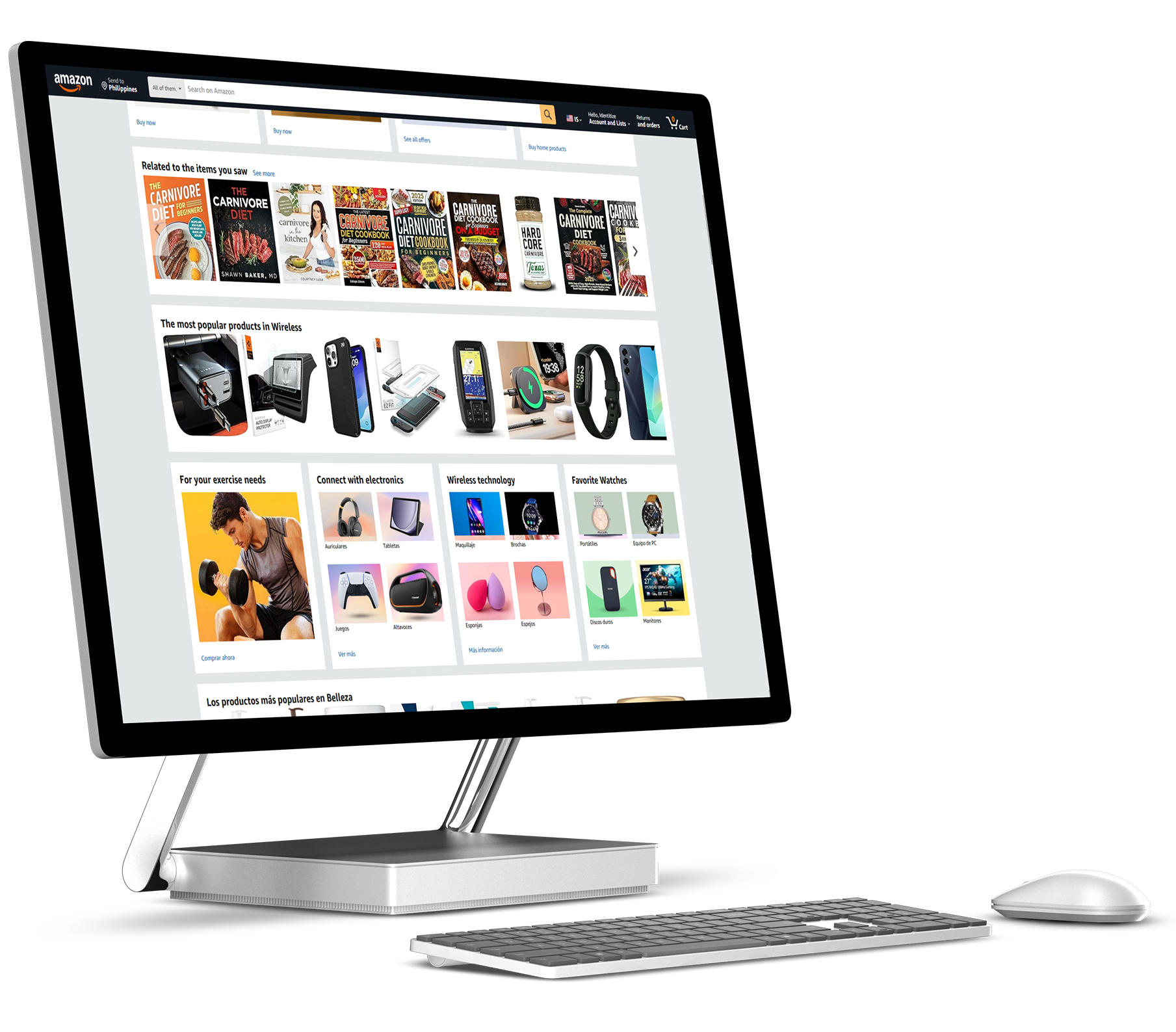
Want to know the best way to sell on Amazon FBA in 2026? The answer always starts with the buyer not the product. Most beginners ask the wrong question: “What product should I sell?” Instead, ask a smarter question. “What group of people is searching for something more specific than what Amazon offers?” That simple reframe changes everything. You stop chasing trending products. You start identifying underserved buyers. Then you build a product for them.
To put this into practice, try layered drilling. Start with a broad category. Then progressively narrow it down. For instance, “hydration products” is huge and crowded. “Electrolytes” is still competitive. However, “sugar-free electrolytes for a carnivore diet” is far more specific. That’s where the opportunity lives. Similarly, “dog brush” is saturated. But “Golden Retriever dog brush” speaks to a clearly defined audience.
Scrolling Amazon bestsellers or chasing TikTok trends rarely produces this kind of clarity. Those tactics show you what’s already popular. Usually, that means it’s already crowded. In contrast, audience-first research uncovers gaps that broad scans miss. Even better, when you understand the buyer, every later step becomes easier. That includes branding, listing optimization, and ads.
As a starting point, list three to five buyer groups you genuinely understand. Think about your hobbies, profession, or lifestyle. Then dig into what they buy. Ask what they complain about. Find out what they wish existed. That insight is the seed of every winning Amazon brand in 2026.
Step 2 – Validate the Demand With Real Data

Once you’ve identified a promising niche, the next step is validation. In other words, you need to confirm real buyers are searching for your product idea. Without validation, you’re just guessing. Guessing is exactly what gets beginners stuck in failed launches. Fortunately, this step is straightforward with the right tools.
Helium 10 is the go-to research platform for this purpose. With it, you can see exactly what people type into Amazon. You can also see how often they search. Plus, you can gauge how competitive each keyword is. Importantly, don’t get distracted by broad keywords. Terms like “electrolytes” or “dog brush” are battlefields. Instead, focus on long-tail searches that signal a specific buyer with a specific need. Those are the keywords where opportunity hides in plain sight.
Beyond keyword volume, you also need to validate the numbers. As a general rule, aim for at least a 25% profit margin. Account for product cost, shipping, Amazon fees, and other expenses. If the math doesn’t work, the business will be a grind. Additionally, plan a realistic launch budget of $500 to $4,000. That’s the sweet spot for most beginners to test without overextending. Validation might feel less exciting than dreaming up your first product. However, it’s the step that separates successful sellers from quitters. Ultimately, the data takes the guesswork out of the equation. Even better, it gives you the confidence to move forward.
Step 3 – Branding That Makes Your Product the Obvious Choice

Branding on Amazon isn’t about logos, fonts, or fancy packaging at least, not at first. Instead, branding is about clarity. Specifically, it’s about making sure the right buyer instantly understands your product was built for them. When that happens, the sale practically closes itself.
Three elements do the heavy lifting on every Amazon listing. First, your title should include the primary keyword your niche audience searches for. For example, use “Golden Retriever Dog Brush” instead of just “Dog Brush.” Next, your main image must communicate the niche at a glance. Ideally, show the product being used by that specific audience. Finally, your bullet points should explain why the product fits that buyer better. Together, these three elements create immediate recognition.
Buyer psychology backs this up. Most Amazon shoppers make decisions in just a few seconds. They scroll fast and compare quickly. Then they gravitate toward the listing that obviously fits their need. Therefore, the clearer your positioning, the higher your conversion rate. As a result, you don’t need to outspend competitors on ads. You simply need to look like the right answer first.
Even better, strong niche branding reduces your PPC dependence over time. Generic listings rely on paid traffic because they can’t stand out organically. Notably, niche-branded listings often start ranking organically much faster. That means lower ad costs and healthier margins. Ultimately, clarity beats creativity. It’s the most underrated lever beginners can pull.
Step 4 – Budget and Inventory Planning Without the Stress

Many beginners overcomplicate the budgeting stage. However, the reality is simpler than it seems. For most first-time sellers, a realistic launch budget falls between $500 and $4,000. The exact amount depends on product complexity and category. Fortunately, you don’t need a huge bankroll to get started. You just need to deploy your capital strategically.
When it comes to inventory, the sweet spot for an initial order is 300 to 500 units. That’s enough to test demand without locking yourself into a massive commitment. Furthermore, many smart sellers split their inventory. They send part directly to Amazon FBA. A backup batch stays with the supplier or in a personal warehouse. Some also use Amazon’s AWD (Amazon Warehousing & Distribution). That way, if the product takes off, you can replenish quickly and avoid stockouts.
The goal at launch isn’t to dominate the category overnight. Instead, it’s to test the niche and generate real data. Early sales then begin paying for future inventory. Even better, this approach keeps your stress low and your decision-making sharp. Once you have proof the product is selling, scaling becomes a math problem not a leap of faith. Ultimately, smart inventory planning is what separates relaxed sellers from anxious ones. By starting small and scaling smart, you protect your capital while giving yourself room to win big.
Step 5 – Launch With Intention, Not Hope

A successful Amazon launch doesn’t start when inventory lands at the warehouse. It starts long before. In fact, by the time your product reaches FBA, your listing should already be fully optimized. That preparation is the difference between a launch that gains momentum and one that stalls.
First, write your title to lead with the primary niche keyword. Then design your main image to identify the product and the niche within seconds. Next, craft your bullet points to highlight benefits. Weave in high-volume secondary keywords so your listing surfaces in more searches. Finally, make sure your A+ content reinforces the niche positioning visually and emotionally.
The underlying goal is simple. You want to shrink the buyer’s decision time to just a few seconds. When your listing signals “this is for you,” conversions climb. Organic ranking accelerates. Ad spend works harder. As a result, you build momentum quickly. Even better, momentum is everything in the early days on Amazon. Importantly, an intentional launch can start producing real sales within days, not months. Ultimately, this is how modern sellers go from “live on Amazon” to “actually profitable.” Best of all, they do it without burning through their entire budget on ads.
Step 6 – Scale What’s Working

Once your product is selling consistently, the final stage is scaling. This is where Amazon FBA starts to feel like real freedom. Importantly, scaling doesn’t mean reinventing the wheel. Instead, it means doubling down on what’s already working. Then you expand strategically from a position of strength.
There are two proven scaling paths. First, the flywheel method drives external traffic to your Amazon listing. Use platforms like TikTok, Instagram, and YouTube. Each external sale boosts your Amazon ranking. That ranking then drives more organic traffic. The cycle compounds. Second, you can use the same 5-step framework to launch additional niche products. Over time, you build a portfolio of validated, profitable listings that generate near-passive income.
Furthermore, you can scale within your existing product line. Introduce variations like different sizes, colors, flavors, or formats. These serve the same niche audience. This is one of the fastest ways to grow revenue. After all, you’ve already built trust with that buyer group. In addition, smart sellers time their reorders based on velocity data. They never overcommit on inventory without proof of consistent sales.
Even better, this is a repeatable system. It’s not a one-time win. Once you’ve launched one successful product, you can apply the exact same process to your next launch. Eventually, you build a portfolio of Amazon products that work together. That portfolio creates the financial freedom most beginners dream about.
Real Results and Why Mentorship Changes Everything

Here’s the honest truth. It’s possible to figure out Amazon FBA on your own. However, it’s painfully slow and expensive. In our experience, launching eight products over the past two years produced more than $1 million in sales. But it took the right strategy, the right mentor, and the right system. Without guidance, those same months would have been filled with costly mistakes.
That’s why the Passion Product Formula was built. The goal: give beginners the same shortcut successful sellers wish they’d had on day one. Specifically, the program includes more than 100 in-depth, step-by-step tutorials. These walk you through every stage of the journey. You learn how to find your niche, launch, and scale. Additionally, you get one-on-one coaching sessions tailored to your specific situation. As a result, you’re never stuck wondering whether you’re on the right track.
Even better, you’ll join live weekly Q&As with Travis Marziani and other Amazon experts. They answer your questions in real time. Furthermore, you’ll get access to an exclusive community of Amazon sellers. Many become your first customers, your first reviewers, and your long-term collaborators. Importantly, that community alone has helped countless students avoid the isolation that derails new sellers.
Are you ready to discover the best way to sell on Amazon FBA in 2026? If so, book your free strategy call today. Alternatively, grab our free 12-hour Amazon FBA course if you’re not quite ready to commit. The course breaks down every step in even more detail. Either way, you don’t have to figure this out alone.
Your Next Move: Take the First Step Toward Amazon FBA Success Today

The best time to start Amazon FBA was years ago. The second-best time is right now. Even though the strategies have changed, the opportunity is still wide open. The 5-step framework we covered is the modern roadmap. To recap, that framework includes research, validate, brand, launch, and scale. It’s already producing results for sellers in 2026.
So what’s the action plan? First, start with the buyer, not the product. Then validate demand with real data using tools like Helium 10. Next, brand your product so it instantly speaks to your niche audience. After that, plan your budget and inventory to test without overextending. Finally, launch with intention and scale what’s working. You can use the flywheel method or add more products to your portfolio.
Ultimately, niche branding is the best way to sell on Amazon FBA in 2026. It beats generic competition every time. Even better, this is a repeatable system. You can use it to build one product, then five, then a full portfolio. Eventually, that portfolio generates near-passive income. The opportunity isn’t going anywhere. However, the sellers who win in 2026 will be the ones who take action now.
Are you ready to take that first step? Book your free strategy call today. Or grab the free 12-hour Amazon FBA course. Either way, your Amazon FBA journey starts the moment you decide to begin.
Frequently Asked Questions
How much money do I need to start Amazon FBA in 2026?
For most beginners, a realistic launch budget falls between $500 and $4,000. The exact amount depends on your product category and complexity. Importantly, the goal isn’t to bet big. It’s to test smart. Starting with 300 to 500 units lets you validate the market without overextending your capital.
Is Amazon FBA still profitable in 2026?
Yes and the numbers prove it. Independent sellers account for more than 60% of Amazon sales. US sellers averaged over $290,000 in annual revenue in 2024. Over 55,000 sellers crossed the $1 million mark. However, profitability depends on using the right strategy. Niche branding is the approach producing the best results today.
What is niche branding, and why does it work?
Niche branding means designing your product, listing, and positioning for a specific group of buyers. You don’t try to serve a broad audience. For example, a Golden Retriever brush outperforms a generic dog brush among Golden Retriever owners. The product simply looks like it was made for them. As a result, you stand out, convert better, and reduce your reliance on paid ads.
Do I need to use Helium 10 for product research?
Helium 10 is one of the most effective tools for validating Amazon demand. It shows you exactly what people are searching for. It also shows how competitive each keyword is. Plus, it reveals where the real opportunities live. You can technically research manually. However, using a tool like Helium 10 dramatically speeds up the process. It also reduces the risk of guessing wrong.
How long does it take to launch a successful Amazon FBA product?
On average, beginners can go from research to first sales in two to four months. The exact timeline depends on supplier timelines and how quickly you validate your niche. Even better, students using the Passion Product Formula often shorten that timeline. They avoid the trial-and-error mistakes that slow down most solo sellers.
Can I start Amazon FBA without prior business experience?
Absolutely. In fact, the majority of successful Amazon sellers started with zero business background. The key is following a proven framework. You also need to validate before you invest. Finally, get guidance from people who have already done it. That’s exactly why programs like the Passion Product Formula exist. They compress years of trial and error into a clear, step-by-step path.