
What if finding a six-figure Amazon FBA products was as simple as typing a few words into the Amazon search bar? It sounds too good to be true, but this exact method has uncovered products generating $300,000 or more in profit. Best of all, it costs absolutely nothing to use, and you can start applying it today.
In a recent video, Travis Marziani broke down the precise process he uses to discover winning Amazon FBA products. This is the same approach that helped him build Carnivore Electrolytes, a brand he launched in just seven days, grew to over a million dollars in revenue, and eventually sold for $840,000. In other words, this isn’t theory. It’s a proven system with real results behind it.
By the end of this post, you’ll know two completely free product research methods, the exact scorecard Travis uses to validate winners before launch, and the biggest product niches heading into 2026. Whether you’re searching for passive income, planning your first online business, or looking for your next big product, the strategies below will give you a serious head start. Let’s dive into the easiest method first.
- The "For" Method: The Easiest Free Product Research Trick
- Validating Demand with Search Volume
- Niche Branding: Why "For Women" Beats Generic Every Time
- The New Releases Method: Finding Proven Products with Fixable Flaws
- The Product Scorecard: How to Grade a Product Before You Launch
- The Biggest Amazon FBA Niches for 2026
- Turn These Methods Into Your First Winning Product
- Frequently Asked Questions
The “For” Method: The Easiest Free Product Research Trick
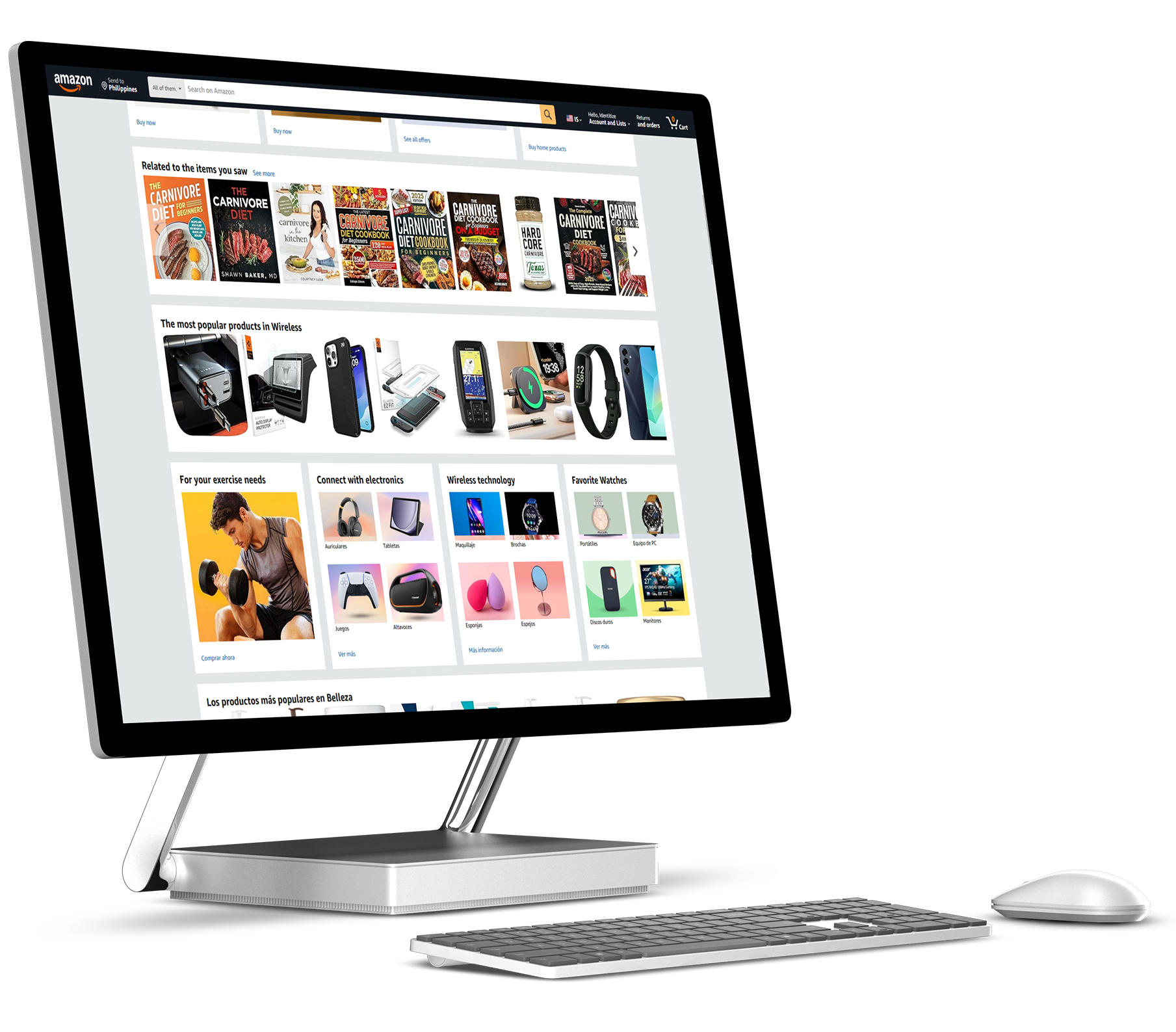
Here’s how it works. Go to Amazon, type a product name into the search bar, and then add the word “for” after it. Immediately, Amazon’s autocomplete will show you a list of suggested searches. These suggestions aren’t random. They reflect what real customers are actively typing into Amazon FBA products right now, which makes them a goldmine of validated product ideas hiding in plain sight.
Take creatine, for example. When you type “creatine for” into the search bar, one of the first suggestions is “creatine for women.” Sure enough, one company seized that exact opportunity and now does roughly a million dollars a month in sales. According to Helium 10 data, their creatine for women product alone pulls in nearly $800,000 in 30-day revenue. The product itself isn’t revolutionary. Instead, the brand simply took an existing product and marketed it specifically for women, and customers rewarded them handsomely for it.
Naturally, the next step is to find a similar opportunity that hasn’t been claimed yet. Travis demonstrated this by typing “protein for” into the search bar, and one suggestion immediately stood out: protein for coffee. While plenty of coffee-flavored proteins and smoothie powders exist, almost nothing on Amazon is designed specifically to be added into your morning coffee. That gap represents a genuine opportunity, and whoever fills it properly could make a tremendous amount of money.
The beauty of this method is its simplicity. You don’t need expensive software, insider connections, or years of experience. Amazon FBA products hands you the demand data for free. All you have to do is pay attention, spot the underserved searches, and act on them before someone else does.
Validating Demand with Search Volume
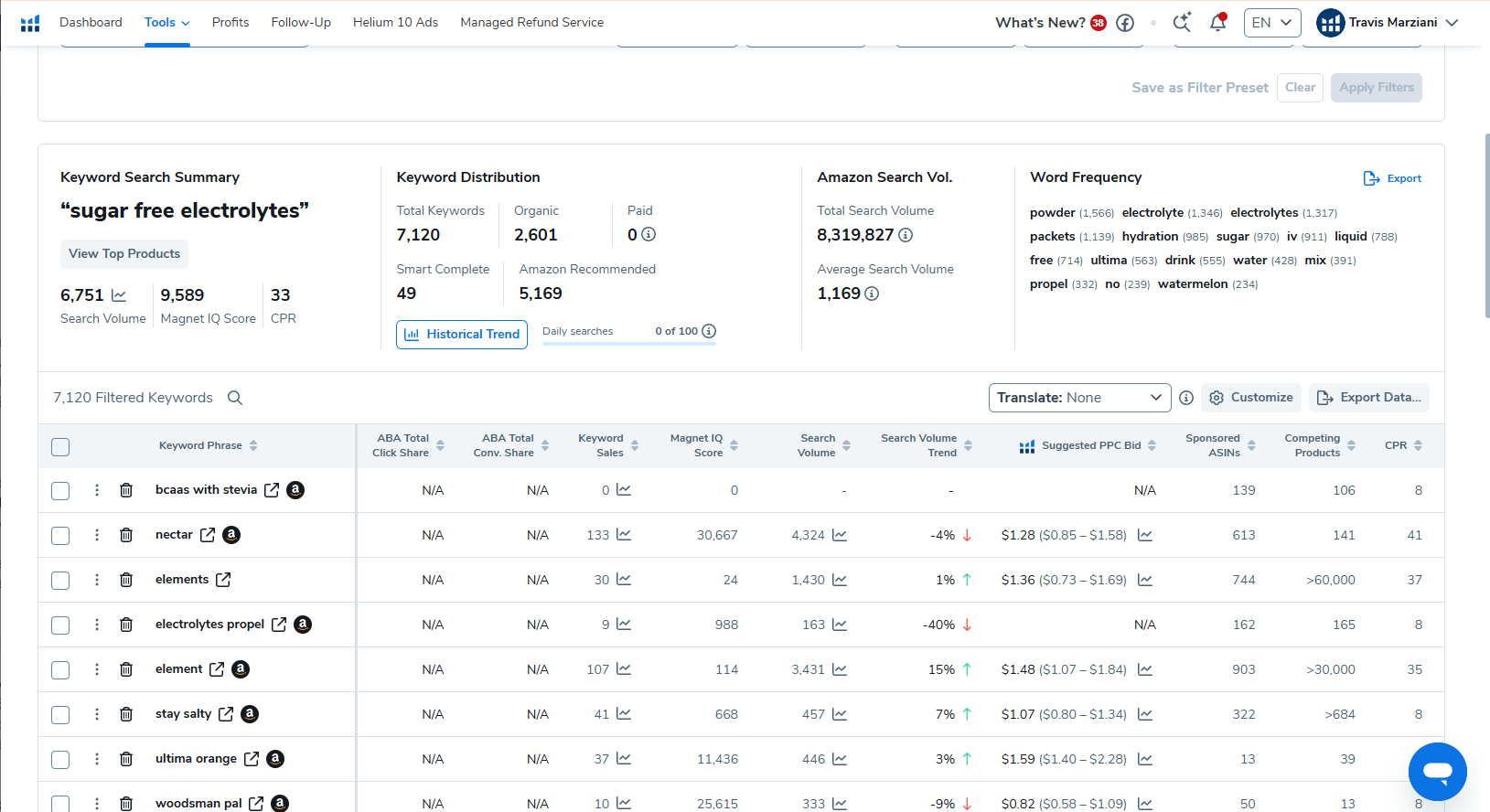
Of course, a great idea is only half the battle. Before investing a single dollar into a product, you need to confirm that people are actually searching for it. Fortunately, this step is just as straightforward, and it’s where Helium 10 comes into play. Helium 10 shows you exactly how many people per month are searching for any given term on Amazon, which removes all the guesswork from product research.
Let’s return to the protein for coffee example. When Travis plugged that phrase into Helium 10, the data showed over 1,000 people per month searching for exactly that product. Think about what that means. Every single month, a thousand ready-to-buy customers are typing that phrase into Amazon and not finding a product built for them. If you launch that product, you’re stepping directly into the path of existing demand.
The mouth tape example is even more striking. After noticing the growing buzz around mouth taping, Travis searched “mouth tape for sleeping women” and found 18,000 monthly searches. Even better, the existing competition looked terrible. The listings resembled generic knockoff brands, and none of them targeted women in a genuinely premium way. High demand combined with weak competition is the single best setup you can find as a new Amazon seller.
This validation step transforms product research from gambling into calculated decision-making. Rather than hoping your product will sell, you’ll know real customers are already looking for it. That confidence makes every subsequent step, from manufacturing to launch, dramatically easier.
Niche Branding: Why “For Women” Beats Generic Every Time
Now that you know how to find and validate ideas, let’s talk about the strategy that turns a simple product into a thriving brand. The core principle is this: never sell a generic product. Instead, brand it and niche it down for a specific group of people. Generic creatine competes against hundreds of identical listings, but creatine for women speaks directly to a specific customer and instantly stands apart.
Travis proved this principle with his own brand, Carnivore Electrolytes. As a public experiment, he launched the entire business in just seven days and streamed the whole process live on his YouTube channel. The product was simply electrolytes, but the branding spoke directly to the carnivore diet community. That focused positioning produced incredible results. The business generated over a million dollars in revenue last year with roughly $400,000 to $500,000 in profit, and Travis sold it earlier this year for $840,000.
Why does niching down work so well? Because customer expectations have fundamentally shifted. A few years ago, a woman who wanted creatine would simply buy regular creatine. Today, however, shoppers want the perfect product made specifically for them, and the search data proves it. Search volume for women-specific versions of everyday products has doubled in recent years, and that trend shows no signs of slowing down.
This niche branding framework is exactly what Travis teaches inside the Passion Product Formula. Rather than chasing random products, students learn to build brands around specific audiences they care about, which leads to stronger margins, loyal customers, and businesses that are genuinely fun to run.
The New Releases Method: Finding Proven Products with Fixable Flaws
But what if you struggle to come up with ideas from scratch? Thankfully, there’s a second completely free method that does the creative work for you: the New Releases method. Simply navigate to Amazon FBA products Hot New Releases page, pick a category that interests you, and browse the products that are currently gaining traction. These listings show you exactly what’s selling right now.
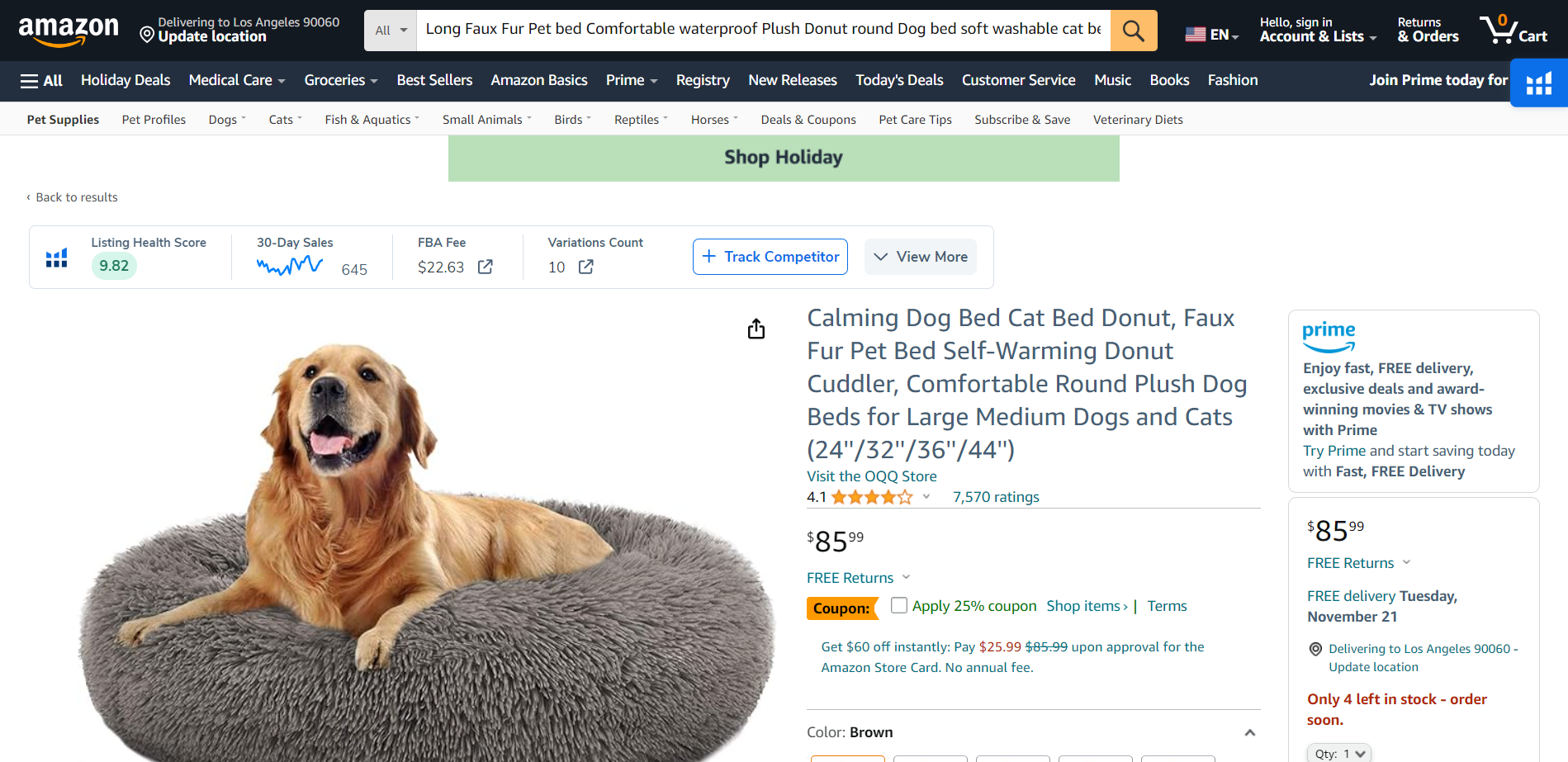
While exploring the Pet Supplies category, Travis spotted a simple product doing $50,000 a month in sales despite holding only a four-star rating. That rating gap is precisely what makes the opportunity so exciting. A four-star average means one-star reviews exist, and those negative reviews are a roadmap to building something better.
Reading through the complaints, the pattern became obvious. Customers called it a bad design, said it wasn’t durable, and described it as unsafe. One reviewer summed up the entire opportunity in five words: good idea but bad execution. That single phrase is a gold mine. Customers clearly love the concept and are spending $50,000 a month on it, yet the current product fails to deliver. If you launch a version 2.0 that fixes those specific flaws, you position yourself to dominate the niche.
Run the numbers and the potential becomes even clearer. A product doing $50,000 a month in revenue can easily generate over $100,000 a year in profit. For most people, that’s life-changing money. It’s enough to quit a job, gain real freedom, and build the lifestyle you actually want, all from improving a product that customers have already validated.
The Product Scorecard: How to Grade a Product Before You Launch

Before launching anything, however, every product idea should pass one final test. Travis grades all of his potential products using a tool called the Product Scorecard, which evaluates the most critical factors for Amazon success. This systematic approach ensures you only move forward with ideas that genuinely deserve your time and money.
The scorecard starts with four foundational factors. First, search volume: are people actively searching for this product? Second, competition level: how strong or weak are the existing listings? Third, ease of manufacturing: can you realistically produce this product without major complications? Fourth, ease of shipping: will logistics be simple and affordable?
Applying the scorecard to the women’s mouth tape example shows why it scored so highly. Search volume earned a perfect 10 out of 10 with 18,000 monthly searches. Competition also scored 10 out of 10 because the existing products were genuinely bad. Manufacturing scored another 10 out of 10 since mouth tape is simple to produce, and shipping rounded out the perfect score because the product is small, light, and durable. When a product scores that well across the board, you’ve found something special.
Beyond these four factors, Travis also evaluates profitability, product uniqueness, barrier to entry, and several other criteria covered in his upcoming content. Students who join the Passion Product Formula mentorship get full access to this scorecard along with a complete library of worksheets, so every launch decision is backed by a proven framework rather than gut feeling.
The Biggest Amazon FBA Niches for 2026

Finally, let’s look ahead at where the biggest opportunities are heading. The first major trend is looksmaxing, the rapidly growing movement of men investing in their appearance. The trend data is exploding, and Travis moved quickly to capitalize on it by launching Ascend Men, a makeup brand built specifically for this audience. He’ll be documenting the entire journey on his channel, including the branding process and launch strategy.
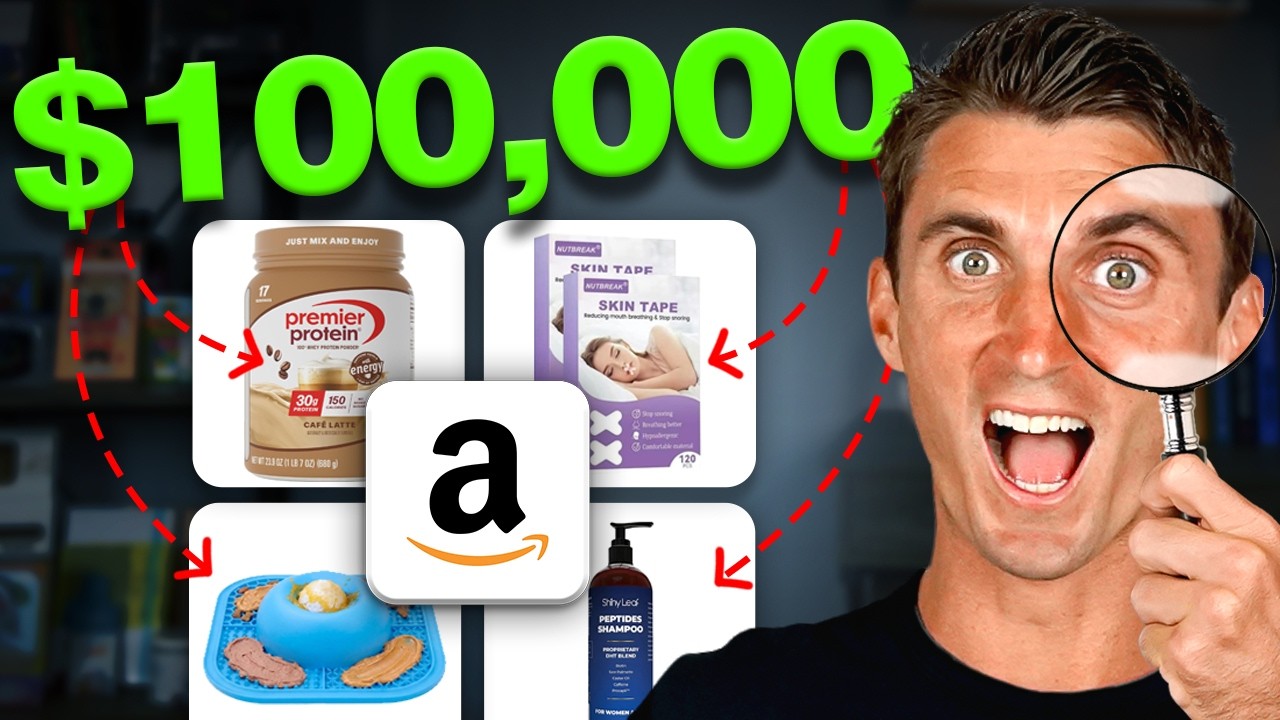
The second trend to watch is peptides. Interest in peptides has surged across the health and wellness world, and while you can’t sell injectable peptides on Amazon FBA products, creative compliant angles absolutely exist. Travis is launching a peptide shampoo to ride this wave, which perfectly illustrates the lesson: when a trend explodes, find the version of it that fits within Amazon’s marketplace.
The third trend is the continued rise of “for women” products. As mentioned earlier, search volume in this space has doubled over the past few years, and the underlying shift in consumer behavior is powerful. People no longer settle for one-size-fits-all products. They actively seek out versions designed for their specific needs, demographics, and lifestyles.
Here’s the encouraging part: all three trends are still early. The looksmaxing market is just forming, peptide products are only beginning to appear on Amazon FBA products, and countless everyday products still lack a women-specific version. That means plenty of room remains for new sellers to claim a niche, build a brand, and grow alongside these movements rather than fighting for scraps in saturated markets.
Turn These Methods Into Your First Winning Product

Let’s recap everything you’ve learned. The “For” method reveals underserved niches directly from Amazon’s search bar, and Helium 10 validates the demand with hard numbers. Niche branding transforms ordinary products into standout brands, while the New Releases method hands you proven products with fixable flaws. The Product Scorecard then filters your ideas so only the strongest survive, and the 2026 trends point you toward the markets with the most explosive growth ahead.
More importantly, remember what’s possible when you apply these methods. Travis took a simple electrolyte product, niched it down for the carnivore community, and turned it into a million-dollar brand that sold for $840,000. He started that business in seven days. If an idea that simple can produce results that dramatic, your product idea can absolutely work too.
If you want hands-on help launching your own Amazon FBA business, Travis just opened up a few spots for free coaching calls with himself and his team. On that call, you’ll receive a personalized strategy and a clear plan for finding success on Amazon within the next 90 days. You’ll also learn more about the Passion Product Formula mentorship program. It’s not a hard pitch either. In fact, the team turns away plenty of applicants because Travis only works with people he genuinely believes will succeed and launch a product.
Frequently Asked Questions
Do I need to pay for tools to find a product?
No, you don’t. Both the “For” method and the New Releases method are completely free and only require the Amazon website. That said, a tool like Helium 10 makes validation much faster by showing exact monthly search volumes. You can sign up for a free Helium 10 account through the link below the video, and a coupon code is available if you decide to upgrade.
How much money can I realistically make with Amazon FBA?
Results vary, but the examples in this post show what’s achievable. The creatine for women brand generates nearly $800,000 a month, the pet product does $50,000 a month, and Travis’s own Carnivore Electrolytes brand produced $400,000 to $500,000 in annual profit before selling for $840,000. A product doing $50,000 a month in revenue can translate to over $100,000 a year in profit.
What makes a product worth launching?
Run it through the Product Scorecard. Strong candidates combine high search volume, weak competition, easy manufacturing, and simple shipping. Beyond those four, profitability, uniqueness, and barrier to entry matter as well. When a product scores highly across all factors, like the women’s mouth tape example, you’ve likely found a winner.
Why is niching down better than selling a generic product?
Generic products force you to compete on price against hundreds of identical listings. Niche products, on the other hand, speak directly to a specific audience and stand out immediately. Customers today actively want products made for them, which is why creatine for women outsells generic creatine alternatives so dramatically.
How do I get help launching my first product?
Apply for a free coaching call with Travis and his team using the link below the video. On the call, you’ll get a tailored 90-day success plan plus more details about the Passion Product Formula mentorship. You can also start with the free Amazon FBA course, which covers every step of the launch process.